
How to Replace Brake Pads on BMW G20 - 330i, M340i DIY
Affiliate disclosure. BimmerTalk is a proud partner of the Amazon Associates Program and Turner Motorsport. We may earn a small commission on qualifying purchases through our links, at no extra cost to you. Read the full disclosure.

I've been doing brake jobs on G20s since they landed in 2019, and the chassis has become one of the more common cars in my shop for this work. The G20 3 Series covers the 330i, 330e plug-in hybrid, M340i, and the M3-adjacent G20 M340i Competition. The brake system on the G20 is mature and well-designed - BMW refined the layout significantly from the F30 - but the electronic parking brake is still present at the rear and it still requires a software step before you can service the rear pads. If you are coming from an older car where EPB was not a thing, that is the one step in this guide you absolutely cannot skip.
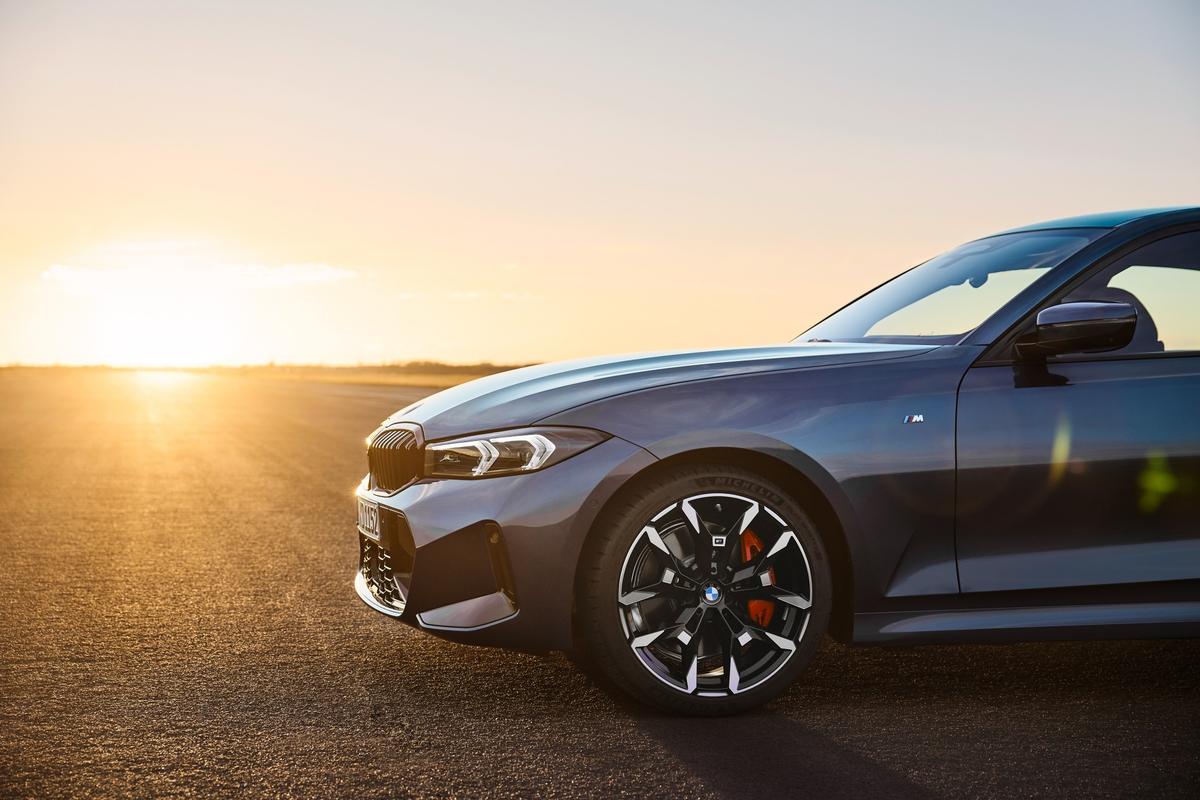
Rotor sizing on the G20 is larger than the F30 across the board. The base 320i and 330i come with 348mm front rotors - the same size that the F30 335i and M Sport used, now standard even on lesser variants. The M340i steps up to 374mm front rotors with a larger front caliper, and the M340i Competition gets the same 374mm setup. The rear rotor on all G20 variants is 345mm, which is noticeably larger than the F30 rear. These bigger rotors give the G20 better thermal capacity and contribute to its notably confident brake feel compared to the older chassis.
The 330e hybrid variant deserves a mention. The 330e has a regenerative braking system that recovers energy under light braking by using the electric motor as a generator. This means the physical brakes engage less frequently under normal deceleration, which can actually slow down pad wear on the rear axle in particular. However, the mechanical brake system is identical in design to the 330i and the same EPB procedure applies to the rear. The one practical difference: on the 330e, the brake feel is managed by a more complex brake-by-wire control unit that blends regen braking with mechanical braking. This system requires a brake calibration step after any brake work, run via the scan tool. BimmerLink handles this on the 330e with a specific function under the brake module.
348mm
G20 330i Front Rotor
374mm
G20 M340i Front Rotor
345mm
G20 Rear Rotor (all)
Motorized (rear)
EPB Type
Yes (EPB service mode)
Scan Tool Required
Single-piston floating
Front Caliper (330i)
4-piston fixed Brembo
Front Caliper (M340i)
110 Nm
Front Carrier Bolt Torque
80 Nm
Rear Carrier Bolt Torque
G20 330i vs M340i - Different Brake Procedures
The 330i and M340i have meaningfully different front brake hardware that requires different service approaches. The 330i uses a conventional single-piston floating caliper on the front axle - the same type used on every other standard BMW passenger car. One piston, one carrier, straightforward C-clamp compression, nothing unusual. The M340i uses a 4-piston fixed Brembo caliper on the front axle with the 374mm rotor. A fixed caliper does not slide on pins - instead it has two pistons on each side of the rotor (four total) that squeeze the rotor from both sides simultaneously.
Servicing a 4-piston fixed caliper requires a different approach than a floating caliper. On the M340i front, you do not remove the caliper from the car to change pads - instead, you remove the two caliper retaining bolts on the top and bottom of the caliper bridge, then slide the pads out and in from the side. The pistons do not need to be compressed until all the way - you just need to push them back enough to clear the new, thicker pads. A flat caliper piston tool (or even a large flathead screwdriver with a rag to protect the piston face) can push each piston back slightly. With four pistons, push each one back gently and evenly before attempting to insert the new pad.
The M340i front brake pad is a specific part number that fits only the 4-piston Brembo caliper - it is not the same as the 330i front pad. When ordering, specify M340i or look for the 4-piston Brembo caliper fitment. This is a commonly ordered incorrectly, and the wrong pad will not seat properly in the caliper. Measure twice, order once.
EPB Service Mode - G20 Procedure
The G20 EPB system is functionally identical to the F30 and F15 X5 systems from a service perspective. Connect your OBD2 adapter (Vgate VLinker BM or equivalent) to the OBD port under the dash. Open BimmerLink with ignition in accessory mode. Navigate to the brake system module. Select EPB service mode and activate for the rear axle. The motor retracts, you hear it run for 5-10 seconds, and then the piston is in service position.
On the G20, BimmerLink has a specific G20/G-chassis profile that works cleanly. I have tested Carly on G20s as well and it handles the EPB functions correctly. Do not use a generic ELM327-based scanner for this step - it will not have the BMW-specific EPB command set and you will be stuck with the rear piston locked in place. A BMW-compatible scanner is not optional for G20 brake service.
After the rear pad installation, exit EPB service mode via the scan tool. The motor runs its calibration cycle. Apply the parking brake once to verify engagement, then release. Pump the pedal 15 times to restore a firm feel. Clear the CBS brake service interval - on the G20, this can be done via iDrive under Vehicle Settings, Service, or via BimmerLink's service reset function. Both work, and I prefer iDrive for the CBS reset since it does not require the OBD adapter to remain connected.
Front Pad Replacement - 330i Procedure
With the wheel off, spray the caliper assembly with brake cleaner and wipe down. Open the brake fluid reservoir cap to prevent overflow when compressing the piston. Remove the two caliper slide bolts (13mm on the G20 front) from the back of the caliper. The G20 slide bolt area is clean and well-shielded from road debris compared to older BMW front calipers - the rubber boots are in good condition on cars up to 50,000 miles typically. Pull the bolts, slide the caliper off, hang it from the spring.
Remove the old pads from the carrier. On the G20, I consistently find the carrier channels in good condition even on cars that have not seen brake service before the factory pad set wore out - BMW improved the carrier coating on this chassis compared to the F30, which was notorious for rusted carrier rails. Still, wire brush the channels and apply fresh caliper paste before installing new pads. Takes 3 minutes and prevents squeal and uneven wear.
Compress the G20 front piston with a C-clamp. The piston bore on the 330i front is a standard push-in design. Compress fully, install pads inboard to outboard (wear sensor in the inboard pad), slide caliper back, torque slide bolts to 27 Nm. If the carrier was removed, torque carrier bolts to 110 Nm.

Front Pad Replacement - M340i 4-Piston Procedure
On the M340i, the front brake procedure is different. The 4-piston Brembo fixed caliper stays bolted to the carrier - it does not slide off pins. Remove the two pad retainer bolts (typically 7mm hex) on the top of the caliper bridge. These bolts secure a retaining clip or bridge that holds the pads in place. Remove the retaining hardware and slide the worn pads out of the caliper from the top or side, depending on the caliper orientation. Some M340i front calipers have a specific pad removal direction - refer to the caliper design to determine whether the pads pull up and out or slide laterally.
With the old pads out, use a flat tool to push each of the four pistons back slightly - just enough to create clearance for the new, thicker pads to slide in. Gently is the operative word here - a flat tool with a rag between the tool and the piston face prevents scratching the aluminum piston. Push each piston back a few millimeters. Insert the new pads from the same direction the old ones came out. Reinstall the retaining hardware and torque to spec. No caliper body removal required.
Wear Sensor Replacement and CBS Reset
The G20 uses wear sensors at the front passenger side and rear driver side, standard BMW configuration. Replace both at every pad change. On the G20, the sensor connectors are slightly different from F30 connectors - BMW redesigned the routing slightly to improve harness protection. The connector clicks home with an audible snap; if you do not hear the snap it is not fully engaged and will give a false fault code.
After sensor replacement and pad installation, the CBS brake service indicator in the instrument cluster needs resetting. On the G20, this is done through iDrive: go to Vehicle Settings, then Service, then Condition Based Service, find Brake Fluid or Brake Pads, and reset the applicable counter. The iDrive method works without a scan tool. If you prefer using BimmerLink for the reset, it is under Service Functions, CBS reset, Brake Pads. Either method works correctly on the G20.
Rotor Replacement Intervals
| G20 Variant | Front Rotor | Front Min Thickness | Rear Rotor | Rear Min Thickness |
|---|---|---|---|---|
| 330i / 320i | 348mm | 30mm | 345mm | 9mm |
| M340i / M340i Competition | 374mm | 32mm | 345mm | 9mm |
330i / 320i
- Front Rotor
- 348mm
- Front Min Thickness
- 30mm
- Rear Rotor
- 345mm
- Rear Min Thickness
- 9mm
M340i / M340i Competition
- Front Rotor
- 374mm
- Front Min Thickness
- 32mm
- Rear Rotor
- 345mm
- Rear Min Thickness
- 9mm
The G20 rotors are, in my experience, more durable than the F30 rotors at equivalent mileage. BMW improved the metallurgy on the G20 brake package and the larger rotor diameters provide better thermal mass. I see fewer heat-stressed G20 rotors relative to mileage than I do F30 rotors. That said, the same inspection criteria apply - measure thickness, check for grooves, look for heat checking, feel for pulsation. Replace when at or near minimum thickness, or when heat damage is visible.
The G20 M340i's 374mm front rotors are particularly impressive thermally. The large diameter and correspondingly large swept area mean these rotors stay cooler per stop than the smaller 330i rotors under equivalent braking. This partly explains why the M340i feels so much more composed during repeated hard braking - it is not just the larger caliper, it is the genuinely better thermal capacity of the rotor. If you have a 330i and are considering a brake upgrade, the M340i big brake kit is a direct bolt-on upgrade - same caliper carriers, same spindle interface, just larger rotors and calipers. The brake upgrade guide covers this in detail.
Brake Fluid and System Health
The G20 is a modern car and many owners assume that because it is relatively new, all fluids are fine. Brake fluid does not work that way - it absorbs moisture from the atmosphere through the reservoir cap seal and through microscopic permeation of the rubber hoses, regardless of vehicle age. On a 2020 G20 with 30,000 miles, the brake fluid may be four-plus years old and approaching the two-year service recommendation. Check the color - fresh BMW brake fluid is light amber, almost golden. Dark brown fluid has absorbed moisture and should be replaced.
The G20's ABS/DSC system is highly capable, with more computing power and faster intervention than the F30's system. But the hydraulic foundation is the same - clean, properly maintained brake fluid with a high boiling point. I always offer a brake fluid test and flush alongside a G20 pad change, and the results are frequently enough to convince owners to do the flush while the car is already up on stands.
For the full procedure on brake fluid replacement, see our brake fluid guide. For more on the G20 brake system and upgrade options, see the brakes overview, pad selection guide, rotor guide, and brake lines upgrade guide.

Motul RBF 600 Factory Line DOT-4 Racing Brake Fluid — 500ml 2-Pack
$43.65
Bedding New G20 Pads
The G20 responds well to a thorough bedding sequence. For street pads, my standard procedure works well - 10 moderate stops from 50 mph to 10 mph, cool for 45 seconds between stops, then 5 firmer stops from 60 mph to 15 mph, then a 10-minute normal drive to cool down. The G20's larger rotors take slightly longer to reach bedding temperature than F30 rotors, so the first 3-4 stops will feel relatively mild before the pads begin to transfer material and the bite improves.

Alpaca Ceramic Slotted Brake Pads for BMW Front and Rear
$182.95

StopTech G-Coated Drilled & Slotted Front Brake Rotors for BMW 2/3/4 Series X1
$121.95
Motul RBF 600 Factory Line DOT-4 Racing Brake Fluid — 500ml 2-Pack
$43.65

On the M340i, the 4-piston front calipers and 374mm rotors have more thermal mass than the 330i setup, and the bedding sequence takes slightly longer. I do 12-15 moderate stops before the 5 firmer ones on M340i bedding runs. The result is worth the extra effort - properly bedded M340i brakes feel extraordinarily confident and consistent from the first real-world hard stop.


