
How to Replace Brake Pads on BMW M3 - F80, G80 DIY
Affiliate disclosure. BimmerTalk is a proud partner of the Amazon Associates Program and Turner Motorsport. We may earn a small commission on qualifying purchases through our links, at no extra cost to you. Read the full disclosure.

The M3 is where brake work gets serious. I've done brake jobs on F80 M3s brought back from Nurburgring stints with glazed pads and rotor-colored front wheels, and on G80 M3s that owners want prepped for their first track day. The M3's braking hardware is on a completely different level from any standard 3 Series - Brembo fixed calipers, large rotors, and a brake system designed to handle repeated hard stops at high speed. Getting the pad choice right and understanding the caliper design are the two most important things for this job.
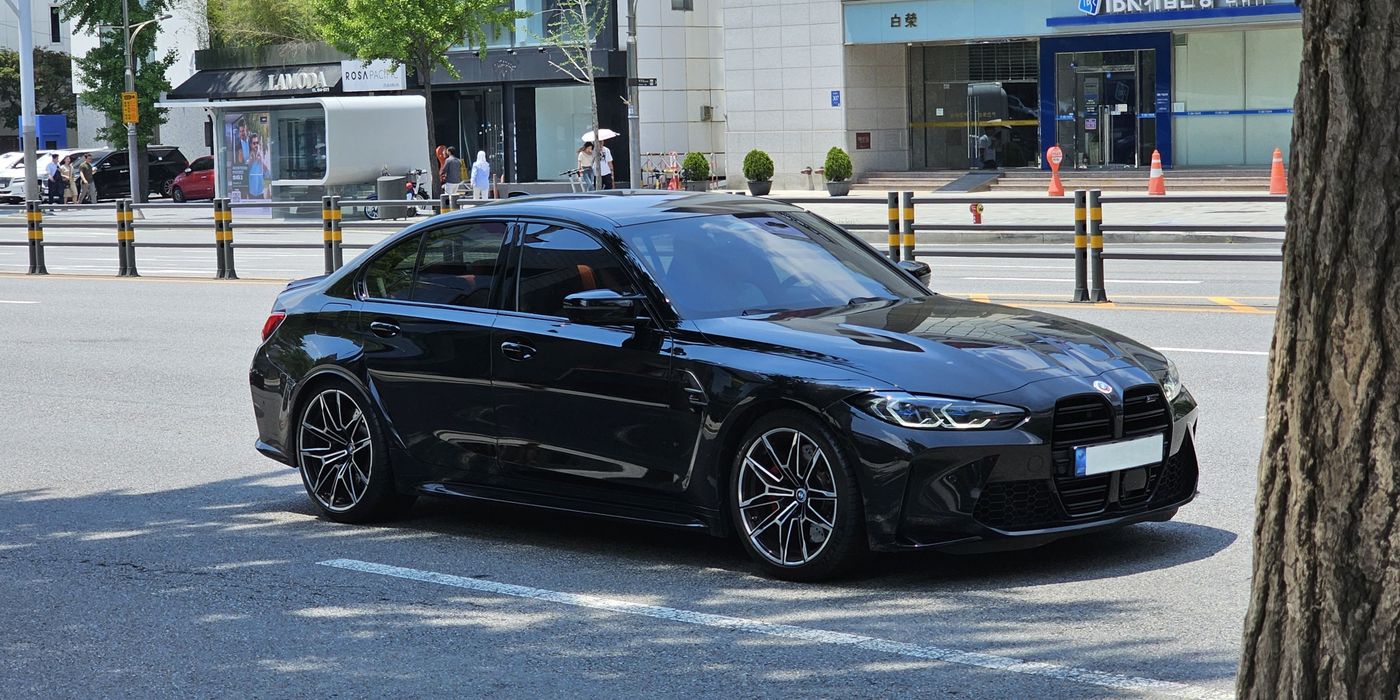
The F80 M3 (2014-2018) uses a 4-piston front Brembo fixed caliper with 380mm front rotors. The Competition package on the F80 added a larger 6-piston front caliper with 395mm rotors - the same setup used on the F82 M4 Competition. The G80 M3 (2021-present) uses a 6-piston front Brembo caliper with 395mm rotors as standard across the lineup, with the M Carbon Ceramic Brake (MCCB) option adding a carbon ceramic rotor variant. The rear on both generations is a 4-piston rear caliper with either 370mm (F80) or 380mm (G80) rotors.
If you are coming from doing brake work on regular BMWs and you have never worked on a fixed multi-piston caliper before, the procedure is different enough to warrant careful reading. Fixed calipers do not slide on pins - there is no caliper removal step for pad changes. Instead, pads are inserted and removed from the caliper aperture with the caliper bolted in place. The pistons are pushed back with a flat tool rather than a piston compression tool. And with a 6-piston caliper, you have 12 pistons total (6 per side, remember each side of the rotor has its own pistons) that all need to be pushed back slightly when fitting new, full-thickness pads. I'll walk through exactly how to do this correctly.
380mm (4-piston) / 395mm (Competition 6-piston)
F80 M3 Front Rotor
395mm (6-piston standard)
G80 M3 Front Rotor
370mm (4-piston)
F80 Rear Rotor
380mm (4-piston)
G80 Rear Rotor
Brembo fixed multi-piston
Front Caliper Type
Brembo fixed 4-piston
Rear Caliper Type
Yes
EPB (G80 rear)
No (mechanical)
EPB (F80 rear)
Understanding Fixed Caliper Pad Changes
On a standard single-piston floating caliper (as found on every regular BMW 3 Series), changing pads involves removing the caliper body from the carrier, which exposes the pads for easy removal and installation. Fixed calipers are bolted rigidly to the knuckle and do not move - the pads slide into the caliper from the outside through an opening in the caliper bridge. This design is stronger and more consistent for high-performance braking, but pad changes work differently.
On the M3 front caliper, look for the caliper bridge that spans across the rotor at the top and/or leading edge of the caliper. On the F80 4-piston front caliper, there is a top bridge with two pad retaining pins running through the caliper bridge and through the pads. You remove those pins (they typically pull out with a flathead or release with a clip), the anti-rattle spring on the bridge comes off, and then the two pads slide up and out of the caliper. On the G80 6-piston caliper, the design is slightly different - the pads are retained by a clip system on the bridge and slide out laterally. Check which direction your pads release before pulling with force.
With the old pads out and the rotor visible, push each piston back slightly using a flat pad spreader tool. You are not compressing them fully - just pushing them back enough to create clearance for the new pads to slide in. On a 6-piston caliper, push each of the three pistons on one side back a small equal amount before inserting the new pad. Even piston retraction keeps the caliper's hydraulic balance correct. Slide the new pads in, reinstall the retaining hardware, and the front is done without ever unbolting the caliper.
F80 M3 Rear Brakes - Mechanical Parking Brake
The F80 M3 (2014-2018) does not use an electronic parking brake. Like the E90, it uses a mechanical cable actuating a drum-in-hat mechanism at the rear rotors. This means the rear caliper pistons are conventional push-in designs that compress with a C-clamp. The rear calipers on the F80 M3 are 4-piston fixed units - different from the single-piston rear calipers on standard 3 Series cars, but the pads still insert and remove from the caliper in the same way as the front (through the caliper aperture with the caliper in place).
For F80 rear pad changes, remove the rear pad retaining hardware, push the four rear pistons back evenly using a flat pad spreader, slide new pads in, reinstall retaining hardware. No EPB unlock required, no scan tool needed for the F80 rear. This is one of the reasons some track day people prefer the F80 over the G80 for DIY maintenance - the rear brake job is simpler and requires less tooling.
G80 M3 Rear Brakes - EPB Procedure
The G80 M3 introduced the electronic parking brake at the rear, same system as found on the G20 330i and other modern BMW models. The procedure is identical to what I described for the G20 - connect BimmerLink, activate EPB service mode, hear the motor retract, then proceed with the mechanical work. Exit service mode after pad installation and calibrate. The G80 rear caliper is a 4-piston fixed unit, same as the front but smaller, so the pad change method is the same (retaining hardware out, flat tool to push pistons back, pads in from the aperture, hardware back in).
One G80-specific note: the G80 M3 with M xDrive has a slightly different rear EPB calibration sequence than the RWD variant. The xDrive system has additional torque vectoring functions that interact with the brake system, and the scan tool calibration sequence after a rear pad change on xDrive cars includes a torque vectoring brake calibration step. BimmerLink handles this automatically when you exit EPB service mode on xDrive G80 cars - it detects the drivetrain configuration and runs the appropriate sequence. Verify your scan tool supports this xDrive-specific step if you are using anything other than BimmerLink or Carly.
Pad Compound Selection for M3 Use Cases
This is the most important section of this guide for M3 owners because the pad choice determines the entire character of the brake system. The M3 is unique among BMW models in that its brake system is genuinely capable of supporting dedicated track use - the Brembo calipers and large rotors provide the thermal capacity. But the pad compound must match the use case or the system will either underperform or cause problems.
For M3 owners who drive the car on the street and occasionally attend track days or HPDE events: the Hawk DTC-30 is my consistent recommendation. It is the compound I have run on my own track car and recommended to dozens of customers. The DTC-30 performs well from ambient temperature on the street - it does not have the cold bite delay that full race compounds suffer from - and it handles sustained track temperatures without the fade that street-only pads exhibit. It will produce more dust than a street compound and you will notice slightly more squeal at low speeds, but for a dual-purpose M3 it is the right balance.
For M3 owners who primarily track the car with occasional street use. Pagid RS29 is the benchmark compound in the BMW track community. I have run Pagid RS29 on multiple track cars and the feel is exceptional - incredibly consistent bite from warm, linear modulation through the braking zone, and durability that outlasts most other compounds at equivalent temperature. The RS29 requires proper warmup before it reaches full performance - running it cold on the street means the first few stops have reduced bite compared to a street compound. If you can tolerate that on the commute, the RS29 is the choice for serious track use.
For M3 owners who do full race days or time attack events. Pagid RS4-2 or Endless ME20 are compounds I have seen work very well at sustained high temperatures. These are genuine racing compounds and they have essentially no street usability - they glaze cold and have minimal bite below 200 degrees C. They go on the car at the track and come off when the track weekend is over. Not relevant for most readers but worth knowing they exist as the next level beyond the RS29.
| Use Case | Recommended Compound | Cold Bite | Max Temp | Dust Level |
|---|---|---|---|---|
| Street daily | Hawk HPS 5.0 | Excellent | 400C | Low |
| Street and occasional track | Hawk DTC-30 | Good | 700C | Medium |
| Track-focused with street use | Pagid RS29 | Fair | 800C | High |
| Dedicated track / time attack | Pagid RS4-2 | Poor | 900C+ | Very High |
Street daily
- Recommended Compound
- Hawk HPS 5.0
- Cold Bite
- Excellent
- Max Temp
- 400C
- Dust Level
- Low
Street and occasional track
- Recommended Compound
- Hawk DTC-30
- Cold Bite
- Good
- Max Temp
- 700C
- Dust Level
- Medium
Track-focused with street use
- Recommended Compound
- Pagid RS29
- Cold Bite
- Fair
- Max Temp
- 800C
- Dust Level
- High
Dedicated track / time attack
- Recommended Compound
- Pagid RS4-2
- Cold Bite
- Poor
- Max Temp
- 900C+
- Dust Level
- Very High

Rotor Selection and Replacement on the M3
The M3's large rotors are expensive to replace - a set of four quality rotors for the F80 or G80 will run $400-800 depending on whether you choose OEM, OEM supplier, or performance aftermarket. The investment is worth making carefully. I have seen M3 owners install cheap economy rotors on their Brembo calipers to save $100 and then have the rotors crack or develop deep hot spots after two track days. The thermal demands on these rotors are real, and the metallurgy of the rotor matters.
For street and occasional track use, a quality slotted or drilled-and-slotted rotor from Stoptech, Brembo, or ECS Tuning OEM equivalent performs well and lasts appropriately. Slotting helps with pad outgassing during spirited driving - as the pad heats up, it generates gas from the resin binders, and a slotted rotor gives that gas somewhere to escape rather than building up as a gas layer between the pad and rotor that reduces friction. For dedicated track use, a two-piece floating rotor with an aluminum hat is the correct choice - the floating design allows the iron rotor ring to expand independently under heat without the stresses that cause one-piece rotors to crack.
Minimum rotor thickness on the F80 M3 front is 34mm for the 380mm rotor and 36mm for the 395mm Competition rotor. On the G80 M3, the 395mm front rotor minimum is 36mm. Measure with a micrometer at multiple points around the rotor to identify any uneven wear. A rotor that is at minimum thickness in one area but above minimum in another indicates uneven pad contact or a caliper piston sticking - address the caliper issue before installing new rotors or you will wear through them unevenly again.
Brake Fluid for Track Use - What I Run
The M3's brake system generates significant heat during track use. Standard DOT 4 brake fluid - including BMW's OEM fluid - has a dry boiling point around 420 degrees F (216 degrees C). A hard track session with a properly set up M3 will have caliper temperatures well above that. When the fluid boils, vapor bubbles form in the brake line, and vapor compresses where fluid does not - the result is a suddenly spongy pedal or complete pedal loss at the worst possible moment. This is called brake fade due to fluid boiling, and it is a serious safety issue on a track.
The solution is purpose-built racing brake fluid. I use Motul RBF 600 on every M3 that comes through my shop for track preparation. RBF 600 has a dry boiling point of 593 degrees F (312 degrees C) - a substantial margin above standard DOT 4. The wet boiling point (after absorbing moisture over time) is also significantly better than standard fluid, which means you have more thermal headroom even if the fluid has been in the car for a full season. I flush the entire system with RBF 600 before any track event and recommend annual replacement at minimum on track cars.

Motul RBF 600 Factory Line DOT-4 Racing Brake Fluid — 500ml 2-Pack
$43.65
Bedding M3 Brake Pads
Bedding performance pads on an M3 is a more involved process than bedding street pads on a regular BMW. The Brembo fixed calipers and large rotors take longer to reach bedding temperature, and the higher-friction compounds used on the M3 require a more aggressive heat cycle to properly transfer the friction material layer. For DTC-30 pads on the M3, I use the following bedding procedure.
Find a safe stretch of road or an empty parking lot where you can make hard stops safely. From 60 mph, brake to approximately 15 mph - do not stop completely. Do 8 of these stops, allowing 60 seconds between stops for cooling. You should notice the brakes improving in feel around the 4th-5th stop as the pad material begins transferring to the rotor. After the 8 stops, drive at normal speed for 5 minutes to cool the system. Then from 70 mph, make 5 very firm stops (not emergency stops, but close to full-effort braking) to 10 mph. Allow 2 minutes between each stop. After the full sequence, drive normally for at least 10 minutes without any hard braking.
For Pagid RS29 pads, the bedding sequence should be done at the track rather than on the road - the RS29 requires higher operating temperatures than street driving typically reaches, and a proper warmup lap followed by 3-4 hard braking zones on track does a better job of bedding RS29 pads than any road sequence. Start the track session with conservative braking in the first lap, progressively increase braking effort over the first 3-4 laps, and by lap 5 the pads should be properly bedded. I always verify by inspecting the rotor surface at the first pit stop - a properly bedded rotor will show an even gray-blue coloration across the full sweep zone, indicating even pad contact and material transfer.

StopTech G-Coated Drilled & Slotted Front Brake Rotors for BMW 2/3/4 Series X1
$121.95
Motul RBF 600 Factory Line DOT-4 Racing Brake Fluid — 500ml 2-Pack
$43.65

For more M3 brake system information, see our brake overview, pad selection guide, rotor guide, brake fluid guide, and the comprehensive BMW brake upgrade guide for big brake kit options on the M3 platform. Also check our brake lines guide for stainless line upgrades.


