
How to Replace Brake Pads on BMW M4 - F82, G82 DIY
Affiliate disclosure. BimmerTalk is a proud partner of the Amazon Associates Program and Turner Motorsport. We may earn a small commission on qualifying purchases through our links, at no extra cost to you. Read the full disclosure.

The M4 shares its brake hardware with the M3 in both generations, but because it is the coupe and cabriolet variant of the same platform, there are a few packaging differences worth knowing about. I've worked on more M4s than M3s simply because the M4 coupe has historically outsold the M3 sedan, and the brake job on both is nearly identical once you understand the fixed caliper pad change procedure. If you have already read the M3 guide, most of what applies there applies here. I'll focus on the M4-specific differences and fill in the complete picture for anyone coming to this guide fresh.
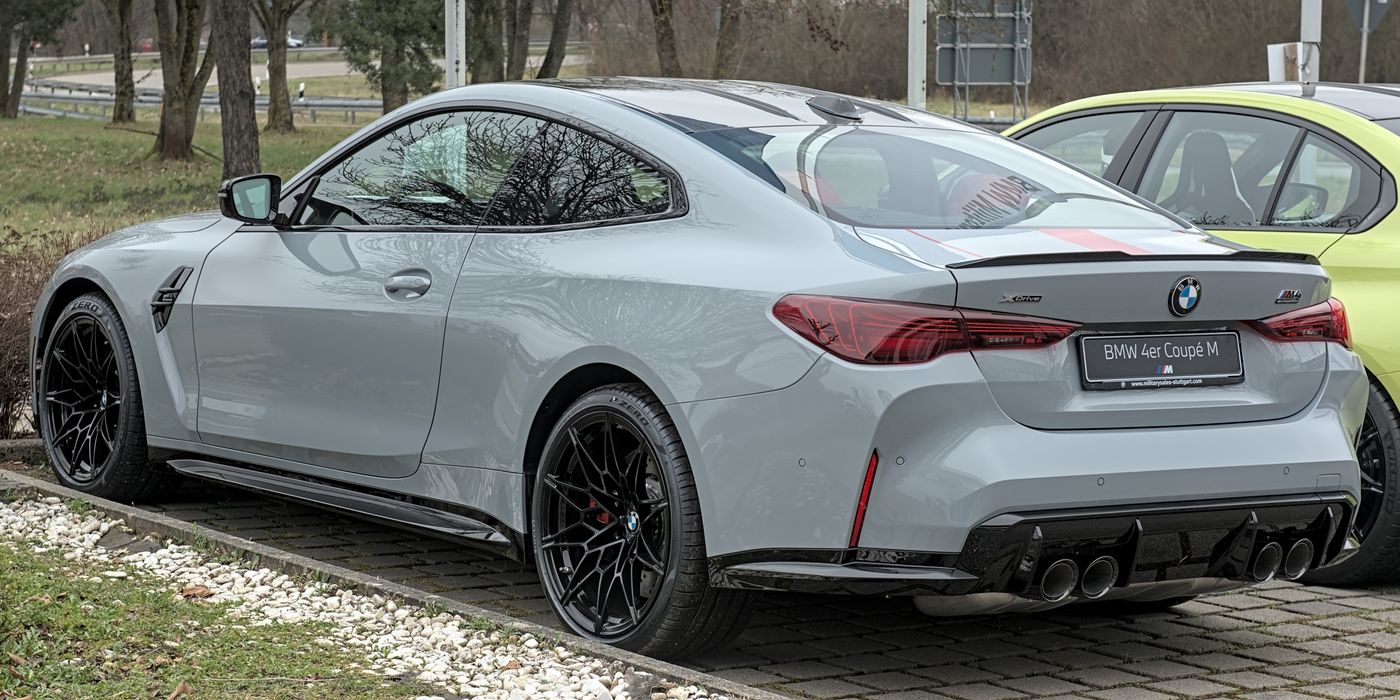
The F82 M4 coupe (2014-2020) shares the same 4-piston front Brembo caliper and 380mm rotor as the standard F80 M3. The F82 Competition package adds the 6-piston front Brembo caliper with 395mm rotors - the identical setup to the F80 M3 Competition. On the G82 M4 (2021-present), the 6-piston front Brembo is standard across the lineup, and the M4 Competition xDrive and M4 CSL variants get additional brake system upgrades including larger rear calipers. The M4 CS and M4 CSL use the same MCCB carbon ceramic brake option as the G80 M3.
The structural difference between the F82 coupe and F80 sedan that affects brake work is primarily access. The M4 coupe body structure is stiffer than the sedan, which means slightly tighter tolerances in the wheel well area and marginally less room to maneuver tools around the rear calipers. It is a minor consideration but worth knowing - if you have large hands, take extra care with the rear caliper work. The G82 coupe has similarly tight packaging. Nothing that makes the job undoable, just something that catches people off guard when they are used to working on sedans.
380mm (4-piston)
F82 M4 Front Rotor (standard)
395mm (6-piston)
F82 M4 Front Rotor (Competition)
395mm (6-piston)
G82 M4 Front Rotor (all)
370mm (F82) / 380mm (G82)
F82/G82 Rear Rotor
Brembo fixed multi-piston
Front Caliper
4-piston fixed
Rear Caliper (F82)
No (F82) / Yes (G82)
Rear EPB
110 Nm
Front Carrier Bolt Torque
F82 M4 Standard vs Competition - Hardware Differences
Before ordering pads for an F82 M4, you need to know whether you have the standard 4-piston front caliper or the Competition 6-piston caliper. The visual way to check without removing the wheel: look through the wheel spokes at the front caliper. A 4-piston caliper has two visible pistons on the inboard face. A 6-piston caliper has three visible pistons on the inboard face. Count them. If you can not see clearly through the wheel design, pop the wheel off - it takes 5 minutes and removes all doubt.
The pad parts are different between the 4-piston and 6-piston applications. The 4-piston pad is a slightly smaller, simpler shape. The 6-piston pad is larger and specifically designed for the 6-piston Brembo caliper's wider pad aperture. Installing the wrong pad - even if it technically fits into the caliper - will not provide correct coverage of the rotor face and can cause uneven wear and reduced braking performance. Measure or visually confirm your caliper type before any purchase.
On the F82 Competition specifically, there is also a difference in the caliper color. BMW finished the standard F82 M4 front calipers in silver. The Competition package calipers were offered in blue as a factory option (BMW Individual color coding) and red as another option. The color tells you nothing about the functional specification, but the 6-piston Competition calipers are notably larger in physical size than the 4-piston standard units - if the caliper looks proportionally large relative to the wheel, you almost certainly have the Competition setup.
6-Piston Brembo Pad Change - Detailed Procedure
With the wheel off and the caliper visible, orient yourself to the caliper bridge. On the G82 M4 and the F82 Competition, the 6-piston Brembo front caliper has a bridge that spans the top of the caliper assembly. The bridge retains the two pads - one on each side of the rotor - via a combination of the bridge structure and anti-rattle clips. Look for two pad retaining pins running through the caliper from one side to the other, passing through slots in the pads. These pins are typically secured by cotter pins or retaining clips at each end.
Remove the cotter pins or clips first - these are the primary retention safety mechanism. Then pull the retaining pins from the caliper bridge. They should slide out freely once the clips are removed. With the pins out, the anti-rattle spring (a flat, slightly curved spring clip that sits over the pads in the caliper aperture) can be removed. Now the pads are held only by friction with the caliper body. Grasp the pad tab and pull it out of the caliper aperture. On a hot rotor or a car that has sat for a while, the pads may have light corrosion bonding them to the caliper surfaces - wiggle gently while pulling outward to break them free. Do not pry aggressively against the rotor surface.
With both pads out, you are looking at 6 pistons total in the front caliper - 3 on the inboard side (the side facing the chassis), 3 on the outboard side (facing the wheel). They are arranged in a line, and they should all be at approximately the same extension depth. If any one piston is noticeably further extended or less extended than the others, that piston is either stuck or the caliper is seizing. Address any sticking pistons before installing new pads by working them gently in and out with brake system pressure if necessary, or by rebuilding the caliper.
To push the pistons back for new pad installation, use a flat pad spreader tool sized to span across all three pistons on one side simultaneously. Apply even pressure to push all three back together. Even compression preserves the caliper's hydraulic balance. If you push them back one at a time, the fluid pressure in the caliper forces the other two pistons forward as you push one back - you end up playing an inefficient game of hydraulic whack-a-mole. A proper multi-piston spreader tool (or a block of wood cut to span all three pistons) makes this step fast and effective. Once both sides are pushed back enough to accept the new pads, slide the new pads in, reinstall the anti-rattle spring, insert the retaining pins, and secure with new cotter pins.

Pad Compound Selection for the M4
M4 pad selection follows the same logic as M3 pad selection - use case determines compound. For an M4 that is primarily a street car and occasionally sees a track day, run Hawk DTC-30 front and rear. For an M4 that is primarily a track car with street use for transit, run Pagid RS29 front, Hawk DTC-30 or similar on the rear. For a dedicated track M4: Pagid RS4-2 or Endless ME20 front and rear.
One M4-specific consideration: the M4 coupe is sometimes used as a grand touring car in a way the M3 sedan is not. Longer highway trips mean brake temperatures stay low for extended periods, and then hard braking events - an exit ramp, a mountain descent - happen after the brakes have been cold for hours. Track-only compounds like the RS29 genuinely do not perform well in this scenario. The DTC-30's advantage is its ability to perform from ambient temperature. For the M4 owner who drives the car on enthusiastic road trips but also does track events, the DTC-30 is the right call.
I also want to address OEM M4 pads briefly. The factory Brembo pads that come on the M4 are actually decent for street use - they are a high-metallic compound with reasonable temperature range and good initial bite. The problem is dust. The OEM M4 pads produce extraordinary amounts of iron-rich brake dust that coats the wheels and corrodes the alloy finish. Any quality aftermarket compound - Hawk, EBC, Pagid - produces significantly less dust than OEM. This alone is often enough reason for M4 owners to switch compounds after the first pad change.
M4 Rear Brake Pad Replacement
The F82 M4 rear uses a 4-piston fixed caliper with no EPB - same mechanical parking brake cable design as the F80 M3. The G82 M4 rear has EPB, same system as the G80 M3. Procedures for each are identical to what I described in the M3 guide.
One rear-specific note for the M4: the rear Brembo 4-piston fixed caliper on both generations is notably more vulnerable to stone damage than the front because of its lower position relative to the road surface and the M4's lower ride height compared to a standard 3 Series. I have seen rear M4 calipers with stone impact damage to the piston dust boots, which allows water intrusion and causes piston seizure. Always inspect the rear caliper piston dust boots when changing rear pads. If any boot is cracked, torn, or shows impact damage, the caliper should be rebuilt or replaced before the next track event. A seized rear piston on a track car causes severe rear pad wear and potentially dangerous rear brake bias.
For the G82 M4 rear, the EPB procedure is the same as the G80 M3 - BimmerLink EPB service mode open, mechanical work, close and calibrate. The G82 M4 CS and CSL have additional rear brake hardware (larger calipers) that may have different retaining hardware designs - confirm the specific caliper model before assuming the pad change procedure is identical to the standard G82 rear.
Rotor Replacement on the M4
| M4 Variant | Front Rotor | Front Min Thickness | Rear Rotor | Rear Min Thickness |
|---|---|---|---|---|
| F82 M4 standard | 380mm | 34mm | 370mm | 9mm |
| F82 M4 Competition | 395mm | 36mm | 370mm | 9mm |
| G82 M4 all | 395mm | 36mm | 380mm | 9mm |
F82 M4 standard
- Front Rotor
- 380mm
- Front Min Thickness
- 34mm
- Rear Rotor
- 370mm
- Rear Min Thickness
- 9mm
F82 M4 Competition
- Front Rotor
- 395mm
- Front Min Thickness
- 36mm
- Rear Rotor
- 370mm
- Rear Min Thickness
- 9mm
G82 M4 all
- Front Rotor
- 395mm
- Front Min Thickness
- 36mm
- Rear Rotor
- 380mm
- Rear Min Thickness
- 9mm
The M4's rotors are large and expensive. OEM replacement 395mm front rotors run $200-350 each from BMW. Performance aftermarket rotors from Stoptech or Brembo OE replacement are typically in the same range for quality equivalents. The investment is worth it - I have seen cheap economy rotors used on M4s develop hot spots and surface cracks after a single moderate track day. The M4's brake system generates more heat than economy rotor metallurgy is designed to handle.
For track-focused M4s, the upgrade path is a two-piece floating front rotor with an aluminum hat. These run $500-800 per corner for quality units, but they are thermally superior to any one-piece rotor at sustained track temperatures. The floating design allows the iron ring to expand thermally without cracking the hat junction. I have seen one-piece OEM-replacement rotors crack at the vent holes after aggressive track use; I have never seen a properly engineered two-piece floating rotor crack in track use. If you are doing more than 2-3 track days per year on your M4, the two-piece rotor investment makes financial sense over multiple sets of cheaper replacements.
Brake Fluid for the M4
The same argument that applies to the M3 applies identically to the M4 - standard DOT 4 is insufficient for sustained track use and Motul RBF 600 is the replacement fluid I use in every M4 that comes through for track prep. The M4's higher power output compared to the M3 (at equivalent weights) means brake events can be slightly more severe, and the thermal margin that RBF 600 provides is valuable. I flush the full brake system with RBF 600 before any track event and recommend annual fluid changes on M4s that see track use.
For street-only M4s, standard BMW approved DOT 4 fluid is adequate as long as it is changed every two years. Do not skip the two-year interval just because the car has low mileage - brake fluid absorbs moisture from the atmosphere over time regardless of how much the car is driven. A street M4 with 10,000 miles but four-year-old brake fluid has degraded fluid that should be replaced.

Motul RBF 600 Factory Line DOT-4 Racing Brake Fluid — 500ml 2-Pack
$43.65
Stainless Brake Lines and ABS Integration
Upgrading the M4's flexible brake hoses to stainless steel braided lines is one of the first things I recommend to track-oriented owners. The OEM rubber hoses on both the F82 and G82 M4 are adequate for street use, but under the sustained hard braking of a track day they can feel slightly soft compared to the overall capability of the Brembo brake system. Stainless lines eliminate that softness and give you a very direct, consistent pedal feel that matches the calipers' capability.
One consideration for the M4 specifically: the M4's ABS and M Dynamic Mode (MDM) brake intervention calibration is based in part on the hydraulic compressibility of the stock hose setup. Installing stainless lines changes the system's hydraulic characteristics slightly. In practice, the ABS works correctly with stainless lines on the M4 - the system is adaptive enough to handle the difference. But some owners report that the ABS intervention feels slightly firmer and more abrupt with stainless lines, which is actually preferable for track use where you want maximum control over the ABS threshold. For street use, the difference is barely perceptible. See our brake lines guide for the installation procedure.
Bedding M4 Pads and Post-Install Checklist
The bedding procedure for M4 brakes is the same as described in the M3 guide - more aggressive than a standard street car bedding sequence, and ideally done at a track for RS29 or higher compounds. For DTC-30 pads on the M4, the road bedding procedure works well: 8-10 hard stops from 60 mph to 15 mph with 60-second cooling intervals, then 5 near-maximum effort stops from 70 mph to 10 mph with 2-minute cooling intervals. The Brembo calipers on the M4 provide excellent modulation that makes it easy to maintain consistent deceleration rates during bedding - use that modulation to feel the brake buildup and adjust your pedal effort accordingly.
Post-installation checklist for M4 brake work: verify all retaining pins are secured with new cotter pins or clips, verify caliper bridge hardware is torqued to spec, check that all wheel bolt holes are clear of caliper hardware interference, pump the pedal 15 times before moving the car, inspect for any fluid leaks at all connections, and if you replaced rear pads on a G82, confirm EPB calibration was completed successfully before testing the parking brake on a hill. A parking brake that has not been calibrated after pad replacement on the G82 EPB system can give inconsistent engagement - sometimes holding fine, sometimes requiring more travel than expected.


StopTech G-Coated Drilled & Slotted Front Brake Rotors for BMW 2/3/4 Series X1
$121.95
Motul RBF 600 Factory Line DOT-4 Racing Brake Fluid — 500ml 2-Pack
$43.65

For complete M4 brake system resources, see our brake overview, compound selection guide, rotor guide, and the BMW brake upgrade guide which covers big brake kit options, carbon ceramic upgrades, and endurance racing brake setups for the M4 platform. See also our fluid guide and brake lines guide for the complete system maintenance picture.


