
How to Replace Brake Pads on BMW X5 - E70, F15, G05 DIY
Affiliate disclosure. BimmerTalk is a proud partner of the Amazon Associates Program and Turner Motorsport. We may earn a small commission on qualifying purchases through our links, at no extra cost to you. Read the full disclosure.

The BMW X5 is one of the most common vehicles in my shop for brake work, and the reason is simple - it is heavy. The E70 X5 curb weight is around 4,900 lbs, the F15 is approximately 4,800 lbs, and the G05 comes in between 4,700 and 5,100 lbs depending on drivetrain. That weight means the brakes are working significantly harder per stop than on a 3 Series. I typically see X5 front pads wear through in 25,000-35,000 miles under normal driving conditions, versus 35,000-50,000 miles on an equivalently driven F30. If you drive your X5 with any urgency - merging hard, mountain roads, commuting in hilly terrain - expect the front pads to need attention closer to 25,000 miles.
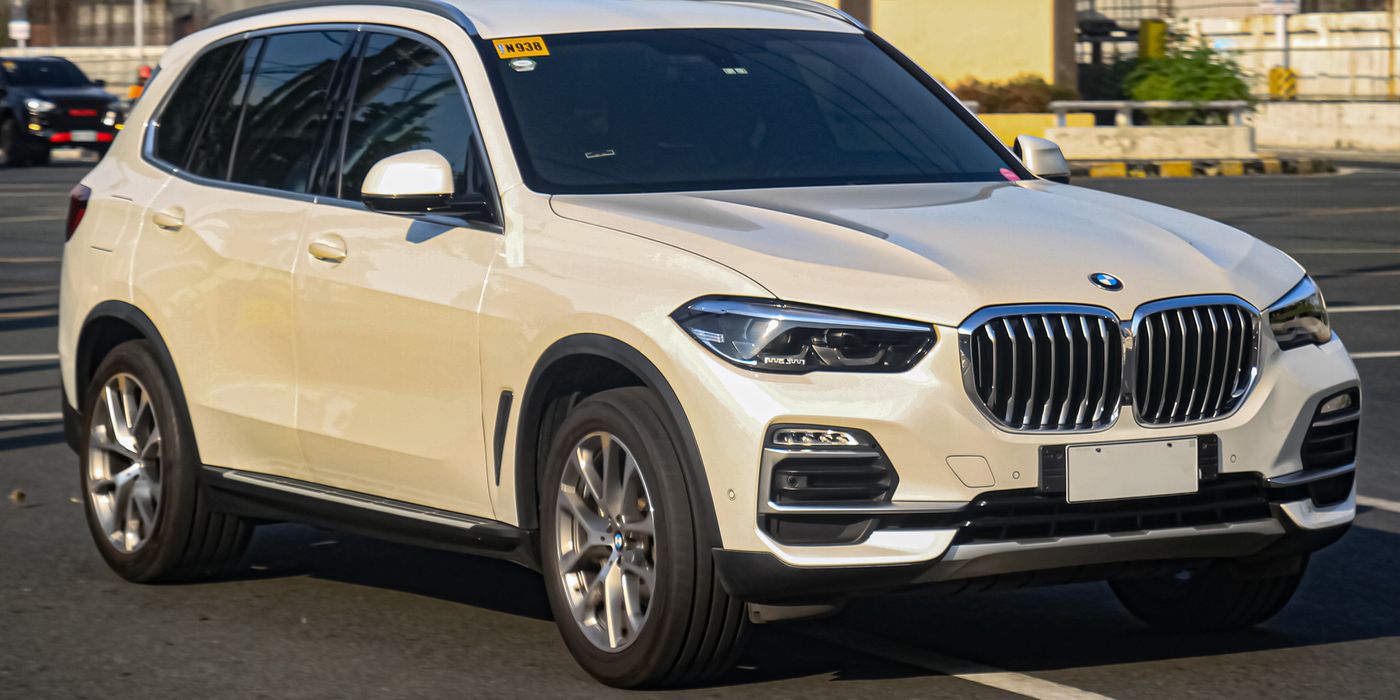
The X5 spans three distinct generations with meaningfully different brake systems. The E70 (2007-2013) uses a mechanical parking brake without EPB - similar in concept to the E90 3 Series, straightforward to service. The F15 (2014-2018) introduced the electronic parking brake at the rear, which requires software retraction before pad service just like the F30. The G05 (2019-present) continues with EPB and adds some additional calibration steps after pad replacement. I will cover each generation separately because the differences matter for a safe, correct job.
Front rotor sizes on the X5 are large compared to the 3 Series because the car needs proportionally more braking surface for its mass. The E70 xDrive35i and 48i used 345mm front rotors. The F15 xDrive35i went to 348mm front, with the larger M Sport package getting 365mm fronts behind the optional 6-piston calipers. The G05 xDrive40i comes with 348mm fronts standard, with the M50i and competition variants running 395mm front rotors with 6-piston Brembo calipers. These large rotor sizes mean the pads themselves are physically larger and more expensive than 3 Series pads, but they are also doing proportionally more work.
345mm
E70 Front Rotor
348mm
F15 Front Rotor (standard)
365mm
F15 Front Rotor (M Sport)
348mm
G05 Front Rotor (xDrive40i)
395mm
G05 Front Rotor (M50i/Competition)
No (mechanical cable)
E70 EPB
Yes (rear, motorized)
F15/G05 EPB
4700-5100 lbs
Vehicle Curb Weight (approx)
Pad Wear Rates on Heavy SUVs - What to Expect
I want to spend a moment on this because X5 owners are sometimes surprised by how quickly their pads wear. Physics does not lie - kinetic energy scales with the square of velocity, and it scales linearly with mass. A 4,900-lb X5 traveling at 60 mph has significantly more kinetic energy than a 3,600-lb F30 at the same speed. All of that energy must be converted to heat by the brakes on every stop. More energy, more heat, faster wear.
The front pads on an X5 do the majority of the braking work. Under hard braking, forward weight transfer loads the front axle heavily, putting more contact force on the front pads. On a normal X5 with a reasonably aggressive commuter driver, I have seen front pads at 20,000 miles that were below 3mm of friction material remaining - effectively at the wear limit. The rear pads on the same car still had 6-7mm. This front-biased wear is normal for any front-heavy vehicle under hard braking, but it is more pronounced on a heavy SUV than on a lighter sedan.
My recommendation for X5 owners: inspect your front pads at every oil change, which on these cars typically means every 10,000 miles with BMW's Condition Based Service. Pop a wheel off and measure the pad thickness. Anything under 4mm means a pad change is imminent. Under 3mm is at the wear limit and the car should not leave the driveway until pads are replaced. The wear sensor will warn you, but by the time the sensor triggers the pads are already at minimum thickness. Proactive inspection saves you from being stranded waiting for a tow because you wore through the pad backing plate and damaged the rotor.
E70 X5 Brake Pad Replacement - No EPB
The E70 is the easiest X5 generation for a brake job because it has no EPB. The rear caliper uses a conventional push-in piston design with the mechanical parking brake cable attaching to a lever on the caliper body. The procedure mirrors the E90 rear job closely.
For the E70 front brakes: jack and support the car, remove the wheel. The E70 front caliper uses 13mm slide bolts (not 7mm hex like the E90) with rubber dust boots over the bolt heads. Remove both slide bolts and hang the caliper. Pull the old pads from the carrier channels. Clean the carrier channels aggressively - on high-mileage E70s these channels accumulate thick scale that is almost like concrete. A wire brush attachment on a drill speeds this up considerably on a heavy-duty carrier. Apply caliper paste to the contact rails.
The E70 front caliper piston is a large-bore unit - it has to generate substantial clamping force on a 345mm rotor to stop nearly 5,000 lbs. A standard C-clamp works but a dedicated large-bore piston compressor tool makes the job easier and puts less stress on the piston and seal. Compress fully, install pads, reinstall caliper, torque slide bolts to 30 Nm, carrier bolts to 110 Nm.
For the E70 rear: same C-clamp push-in piston procedure. Check the parking brake cable for fraying at the caliper end - these cables degrade with age on the E70 and a frayed cable is a safety issue. The rear slide bolts on the E70 are also 13mm. Torque rear carrier bolts to 80 Nm.
F15 X5 Brake Pad Replacement - EPB Procedure
The F15 introduced the electronic parking brake, making the rear pad replacement require the same software step as the F30. Connect your scan tool - BimmerLink or Carly work on the F15 - with ignition in accessory mode. Navigate to the brake system module and activate EPB service mode. You will hear the motor retract the piston. Proceed with the mechanical work once the motor has completed its cycle and the piston is fully retracted.
The F15 EPB caliper piston is larger in bore diameter than the F30 rear caliper because the F15 is a bigger, heavier vehicle. However, the operating principle is identical. After the EPB retraction command, the piston is free to be pushed in further if needed using a rear caliper wind-back tool. Fully retract the piston, install new pads, reinstall the caliper, torque slide bolts to 35 Nm, carrier bolts to 80 Nm.
After the F15 rear pad job, exit EPB service mode via the scan tool. The EPB motor will self-calibrate by running through a short test cycle - you will hear it briefly. Apply the parking brake via the interior switch to verify it holds, then release and confirm the pedal pumps up to a firm feel within 15 pumps. Clear the CBS brake service indicator via the scan tool or iDrive menu.
G05 X5 Brake Pad Replacement - Additional Calibration
The G05 X5 follows the same EPB procedure as the F15 for rear pad replacement, but adds an additional step that some aftermarket scan tools handle better than others. After the G05 rear pad installation, the EPB system benefits from a calibration run that sets the motor position to the new pad thickness. Without this calibration, the parking brake engagement can feel inconsistent - either too light or requiring more lever travel than expected.
BimmerLink handles this calibration automatically as part of the EPB service exit procedure on G05 models. Carly also supports it. If you are using a generic OBD2 tool, verify it supports G05-specific EPB functions before starting the job. A generic scanner that can open the EPB but cannot calibrate it on exit is only half the tool you need for the G05. I have seen cars where the parking brake would not hold properly on a hill after a pad change because the calibration was not run - not a situation you want to discover in a parking lot.
The G05 M50i and Competition variants with the 395mm front rotors and 6-piston Brembo front calipers are a slightly different job. The 6-piston caliper has three pistons on each side of the rotor, and when you install new pads you are pushing back three pistons rather than one. The recommended tool is a 6-piston caliper spreader that expands between the two pad faces and pushes all three pistons back evenly. Trying to push them back one at a time with a C-clamp risks cocking the piston in its bore and tearing the piston seals. The right tool matters here.
Pad Selection for the X5 - Heavy Vehicle Considerations
Pad selection for a heavy SUV requires a bit more thought than for a lighter car. The X5's mass means the pads run hotter on any spirited drive, and a pad compound that is not suited to elevated temperatures will fade, glaze, or wear prematurely. For the vast majority of X5 owners - daily commuting with occasional highway driving - a good quality street compound like the Hawk HPS 5.0 works well and is my default recommendation. It operates from cold without the initial bite delay you get with some high-temp compounds, and it handles the occasional hard stop without issues.
If you regularly drive mountain roads with your X5, carry passengers and luggage frequently, or tow a trailer, I would step up to a pad compound with a higher thermal rating. Hawk Performance Ceramic pads offer lower dust and noise with a higher temperature threshold than the HPS 5.0, making them well-suited to the X5's heavier use profile. For the rare X5 owner who does track days or performance driving events, the Hawk DTC-30 is the crossover compound I recommend - street-usable in warm weather with genuine track-temperature capability.
One pad characteristic that matters specifically for the X5 is the bedding temperature requirement. Pads with a high initial bite temperature threshold will feel wooden and underperform until they reach operating temperature. On a heavy SUV in city traffic, those pads may never fully warm up, meaning you are braking on a glazed, underperforming surface every day. Choose pads rated for operation from ambient temperature down, not just peak performance at high temperature.
Brake Rotor Replacement Timing on the X5
| X5 Generation | Front Rotor | Minimum Thickness | Typical Replacement Interval |
|---|---|---|---|
| E70 xDrive35i | 345mm | 30mm | 50,000-60,000 miles |
| F15 xDrive35i | 348mm | 30mm | 50,000-70,000 miles |
| F15 M Sport | 365mm | 32mm | 60,000-80,000 miles |
| G05 xDrive40i | 348mm | 30mm | 60,000-80,000 miles |
| G05 M50i | 395mm | 34mm | 70,000-100,000 miles |
E70 xDrive35i
- Front Rotor
- 345mm
- Minimum Thickness
- 30mm
- Typical Replacement Interval
- 50,000-60,000 miles
F15 xDrive35i
- Front Rotor
- 348mm
- Minimum Thickness
- 30mm
- Typical Replacement Interval
- 50,000-70,000 miles
F15 M Sport
- Front Rotor
- 365mm
- Minimum Thickness
- 32mm
- Typical Replacement Interval
- 60,000-80,000 miles
G05 xDrive40i
- Front Rotor
- 348mm
- Minimum Thickness
- 30mm
- Typical Replacement Interval
- 60,000-80,000 miles
G05 M50i
- Front Rotor
- 395mm
- Minimum Thickness
- 34mm
- Typical Replacement Interval
- 70,000-100,000 miles
The larger rotors on the X5 tend to last longer than the pads in terms of pad-to-rotor change cycles. I typically see X5 rotors last through 2-3 pad changes before they need replacement - but this depends heavily on driving style. An X5 that has been driven aggressively with cheap aftermarket pads may have deeply grooved rotors at 50,000 miles. An X5 that has been maintained with quality pads and driven reasonably may have rotors in good condition at 100,000 miles.
The tell-tale signs for rotor replacement on the X5 are the same as any BMW - lip formation at the outer edge of the rotor (indicating wear beyond minimum thickness in the swept zone), deep circumferential grooves from pad contact, heat checking on the rotor face, and hard spots that cause pedal pulsation. On a vehicle this heavy, hard spot formation is more common than on lighter cars because the brakes generate more heat per stop. If you feel pedal pulsation during braking - a rhythmic pulse that correlates with wheel rotation - the rotors need attention. Machining is sometimes viable but often not worthwhile on rotors that are close to minimum thickness already.
Stainless Brake Lines for the X5
The rubber flexible brake hoses on all X5 generations are a common neglect item. The OEM rubber hoses have an internal liner that degrades over time, and on high-mileage examples the liner can bulge under pressure, causing a spongy pedal and inconsistent brake feel. On a vehicle this heavy, consistent brake feel is not optional - it is a safety requirement. I routinely replace X5 rubber brake hoses on cars over 80,000 miles as preventative maintenance.
Upgrading to stainless steel braided brake lines is one of the best value-per-dollar brake improvements you can make on an X5. The stainless braid prevents the hose from expanding under pressure, which translates to a firmer, more consistent pedal feel and more precise brake modulation. The improvement is particularly noticeable on the X5 because the stock rubber hoses are sized larger than on a 3 Series - more hose volume means more expansion, and the stainless replacement makes a clearer difference. See our brake lines guide for installation procedure.
Bedding Procedure for X5 Pads
The bedding procedure for X5 brakes is the same sequence as for a lighter car but requires you to be more deliberate about the load placed on the system. The X5's mass means each stop during bedding is generating more heat than the same stop on a 3 Series - the pads and rotors will reach bedding temperature faster. I do the same 10 moderate stops from 50 mph to 10 mph, then 5 harder stops from 60 mph to 15 mph, but I allow slightly more cooling time between the cycles - approximately 45 seconds between each stop rather than 30 seconds.
For X5 owners who also tow: if you tow a trailer, do not attempt a bedding run with the trailer attached. Bed the brakes first with the unloaded vehicle, then tow after the pads are properly seated. Towing while bedding concentrates excessive heat in the brakes during the first few stops and can glaze the pads before they have had a chance to properly transfer the friction layer to the rotor surface. This is the voice of experience speaking.
After bedding, monitor the brake feel over the first 500 miles. It is normal for the initial feel to be slightly different from what you are used to as the pads settle and the friction transfer layer on the rotor fully develops. By 500 miles, the brake feel should be consistent and predictable. If you notice vibration or pulsation developing after the initial bedding, it may indicate an uneven heat transfer during bedding - in that case, repeat the bedding procedure on a cooler day with more cooling time between stops.
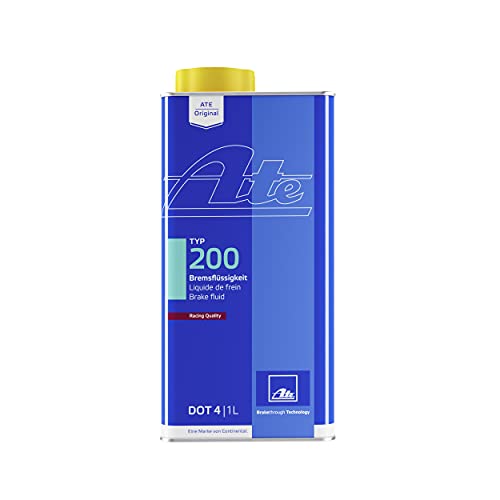
For complete brake system maintenance on the X5, check our brake overview page, the pad selection guide, the rotor replacement guide, and the fluid flush procedure. If you are considering a comprehensive upgrade on an F15 or G05 X5, the BMW brake upgrade guide covers big brake kit options and caliper upgrades for this platform.


