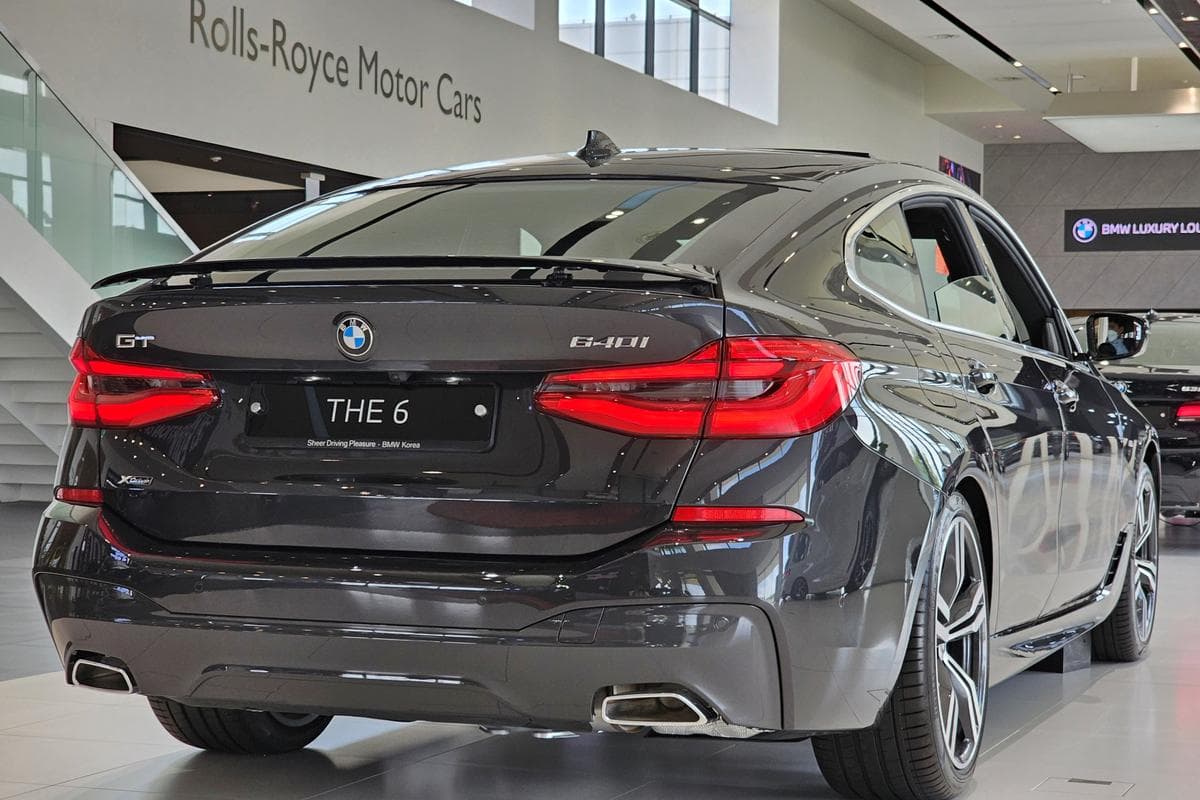
TPMS Sensors for BMW 6 G32
Affiliate disclosure. BimmerTalk is a proud partner of the Amazon Associates Program and Turner Motorsport. We may earn a small commission on qualifying purchases through our links, at no extra cost to you. Read the full disclosure.


More wheel and tire options for the BMW G32
If you own a BMW long enough, TPMS stops being some invisible background feature and turns into a very specific headache. Usually it happens when you swap wheels, mount winter tires, buy a second set of Style 397s or 437Ms off Marketplace, or replace one dead sensor and suddenly the dash still complains. Then you find out BMW did not keep one simple tire pressure sensor standard across every chassis, every market, and every generation. You have frequency differences, system differences, wheel electronics differences, and enough parts catalog weirdness to waste an afternoon if you go in blind.
That is exactly why BMW owners search for BMW TPMS sensors so often. Not because the concept is complicated, but because BMW made the implementation chassis-dependent. The E-chassis cars at the end of the 2000s work differently than early F-chassis cars. The G-series cars generally want 433 MHz in most global applications, while a lot of older North American cars use 315 MHz. Some cars are easy with a universal programmable sensor. Some are easier if you clone the original IDs. Some owners still confuse FTM, which uses ABS wheel speed, with true RDC direct pressure sensing. If you are trying to avoid a yellow warning light, preserve OE behavior, and not buy sensors twice, details matter.
I have dealt with this on my own cars, friends' cars, and enough customer wheel setups to know where people get burned. My current daily is a G20 330i with the B48, and BMW's modern TPMS behavior is familiar territory. I also spent a year in BMW and MINI marketing, which mostly taught me how often the brochure version of a system leaves out the annoying shop-floor realities. So this guide is not fluff. It is the practical version - frequencies, generations, chassis fitment logic, reset behavior, cloning, battery life, and what I would actually buy depending on whether you have an E92, F30, G05, or G80.
How BMW TPMS actually works across generations
Before getting into sensors themselves, it helps to separate three BMW tire pressure monitoring strategies that people constantly mash together. On older cars you may have FTM, sometimes called flat tire monitor, which does not use pressure sensors in the wheels at all. It estimates a deflation event by comparing wheel speed through the ABS system. If one tire gets low, its rolling radius changes, the wheel spins differently, and the car flags a problem. This system is cheap and simple, but it does not give you live PSI per corner because it is not reading actual pressure.
Then you have direct TPMS, which BMW usually refers to under the RDC naming family. That is the system most owners mean when they search for a BMW tire pressure sensor. In these setups, each wheel has a battery-powered sensor and radio transmitter inside the tire. It measures pressure, often temperature too, and communicates with the vehicle receiver. Depending on the generation, the car may display a generic warning, a position-specific warning, or full pressure and temperature values on iDrive or the cluster.
The confusion comes from BMW changing hardware and software generations over time. You will see terms like RDC, RDCi, and RDC2 when discussing wheel electronics and system architecture. Owners tend to simplify all of it into "my car uses TPMS sensors," but the distinctions matter when you buy replacements. Even when two cars both physically accept a clamp-in sensor, the radio protocol and frequency may differ.
FTM versus direct RDC
FTM was common on earlier cars or lower-spec applications, particularly in markets or trims where direct TPMS was not required. Think many E46 and earlier-era setups, though exact configuration depends heavily on market and production date. If your car resets tire pressure through a simple menu but there are no wheel sensors registered and no live pressure values available, you may be on an indirect system. In that case, buying TPMS sensors will do nothing because the car is not looking for them.
Direct RDC became much more widespread as regulations and customer expectations changed. On direct systems, the sensors are required for the system to function. If you put on a second wheel set without sensors, the car will not magically infer pressure from wheel speed if it was originally configured for direct measurement. It will complain, and on many F and G cars it will keep complaining until the correct hardware is installed and recognized.
RDC, RDCi, and RDC2 in plain language
The naming varies depending on diagnostic software, parts catalog language, and who you are talking to. At a practical level, what matters for the owner is that BMW moved through generations of wheel electronics and receiver logic. Older systems often used 315 MHz in North America. Newer systems, especially around 2014 onward and in many global and EU applications, leaned heavily into 433 MHz. The later systems are generally better at position learning, data stability, and displaying actual tire values.
When someone says RDCi or RDC2, they are usually trying to distinguish later direct TPMS generations from the simpler earlier implementations. You do not need to become a full RF engineer to buy sensors correctly, but you do need to know your chassis generation, production year, market, and whether the sensor frequency matches what your control unit expects.
That last point is where most mistakes happen. The average parts listing says "fits BMW" and leaves out the one detail that matters. The radio frequency is not interchangeable. If your F30 expects 433 MHz and you install 315 MHz sensors, the car will not see them. No amount of BMW TPMS reset procedure will save you from the wrong hardware.
433 MHz versus 315 MHz and why BMW owners get tripped up
This is the key distinction on this page, and honestly the one that causes the most wasted money. A BMW tire pressure sensor is not just a sensor. It is a sensor, a radio transmitter, a protocol set, and an ID. For practical buying purposes, frequency is your first gate. The big split is 315 MHz versus 433 MHz TPMS.
In broad terms, many older North American BMW applications used 315 MHz. Many later BMWs, especially around 2014 and newer, use 433 MHz. European-spec BMWs commonly use 433 MHz. Some universal replacement sensors can be programmed for either 315 or 433 depending on the tool and application, which is why products like the AUTO OCCASION 4-Pack 315/433MHz Universal TPMS Sensors for All BMW Models or GEARMEISTER TPMS Multi-Protocol Tire Pressure Sensors for BMW 315/433MHz make sense if you are dealing with mixed fleets, uncertain fitment, or a shop environment.
What catches people out is that they assume production year alone determines frequency. It often gets you close, but not always all the way there. Market matters. Chassis generation matters. Build date matters. Existing wheel set matters if someone already retrofitted sensors. If you bought used wheels from another region or another model line, the sensors installed inside may not match your car even if the wheel physically bolts up fine.
Typical BMW frequency patterns
If I had to simplify BMW frequency fitment in a way that is useful in the real world, I would say this. Older E-chassis and some early F-chassis North American direct TPMS applications often use 315 MHz. Most later F and G chassis commonly use 433 MHz, especially globally and in EU-market logic. That is the reason so many replacement products specifically target F and G cars at 433 MHz, such as the A-Premium 433MHz TPMS Sensors for BMW F-G Chassis and RENECTIV 433MHz TPMS Sensors (Set of 4) - BMW/MINI #36106856227.
On a modern G20 like mine, I would start from 433 MHz unless I had a very specific reason not to. On a 2008 E92 in North America, I would verify carefully because that is exactly the era where 315 MHz assumptions are often still correct for direct TPMS cars. On an early F10 or F30, I never tell anyone to buy based on internet folklore alone. Check the build date, pull the existing sensor number if possible, or scan the car.
Why the wrong frequency never "just works"
BMW TPMS receivers are designed to listen on the intended band and decode the intended sensor protocol. A wrong-frequency sensor is not "close enough." The car either sees valid messages or it does not. If the sensor is silent to your receiver, the reset initialization will never complete. You can drive 10 minutes, 20 minutes, 50 miles, it does not matter. The car cannot learn a transmitter that it cannot hear.
This is why I usually prefer universal programmable sensors when fitment is uncertain, as long as the installer has a proper TPMS programming tool. A dual-frequency or configurable sensor lets you match the vehicle requirement instead of gambling. For DIY owners who know the car needs 433 MHz, a pre-programmed BMW-specific set can save time and cost.
Quick reference by era
| BMW era | Common chassis | Typical TPMS approach | Typical frequency tendency | Buying note |
|---|---|---|---|---|
| Late E-chassis | E60, E70, E90, E92 | Direct RDC on many NA cars, some FTM on others | Often 315 MHz in North America | Verify by VIN, build date, or existing sensor |
| Early F-chassis | F10, F15, F30, F32 | Direct TPMS widespread | Transition period - verify carefully | Do not assume all early F cars are 433 MHz |
| Later F-chassis | F30 LCI, F80, F87, F15 LCI | Direct TPMS | Commonly 433 MHz | 433 MHz BMW-specific sets often fit well |
| G-series | G05, G20, G30, G80, G87 | Direct TPMS with live pressure display on most cars | Predominantly 433 MHz | Use quality 433 MHz sensors, initialize through vehicle menu |
The key phrase there is "verify carefully." BMW owners are used to broad platform rules that mostly hold true until they do not. That is exactly how you end up buying four sensors twice.
BMW chassis breakdown and what each generation usually needs
This is the section most BMW people actually want because "fits BMW" is meaningless if you care about whether your E70 X5 and your buddy's G30 540i need different hardware. The broad rules help, but chassis-specific tendencies are what keep you out of trouble.
I am going to break these down by generation and mention where ambiguity matters. This is not a substitute for VIN-based parts confirmation, but it is the framework I use before I even open a catalog.
E36, E39, E46 and the era before direct TPMS became normal
Most enthusiasts asking about E36s, E39s, and many E46s are often mixing up modern direct TPMS expectations with cars that either did not use direct wheel sensors or did not use them consistently by market and option. These cars are old enough that many wheel sets have changed hands several times, many cluster coding changes have happened, and on track-focused cars the original monitoring system may have been ignored entirely.
An E46 330i with the M54 may have indirect monitoring depending on market and year. An E46 M3 with the S54 may be a different discussion depending on production date and region. If you have no sensor stems, no TPMS registration process, and no live tire values, do not start by buying wheel sensors. Start by identifying whether the car even has direct RDC hardware. This is where a quick look at the options list, scan tool data, or wheel internals saves money.
For owners of these older chassis running aftermarket wheels, especially track or autocross setups, it is common to simply live without direct pressure sensors if the car was not originally built around them. If your older BMW truly uses direct TPMS, verify sensor style and frequency from the original equipment before ordering.
E60, E70, E90, E92 and the 315 MHz problem area
This is one of the biggest TPMS minefields in BMW ownership. The E60 5 Series, E70 X5, and E9x 3 Series era overlaps with the period where North American BMWs commonly used direct TPMS sensors at 315 MHz. A lot of owners buying new wheel sets for 328i, 335i, 535i, X5 35i, or 335is cars get caught because every generic listing online now defaults to 433 MHz due to later F and G volume.
Last summer I helped a buddy with an E92 335i, N54 car, putting together a second square setup for daily use. The used wheels came with sensors from a newer BMW. Physically fine. Electrically useless. The car would not initialize because the installed sensors were 433 MHz while his chassis expected the older North American signal setup. We lost time pulling the tires back apart when all of that could have been prevented by checking frequency first.
If you own an E90, E91, E92, or E93 and it definitely has direct TPMS, do not assume a modern 433 MHz BMW tire pressure sensor is right just because it is marketed heavily. Verify. Same goes for E70 and E71 SUVs, which many people wheel-swap across model years without thinking about sensor electronics.
F10, F15, F30, F32 and the transition years
The F-chassis era is where broad advice starts becoming dangerous because BMW was moving through system generations and global harmonization. A 2012 F30 328i with the N20 or N26 is not the same buying scenario as a 2018 F30 330i with the B46 or B48. An early F15 X5 may still make me verify sensor generation before I buy. A later F32 440i is a much stronger candidate for straightforward 433 MHz replacement.
For many later F cars, a pre-programmed 433 MHz BMW-specific set is the easiest route. If I were shopping for a later F30, F32, F80 M3, or F87 M2 and I wanted a clean budget-friendly replacement for a second wheel set, the A-Premium 433MHz TPMS Sensors for BMW F-G Chassis is exactly the kind of thing I would look at first. Straightforward, already set up for the common later frequency, and priced well enough that you are not spending OEM money for a consumable battery-backed component.
The catch is still the same. Early F-chassis means verify. Later F-chassis generally means 433 MHz is the right neighborhood. If your installer has a quality TPMS tool, a universal programmable sensor can reduce the guesswork even further.
G05, G20, G30, G80, G87 and the modern 433 MHz world
On the G-series cars, life gets simpler in one sense and more annoying in another. Simpler because 433 MHz is overwhelmingly the right call in many applications, especially on current global BMWs. More annoying because these cars actually show pressure and temperature data more prominently, so if a sensor is dead or wrong, you notice immediately.
My G20 330i with the B48 is the perfect example of modern BMW TPMS expectations. The car wants the correct direct sensors, and once they are recognized, it gives you a proper per-corner view. If one sensor starts acting up, you do not just get a generic light, you get a system message and often a clear corner-specific issue after drive time. That is nice when everything works and unforgiving when it does not.
For G20, G30, G05, G80, and G87 owners, I would generally start with quality 433 MHz replacements. The RENECTIV 433MHz TPMS Sensors (Set of 4) - BMW/MINI #36106856227 and A-Premium 433MHz TPMS Sensor Set for BMW both fit the kind of use case where you want a full fresh set for aftermarket or winter wheels without overcomplicating the install.
| Chassis group | Example models | Likely system type | Most likely frequency tendency | My buying approach |
|---|---|---|---|---|
| E36 / E39 / early E46 | 328i, 540i, 330i | Often indirect or mixed by market | Not universal direct TPMS | Confirm if wheel sensors are even required |
| Late E46 / E60 / E70 / E90 / E92 | 330Ci, 535i, X5 35i, 328i, 335i | Direct TPMS common on many cars | Often 315 MHz in North America | Verify old sensor frequency before buying |
| Early F10 / F15 / F30 / F32 | 528i, X5 35i, 328i, 435i | Direct TPMS | Mixed transition period | Best with programmable or VIN-confirmed sensors |
| Later F30 / F32 / F80 / F87 | 340i, 440i, M3, M2 | Direct TPMS | Usually 433 MHz | 433 MHz pre-programmed sets work well |
| G05 / G20 / G30 / G80 / G87 | X5, 330i, 540i, M3, M2 | Direct TPMS with live display | Predominantly 433 MHz | Use quality 433 MHz sensors and initialize correctly |
If you are not sure what chassis code your BMW uses, check our BMW chassis code tool. I still think in chassis codes first because it tells you more about parts logic than the model badge ever will.
OEM BMW TPMS sensors versus programmable aftermarket sensors
If money were no object and every owner loved dealership parts pricing, we could stop at OEM sensors. But TPMS sensors are consumable electronics with sealed batteries. They die. People need second wheel sets. Wheel swaps happen. In the real world, aftermarket and universal programmable sensors matter a lot, and in many cases I actually prefer them.
OEM BMW sensors have obvious advantages. They are designed for the exact application, they generally register cleanly when frequency and generation are correct, and OE valve hardware fitment is usually fuss-free. If you are maintaining a low-mile G80 M3 under warranty and want everything as close to factory as possible, OEM parts are still a rational choice. Same for someone chasing an intermittent issue and wanting one fewer variable.
But programmable sensors have one huge advantage that BMW-specific fixed sensors do not. Flexibility. A shop or serious DIY owner can set the sensor to the correct make, model, year, protocol, and frequency. Better yet, many tools can clone the ID of the original sensor, which makes the car think it is still seeing the same wheel electronics. For seasonal wheel swaps, that can make initialization smoother and avoid confusion.
Why programmable sensors often make more sense
Continental Redi-Sensor and Schrader EZ-Sensor are the names you hear a lot for a reason. They simplify inventory and fitment. A shop does not want twenty bins of BMW-specific sensors for every transition year and region. They want a smaller number of programmable sensors that can be configured to the exact vehicle. That same logic benefits BMW enthusiasts. If you are supporting multiple cars, mixed E and F platforms, or uncertain used wheel sets, programmable is often easier than trying to source one exact OE-style number.
That flexibility is also why products built around broad compatibility appeal to me. The AUTO OCCASION 4-Pack 315/433MHz Universal TPMS Sensors for All BMW Models and GEARMEISTER TPMS Multi-Protocol Tire Pressure Sensors for BMW 315/433MHz fit the same philosophy. If your installer can actually program and clone, a multi-protocol sensor lowers the risk of ordering the wrong thing.
When I still prefer pre-programmed BMW-specific sensors
If I know the car is a later F or G chassis running 433 MHz and I just want a clean, affordable install for a second wheel set, I do not need the extra complexity of a fully universal programmable sensor. In that case, a BMW-specific pre-programmed option is often ideal. The A-Premium 433MHz TPMS Sensor Set for BMW and A-Premium 433MHz TPMS Sensors for BMW F-G Chassis make sense precisely because they remove one step.
That is especially true for private owners who are not going to buy a TPMS programming tool. If you are dropping wheels and tires at a local installer and want the simplest path to function, pre-programmed can be smarter than universal. Less room for an installer to skip a step or select the wrong protocol.
Brand and strategy comparison
| Sensor strategy | Best for | Pros | Cons | My take |
|---|---|---|---|---|
| OEM BMW sensor | Factory-correct repairs, warranty-minded owners | Exact OE fitment, predictable behavior | Highest cost, narrow application | Great when exactness matters more than budget |
| BMW-specific pre-programmed aftermarket | Known 433 MHz F and G chassis | Simple install, low cost, no programming step | Less flexible if fitment is uncertain | My favorite for many later BMW second wheel sets |
| Universal programmable aftermarket | Shops, mixed fleets, uncertain fitment | Can do 315/433 MHz, clone IDs, broad compatibility | Requires proper tool and competent setup | Best choice when frequency is not 100 percent confirmed |
The short version is simple. If you know the exact requirement, pre-programmed is convenient. If you do not, programmable is safer. If originality matters most, buy OEM.
Part numbers, sensor generations, and the BMW numbers you will actually see
BMW owners love part numbers because they bring order to chaos, but TPMS can still get messy because the same wheel style can be run across years and regions while the sensor behind it changes. I am not going to invent a giant fake OE catalog here. What I will do is point out the real identifiers you are likely to encounter and how to use them intelligently.
One OE-style part number that comes up constantly in later BMW and MINI 433 MHz sensor discussions is 36106856227. That is why you will often see replacement sets referencing it directly, like the RENECTIV 433MHz TPMS Sensors (Set of 4) - BMW/MINI #36106856227. If you pull a sensor and see that number cross-referenced for your application, you are in useful territory. It tells you you are likely dealing with the modern 433 MHz family common to many later BMWs.
That said, I still do not tell owners to buy solely off a loose forum mention of one part number. BMW supersedes parts. Aftermarket sellers cross-reference aggressively. MINI overlap complicates listings. Always compare against VIN-based catalog data or at least the exact sensor physically removed from your wheel if possible.
What to read on the sensor itself
If the tire is already dismounted, look at everything on the sensor body, not just the shiny valve stem. You want the manufacturer, frequency, FCC or regional radio markings, and any OE or interchangeable number. Even if the branding is aftermarket, the frequency and protocol family can usually be inferred from the sensor shell and printed labels. A decent tire shop can also scan the existing sensor and read frequency, ID, battery status, and protocol.
This is often the easiest way to verify a used wheel set before mounting tires. I wish more BMW owners did this. If you are buying a set of 704M winter wheels for a G20 or 513M take-offs for an F80, ask the seller to scan the sensors or send clear photos before you hand over money.
Common replacement scenarios
- One dead sensor on an otherwise original wheel set - replace one, but be aware the others are often close behind if they are the same age.
- Second seasonal wheel set - usually best to install a full fresh matched set rather than gambling on unknown used sensors.
- Used wheels with unknown sensors - either scan and verify first or budget to replace all four.
- Aftermarket wheels for track or street - confirm valve hole fitment and barrel clearance in addition to radio compatibility.
If the car is old enough that the original sensors are 8 to 12 years old, I rarely recommend replacing just one unless you are trying to get through a sale or inspection on the cheap. Sensor batteries are sealed. They do not get rebuilt. Once one dies, the clock is usually ticking on the rest.
How to choose the right BMW TPMS sensors for your car and wheel setup
This is where theory meets money. You need to know not just what sensor your chassis accepts, but what your actual wheel setup demands. BMW wheel swaps are constant in this community. Square winter setups, staggered summer setups, M take-offs on non-M cars, aftermarket forged wheels, track wheels, and random Marketplace specials all change the buying decision.
I think of TPMS buying in five questions. Is the car direct TPMS or indirect FTM. What frequency does it need. Is this a known later 433 MHz application or a transition-year mystery. Will the installer program and clone sensors correctly. Is the wheel set worth trusting with unknown old sensors.
If you answer those honestly, the right path usually becomes obvious.
For a known later 433 MHz F or G chassis
This is the easy one. If you have a later F30 340i, F32 440i, G20 330i, G30 540i, G05 X5, G80 M3, or G87 M2, and you know the car is on the standard later 433 MHz setup, I would buy a quality full set of 433 MHz sensors and be done with it. The price delta between one mystery used sensor and four fresh matched units is usually not worth overthinking.
Good examples are the A-Premium 433MHz TPMS Sensors for BMW F-G Chassis, the A-Premium 433MHz TPMS Sensors - 4pc for BMW, and the RENECTIV 433MHz TPMS Sensors (Set of 4) - BMW/MINI #36106856227. If I were putting together a winter setup for my G20, this is the lane I would stay in.
For older E-chassis and early F-chassis uncertainty
This is where I become a lot more conservative. If you have an E90 328i, E92 335i, E70 X5, or early F10 and you are not 100 percent sure on the system frequency and generation, use a programmable sensor or verify the existing wheel electronics first. This is not where I would blindly buy a bargain pre-programmed 433 MHz set just because the listing mentions BMW.
A dual-band or multi-protocol option like the AUTO OCCASION 4-Pack 315/433MHz Universal TPMS Sensors for All BMW Models or GEARMEISTER TPMS Multi-Protocol Tire Pressure Sensors for BMW 315/433MHz makes more sense here. You are paying for flexibility and reducing the chance of a wrong-frequency install.
For aftermarket wheels
Most BMW aftermarket wheels use a standard valve hole compatible with clamp-in TPMS hardware, but there are still two practical concerns. One is physical clearance around the barrel and drop center. The other is stem angle and sealing. Some cheap wheels make sensor installation fussier than OE wheels do. If the inside barrel gets close to the sensor body, especially on aggressive brake-clearance wheel designs, I like to dry-fit and confirm there is no interference before final mounting.
That matters a lot on M cars with large brakes. F80, G80, G87 owners running aftermarket 18s or 19s already know wheel clearance is tight enough without adding a poorly positioned sensor body into the equation.
When to replace all four instead of one
My rule is pretty simple. If the set is over six or seven years old and one sensor has died, I strongly consider replacing all four. Yes, you can replace one. But if the others are original, they are usually on borrowed time. The labor to break down tires is the expensive part. Doing that job four times across the next year because each battery dies one by one is a false economy.
On a modern BMW, fresh matched sensors also reduce the chance of inconsistent reporting or weird intermittent communication issues between mixed brands and ages. For second wheel sets, four new sensors is almost always the cleanest answer.
Cloning sensor IDs and why it matters more than most BMW owners think
If you have never dealt with TPMS cloning, the idea is simple. Every direct sensor has its own unique ID. The car learns those IDs. A programmable sensor can often be set up with either a new ID that the vehicle learns during initialization, or a cloned copy of the existing ID from the current wheel sensor. When you clone, the new wheel effectively impersonates the old one from the car's perspective.
This matters most for seasonal wheel swaps and multi-set ownership. If your summer set and winter set use the same cloned IDs, the car sees familiar sensors when you switch wheels. Depending on the system, that can make the transition smoother and reduce relearn drama. It is not always mandatory, but it can be very useful.
On BMWs, especially from the F and G era where owners regularly run two complete wheel sets, cloning is one of the best reasons to use programmable sensors. A shop with a proper TPMS tool can read the current IDs from your installed sensors and write them to the new set. Then the car behaves as if the same four wheels are still present, just in a different physical package.
When cloning helps
- You have summer and winter wheels and want seamless swaps
- You are replacing one failed sensor but want the car to recognize it as the same ID
- You are working on a system that can be picky or slow to relearn fresh IDs
- You want to preserve known-good registration behavior
I have seen cloning save time on both older and newer BMWs. It is not magic, but it removes variables. If your current sensors communicate correctly, copying their IDs to a second set can be cleaner than introducing four brand-new IDs and asking the vehicle to learn everything from scratch.
When cloning does not matter much
If you are replacing all four dead sensors on a single wheel set and the car is a cooperative later G-series BMW, new IDs are usually fine. The car initializes, drives, and learns. In that scenario, I do not obsess over cloning unless there is a specific reason. Same if the original sensors are so dead or damaged they cannot be read in the first place.
The bigger point is this. If you are paying a shop to install universal programmable sensors and they do not offer cloning or do not seem to understand it, ask questions. A lot of generic tire shops can mount tires all day long but are sloppy on TPMS setup details.
BMW TPMS reset procedure and the truth about initialization
Here is a point that deserves to be written clearly because a lot of websites get it half wrong. BMW TPMS reset is not some magical menu action that immediately fixes everything while the car sits parked. The menu step only starts initialization. The actual learning process happens while driving. On most BMW direct TPMS systems, you need to drive for around 10 minutes above roughly 12 mph for the car to complete the process, sometimes longer depending on conditions and system generation.
Owners often say "I did the iDrive reset and it still does not work." What they really did was start initialization and then either did not drive the car enough, drove too slowly, or had incompatible or dead sensors. The menu is not the reset. The drive cycle is part of the reset.
On modern G-series iDrive, the process is usually under vehicle status or tire settings. On older F and E direct TPMS systems, the menu wording changes, but the logic is similar. You set the reference or start reset, then drive. If the vehicle sees valid sensors with the correct IDs, frequency, and protocol, the system completes. If it does not, the reset never completes because the hardware problem still exists.
Typical BMW TPMS reset process
- Set all four tire pressures correctly while the tires are cold.
- Turn the ignition on or start the vehicle.
- Go into the tire pressure monitor or vehicle status menu.
- Select reset or initialize tire pressure monitoring.
- Drive the car at road speed, typically above 12 mph, for around 10 minutes.
- Monitor the status until initialization completes.
If the system stalls on "initializing" or fails outright, one of the following is usually true:
- Wrong frequency sensor installed
- Dead sensor battery
- Sensor not programmed for the BMW protocol
- Sensor physically damaged during tire installation
- Vehicle-side receiver or module issue
- Actual tire pressure set too far out of expected range
Why people think BMW uses no reset at all
Some owners phrase it as "BMW does not use iDrive reset." What they usually mean is that the menu action alone does not perform a full static relearn. That part is true. The vehicle needs to move and see live sensor data. So if someone tells you "just do the iDrive reset," the advice is incomplete. If someone else says "BMW does not use iDrive reset," that is also incomplete. The menu starts it, the drive finishes it.
On my G20, once everything is correct, the process is straightforward. Set pressures, initialize, drive, done. But if I had a wrong-frequency sensor in one wheel, no amount of menu poking would rescue it. That is the practical takeaway.
If you are already chasing other electrical issues on the car, it is worth making sure your battery and vehicle voltage are healthy too. Modern BMWs can behave strangely when system voltage is unstable, which is why our BMW battery replacement guide ends up relevant more often than people expect. TPMS itself is wheel-side, but poor battery condition can muddy diagnostics on late cars.
Common BMW TPMS problems, fault patterns, and how I diagnose them
TPMS failures on BMWs tend to cluster into a few repeat offenders. Dead sensor batteries are by far the most common. After that, wrong-frequency sensors from used wheel sets, botched programming on universal replacements, damaged valve hardware, and occasional vehicle-side receiver or module faults. Once you know the patterns, diagnosing them gets much faster.
The easiest wrong move is treating every TPMS warning as a pressure issue. Sometimes it is. A nail in the shoulder or a sudden ambient temperature drop absolutely can trigger a genuine warning. But if you just mounted a new wheel set and immediately get "TPMS malfunction" or endless initialization, that is not a low-tire event. That is a communication problem.
BMW warning language also matters. A simple tire pressure warning is different from a system malfunction warning. The first means the car sees the sensors and thinks one tire is out of expected range. The second often means one or more sensors are not communicating correctly at all.
Dead sensor batteries
Most TPMS sensors last around 7 to 10 years in real use. Sometimes more, sometimes less. Heat cycles, mileage, and storage conditions matter. On an original E90 or early F30 wheel set, battery death is almost expected at this point. The internal battery is sealed. The fix is replacing the sensor, not repairing it.
Symptoms include intermittent warnings at first, especially in cold weather, then persistent failure. A proper TPMS scan tool usually reads low battery status before total failure. If one sensor in a same-age set dies, the others are rarely far behind.
Wrong-frequency or wrong-protocol sensors
This shows up right after wheel installation. The car cannot initialize, live readings never appear, and a TPMS malfunction remains. If all four new sensors are the wrong type, the whole system stays blind. If only one corner is wrong or dead, some BMWs may still flag a specific wheel issue after partial communication from the others.
This is why 433 MHz vs 315 MHz TPMS matters so much on BMWs. It is not an academic distinction. It is the difference between a working system and a wasted tire mount and balance bill.
Physical installation damage
Sensors get broken more often than many owners realize. A sloppy installer can hit the sensor body with the bead breaker, twist the stem hardware incorrectly, or crack the housing during mounting. Cheap valve hardware can also leak. If a sensor was working before the tire change and not after, I always consider installation damage.
One clue is a tire that loses air from the stem area along with a new TPMS fault. Another is a sensor that scans dead immediately after mounting even though it was known good before. This is another reason I prefer experienced shops when dealing with expensive BMW wheels and low-profile tires.
Vehicle-side module or antenna issues
These are much less common than sensor failures, but they happen. If you have known-good sensors that scan correctly and the vehicle still cannot receive them, the RDC control unit, receiver path, wiring, or software side may need diagnosis. On BMWs this is where ISTA or a competent BMW-capable scan tool earns its keep. A generic OBD scanner is not enough.
If you are building out a home diagnostic kit, our page on BMW coding and diagnostic tools is worth a look. TPMS is not the hardest system on the car, but proper BMW diagnostics makes the difference between guessing and actually testing.
Installing TPMS sensors on BMW wheels the right way
BMW owners spend a lot of energy on wheel specs and offsets, but not enough on the quality of the actual TPMS install. The sensor is a simple component, yet the install details matter. Improper torque on the stem nut, reusing tired seals, or mounting with the sensor clocked poorly in the wheel can turn a good part into a leak or a dead sensor.
Clamp-in TPMS sensors typically use a metal valve stem, rubber grommet, retaining nut, and cap. The sensor body sits inside the wheel at a specific angle. The exact torque depends on the sensor manufacturer, not just the car. That is important because people often ask for "BMW TPMS torque spec" when what they actually need is the torque for the aftermarket sensor hardware they bought. Always follow the sensor maker's instructions.
As a general practice, I want fresh sealing hardware with fresh sensors. If I am already paying for tire mounting, this is not where I penny-pinch. Valve stem seals age, compress, and harden. A slow leak through the stem on a run-flat setup can create a ghost chase that looks like a tire puncture.
Installation best practices I insist on
- Confirm sensor frequency and protocol before mounting the tire
- Use new sealing grommets and hardware supplied with the sensor
- Torque the stem nut to the sensor manufacturer's spec
- Position the tire machine head to avoid striking the sensor body
- Scan each sensor after installation and before the wheel goes on the car
- Set all cold pressures correctly before initialization
That fifth step gets skipped constantly, and it should not. If the shop has a TPMS scanner, they should confirm every mounted wheel is transmitting before the car leaves. It takes minutes. It can save you a return trip and another bead break.
Used wheel sets and hidden problems
Used BMW wheels are a minefield because sellers often say "TPMS included" as if that means anything. Included can mean original 2014 sensors with dead batteries. It can mean wrong-market frequency sensors. It can mean one missing sensor and three tired ones. I treat used included sensors as a bonus only if they scan good and match the car.
If the wheel deal is strong and the sensors are unknown, I mentally price the set as if I am going to replace all four. That keeps me from making bad assumptions. On M wheels and larger SUV wheels where mounting costs are not trivial, that mindset matters.
Do not forget pressures and load specs
After installation, use the correct cold pressures for your tire size and load condition. TPMS is not a substitute for knowing what your BMW should actually run. A G20 330i on 225/45R18 square winter tires and an X5 G05 on 275/45R20 fronts and 305/40R20 rears do not want the same pressures. If you are unsure, use the door jamb label and account for your actual tire spec. The system learns around the pressure you set during initialization.
While we are on maintenance tangents, tire pressure monitoring sits in the same category as all the other little systems owners ignore until they matter. Cooling, battery health, transmission service interval reality, all of it. If you are refreshing a used BMW, our guides on BMW coolant flushes and BMW automatic transmission fluid are worth your time too. None of those jobs are glamorous, but they are what keep these cars feeling right.
Best TPMS sensor options from the BimmerTalk catalog and who should buy each one
There is no single best BMW TPMS sensor for every chassis. There is a best choice for your fitment certainty, your installer, and your wheel plan. These are the products in the catalog I would actually sort into use cases rather than pretending one beats all others universally.
If I know I am dealing with a later 433 MHz F or G chassis and I want a direct no-nonsense install, I like BMW-specific pre-programmed sets. If I am dealing with an early F-chassis or a North American E-chassis where frequency uncertainty is real, I prefer multi-protocol programmable hardware. That is the framework.
Best for later F and G chassis owners
The A-Premium 433MHz TPMS Sensors for BMW F-G Chassis makes sense for exactly what it says on the tin. Later F and G cars, known 433 MHz requirement, owner wants to mount a full set and go. Same story with the A-Premium 433MHz TPMS Sensor Set for BMW. These are the kind of parts I would shortlist for a G20, G30, G05, late F30, or late F32 second wheel set.
The RENECTIV 433MHz TPMS Sensors (Set of 4) - BMW/MINI #36106856227 is also attractive because it references a very familiar OE-style number for later 433 MHz BMW and MINI applications. For owners who like seeing a recognizable cross-reference point, that can add confidence.
Best for shops or uncertain fitment
The AUTO OCCASION 4-Pack 315/433MHz Universal TPMS Sensors for All BMW Models and GEARMEISTER TPMS Multi-Protocol Tire Pressure Sensors for BMW 315/433MHz are where I would look if I were supporting mixed BMW inventory or I had an E90-to-F10-to-G20 household and wanted flexibility. These only make sense if the installer can actually program them properly, but in the right hands they solve a lot of BMW fitment ambiguity.
If I were helping someone with an E92 and the fitment evidence was still fuzzy, I would rather start here than bet on a fixed 433 MHz set and hope. On an old X5 or 5 Series where wheel sets get swapped around from everywhere, this approach is safer.
Best value mindset
The value answer is not always the cheapest listed price. The value answer is the sensor that works the first time and does not force a second mount and balance. For a clearly 433 MHz G-series car, the budget-friendly pre-programmed sets are usually the best value. For a mixed or uncertain application, the universal programmable sets are the best value because they reduce the odds of a wrong purchase.
| Product | Best use case | Frequency support | Why I would pick it |
|---|---|---|---|
| A-Premium 433MHz TPMS Sensors for BMW F-G Chassis | Known later F and G chassis | 433 MHz | Simple, affordable, no extra programming step |
| A-Premium 433MHz TPMS Sensor Set for BMW | Modern 433 MHz BMW wheel set refresh | 433 MHz | Good fit for second wheel sets on later cars |
| RENECTIV 433MHz TPMS Sensors | Owners wanting OE-style number cross-reference | 433 MHz | Useful match for common later BMW/MINI applications |
| AUTO OCCASION 315/433MHz Universal TPMS Sensors | Transition-year BMWs and shops | 315 and 433 MHz programmable | Flexible when exact frequency needs verification |
| GEARMEISTER TPMS Multi-Protocol Sensors | Mixed fleets or cloning-capable installs | 315 and 433 MHz programmable | Broad compatibility and safer for older NA applications |
If you force me to make the call by chassis, here is the short version. G20, G30, G05, G80, G87 - I would start with 433 MHz pre-programmed sets unless there is contrary evidence. E90, E92, E70, early F10 - I would verify and likely use programmable if there is any uncertainty. That is the honest answer.
What BMW owners get wrong about TPMS and the practical advice I keep repeating
Every BMW platform has its folklore, and TPMS has plenty of bad advice floating around. Some of it comes from people confusing indirect and direct systems. Some comes from tire shops that do not know BMW-specific patterns. Some comes from owners assuming all wheel electronics are interchangeable because the valve stems look the same.
The biggest mistake is buying based on wheel fitment alone. Wheels fitting the hub, brake package, and fenders tells you absolutely nothing about whether the sensors inside are right for your car. A set of F80 513M wheels can physically go onto a lot of BMWs with the right tire setup. That does not mean the sensors in those wheels will talk to your chassis.
The second biggest mistake is relying on the reset procedure as if it can compensate for wrong hardware. It cannot. BMW TPMS reset only initializes and relearns compatible sensors. It does not convert 315 MHz into 433 MHz, wake up a dead battery, or program a universal blank sensor that was never written correctly in the first place.
The practical rules I wish every owner followed
- Identify whether your car uses indirect FTM or direct TPMS before buying anything
- Verify 315 MHz versus 433 MHz, especially on E-chassis and early F-chassis cars
- Treat used included sensors as unverified unless they scan good
- Replace all four if the set is old and one has failed
- Use programmable sensors when fitment is uncertain or cloning is useful
- Remember that BMW TPMS reset requires driving, not just menu clicking
That last one is so common I will say it again in plain language. Start initialization, then drive for roughly 10 minutes above about 12 mph. If it still does not complete, stop blaming the menu and start checking the sensor hardware.
BMWs are not uniquely difficult here, but they are specific. And on cars where the rest of the ownership experience already has enough moving parts, the best TPMS decision is usually the one that removes variables rather than adding them.
FAQ
How do I know if my BMW uses TPMS sensors or just the ABS-based flat tire monitor
Check whether the car displays individual tire pressures and temperatures or requires wheel sensors during initialization. If it only has a basic flat tire monitor that resets a rolling-radius baseline through the ABS system, it may use indirect FTM instead of direct TPMS. Older E-chassis cars are the most likely to cause this confusion. A VIN decoder, scan tool, or physical inspection of the wheels will confirm it.
Are most BMW TPMS sensors 433 MHz
Most later BMWs, especially many 2014 and newer F and G chassis plus EU-spec cars, commonly use 433 MHz. But many older North American direct TPMS BMWs, especially in the E60, E70, E90, and E92 era, often use 315 MHz. Do not assume based on internet shorthand. Verify your exact car.
What is the difference between 433 MHz vs 315 MHz TPMS on BMW
It is the radio frequency the sensor uses to communicate with the car. The vehicle receiver is designed for the expected frequency and protocol. If you install 315 MHz sensors in a BMW expecting 433 MHz, or vice versa, the system will not initialize properly because the car cannot read the sensors.
How do I do a BMW TPMS reset after installing new sensors
Set cold tire pressures correctly, go into the vehicle tire pressure menu, select reset or initialize, then drive the car. On most BMWs the system completes learning only after around 10 minutes of driving above roughly 12 mph. The menu step alone is not enough.
Why is my BMW TPMS stuck on initializing
The most common causes are wrong-frequency sensors, unprogrammed universal sensors, dead sensor batteries, or a damaged sensor from tire installation. If the system never completes after proper driving, the car is not receiving valid data from one or more sensors.
Can I reuse used TPMS sensors from another BMW wheel set
Yes, but only if they match your car's frequency and protocol and still have healthy batteries. This is where owners get burned. Used sensors from a newer 433 MHz G-series wheel set may not work on an older North American 315 MHz E-chassis car even though the wheels physically fit.
Should I replace one BMW tire pressure sensor or all four
If the other sensors are the same age and already 7 or more years old, I usually recommend replacing all four while the tires are off. The labor to dismount tires is the expensive part. One dead sensor often means the rest are not far behind.
Do universal programmable TPMS sensors work on BMW
Yes, and they are often the smartest choice for uncertain fitment, transition-year cars, or second wheel sets that benefit from cloning. The catch is they need to be programmed correctly with a proper TPMS tool. If your installer cannot do that, a BMW-specific pre-programmed sensor may be a better choice.
What does cloning TPMS sensors mean on a BMW
Cloning means copying the ID from your original wheel sensor to a new programmable sensor. This can help the vehicle treat the replacement or second wheel set as if it were the original set, which can make seasonal swaps and initialization cleaner.
Will BMW TPMS work without iDrive
Yes. Earlier BMWs without modern iDrive still have reset or initialization procedures through the cluster stalk, BC button, or a simpler menu structure depending on chassis. The important part is that direct TPMS systems still require compatible wheel sensors and a drive cycle to complete initialization.
What BMW chassis are most likely to need 315 MHz sensors
Many North American direct TPMS cars from the late E-chassis era, such as E60, E70, E90, and E92 applications, are the most common candidates. Exact fitment depends on build date and market, so verify before ordering.
What would you buy for a G20 330i or G30 540i winter wheel setup
For a known later 433 MHz setup like a G20 or G30, I would usually buy a full fresh set of quality 433 MHz sensors rather than trust unknown used sensors. A BMW-specific pre-programmed set is usually the cleanest answer unless you specifically want cloning through a programmable system.