BMW Transmission Fluid
Transmission Fluid for BMW. Compare prices, check fitment, find the right part for your build.
Affiliate disclosure. BimmerTalk is a proud partner of the Amazon Associates Program and Turner Motorsport. We may earn a small commission on qualifying purchases through our links, at no extra cost to you. Read the full disclosure.

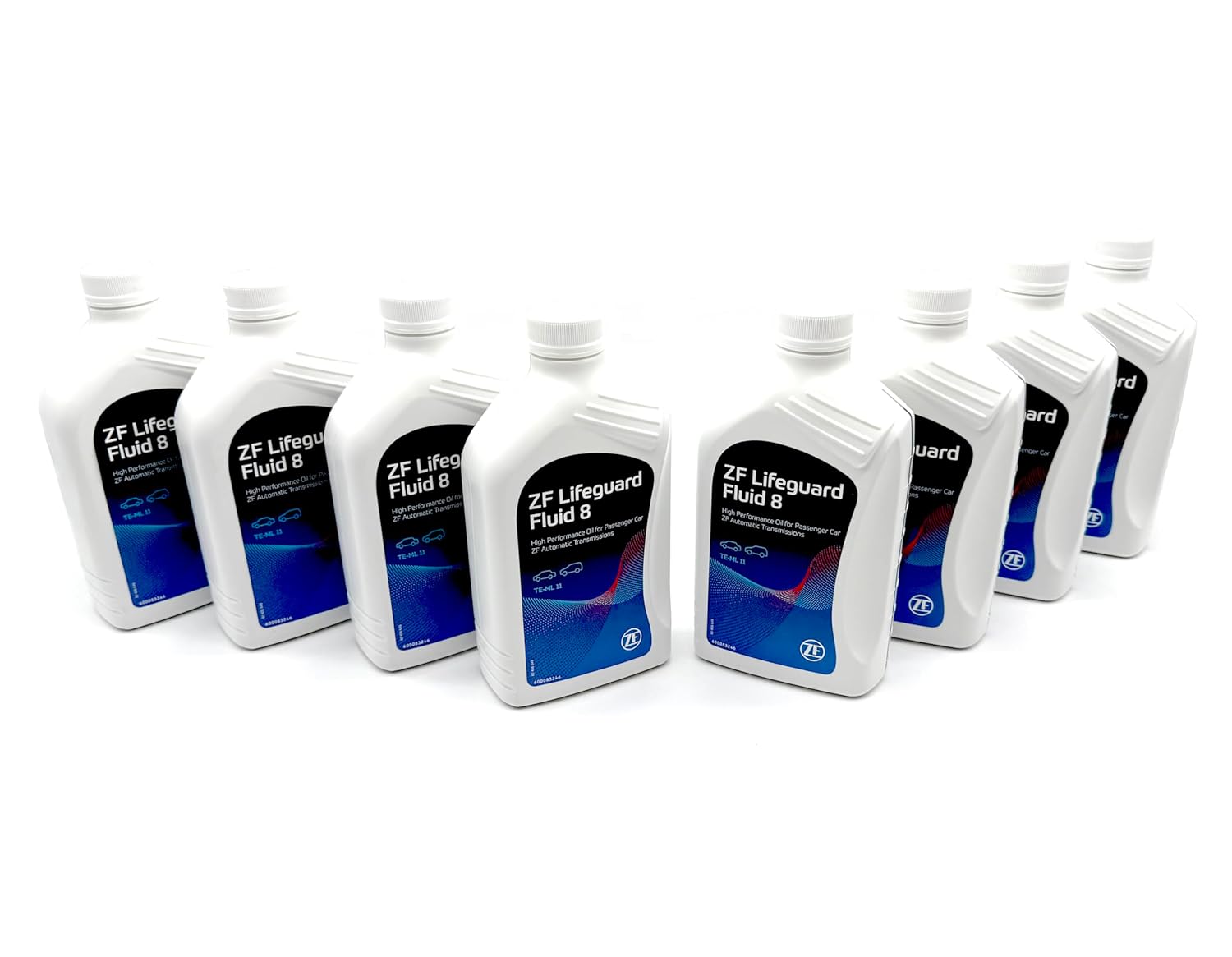
ZF Lifeguard 8 ATF - Fluid for BMW ZF 8HP Service
the WIT WHATEVER IT TAKES TRANSMISSION PARTS, INC

ZF LifeGuard Fluid 8 Automatic Transmission Fluid - 7 Liters
ZF

Triax ATF 689 - Full Synthetic ZF 8HP Transmission Fluid for BMW F30 G20 X3 X5
Visit the Triax Store

ZF Lifeguard Fluid 8 - ATF for BMW 8HP Transmissions
the Transmaxx
If you searched for BMW transmission fluid, odds are you are already past the generic advice. You know BMW used a pile of different gearboxes across the E, F, and G generations, and you also know "BMW ATF" is not one bottle that magically fits everything from an E36 325i manual to a G20 330i with a ZF 8HP. That is exactly where most online articles fall apart. They blur together GM automatics, ZF automatics, Getrag manuals, ZF manuals, transfer cases, and differentials like it is all one service item. It is not.
I have spent enough time under BMWs to know transmission fluid questions usually come up at one of three moments. First, the car just crossed 60,000 to 100,000 miles and the owner wants to do right by it before drivability gets sloppy. Second, the transmission already has symptoms like delayed engagement, flare on the 2-3 or 3-4 shift, converter shudder, or a rough cold 1-2, and now everyone starts arguing about whether fresh fluid will fix it or kill it. Third, somebody finally looks past BMW's "lifetime fill" language and realizes ZF itself has been telling the world for years that service intervals matter.
I daily a G20 330i with the B48 and the ZF 8-speed, and if there is one hill I will gladly die on, it is this one - lifetime fluid BMW messaging has done more to shorten transmission life than any spirited on-ramp ever did. On a modern ZF 8HP, I would rather service fluid at 60,000 miles than brag about never touching it at 120,000. On older 6HP cars like E90s, E60s, and E70s, timely fluid changes can be the difference between a transmission that ages gracefully and one that starts doing the classic mechatronic sleeve and bridge seal dance. This page is the full breakdown, chassis by chassis where it matters, with real specs, real cautions, and my honest take on what is worth buying and what is not.
Why BMW transmission fluid is not one-size-fits-all
BMW has used a mix of automatic and manual transmissions sourced from ZF, GM, Getrag, and Aisin depending on chassis, engine torque, drivetrain, and market. Even within the same generation, fluid requirements can change. An E90 328i with an N52 might have one transmission family, while an E90 335i with the N54 can have another. An F30 328i and an F30 340i both look similar to the average person, but one may run a lower-torque variant of the 8HP while the other gets a heavier-duty version. Add xDrive to the conversation and now you have transfer case fluid in the mix too, which is separate from the transmission.
This matters because fluid chemistry is part of the calibration. Shift feel, clutch apply speed, converter lockup strategy, mechatronic pressure control, and cold-temp behavior are all tuned around a specific viscosity and friction package. A transmission can physically operate on the wrong fluid and still drive, but it may shift worse, adapt around bad behavior, or shorten clutch life. BMW owners are often sensitive to this because we notice the little stuff. The slight tie-up on an F10 535i rolling into 3rd. The odd hesitation on an E92 335i after a hot restart. The way a healthy G20 with a ZF 8HP should snap off clean shifts without hunting.
When people say "BMW transmission fluid," they usually mean one of four things:
- Automatic transmission fluid for a ZF 8HP, common on F and G chassis
- Automatic transmission fluid for an older ZF 6HP, common on late E and early F chassis
- ATF or MTF for older automatics and manuals, especially E36, E46, E39, E60, and E90 cars
- Manual transmission fluid for GS6 or ZF S6-37 style 6-speed gearboxes in modern BMWs, including M cars
That is why any decent BMW transmission service starts with identifying the exact transmission, not just the model and year. If you are unsure, use the VIN, check the transmission tag, and cross-reference the chassis on the BMW chassis code tool. I also like to check the oil pan shape on the automatics because ZF pan designs are a dead giveaway once you have been under enough of them.
One more thing - enthusiasts often confuse engine code confidence with transmission confidence. People can instantly tell me they own an F32 440i with a B58 or an E92 M3 with an S65, but not whether the automatic under the car is a 6HP, 8HP45, 8HP50, or something else. For fluid service, the transmission code matters just as much as the engine code.
BMW lifetime fluid and why I do not buy the claim
BMW's lifetime fill language has caused endless debates. The charitable interpretation is that "lifetime" means the expected service life under a defined ownership profile, not that the fluid remains chemically ideal forever. The less charitable interpretation is that lifetime fill was great for reducing advertised maintenance costs during the warranty and free service era, but not so great for the second or third owner staring down a rough-shifting 6HP at 110,000 miles.
Fluid does not stay new. It shears, heat-cycles, suspends clutch material, absorbs contamination, and loses the clean friction characteristics the mechatronic calibration expects. The transmission might still function, but the margin gets smaller. The 8HP is a fantastic gearbox, probably one of the best automatic transmissions ever fitted to BMWs, but it is still full of clutches, valves, solenoids, and seals. Fresh fluid is cheap compared to valve body work or a full rebuild.
ZF itself has been more realistic than a lot of owners forums. Their service guidance has long pointed toward periodic fluid and filter service, especially in severe use. Severe use is not just towing or track abuse. It can mean short trips, lots of stop-and-go traffic, hot climates, mountainous driving, and spirited use. So basically, many actual BMW owners. If you drive an F30 340i, G20 M340i, G30 540i, F15 X5 35i, G05 X5 40i, or anything with real low-end torque and a lot of converter lockup activity in traffic, the fluid is working.
What I recommend for change intervals
These are the intervals I actually like, not the brochure version:
- ZF 8HP street-driven BMWs - every 60,000 to 80,000 miles
- ZF 6HP BMWs - every 50,000 to 60,000 miles if healthy
- Manual transmissions - every 50,000 to 70,000 miles, sooner if tracked
- Hard use, towing, track, repeated high temp operation - cut those numbers down
On a healthy G20 330i, I would comfortably do a fluid and pan service around 60,000 miles. On an older E90 335i with a 6HP and unknown history at 130,000 miles, I would inspect first, scan for adaptation and ratio errors, and have a more careful conversation before disturbing anything. The risk is not that fresh fluid is somehow bad. The risk is that neglected, already-damaged transmissions sometimes reveal existing problems after service because the old fluid was masking poor clutch behavior.
People love to repeat the phrase "if it has never been changed, do not touch it." I think that advice is too broad to be useful. If the transmission is functioning well, has no major slip, no burnt fluid, no metal in the pan, and no adaptation faults, I would rather service it than leave old fluid in there forever. Where I get cautious is with a badly neglected unit that already shows clear signs of internal wear. In that case, no fluid on earth is going to reverse damage.
ZF 8HP fluid service on F and G chassis BMWs
This is the heart of the topic for most modern owners. The ZF 8HP is in a huge range of BMWs, and for good reason. It shifts fast, locks the converter early, takes torque well, and behaves properly whether it is bolted to a B48 in a G20 330i, a B58 in an M340i, or an S58 in a G80 M3 automatic. Variants differ in torque capacity and calibration, but the family behavior is familiar if you drive enough of them.
Common 8HP-equipped BMWs include the F30 328i, 330i, 340i, 335i in some markets and years, F32 430i and 440i, F10 528i and 535i in later applications, F15 X5, G20 330i and M340i, G30 530i and 540i, G05 X5 40i, G80 M3 auto, and G87 M2 auto. A lot of BMW owners search specifically for zf 8hp fluid because they know this transmission is worth maintaining properly. They are right.
The key thing with the 8HP is that service is more than just dumping a few quarts and topping off blind. Fluid level is temperature-dependent, and the integrated plastic pan/filter design means the service procedure matters. If the fill temperature window is wrong, fluid level will be wrong. If the vehicle is not level, fluid level will be wrong. If you skip adaptation checks or ignore leak points, you can service the transmission and still leave a drivability issue on the table.
What fluid does a BMW ZF 8HP use
The gold standard is ZF LifeguardFluid 8. That is the baseline fluid chemistry the 8HP family was engineered around. If I am servicing a nice F30, G20, G30, F15, or G05 and the owner wants the conservative choice, that is what I pick. In the catalog here, the easiest direct options are ZF Lifeguard 8 ATF - Fluid for BMW ZF 8HP Service, ZF LifeGuard Fluid 8 Automatic Transmission Fluid - 7 Liters, and if you only need to finish off a level procedure or supplement a service, ZF Lifeguard Fluid 8 - ATF for BMW 8HP Transmissions.
There are aftermarket equivalents that claim compatibility with ZF 8HP applications. Some are perfectly decent. Some are just "multi-vehicle" fluid with a lot of brave labeling. If I am working on a car I plan to keep, especially one where shift quality matters and adaptations are sensitive, I still lean OEM-spec ZF chemistry first. That said, for budget-conscious owners doing a timely service on a well-sorted F30 or G20, the Triax ATF 689 - Full Synthetic ZF 8HP Transmission Fluid for BMW F30 G20 X3 X5 is one of the products people look at because the cost difference is real.
Why a simple drain-and-fill is only a partial service
On a ZF 8HP, a pan drop gets you part of the fluid, not all of it. A meaningful amount remains in the converter, valve body circuits, and clutch drums. That does not mean a drain-and-fill is pointless. It absolutely helps. But owners should be realistic. If you replace 5 to 7 liters and the total system capacity is higher, you are refreshing a portion of the fluid, not completely renewing it.
That is one reason I do not love people calling every pan service a "full flush." It is not. It is a service. A proper service includes:
- Draining old fluid
- Removing the integrated pan and filter
- Inspecting debris and magnet material
- Installing new pan hardware per spec
- Refilling with correct zf 8hp fluid
- Level-setting within the specified temp range
- Checking for codes and evaluating shift behavior after service
Some shops use machine exchange methods. I am not categorically against that, but I am picky about where and how it is done. On higher-mileage cars with unknown history, I prefer a controlled pan service over aggressive power flushing. The 8HP usually responds well to sane maintenance, and there is no reason to get creative.
Typical fill amounts for 8HP service
The exact number depends on the variant, pan replacement, how long the unit drains, and temperature during level set. In real life, many BMW 8HP pan services use around 6 to 8 liters. That is why 7-liter and 8-liter fluid bundles are common. If I had to bet on a straightforward street-car service where I want margin, I buy the 8-liter package and would rather have a bit left than come up short during final level check.
| BMW chassis | Common engine | Common transmission family | Typical pan service fill | My interval |
|---|---|---|---|---|
| F30 328i | N20 | ZF 8HP45 | 6-7 liters | 60k miles |
| F30 340i | B58 | ZF 8HP50 | 6.5-7.5 liters | 60k miles |
| G20 330i | B48/B46 | ZF 8HP50 variant | 6.5-7.5 liters | 60k miles |
| G30 540i | B58 | ZF 8HP50/51 family | 6.5-8 liters | 60k miles |
| F15 X5 35i | N55 | ZF 8HP70 family | 7-8 liters | 50k-60k miles |
| G05 X5 40i | B58 | ZF 8HP75 family | 7-8 liters | 60k miles |
Those numbers are service-fill reality, not some marketing brochure abstraction. Always verify the transmission variant and use the proper level-setting procedure for the exact car. If you need a broader maintenance planning reference while sorting the rest of the car, the BMW oil capacity tool is handy for keeping engine service lined up with drivetrain service intervals.
ZF 6HP fluid service on E and early F chassis
If the 8HP is BMW's modern hero transmission, the 6HP is the older veteran that can be excellent when maintained and frustrating when ignored. You will find ZF 6HP variants in a bunch of E60, E70, E90, E92, and related chassis, especially behind engines like the N52, N54, and N55 depending on year and trim. These transmissions often get blamed for every drivability issue under the sun, but a lot of them were simply denied service for too long.
The 6HP has its known weak spots. Mechatronic sleeve leaks. Bridge seal issues. Solenoid wear with age. Pan/filter service intervals that BMW effectively pretended did not exist. By the time many owners start asking about BMW transmission service on these cars, the transmission already has enough age and mileage that fluid is only one piece of the picture. You also need to consider adaptation values, internal sealing, and whether the pan has ever been off.
I have helped on enough E90 and E60 jobs to say this plainly - fresh fluid will not magically cure worn valve body bores or hardened sealing sleeves. But it absolutely can improve shift consistency if the transmission is still fundamentally healthy. Last summer I helped a buddy with an E92 335i that had lazy engagement and a slightly lumpy 2-1 roll-down. The pan was original, the fluid looked tired, and the mechatronic sleeve was starting to seep. After a proper pan, sleeve, fresh fluid, and adaptation reset procedure done carefully, the car was noticeably cleaner in daily driving. Not new, but obviously better.
Fluid naming confusion on 6HP cars
Older ZF 6HP applications are where people get tripped up by fluid labels like Lifeguard 6, Shell M-1375.4, and various equivalents. This is not where you grab a random Dexron bottle and hope for the best. The transmission was calibrated around a specific fluid standard, and the friction behavior matters. If you own an E60 535i, E90 335i, or E70 X5 with a 6HP, identify the exact unit before ordering fluid.
There is also the old pan color and sticker issue on earlier BMW automatics where green-label, black-label, and Texaco/Esso/Shell distinctions mattered. That mostly applies to older 5HP and GM applications, but the lesson carries over - BMW transmission fluid specs are transmission-specific, not brand-loyal by default. The transmission dictates the fluid, not the roundel on the hood.
Should you service a high-mileage 6HP
This is the section everyone wants me to oversimplify, and I will not. My answer depends on symptoms and inspection findings.
- If the car has 120,000 miles, shifts decently, no major slip, no ratio faults, and the pan has never been serviced, I usually lean yes.
- If the fluid is burnt, the pan is full of heavy debris, and the transmission already flares or slips, fluid service is not your real fix.
- If there are sleeve leaks, bridge seal issues, or adaptation faults, service should be part of a broader repair plan.
The biggest mistake with these cars is waiting until the transmission is obviously in trouble and then expecting a pan service to perform a miracle. The 6HP rewards owners who do maintenance before the gearbox is waving a white flag. If you are shopping an older E90, E92, E60, or E70 and there is no proof of fluid service, I count that against the car. Not a dealbreaker, but definitely part of the value equation.
| Chassis | Typical engine | Common auto trans | Common issues tied to neglect | My service take |
|---|---|---|---|---|
| E90 328i | N52 | ZF 6HP19/21 family | Harsh downshift, delayed reverse, sleeve leaks | Service at 50k-60k if possible |
| E92 335i | N54/N55 | ZF 6HP21/28 family | Flare shifts, adaptation wear, sealing issues | Service plus inspect sleeve and bridge seal |
| E60 535i | N54/N55 | ZF 6HP26/28 family | Mechatronic leaks, rough cold shifts | Worth doing if transmission is still healthy |
| E70 X5 | N52/N55 | ZF 6HP | Heat stress, heavy vehicle load, leak-prone aging seals | Do not delay past 60k |
If you want a more automatic-specific overview beyond this page, the BMW automatic transmission fluid guide is worth reading alongside this one.
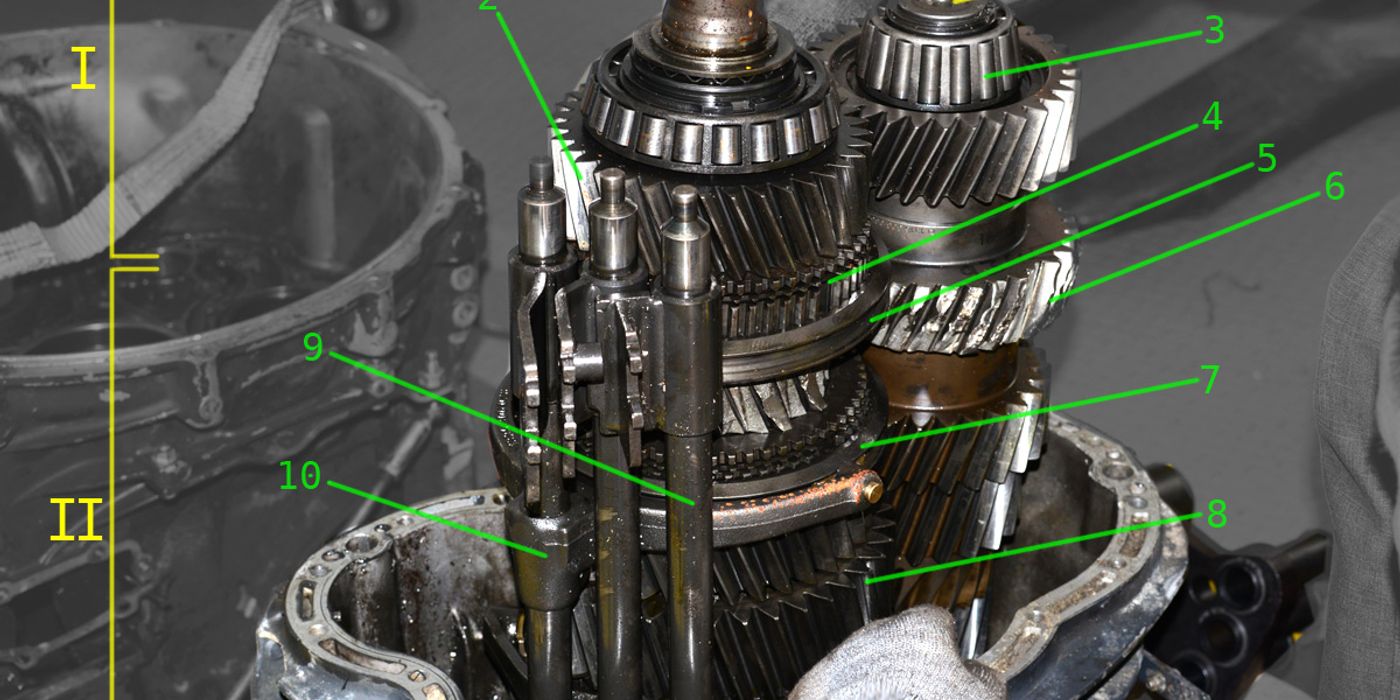
BMW manual transmission fluid on GS6 and ZF 6-speed cars
Manuals get ignored in this conversation because the dramatic debates always center on automatics. That is a mistake. BMW manual gearboxes respond strongly to the correct fluid, and owners feel it immediately through notchiness, cold shift quality, synchro behavior, and noise. If you have an E36, E46, E90, F30 6MT, F80 M3 6MT, G80 M3 6MT, or G87 M2 6MT, this matters as much to drivability as engine oil selection does.
BMW has used both ATF-filled and dedicated MTF-filled manuals depending on era and transmission. Older boxes behind M50, M52, M54 and even some S54-era applications can have label-specific requirements. Some BMW manuals originally spec'd ATF, some MTF-LT variants, and some owners have strong personal blends that they swear transform shift feel. My advice is less romantic - start with what the transmission actually calls for, verify the BMW or gearbox manufacturer spec, and do not let forum folklore overrule the sticker on the transmission case.
On newer cars, especially M cars with the 6MT, owners are very sensitive to cold notchiness and hot-session feel. The S55 F80 and S58 G80/G87 six-speed cars can feel dramatically different depending on fluid age and ambient temperature. Fresh, correct manual transmission fluid will not make a BMW shift like a Honda, but it can tighten up synchro engagement and reduce that rubbery resistance that develops with old fluid.
Common manual applications and fluid logic
Here is the broad logic by era:
- E36 and E46 manuals - verify the transmission label, because BMW used different fluid requirements including ATF in some units
- E46 M3 6MT and later performance applications - use the proper MTF spec, not a guess based on another BMW
- E90/E92 6MT and F30/F32 6MT - identify the exact GS6 or ZF gearbox before buying fluid
- F80, G80, G87 6MT cars - follow the OE-approved MTF spec and service sooner if driven hard
On a street-driven manual BMW, I like a 50,000 to 70,000 mile fluid interval. If the car sees autocross, track days, mountain driving, or repeated high-temp abuse, I cut that down. Manual fluid service is relatively cheap and usually high-value in terms of feel. If the box is balky cold or has become more reluctant at high RPM, fluid age is one of the first things I look at after clutch hydraulics and shifter wear.
What fluid can and cannot fix in a BMW manual
Fluid can improve shift quality, especially when the existing fluid is old or wrong. It can reduce gear rollover noise in some cases and improve synchro compatibility. It cannot fix:
- A worn clutch
- Bad pilot or release bearings
- Worn detents or shift pins in transmissions known for that issue
- Damaged synchros
- Sloppy linkage, bushings, or carrier wear
That sounds obvious, but I still see owners try to solve mechanical wear with boutique fluid. If your E46 330i or E90 328i 6MT has a truly crunchy 2nd gear synchro, fresh fluid may help symptom severity, but it is not magic. Same story with an F80 M3 6MT that has been repeatedly power-shifted by someone who mistakes abuse for driving skill.
How to identify the right transmission before buying fluid
This is the practical section that saves money. Before ordering BMW transmission fluid, identify the exact gearbox. Not "2017 3 Series automatic." Not "B58 car." The actual transmission family. BMWs can change suppliers and variants mid-generation, and aftermarket catalogs are not always as precise as they should be.
There are four ways I usually identify a transmission:
- Decode the VIN with BMW parts catalog data
- Physically inspect the transmission tag or pan shape
- Use diagnostic software that reads transmission control module data
- Cross-reference the chassis and drivetrain combination using a trusted source
For DIY owners, a diagnostic setup pays for itself quickly. If you are serious about BMW ownership, especially on F and G chassis, a decent scan and coding tool is one of the best garage purchases you can make. The BimmerTalk page on BMW coding and diagnostic tools is a good starting point if you are still relying on generic scanners that barely see transmission data.
Chassis examples where people get it wrong
These are common problem cases:
- E46 and E39 owners assuming all automatics use the same ATF because the cars are from the same era
- E90 owners not distinguishing GM automatics from ZF automatics
- F30 owners ordering generic "8-speed fluid" without confirming 8HP variant and pan/filter setup
- X-drive owners confusing transfer case fluid service with transmission service
- Manual owners assuming every BMW 6MT takes the same MTF
The E90 generation is especially messy because two cars that look nearly identical can have different automatic transmission suppliers depending on engine and production date. E60 and E70 are similar. On modern F and G cars, the transmission family is more consistently ZF 8HP, but there are still torque-capacity variants and service nuances worth respecting.
Use the pan and fill procedure as clues
If the transmission has the familiar integrated plastic pan/filter and the service procedure is temperature-sensitive with overflow leveling, you are likely in ZF 6HP or 8HP territory. If the unit has a different pan and a different fluid standard, stop assuming. BMW did not build every car around one transmission architecture, and suppliers matter here.
For owners doing their own maintenance schedule across the whole car, I often recommend grouping transmission service with other interval items. Coolant age, battery health, and charging stability can also affect drivability diagnostics. It sounds unrelated, but weak voltage on a modern BMW can create all kinds of weird adaptation and control behavior, so the BMW battery replacement guide is relevant if your transmission symptoms happen alongside low-voltage faults.
ZF Lifeguard 8 OEM versus aftermarket equivalents
This is where the opinion part really matters. If you want the safest, most conservative answer for a BMW ZF 8HP, use ZF Lifeguard 8. Not because every alternative is junk, but because ZF built the transmission and the fluid package is the reference point. If the car is nice, if you plan to keep it, if you are picky about shift quality, and if the cost difference is not painful, that is still my pick.
The flip side is that not everyone wants to spend OEM money on a daily-driven higher-mileage F30 or X3 that just needs sane maintenance. There are aftermarket fluids that market direct compatibility with ZF 8HP applications, and some owners have perfectly good results with them. The problem is that compatibility on a label does not always tell you how close the friction profile is under real use over time. Short-term operation and long-term shift behavior are not always the same thing.
I break it down like this. On my own G20, if I were doing the first major transmission service and wanted zero drama, I would buy the ZF Lifeguard 8 ATF - Fluid for BMW ZF 8HP Service or the ZF LifeGuard Fluid 8 Automatic Transmission Fluid - 7 Liters depending on what the full parts list looked like. If I were helping somebody keep an older but healthy F30 330i or X3 on a tighter budget, I would at least consider the Triax ATF 689 - Full Synthetic ZF 8HP Transmission Fluid for BMW F30 G20 X3 X5 after confirming the exact application and being honest about use case.
My practical fluid ranking for 8HP cars
| Fluid | Best use case | Pros | Tradeoffs |
|---|---|---|---|
| ZF Lifeguard 8 | Best overall for stock and tuned BMW ZF 8HP cars | Reference fluid, strong cold and hot behavior, least guesswork | Higher cost |
| Triax ATF 689 | Budget-conscious 8HP service when compatibility is verified | Lower price, marketed for BMW 8HP use | Less conservative choice than OE fluid |
| Random multi-vehicle ATF | Almost never my recommendation | Cheap and easy to find | Too much uncertainty for a transmission this good |
Would I lose sleep over a respected equivalent in a well-serviced 8HP? No. Would I put bargain-bin mystery ATF in a G20, G30, or G05 just because somebody online said all modern ATF is basically the same? Also no. The 8HP is too good a transmission to cheap out on blindly.
Stock versus tuned cars
Owners of B58 and S58 cars ask this a lot because tuned torque changes the conversation. A tuned F30 340i, G20 M340i, G30 540i, G05 X5 40i, or G80 M3 xDrive with the 8HP is asking more from the clutches and pressure control strategy than the original calibration did. That makes me even less interested in experimenting with vague fluid choices. If the transmission is already handling extra torque, use quality fluid, reduce service intervals, and monitor shift behavior. Fluid is not a substitute for transmission tuning or hardware limits, but it is part of responsible maintenance.
How a proper BMW transmission service should be done
There is a right way and a lazy way to service BMW transmissions. The lazy way is why so many owners think transmission service "made things worse." The right way takes more time, requires temperature monitoring, and starts with identifying the transmission correctly. I am not saying every DIY owner should be scared off. I am saying precision matters.
For a ZF 8HP, the core process is straightforward on paper. Raise the car level. Remove splash shielding. Open the fill plug before draining if possible, because nothing is worse than a drained transmission with a seized fill plug. Drain the pan, remove it, inspect debris, install the new pan/filter assembly, refill with the correct fluid, start the engine, cycle gears, and level-set the fluid within the correct temperature window until excess fluid just dribbles from the fill opening. Then verify operation and check for leaks.
Where people mess up is usually one of these:
- Vehicle not level
- Fluid temperature not monitored properly
- Wrong fluid
- Pan bolts over-torqued or unevenly tightened
- Fill procedure rushed
- No post-service scan or adaptation review
Pan drop versus flush
I touched on this earlier, but it deserves its own section. On BMW automatics, especially ZF units, I prefer a pan service to an aggressive flush on unknown-history cars. The pan service gives you inspection data. You can look for glitter, chunks, or abnormal clutch material. You can inspect the magnets. You can deal with leaks. You can replace the filter. That matters.
A machine exchange can replace more fluid volume, but if it is done carelessly, with questionable fluid, or on a failing transmission, it can become a very expensive science experiment. There are good shops that know what they are doing. There are also plenty that treat every transmission like an anonymous Camry unit. BMW owners should be pickier than that.
Adaptations after service
This topic gets argued to death online. Some cars benefit from adaptation reset or relearn procedures after service. Some are better left to continue learning naturally unless there is a specific reason to intervene. My general rule is not to casually reset adaptations without understanding why you are doing it. If the old fluid was terrible and shift quality had drifted badly, a reset after proper service may help the transmission stop leaning on old learned compensations. But if the car drove fine and you just did preventive maintenance, you do not always need to hit the nuclear button.
The best approach is to scan first, document fault history, note adaptation values if your software supports it, then decide. Again, proper tools matter. Transmission service on modern BMWs is mechanical and digital at the same time.
Symptoms that point to old, wrong, or low transmission fluid
BMW owners are good at noticing subtle drivability changes, but not every weird shift event is caused by fluid. Still, fluid condition and level are common contributors. If you know the symptom patterns, you can decide whether service belongs early in the diagnostic plan or whether you are dealing with a deeper hardware or electronic problem.
On automatics, old or degraded fluid can show up as:
- Delayed drive or reverse engagement
- Cold shift harshness that improves warm
- Flare between gears under light throttle
- Torque converter shudder during lockup
- Lazy kickdown feel
- Inconsistent part-throttle shifts
Low fluid can create even uglier versions of those symptoms, and on some cars it can introduce aeration that makes the transmission feel random. If there is a leak from the pan, mechatronic sleeve, cooler lines, or sealing surfaces, do not keep driving around "monitoring it" for months. BMW transmissions can survive a lot. They do not like starvation.
Symptoms on specific BMW generations
On E90 and E92 6HP cars, I commonly associate rough 2-1 downshifts, delayed reverse, and inconsistent cold behavior with old fluid plus mechatronic wear. On F30 and G20 8HP cars, a healthy transmission is usually so smooth that any obvious hesitation or roughness stands out. If an 8HP starts feeling lazy off the line, bangs into gear, or shudders under light load, I am checking fluid condition, faults, transfer case status on xDrive cars, and engine-related torque modeling issues.
Manual cars tell on themselves differently. If your E46, E90, or F80 6MT is very notchy when cold, resists quick 1-2 or 2-3 shifts, or has gotten noisier, fluid age should be on the list. But I also inspect shift bushings, clutch delay valve behavior on applicable cars, and clutch hydraulics before blaming fluid alone.
What is not usually just fluid
These issues are less likely to be solved by a fluid service alone:
- Hard ratio faults and transmission failsafe mode
- Persistent slipping under load
- Loud whining that tracks vehicle speed and remains after proper fluid level check
- No movement in one direction
- Repeated gear-monitoring codes
At that point, you are looking at actual mechanical or mechatronic problems. Service may still be part of the repair, but it is not the headline solution. This is where a solid diagnostic baseline matters. Sometimes what feels like a transmission issue on a turbo BMW is actually torque intervention from misfires, boost control problems, or battery voltage weirdness confusing the whole car.
Cost ranges for BMW transmission fluid service
Cost matters because this is often the reason owners delay the job in the first place. The range is wide because BMW transmission service can mean anything from a simple manual gearbox drain-and-fill to a full 8HP pan service with premium fluid, sleeves, shop labor, and adaptation work.
For a ZF 8HP DIY fluid service, expect fluid cost to be a real chunk of the budget. If you use OEM ZF Lifeguard 8, the fluid alone is not cheap. The ZF Lifeguard 8 ATF - Fluid for BMW ZF 8HP Service at $159.92 makes sense when you consider many services land in the 6 to 8 liter range. The ZF LifeGuard Fluid 8 Automatic Transmission Fluid - 7 Liters at $130.07 also fits many typical fills. If you only need a top-off bottle or you want extra margin during level-set, the ZF Lifeguard Fluid 8 - ATF for BMW 8HP Transmissions at $22.08 is useful.
Go aftermarket-compatible and the fluid bill drops. The Triax ATF 689 - Full Synthetic ZF 8HP Transmission Fluid for BMW F30 G20 X3 X5 at $54.99 is the sort of price difference that gets owners' attention. But remember, fluid is only part of the total job. Pan, filter, bolts, tools, pump, diagnostics, and your own time matter too.
Typical service cost by transmission type
| Service type | DIY parts estimate | Independent shop estimate | Dealer estimate |
|---|---|---|---|
| BMW ZF 8HP pan and fluid service | $250-$450+ | $500-$900 | $800-$1400+ |
| BMW ZF 6HP pan and fluid service | $220-$400+ | $450-$850 | $750-$1300+ |
| BMW manual transmission fluid change | $60-$150 | $150-$300 | $250-$450 |
| 6HP service with sleeve and sealing extras | $300-$550+ | $650-$1100 | Often not quoted as a simple service |
Those are realistic enthusiast-market numbers, not fantasy bargains. Labor rates vary a lot by region, and M cars can skew higher because everything around them tends to. If you have an F80, G80, G87, or a heavily optioned xDrive chassis, expect less underbody access convenience and more opportunities for shop labor to climb.
What I would spend where
If I own the car long-term and it is healthy, I spend money on the right fluid and a careful service. If it is a rough, high-mileage beater with an unknown future, I still do not use nonsense fluid, but I might choose a cost-conscious compatible option if the application is verified. The key is being honest about the car. Putting bargain fluid into a pristine G30 540i you plan to keep to 200,000 miles is false economy. Throwing premium fluids at a transmission already full of clutch material is also false economy.
Chassis-specific notes BMW owners actually care about
This section is where the broad advice gets grounded. BMW owners do not own generic cars. They own E46 330is, E92 335is, F30 340is, G20 330is, F80 M3s, G80 M3s, and X5s that weigh enough to remind fluid what work feels like. Here is how I think about common chassis families.
E36 and E46
These cars are old enough that fluid spec confusion is common. Manual transmission label checks matter. Automatic cars vary by engine and transmission supplier, and a lot of examples have had unknown service history, mixed fluids, or previous-owner creativity. On E36 M50 and M52 cars and E46 M52TU or M54 cars, I always verify before ordering. E46 M3 owners should be especially careful because gearbox feel matters so much to the car's character.
At this age, leaks and worn seals are as important as fluid choice. If a 20-plus-year-old BMW has not had driveline service in forever, I approach the job as inspection first, fluid second. Transmission mounts, guibo condition, center support bearing condition, shifter bushings, and differential health all affect what the driver thinks the transmission is doing.
E60, E70, E90, E92
This is prime 6HP territory and also prime "lifetime fluid" misinformation territory. The N52 cars are often less brutal on transmissions than N54 torque cars, but neglect catches up to both. E90 328i owners can often rescue a decent amount of shift quality with timely service. E92 335i, E60 535i, and E70 X5 owners need to be especially alert to leaks, heat, and adaptation drift. These are now old enough that transmission service should be considered baseline maintenance, not optional.
If you are buying one, ask for proof. If there is none, budget the service. If the seller says "BMW says lifetime fluid," I treat that the same as "I never changed the brake fluid because the pedal still works." Not a serious maintenance philosophy.
F10, F15, F30, F32
This is where the 8HP really takes over the conversation. The F30 and F32 cars in particular are now in the mileage zone where many need their first or second meaningful transmission service. An F30 328i with the N20 and an F30 340i with the B58 are different animals in torque delivery, but both benefit from 60,000-mile fluid logic. F10 535i and F15 X5 35i owners should be even more disciplined because vehicle mass and torque load make service all the more sensible.
I have seen F30s that shift beautifully past 100,000 miles because someone serviced the 8HP early. I have also driven examples with "lifetime" original fluid that felt vague and tired long before the rest of the car wore out. These cars are easy to get right if you are proactive.
G20, G30, G05, G80, G87
These are modern enough that some owners still think transmission service is a future problem. It is not. It just has not become urgent yet. The B46/B48 and B58 cars paired to the 8HP are some of the best daily-driver BMW combinations ever sold. They deserve fresh fluid before symptoms show up. My own bias from living with a G20 330i is that the transmission is such a huge part of why the car feels polished. I would rather preserve that feel than wait for decline.
On G80 M3 automatic and G87 M2 automatic cars, the 8HP is doing serious performance work. The S58 can expose weakness anywhere in the driveline if maintenance is ignored. Even if you do not track the car, aggressive street driving and repeated high-load pulls are enough reason to keep fluid service on a real schedule.
Mistakes I see BMW owners make with transmission fluid
Most transmission fluid mistakes are not malicious. They come from oversimplified advice, bad catalog matches, or trying to save money in the wrong place. But the result is the same. The transmission becomes the victim.
The first mistake is assuming "BMW ATF" is universal. It is not. The second is trusting lifetime fluid language as if it were a law of physics. The third is servicing a transmission sloppily and then blaming the concept of service itself. The fourth is ignoring leaks because the car still drives.
The common errors list
- Using fluid based on vehicle year alone instead of transmission ID
- Mixing incompatible fluids without understanding the spec
- Skipping pan and filter replacement on transmissions that need it
- Level-setting at the wrong temperature
- Overfilling or underfilling
- Power flushing a neglected unit without inspection
- Resetting adaptations blindly
- Assuming transfer case fluid is the same as transmission fluid on xDrive cars
Another mistake is chasing internet miracle blends. BMW owners love optimization. I get it. I am the same way with engine oil, tire pressure, and alignment settings. But transmission fluid is not the place for unsupported chemistry experiments unless you are fully prepared to own the outcome. Start with the known correct spec, then branch out only if you have a very specific reason.
Do not ignore the rest of the car
Transmission behavior is linked to the whole vehicle. Engine misfires, thermostat issues, cooling system weakness, transfer case adaptation issues, battery voltage instability, and software faults can all make a transmission feel worse or different. If your BMW is due for broader maintenance, handle it holistically. Something like a neglected cooling system on an N52, N54, N55, or B58 car can affect transmission temps and drivability more than owners realize. If you are tackling overdue maintenance across the board, the BMW coolant flush guide is worth pairing with this job.
My practical recommendations by owner type
If you just want the shortest version of my opinion after all of this, here it is. Match the fluid to the transmission, not the badge. Service BMW automatics earlier than BMW's lifetime language suggests. Be especially proactive with ZF 8HP cars because they are excellent and worth preserving. Do not expect fluid to reverse mechanical damage. And if you are on the fence between premium OEM-spec fluid and a generic substitute, remember how expensive transmissions are.
If you own a modern ZF 8HP BMW
Examples include F30, F32, G20, G30, F15, G05, G80 automatic, and G87 automatic cars. My recommendation:
- Service every 60,000 to 80,000 miles, sooner if driven hard
- Use ZF Lifeguard 8 if you want the safest answer
- Do a proper pan service, not a shortcut drain only
- Level-set by temperature and verify with diagnostics
If it were my own G20 and I wanted an easy answer, I would order ZF fluid, install the correct pan/filter assembly, and not overthink it.
If you own an older ZF 6HP BMW
Examples include many E90, E92, E60, and E70 cars. My recommendation:
- Do not wait for obvious problems to appear
- Inspect for mechatronic sleeve leaks and pan seepage
- Service if the transmission is still fundamentally healthy
- Be realistic that sleeves, seals, and valve body wear may also need attention
On these cars, fluid service is maintenance, not resurrection. Treat it that way and you will be happier.
If you own a BMW manual
My recommendation is simpler:
- Identify the exact transmission and approved fluid spec
- Change fluid every 50,000 to 70,000 miles
- Do it sooner on track-driven or high-temp cars
- Use fluid as a tuning tool for feel only after you establish the correct baseline
Manual BMWs are too enjoyable to let old fluid dull the shift quality. A lot of owners tolerate notchiness for years that could have been improved with one afternoon of maintenance.
FAQ
Does BMW really use lifetime transmission fluid
BMW has marketed many transmissions as lifetime fill, but that does not mean the fluid stays ideal forever. In real-world enthusiast ownership, I recommend service intervals around 60,000 to 80,000 miles for ZF 8HP cars and roughly 50,000 to 60,000 miles for older ZF 6HP cars.
What is the best BMW transmission fluid for a ZF 8HP
The conservative best choice is ZF Lifeguard 8. It is the reference fluid for the transmission family and the one I would choose first for most F30, G20, G30, X3, and X5 8HP applications.
How much fluid does a BMW ZF 8HP take
For a typical pan and fluid service, many BMW ZF 8HP applications use around 6 to 8 liters depending on variant, drain time, and level-setting procedure. A service does not replace every drop in the transmission, so the practical refill amount is usually less than total dry capacity.
Can I use aftermarket fluid instead of ZF Lifeguard 8
You can use a verified compatible fluid in some applications, but I still prefer ZF Lifeguard 8 when budget allows. On nice cars or long-term keepers, that is my default recommendation. On budget builds, a respected compatible fluid may be reasonable if you verify the application carefully.
Will changing BMW transmission fluid cause problems on a high-mileage car
Not automatically. If the transmission is healthy, not slipping, and does not show major internal damage signs, service can still help. The real risk is on a neglected transmission that is already failing. In that case, fresh fluid will not create the failure, but it may reveal one that was already there.
Is a drain and fill enough for BMW 8-speed automatic service
It is better than doing nothing, but it is only a partial fluid refresh. On a ZF 8HP, the best normal service includes pan and filter replacement plus the correct temperature-based level procedure. A simple drain-only approach leaves too much old fluid and skips filter renewal.
What are the signs my BMW needs transmission fluid service
Common signs include delayed engagement, rough cold shifts, inconsistent part-throttle shifts, converter shudder, and old service history with no record of prior maintenance. On manuals, watch for increased notchiness, poor cold shift quality, and general deterioration in feel.
Does xDrive use the same fluid in the transmission and transfer case
No. The transmission and transfer case are separate units with separate fluid requirements. Do not assume the same BMW ATF belongs in both. Always identify each component and use the correct fluid specification for each.
Should I reset transmission adaptations after fluid service
Sometimes, but not blindly. If the transmission had learned around degraded fluid or prior issues, a reset may help after proper service. If the car drove fine and you are doing preventive maintenance, it may be better to leave adaptations alone and let the transmission continue learning normally.
How often should I change manual transmission fluid on my BMW
I generally recommend every 50,000 to 70,000 miles on street-driven cars, with shorter intervals for track use or repeated high-temperature driving. Manual transmissions usually reward fresh correct fluid with better shift feel.
What is the difference between BMW ATF and manual transmission fluid
Automatic transmission fluid and manual transmission fluid have different viscosity and friction characteristics because they do different jobs. Some older BMW manuals used ATF, but many use dedicated MTF specs. Never assume they are interchangeable without verifying the exact transmission requirement.
Can wrong transmission fluid damage a BMW gearbox
Yes. Even if the car still moves, the wrong fluid can alter clutch friction behavior, shift quality, and wear patterns. On modern ZF automatics especially, using the correct fluid is part of preserving calibration and long-term durability.
Transmission Fluid guides
Expert picks and how-tos for BMW transmission fluid.

Find parts by BMW chassis
Decoder pages with engine specs, common problems, and market range per chassis.