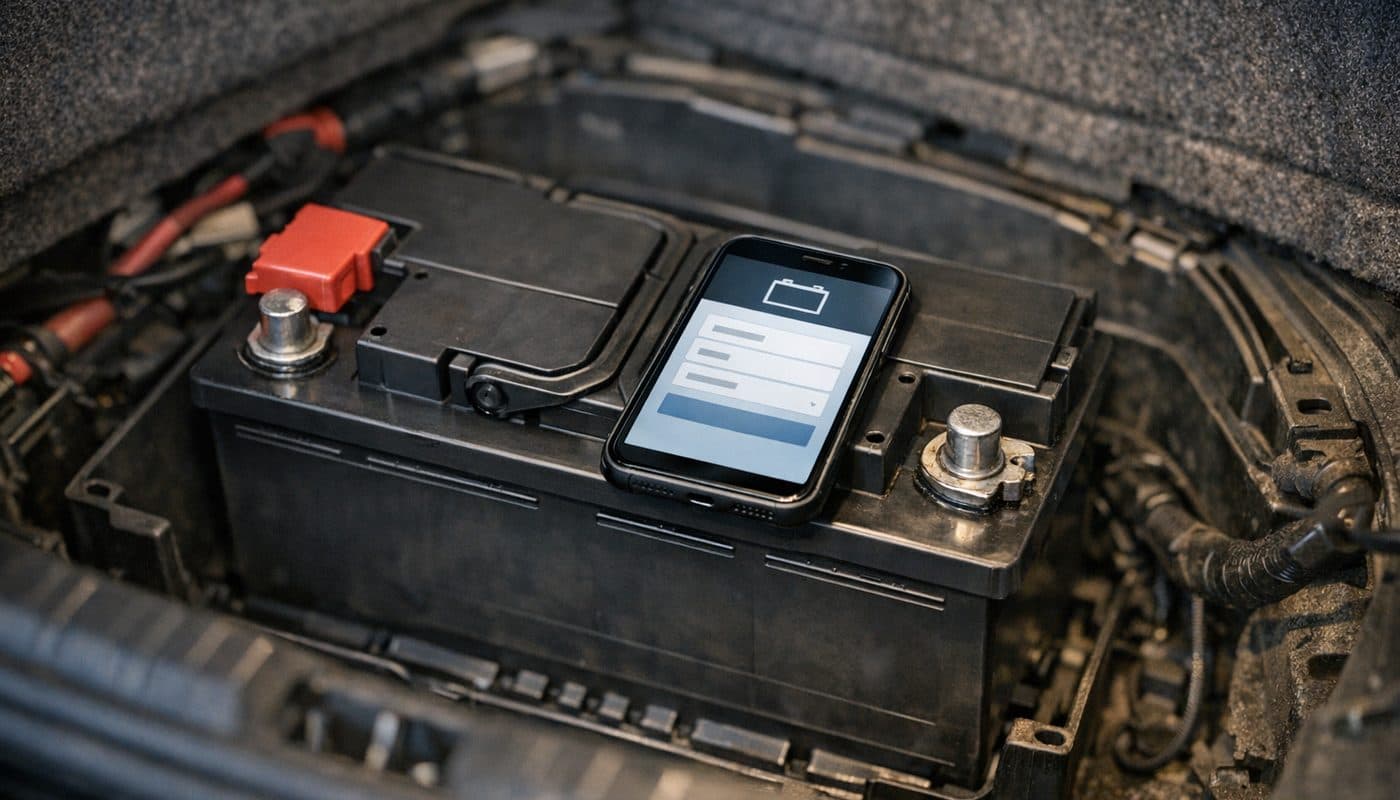
BMW Battery Replacement - AGM Top Picks, Registration, DIY Cost
Affiliate disclosure. BimmerTalk is a proud partner of the Amazon Associates Program and Turner Motorsport. We may earn a small commission on qualifying purchases through our links, at no extra cost to you. Read the full disclosure.

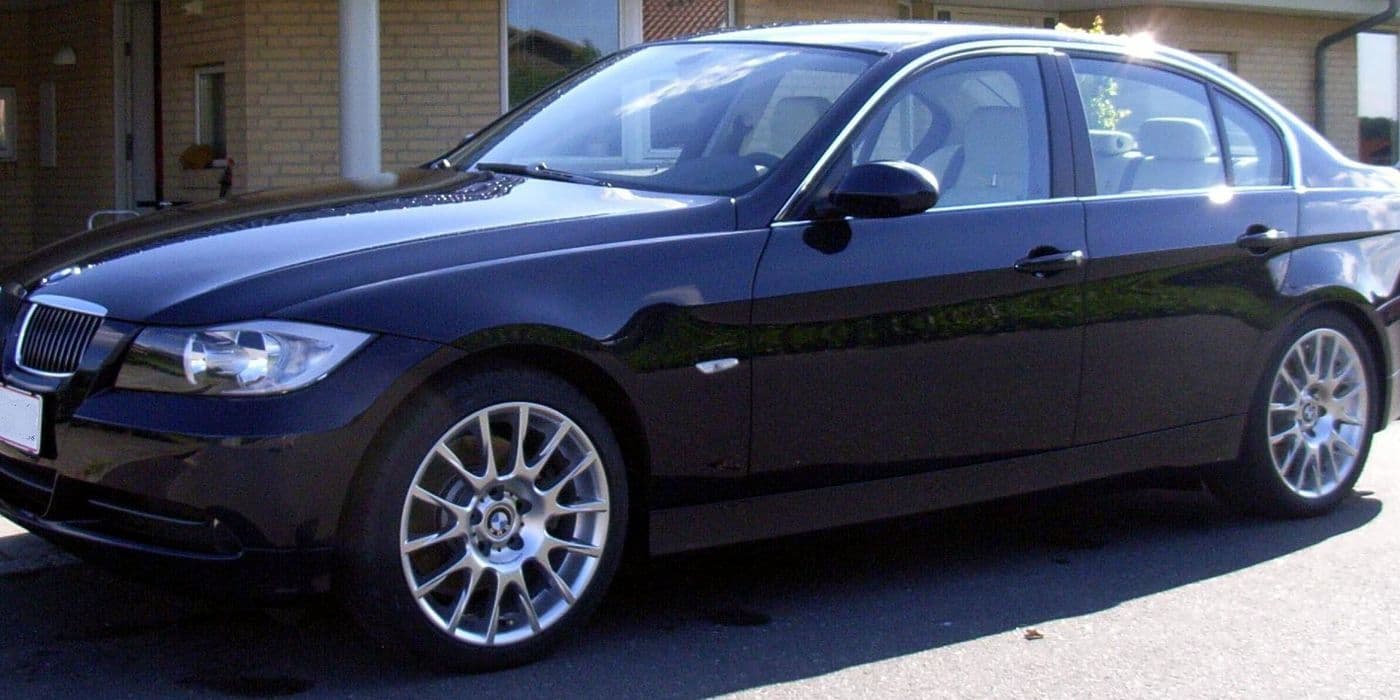
The text from the dealer service advisor on my phone was the kind of message that makes you put down your coffee. Eight hundred and five dollars. For a battery. On a 2015 F30 328i, the same chassis I have been driving and wrenching on for years. I had asked them to quote it as a sanity check before I did the swap myself, because half of being a smart BMW owner is knowing what the dealer charges so you can decide whether you actually want to pay it. The breakdown was almost a parody. Three hundred and eighty for an OEM Exide H8, two hundred and fifty in shop labor for what is genuinely a thirty-minute job, and one hundred and seventy five for "battery programming." That last line is the one that turns a normal repair into a scam-shaped repair, and it is the reason this article exists.
I have been wrenching on BMWs for about five years now, including a one-year stretch working at a BMW and MINI marketing team where I watched this exact transaction happen from the other side of the counter. I daily drive a stock 255 horsepower G20 330i, and I cut my teeth on an F30 that I still have in the garage. I have done battery swaps on E90s, F30s, F32s, F10s, and a couple of X5s, and the truth is that the job is mechanically simple. You disconnect two cables, lift one heavy box out of the trunk, drop another heavy box in, reconnect, and register the new battery to the IBS sensor. The whole thing took me thirty-eight minutes the last time I did it on the F30 in a cold November garage on jack stands, and that was with stopping to take photos for an article exactly like this one. Total cost out of my pocket was two hundred and seventy dollars all in. The dealer wanted eight hundred and five.
The reason most YouTube tutorials get this job wrong is that they treat it like a normal car battery replacement. They show you how to disconnect the terminals, swap the battery, and reconnect, and then they wave at the camera and say "all done." That works on a 2008 Camry. On any BMW from roughly 2002 onward, skipping the registration step is the difference between a battery that lasts six to eight years and a battery that is dead inside eighteen months because the alternator is feeding it the charging profile meant for the old, tired cells. This guide covers both halves of the job. Which AGM battery to actually buy by chassis, and how to register it yourself in ninety seconds without a dealer, a Carly subscription, or any of the other speed bumps the internet wants to put in your way.
$400-700
Dealer Cost
$260-370
DIY Cost (1st)
$200-290
DIY Cost (after)
6-8 years
Battery Lifespan AGM
Below is the chassis-by-chassis quick reference you actually came here for. Pull your trunk floor, find the OEM sticker on the side of your existing battery, and match the group size and the H code. That sticker is the one source of truth that beats any forum guess.
| Chassis | Years | Group Size | H Code | Ah Range | Battery Type |
|---|---|---|---|---|---|
| E46/E60 | 2002-2010 | 49 | H8 | 80-90 | AGM (most) |
| E70 X5 | 2007-2013 | 49 or L95 | H8/H9 | 80-105 | AGM |
| E90/E92 | 2005-2013 | 49 | H8 | 80-90 | AGM |
| F30/F32 | 2011-2019 | 49 | H8 | 80-90 | AGM |
| G20/G22/G30 | 2019+ | 49 (some H7) | H8/H7 | 80-90 | AGM |
| F15/G05 X5 | 2014+ | L95 | H9 | 105 | AGM |
| 7 Series F01/G11 | 2009+ | L95+ | H9+ | 105+ | AGM |
E46/E60
- Years
- 2002-2010
- Group Size
- 49
- H Code
- H8
- Ah Range
- 80-90
- Battery Type
- AGM (most)
E70 X5
- Years
- 2007-2013
- Group Size
- 49 or L95
- H Code
- H8/H9
- Ah Range
- 80-105
- Battery Type
- AGM
E90/E92
- Years
- 2005-2013
- Group Size
- 49
- H Code
- H8
- Ah Range
- 80-90
- Battery Type
- AGM
F30/F32
- Years
- 2011-2019
- Group Size
- 49
- H Code
- H8
- Ah Range
- 80-90
- Battery Type
- AGM
G20/G22/G30
- Years
- 2019+
- Group Size
- 49 (some H7)
- H Code
- H8/H7
- Ah Range
- 80-90
- Battery Type
- AGM
F15/G05 X5
- Years
- 2014+
- Group Size
- L95
- H Code
- H9
- Ah Range
- 105
- Battery Type
- AGM
7 Series F01/G11
- Years
- 2009+
- Group Size
- L95+
- H Code
- H9+
- Ah Range
- 105+
- Battery Type
- AGM
Why BMW battery replacement costs more than your average car
If you have ever swapped a battery on a Honda or a Ford in your driveway, you know the rhythm. Pop the hood, ten millimeter on each terminal, lift the old one out, drop the new one in, reconnect, done. Twenty minutes including a coffee break. The first time you try the same thing on a BMW you discover three things that do not exist on the cheaper cars. First, the battery is not in the engine bay. It is in the trunk on every E and F chassis 3, 5, and 7 series, under the cargo well floor on the X5, and in some weird hybrid spots like under the rear seat on the i3 or in front of the right rear wheel arch on certain wagons. Second, the battery is an AGM unit that costs roughly twice what a flooded battery costs at the same parts counter. Third, the car has an Intelligent Battery Sensor that tracks the health of the old battery and refuses to give the new one a fair chance unless you tell the system the swap happened.
That third point is what the dealer is really charging you for. The mechanical work is genuinely thirty to forty minutes for a competent tech. The OEM Exide or Varta battery wholesales to the dealer for around two hundred dollars. The remaining four to five hundred dollars in your invoice is pure margin on top of a software step that takes ninety seconds with a sixty dollar tool. Once you understand that math, the DIY decision makes itself. The break-even point on owning your own registration tool is half of one battery replacement. After that you are saving four hundred dollars every time the battery cycles, and a BMW battery cycles every six to eight years if you treat it right.
The other reason BMW work feels expensive is that the dealer service department is not actually optimised to fix old cars cheaply. The shop is optimised to sell new cars and warranty service to people leasing fresh ones. If you are out of warranty and standing at the counter with a 2015 F30, you are an accounting problem to them, not a customer to nurture. That is not a moral judgment, it is just how the business model works. Knowing that, you can stop feeling guilty about doing the work yourself.
AGM vs flooded - what BMW switched to and why
BMW started moving from flooded lead-acid batteries to absorbed glass mat (AGM) batteries around the 2002 model year, beginning with the E65 7 Series and rolling across the rest of the lineup over the next six years. By 2008, when the IBS sensor became standard equipment fleet-wide, every BMW sold in the US shipped with an AGM main starter battery from the factory. The switch was not marketing. AGM solves three real engineering problems at once.
The first problem is start-stop. Every time you roll up to a red light and the engine clicks off to save fuel, the battery has to crank the motor again ten or twelve seconds later when you lift off the brake. A flooded battery handles this cycle maybe a thousand or fifteen hundred times before the plates start shedding active material and the cranking voltage drops. AGM handles the same cycle three or four times longer because the glass mat keeps the electrolyte tightly bound to the plates and the plates do not flake. If you put a flooded battery in a start-stop equipped BMW, you will burn through it inside two years even with perfect maintenance.
The second problem is brake energy regeneration. Modern BMWs declutch the alternator during steady cruise and re-engage it under deceleration to recover energy that would otherwise become heat in the brake pads. When the alternator clutches back in, it can dump fifty or sixty amps into the battery in short bursts. Flooded chemistry simply cannot accept that current rate without gassing and overheating. AGM eats it for breakfast and converts it back to stored energy with very high coulombic efficiency.
The third problem is the location. Putting a battery in the trunk under your golf clubs means it had better be sealed, spill-proof, and unlikely to release any meaningful quantity of hydrogen. AGM checks all three boxes. A flooded battery in the same location would, over time, corrode the trunk floor and present a real safety issue if the car was ever in a side impact. AGM is essentially a sealed brick that does not leak even when tipped on its side.
The takeaway is simple. If your car came from the factory with AGM, you replace with AGM. Do not let a parts counter person sell you a flooded battery because "it is the same group size and it is sixty dollars cheaper." It is the same group size on the outside and a completely wrong chemistry on the inside. The car will register the new battery, the alternator will charge it like AGM, and the flooded cells will cook themselves dead inside twelve to eighteen months. This is the single most common cause of "I just put a new battery in and it is already dead" on the BMW forums.
The IBS - intelligent battery sensor explained
The Intelligent Battery Sensor is a small black puck about the size of a hockey puck cap, mounted directly on the negative battery cable usually within an inch or two of the battery post. It has three sensors and one job. The three sensors are voltage, current, and temperature. The job is to tell the DME (the engine computer) exactly what state the battery is in at every moment, so the DME can pick the right charging algorithm and the car can decide whether to allow start-stop, brake regen, comfort access, and a dozen other features that depend on knowing the battery is healthy.
Voltage measurement is straightforward. The IBS reads battery voltage one hundred times per second and reports both resting voltage (key off) and loaded voltage (during cranking). Current measurement is what makes the IBS clever. Every amp that flows in or out of the battery passes through the IBS, and over time the sensor builds up an integrated picture of how much energy the battery has stored and how much it can deliver under load. This is the State of Charge and State of Health calculation. Temperature measurement is the third leg, because cold batteries need a different charge profile than hot batteries, and the alternator field current adapts accordingly.
The critical thing to understand is that the IBS does not know you replaced the battery. When you lift the old one out and drop the new one in, the IBS still has the State of Health adaptation table from the old battery sitting in its memory. As far as it is concerned, you have an eight-year-old, seventy percent healthy AGM in the trunk. The DME continues to apply the charging profile appropriate to that aged battery, which means the new full-capacity battery gets either undercharged (leading to sulfation and premature death) or in some cases overcharged, which cooks the AGM mat and shortens the life from the other direction.
Battery registration is not a security gimmick. It is a one-button command that tells the IBS to wipe its adaptation table and start learning the new battery from scratch. The DME then re-runs its charging algorithm against the actual voltage and current behavior of the new cells, and within one drive cycle the system is properly tuned. Skip it and the new battery dies young, the start-stop disables itself, and you end up back at the dealer with a "diagnostic fee" tacked onto the next visit.
Battery group sizes by chassis
This is the question that owns more BMW forum threads than any other topic in this category. The good news is that the answer is mostly stable across each chassis family, and the OEM sticker on your existing battery is the final authority. The bad news is that the parts counter at AutoZone or Advance Auto will sometimes hand you the wrong group size with confidence, especially on the X5 and 7 Series where they default to assuming H8 when you actually need H9 / L95.
H6 / Group 48 - the smaller AGM
Group 48 with the H6 case dimension is the smaller AGM that BMW uses on certain F-chassis and G-chassis four-cylinder cars when the OEM build sheet specified a smaller battery. You will see this on early F30 320i builds, some F22 228i cars without the comfort access package, and a few G20 330i builds aimed at the European market with smaller standard equipment loads. Capacity is typically 70 to 80 Ah, CCA around 750 to 800. If your car came with this size, you can usually upgrade to a Group 49 H8 with a small bracket modification, but the safer move is to replace with the same size and re-register.
H7 / Group 94R - the mid-tier AGM
The Group 94R H7 case shows up on certain F-chassis 3 Series, F25 X3, and select G-chassis builds. It is also extremely common on the European market 5 Series. Capacity is typically 80 Ah, CCA around 800 to 850. If your car has this fitment, the OEM sticker will say H7 or Gr94R clearly. Do not confuse this with the slightly different H7 European battery code, which uses different terminal positioning. The American 94R H7 is what you want to match.
H8 / Group 49 - the BMW workhorse
This is the single most common BMW battery in the United States. If you own an E46, E60, E90, F30, F32, F10, F22, G20, or G30 with a four or six-cylinder engine, the H8 / Group 49 is almost certainly what is in the trunk. Capacity is 80 to 90 Ah, CCA 800 to 900, RC around 150 to 160 minutes. The H8 case is a tall, deep rectangle with terminals on the short end, designed to fit the standardized BMW trunk well. Most aftermarket AGM options at this size land between $200 and $280 retail.
L95 / H9 - the large AGM for X5, X6, and 7 Series
L95 with the H9 case is the bigger battery used on the X5 (E70, F15, G05), X6, 7 Series (F01, G11, G12), and certain heavily-optioned 540i and 550i builds. Capacity jumps to 105 Ah, CCA over 950, RC north of 180 minutes. The L95 case is wider and taller than H8, so do not try to drop one into a Group 49 tray without modifying the bracket. Conversely, never try to fit an H8 into an L95 tray and call it a day. The smaller battery will be overcharged by the alternator profile that the DME applies to the larger expected capacity, and you will be back at the parts counter inside a year.
Battery location by chassis
If you have never opened a BMW trunk floor before, the first time can be confusing because the battery is rarely where you expect. Here is the cheat sheet by chassis family.
Trunk on 3 Series, 5 Series, and 7 Series sedans
On every E46, E60, E90, E92, F30, F32, F10, F22, G20, G22, G30, F01, and G11 sedan or coupe, the battery lives in the trunk. Open the trunk lid, lift the cargo floor (sometimes secured with two plastic twist clips, sometimes just sitting in place), and look for a black plastic cover on the right side of the spare tire well. That cover lifts off to expose the battery. The vent tube is the small black or clear hose attached to the side of the battery case, and it routes through the trunk floor to a vent on the underside of the car. Do not lose this hose during the swap. You need it.
Cargo well right side on X5 and X6
On every X5 (E70, F15, G05) and X6 (E71, F16, G06), the battery is under the cargo floor on the right side, behind a removable trim panel. You usually have to fold the rear seats forward, lift the load floor, and remove a side trim piece secured by two T20 Torx screws. The battery is heavy and somewhat awkwardly placed. A second pair of hands or a battery lift strap is your friend on this job.
Engine bay on 1 Series, 2 Series, Z4, and small wagons
Some smaller chassis cars do put the battery under the hood. The E82 / E88 1 Series, the E89 Z4, and certain wagon variants like the E91 Touring keep the battery in a more conventional engine bay location, usually on the right strut tower with a plastic shroud over it. The job is faster on these cars, but you still have to register the new battery to the IBS, which is mounted on the negative cable just like on the trunk-battery cars.
M cars and special cases
M3 (E46, E90, F80, G80) and M5 (F10, F90) follow the same chassis pattern as the standard cars, but the M5 F90 has a higher capacity L95 fitment because of the twin-turbo S63 power demands. The i3 has its 12V battery in a strange location under the rear seat because the high-voltage traction battery occupies the floor pan. The M2 (F87, G87) is back in the trunk well like a normal F22 or G42. When in doubt, pull a panel and look for the OEM sticker.
Top AGM battery picks 2026
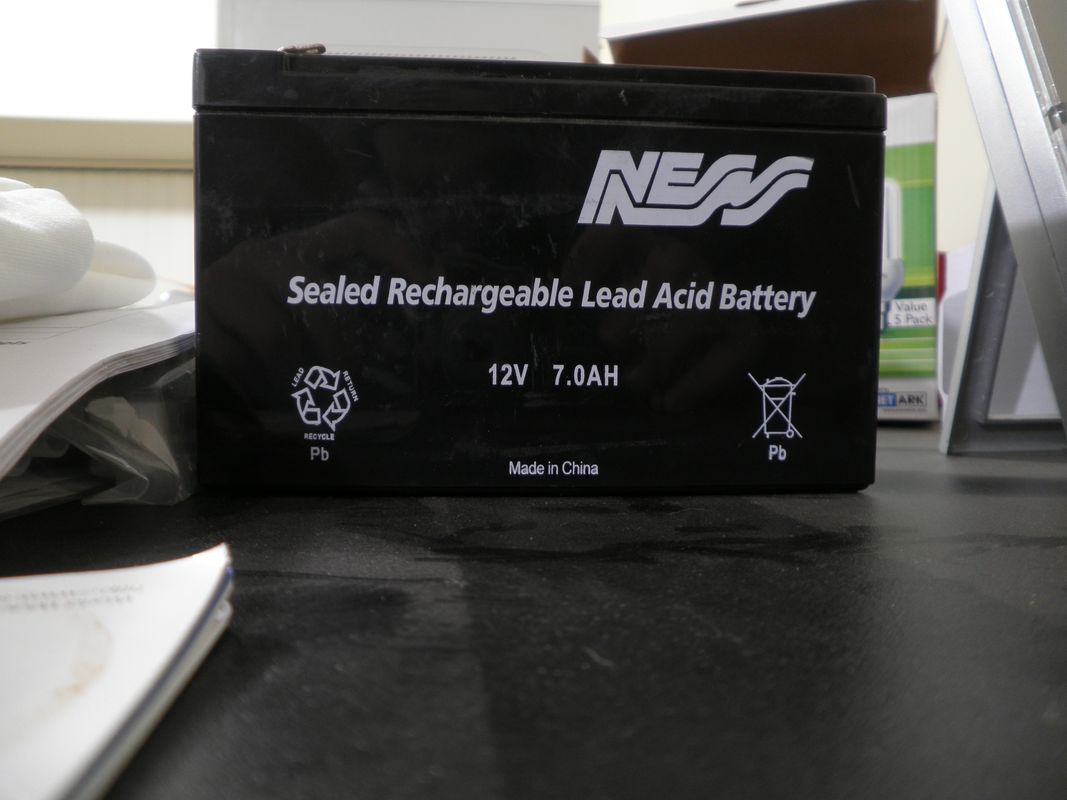
I have run, recommended, or installed every battery on this list at least once. The order is not by price, it is by which one I would actually buy for a friend's car given the chassis they own. The Weize Platinum H8 is the answer for roughly seventy percent of BMW owners reading this article. The other three picks cover the chassis-specific cases where the H8 is wrong.
Weize Platinum H8 - Editor's Pick
This is the battery I put in my own F30 in November 2024, and it is the one I would put in any E46, E60, E90, F30, F32, F10, F22, G20, G22, or G30 with a four or six-cylinder engine. It is a true AGM (not a relabeled flooded), the case has a proper vent port molded in, and the date code is printed clearly on a side sticker so you can verify shelf age before you buy. Ratings are 90 Ah and 850 CCA, which matches or beats the OEM Exide or Varta H8 spec on every chassis I have checked. Warranty is 18 months free replacement, which is shorter than ACDelco but longer than the typical Walmart house brand. Price typically lands between two hundred and twenty and two hundred and sixty dollars, which is roughly forty percent below dealer cost for the OEM equivalent. After three winters in my garage I have zero complaints.
UPLUS AGM L95 - Top L95 Pick
This is the answer for X5, X6, 7 Series, and any 5 Series that came with the larger L95 fitment. The UPLUS L95 is 95 Ah with the H9 case dimension, true AGM construction, and a vent port that mates to the OEM tube on the F15 X5 and G05 X5. CCA is rated at 900, which is plenty for the N63 V8 cars and even for the S63 in heavily-optioned X5 M variants in moderate climates. I helped a buddy install one in his F15 X5 35d two summers ago and it has been flawless through two Polish winters. Price is typically two hundred and seventy to three hundred and twenty, which is again significantly below dealer pricing for the OEM L95.
ACDelco Gold 48AGM - Premium 36-Month Warranty
If you want a recognized brand name and the longest free-replacement warranty in the AGM segment, the ACDelco Gold 48AGM is the one. ACDelco builds it in the United States, the warranty is thirty six months free replacement (compared to eighteen on the Weize), and the case quality, terminal finish, and overall build feel a tick above the budget AGM options. The 48AGM is a Group 48 H6 case, which means it fits BMW chassis that came with the smaller standard battery, including some F30 320i builds, F22 228i without comfort access, and certain G20 builds. Verify your group size before ordering. Price runs about thirty dollars over the Weize, but the extra warranty length more than pays for that delta if you keep the car five plus years.
Weize Platinum H7 - Budget H7 Alternative
If your BMW takes the H7 / Group 94R fitment instead of H8, the Weize Platinum H7 is the same family of battery in the smaller case. 80 Ah, 850 CCA, true AGM, vent port included. This covers certain F30 320i builds, F25 X3 28i and 35i, and many European market 5 Series. Same warranty (18 months) and same build quality as the H8 Editor's Pick. Price typically two hundred to two hundred and forty. If you are not sure whether your car takes H7 or H8, pull the trunk floor and look at the sticker on your existing battery before you order. The two cases look similar in product photos but they are NOT interchangeable.
Battery registration deep dive
Battery registration is the part of this job that scares people away from the DIY route, and it should not. The actual procedure takes ninety seconds with the right tool. The reason it scares people is that the dealer has a financial interest in making it sound complicated. They will tell you it requires "factory diagnostic equipment" and "specialized programming knowledge." Neither of those statements is true in 2026. The factory tool ISTA-D will register the battery, yes, but so will any of half a dozen aftermarket tools that cost between thirty and two hundred and fifty dollars one time.
What registration actually does, mechanically, is overwrite a small chunk of memory inside the DME and the IBS that holds the battery's identification code and adaptation table. The new entry says "AGM, ninety amp-hours, fresh" and clears the old State of Health data. From that moment, the IBS starts measuring the new battery from a clean slate, the alternator picks the right charge profile, and the start-stop system trusts the new cells. The whole exchange happens over a single LIN bus message that the tool sends through the OBD port.
If you skip registration, here is the cascade you can expect. Within days, start-stop disables itself permanently and the iDrive shows a "start-stop unavailable" message every time you fire the car. Within four to eight weeks, the "Increased Battery Discharge" warning starts appearing on the cluster. The new battery, despite being fully healthy, gets undercharged because the DME is still applying the old battery's reduced acceptance profile. SOC drifts down, the system starts disabling "non-essential" features to "save" the battery, and you lose comfort access functionality, sunroof one-touch close, window auto-up calibration, and (eventually) the iDrive starts resetting on cold cranks because the voltage sag trips a protection threshold.
None of this is the new battery's fault. It is the IBS adaptation table being wrong. Register the battery and the entire problem cascade unwinds itself within a single drive cycle. This is why I will keep saying it through the article. Do not skip the registration step.
Registration tool tiers
There are three honest tiers of tool for this job. Free tier, mid tier, and pro tier. There is also one tier I am going to call out by name and tell you to avoid. The right tool for you depends on whether you ever want to do other coding or scanner work on the car beyond just the battery, and how much you mind dealing with a phone-based workflow versus a standalone handheld.
Free tier - BimmerLink plus a vLinker BM adapter
BimmerLink is a phone app (iOS and Android, $29.99 one-time purchase) that pairs with a small Bluetooth OBD adapter like the Vgate vLinker BM ($25 to $35) or the OBDLink CX or MX+ ($30 to $50). Total cost ranges from sixty to eighty dollars, one time, no subscription, ever. BimmerLink registers batteries in ninety seconds, reads BMW-specific fault codes, runs service resets including the CBS oil reset and brake bleeding, and does light coding through its sister app BimmerCode. This is the answer for roughly eighty percent of BMW DIYers reading this. Once you own this combo you have the foundational toolset for everything from oil resets to airbag fault clearing to transmission adaptation reset. For the deeper rabbit hole on what these apps unlock, see my full OBDLink and BimmerCode coding guide.
Mid tier - BimmerCode plus OBDLink CX or MX+
BimmerCode ($29.99 one-time) is the coding-focused sister app to BimmerLink. Use BimmerCode if you are CHANGING the battery type or capacity, for example flooded to AGM, 80 Ah to 90 Ah, or H8 to L95. Use BimmerLink if you are doing a same-spec swap. Most owners need both apps, which still adds up to under a hundred dollars in software plus adapter. The OBDLink CX (Bluetooth, iOS-friendly) and MX+ (Wi-Fi, slightly faster) are the two adapters that get explicit "supported" status from both BimmerLink and BimmerCode developers. Generic ELM327 clones from Amazon will NOT reliably register a battery on a modern G chassis. Spend the extra fifteen dollars on the right adapter.
Pro handheld - ANCEL BM500 - my standalone recommendation
If you do not want to deal with a phone-based workflow at all, the ANCEL BM500 is the single best handheld for under two hundred dollars. It is a standalone tablet, no phone needed, no subscription, ever. It registers batteries, reads and clears all-system fault codes (engine, transmission, ABS, SRS, comfort, body), runs full service functions including CBS oil reset, electronic parking brake roll-back, throttle adaptation, and steering angle calibration. It also does some bidirectional control like ABS bleeding and DPF regen on diesel models. Build quality is solid, the screen is readable in a sunny driveway, and updates are free for life. I keep one in my garage as the "give to a buddy" tool when someone wants to register a battery without buying my phone-tied setup. For the full landscape of options at every price point, my BMW scanner roundup has the deeper comparison.

OBDLink CX Bluetooth 5.1 OBD2 Adapter for BimmerCode
$79.95
Pro tier - Foxwell NT530 / NT510 Elite, Autel
If you want a brand-name standalone scanner that is the unofficial standard for indie BMW shops, the Foxwell NT530 BMW package or NT510 Elite ($199 to $249) is the move. Full bidirectional, full coding, full module access. Battery registration is buried two menus deep but it works reliably on every chassis from E46 to G80. Autel MK808BM ($399 to $499) is the next step up if you also work on Audi, Mercedes, or VW, but it is overkill for a single BMW.
Avoid - Carly subscription model
Carly is the tool I get asked about the most and it is the one I recommend the least. Battery registration "works" most of the time, but the menu is buried three levels deep, the subscription model means the app can lapse mid-job leaving you stuck, and customer service is famously slow when something goes wrong. The total cost over five years (roughly eighty to one hundred and fifteen dollars per year recurring) ends up exceeding what you would have spent on BimmerLink plus an OBDLink CX, which you own forever. Do not get locked into the subscription trap.
| Tool Tier | Example | One-Time Cost | Subscription | Best For |
|---|---|---|---|---|
| Free | BimmerLink + vLinker BM | $60-80 | None | 80% of DIYers |
| Mid | BimmerCode + OBDLink CX | $80-100 | None | Coding plus registration |
| Pro Handheld | ANCEL BM500 | $140-180 | None | No-phone workflow |
| Pro Tablet | Foxwell NT530 | $199-249 | None | Indie shop quality |
| Avoid | Carly | $80-115/yr | Yes | Nobody |
Free
- Example
- BimmerLink + vLinker BM
- One-Time Cost
- $60-80
- Subscription
- None
- Best For
- 80% of DIYers
Mid
- Example
- BimmerCode + OBDLink CX
- One-Time Cost
- $80-100
- Subscription
- None
- Best For
- Coding plus registration
Pro Handheld
- Example
- ANCEL BM500
- One-Time Cost
- $140-180
- Subscription
- None
- Best For
- No-phone workflow
Pro Tablet
- Example
- Foxwell NT530
- One-Time Cost
- $199-249
- Subscription
- None
- Best For
- Indie shop quality
Avoid
- Example
- Carly
- One-Time Cost
- $80-115/yr
- Subscription
- Yes
- Best For
- Nobody
DIY install procedure step by step
This is the F30 / E90 / G20 trunk-mounted procedure. The X5 and 7 Series follow the same logic in a different physical location. Total time first attempt is sixty to seventy five minutes including reading this guide twice. Total time on a repeat job is thirty five to forty five minutes.
Step 1. Park on level ground, key out of the car, doors closed for at least five minutes. This lets the comfort modules complete their sleep cycle. You can open the trunk after that without waking the wrong things up.
Step 2. Open the trunk and lift the cargo floor. On F30 and G20 the floor slides forward then lifts. On E90 there are two plastic twist clips at the rear edge. Set the floor aside. Remove the spare tire well lid or cardboard cover that exposes the battery.
Step 3. Locate the battery. On 3 Series, 5 Series, and 7 Series sedans it is on the right side of the spare tire well, with a black plastic cover over the terminals. Lift the cover off (it usually pulls straight up).
Step 4. Disconnect the negative terminal FIRST. Always negative first when removing, positive first when installing. The negative terminal is the one with the IBS sensor (the small puck) attached to it. Use a 10mm socket on the nut. Lift the cable away from the post, then tuck it under the carpet flap so it cannot spring back and contact the battery while you work.
Step 5. Disconnect the positive terminal. Lift the red plastic safety cover, then 10mm socket on the nut. Lift the cable clear.
Step 6. Disconnect the vent tube. This is a small black or clear hose attached to a port on the side of the battery case. It just pulls off. Set it aside, you will need it for the new battery.
Step 7. Remove the hold-down bracket. There is usually one 13mm bolt at the base of the battery securing a metal strap, or a plastic top clamp on F30 and G20 with a single nut. Loosen, lift the strap or clamp away.
Step 8. Lift the old battery out. It is heavy, fifty to sixty five pounds depending on size. Two hands on the carry strap, lift with your legs not your back. Set it on the garage floor away from the work area.
Step 9. Drop the new battery in. Match the orientation of the old one (terminals in the same relative position). The hold-down points should line up automatically if you bought the correct group size.
Step 10. Connect the vent tube to the new battery FIRST, before the cables. This is critical on AGM. If your new battery does not have a vent port molded into the case, return it and buy one that does. Hydrogen accumulation in a sealed trunk well is a small but genuine fire risk over time.
Step 11. Reinstall the hold-down bracket. Snug, do not crush the case. Eight to ten Newton meters spec.
Step 12. Connect the positive terminal FIRST. Reverse of removal. Snug to eight to ten Newton meters. Reinstall the red plastic safety cover.
Step 13. Connect the negative terminal. Same torque. The IBS sensor lives on the negative cable, do not overtighten and crack the housing.
Step 14. Reinstall the plastic battery cover, the spare tire well lid, and the trunk floor.
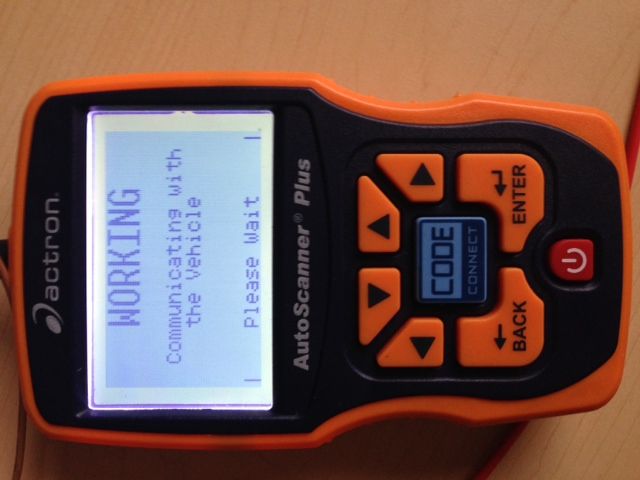
Step 15. Open the driver door but do NOT start the car yet. Plug your OBD adapter into the diagnostic port (driver footwell, just above the pedals on most BMWs). Open BimmerLink. Run "Register Battery Replacement" or "Battery Exchange." Confirm the battery type (AGM) and capacity (80, 90, 92, 95, 105 Ah - match what you actually installed). The app writes to the DME and IBS in about ninety seconds.
Step 16. Now start the car. Drive it for at least thirty minutes on real roads (not idling in the driveway). The IBS uses this drive cycle to take its first State of Health measurement and confirm the new battery is behaving as expected.
The vent tube debate settled
This argument shows up in every BMW battery thread on every forum I have ever read. Half the posters insist the vent tube is critical and the car will literally explode without it. The other half insist they have run a non-vented battery for years with no issue and the whole thing is paranoid nonsense. Both groups are partially right and entirely missing the point.
Here is what is actually true. AGM batteries are sealed under normal operation, but every AGM has a pressure relief valve that opens if the cell internal pressure exceeds spec. This happens during overcharging events (alternator regulator failure, charger left on too long, IBS misreading) and during any catastrophic internal short. When the valve opens, what comes out is a small amount of hydrogen gas mixed with oxygen. In an open engine bay, this gas dissipates instantly and is harmless. In a sealed trunk well with the battery cover on and the spare tire foam packed around it, the gas can accumulate over time.
The vent tube exists to route any released gas through a fitting in the trunk floor and out to the underside of the car, where it dissipates into open air. If your OEM battery had a vent tube and your trunk floor has a vent fitting, your replacement battery MUST have a vent port and you MUST connect the tube. This is not optional. Most aftermarket AGM batteries from Weize, ACDelco, UPLUS, Bosch, and Duralast Platinum have a vent port molded into the case as a standard feature. Some cheap eBay AGM imitations do not. Walk away from those.
If your replacement battery has the vent port on a different angle than your OEM tube, you can buy a five dollar vent adapter elbow that solves the problem. Do not just leave the tube disconnected and "hope for the best." The risk is small but it is real, and the fix costs five dollars.
Critical jump-start procedure
Almost every YouTube tutorial on jump-starting a BMW gets this wrong, and the wrong way can cost you an IBS sensor or a comfort module. NEVER connect jumper cables directly to the battery posts in the trunk. Always use the engine bay jump terminals.
On every modern BMW, the engine bay has a positive (+) jump terminal under a plastic cap usually mounted on the strut tower or fender well. Lift the cap, you will see a chunky red post. The negative (-) ground point is a chassis ground stud, also in the engine bay, usually marked with a ground symbol or a "GND" label, sometimes just a clean unpainted bolt on the strut tower or engine block. Connect the donor car's positive cable to the BMW's red jump terminal, then the donor car's negative cable to the BMW's chassis ground stud. Start the donor car, wait two minutes, then start the BMW. Disconnect in reverse order.
The reason you do not connect to the battery posts directly is the IBS. The IBS lives between the negative battery post and the chassis ground, and it monitors every amp of current that flows. When you dump fifty or sixty amps of jump-start current through the IBS, the sensor sees an event it did not authorize, can throw fault codes, and on some G chassis cars will trip a "jump start fault" that disables start-stop until cleared. Worse, the voltage spike at the moment of donor car cranking can fry sensitive comfort modules. Going through the engine bay terminals routes the current the way the manufacturer intended, bypassing the IBS for the surge and protecting the modules.
Common BMW battery problems
Half the people who land on this article are not actually here for a battery replacement. They are here because they got a warning message and they are trying to figure out if the battery is the cause. Here are the most common warnings and what they actually mean.
Increased Battery Discharge while stopped
This warning appears on the iDrive when the system thinks the car is losing too much charge while parked. About seventy percent of the time, this is NOT a dying battery. It is a parasitic draw, meaning something on the car is staying awake and pulling current when it should be asleep. Common culprits are a stuck-on glove box light, a broken comfort access door handle that keeps the BDC awake, a faulty FEM module, or a stuck rear wiper relay. Test parasitic draw with a clamp ammeter on the negative cable after the car has been parked for at least twenty minutes (long enough for all modules to fall asleep). If the draw is over eighty milliamps with the car asleep, find the parasitic source first. Replacing the battery without finding the draw will give you the same warning back inside a few weeks.
The other thirty percent of the time, the battery genuinely is at end of life. Pull the date code off your existing battery. If it is more than five years old in a salt-belt state or more than seven years old in a mild climate, the battery is the most likely cause. Replace and register, the warning resets within one drive cycle.
Comfort Access stops working at random
This is almost always voltage drop. The car requires roughly 12.4V resting to keep all comfort features active. When the battery sags below that, the system starts disabling features in priority order, and Comfort Access (the keyless entry handle sensors) is one of the first to go. If your battery is healthy and you are still seeing this, suspect the IBS itself. A corroded IBS connector on the negative cable will cause the sensor to misread voltage and report low when the battery is fine. The IBS is replaceable as a separate part for about ninety dollars from FCP Euro.
Start-stop disabled with no warning
The system needs the battery State of Charge above eighty percent and the State of Health above a certain threshold to allow start-stop. After a battery replacement and proper registration, the system trusts the new cells and re-enables start-stop within one drive cycle. If start-stop is disabled and you have NOT just replaced the battery, your existing battery is probably reading low SOH and the IBS is conservatively keeping the system off to avoid a no-start. This is the canary in the coal mine for an aging battery. Replace it before you get stranded.
iDrive resets during cold cranking
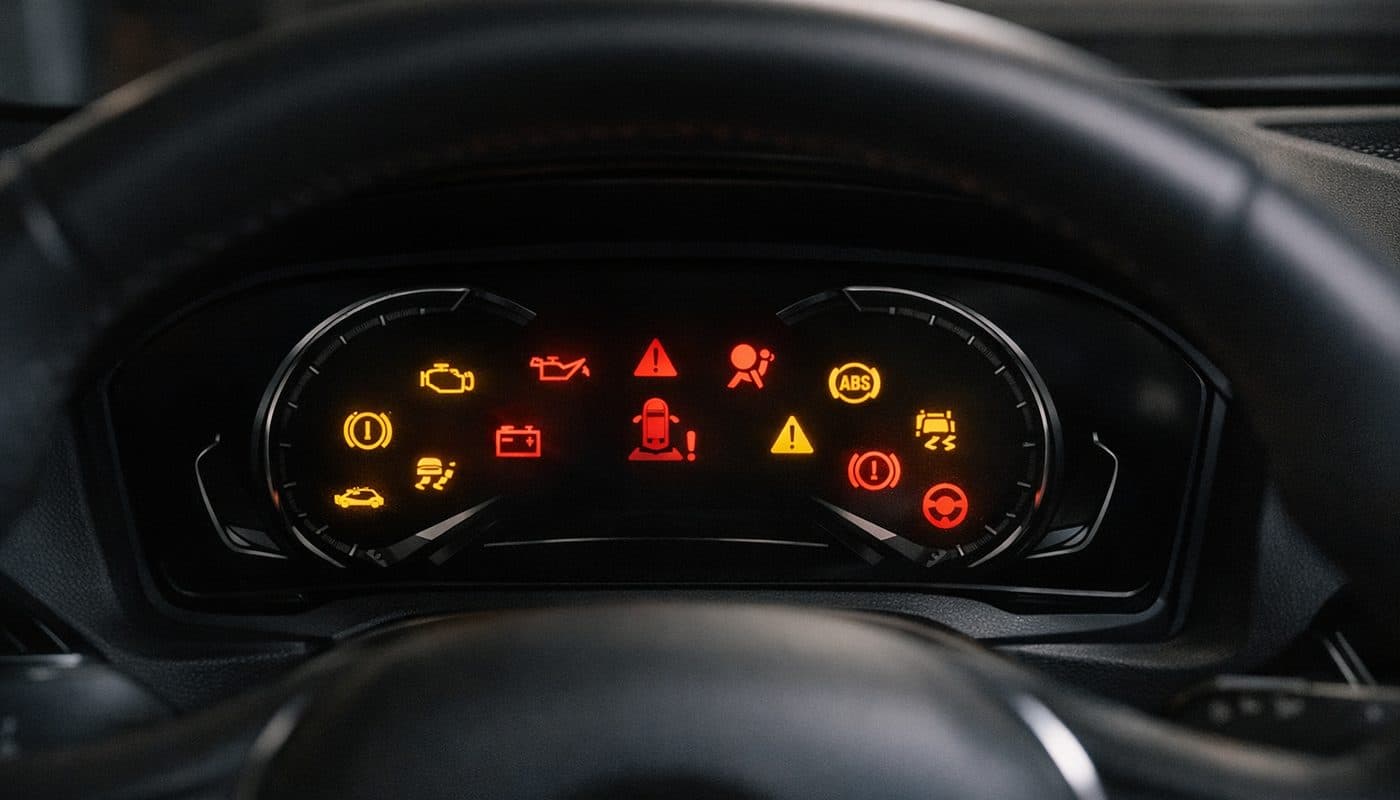
When the battery cannot hold voltage during the cranking event, the iDrive head unit (which has a low voltage cutoff to protect itself) reboots. You see the BMW logo, the system reloads, and your radio presets and last-played source are wiped. This is almost always a battery at end of life. The cranking voltage sag is too deep for the head unit to ride through. Replace and register. If you are seeing this alongside other unusual warnings, it is worth cross-checking my BMW warning lights guide to rule out other causes before you spend money.
Sunroof refuses to one-touch close, windows lose auto-up
This is a calibration loss, not a battery issue per se. When the battery sags or is disconnected, the sunroof and window modules lose their position memory. Re-initialize by holding the close button at the fully closed position for ten seconds. The module relearns end-of-travel and the auto-up / one-touch functions return.
Drivetrain Malfunction warning after battery work
If you see a Drivetrain Malfunction warning after a battery swap, the most common cause is that you started the car BEFORE registering the new battery on a G chassis car, and the DME stored a fault code about the unregistered battery. Run a full system scan, clear codes, then register the battery and the warning should not return. If the warning persists or returns after clearing, you have a separate underlying issue and my BMW drivetrain malfunction guide walks through the full diagnostic tree.
Battery tender and maintenance
If your BMW sits more than four days at a time without driving (winter storage, vacation, second car, garage queen), get a maintainer. Even when the car is "asleep," the FEM, BDC, and various comfort modules pull thirty to eighty milliamps continuously. Over four days that is around eight amp-hours drawn from a battery that is supposed to start the car at the end of the period. Add cold temperatures (which reduce available capacity by twenty to thirty percent) and you can come back from a Christmas trip to a dead battery and an angry spouse.
CTEK MXS 5.0 - the BMW community standard
The CTEK MXS 5.0 is the maintainer that owns the BMW forum recommendations. AGM mode, recond mode, automatic float switching, works down to negative four degrees Fahrenheit, five-year warranty. Roughly ninety to one hundred dollars depending on where you buy. Plug the positive clip onto the engine bay jump terminal (NOT the battery post in the trunk) and the negative clip onto a clean unpainted chassis ground stud. The maintainer will charge the battery through the IBS, which means the IBS sees the charge event and updates the State of Charge correctly. Plug onto the battery posts directly and you bypass the IBS, which then thinks the battery is sitting at the old SOC and may disable start-stop.
NOCO Genius 5 - cheaper alternative
Slightly cheaper at sixty nine to seventy nine dollars, the NOCO Genius 5 has one advantage over the CTEK. It can revive a battery that has discharged all the way to zero volts. The CTEK refuses to charge a battery below about three volts. If you found your BMW after a long absence with a dead-dead battery, the NOCO can sometimes pull it back from the brink. Downside is it only works down to thirty two degrees Fahrenheit, so cold-garage owners should pay the CTEK premium.
CTEK MUS 4.3 Polar - extreme cold
If you are in Minnesota, Wisconsin, the Dakotas, or anywhere in Canada with a cold garage, the CTEK MUS 4.3 Polar is purpose-built for sub-zero charging. Around one hundred and twenty dollars. Worth it if your daily winter low is in the single digits.
Batteries to avoid
Some products get marketed at BMW owners that should never go anywhere near the trunk well. Save yourself a year of headaches by skipping these.
Generic eBay AGM "fits BMW" batteries. No warranty path that actually works, often a relabeled flooded with no real glass mat construction inside, dead inside twelve months. The forum graveyards are full of these stories.
Walmart EverStart Maxx in H8 size. This is NOT an AGM battery despite what the size chart implies. It will work for six months because it is the right physical size, then it will die because the alternator is feeding it the AGM charge profile. You will replace it again, and you will undo the registration cycle in the process.
Optima YellowTop. Marketed at performance enthusiasts but this is a deep-cycle battery, not a starter battery. Wrong charging profile entirely for a BMW expecting standard AGM start-stop behavior. Will not last and you waste two hundred dollars on the wrong tool.
Optima RedTop. A starter battery, yes, but not designed for start-stop cycling. Six months in an F30 and the cells are toast.
Lithium "drop-in" replacements. Antigravity H8, Shorai, and similar lithium-iron-phosphate options are great for track cars where the twenty-five pound weight savings actually matters. Daily driver, hard no. The IBS does not understand lithium charge curves, the alternator profile is wrong, and lithium does not handle deep cold the way AGM does. Save the seven hundred dollars for something you will actually feel on the street.
Generic "universal" Group 49 from a parts store with no AGM marking on the label. If the label does not explicitly say AGM, walk away. Do not let a parts counter clerk talk you into the cheaper option.
DIY vs dealer cost breakdown
Here is the math laid out clearly. The DIY route saves three hundred to five hundred dollars on the first battery replacement, and roughly the same on every replacement after that since you already own the registration tool.
| Line Item | Dealer | Mobile Mechanic | DIY First Time | DIY Repeat |
|---|---|---|---|---|
| Battery | $300-380 | $240-320 | $200-290 | $200-290 |
| Labor | $150-250 | $80-150 | $0 | $0 |
| Registration | $120-175 | $50-100 | $30-80 | $0 |
| Total | $570-805 | $370-570 | $260-370 | $200-290 |
| Time | 2-4 hour wait | 1-2 hour visit | 45-70 min | 35-45 min |
Battery
- Dealer
- $300-380
- Mobile Mechanic
- $240-320
- DIY First Time
- $200-290
- DIY Repeat
- $200-290
Labor
- Dealer
- $150-250
- Mobile Mechanic
- $80-150
- DIY First Time
- $0
- DIY Repeat
- $0
Registration
- Dealer
- $120-175
- Mobile Mechanic
- $50-100
- DIY First Time
- $30-80
- DIY Repeat
- $0
Total
- Dealer
- $570-805
- Mobile Mechanic
- $370-570
- DIY First Time
- $260-370
- DIY Repeat
- $200-290
Time
- Dealer
- 2-4 hour wait
- Mobile Mechanic
- 1-2 hour visit
- DIY First Time
- 45-70 min
- DIY Repeat
- 35-45 min
The break-even on owning a BimmerLink plus OBDLink CX setup is half a battery replacement. After that you are pure savings, plus you have a tool that handles oil resets, brake bleeding, transmission resets, and basic coding for everything else the car will need over its remaining life. There is also the time consideration. The dealer wants you to drop the car off, wait, and come back. DIY is forty five minutes start to finish in your own garage at the time of your choosing.
FAQ
How much does it cost to replace a BMW battery?
Dealer pricing in 2026 runs five hundred and seventy to eight hundred and five dollars for a typical 3 Series, 5 Series, or X3. Mobile mechanic is three hundred and seventy to five hundred and seventy. DIY first time including buying the registration tool is two hundred and sixty to three hundred and seventy. DIY every time after that is two hundred to two hundred and ninety. The single biggest variable is whether you do the registration step yourself or pay someone to do it.
Does a new BMW battery need to be registered?
Yes, on every BMW from approximately 2002 onward equipped with the IBS sensor (Intelligent Battery Sensor). The registration step resets the IBS adaptation table so the alternator applies the correct charging profile to the new battery. Skip it and the new battery typically dies thirty to fifty percent faster than spec. Same brand and same Ah replacement still requires registration.
Can I replace my BMW battery myself?
Yes, easily. The mechanical work is thirty to forty five minutes, no special tools beyond a 10mm and 13mm socket. The registration step takes ninety seconds with a sixty dollar tool. If you can change a wheel, you can do this job. The trunk-mounted location on most BMW chassis is actually easier to access than an under-hood battery on most cars because there is no engine clutter in the way.
How long does a BMW battery last?
OEM AGM batteries on BMWs typically last six to eight years in mild climates, four to five years in salt-belt or extreme cold states. Aftermarket AGMs from Weize, ACDelco, or UPLUS land in the same range when properly registered. The OEM Exide H8 in my F30 lasted nine years before I replaced it preemptively in November 2024. Date codes are stamped near the negative post on every battery. Check yours.
What kind of battery does a BMW take?
AGM (absorbed glass mat) on every model from approximately 2002 onward. Group sizes are H8 / Group 49 for most 3 Series, 5 Series, and 4-cylinder X3, L95 / H9 for X5, X6, 7 Series, and heavily-optioned 540i, and H6 / Group 48 or H7 / Group 94R for certain smaller chassis builds. Pull your trunk floor and read the OEM sticker, that is the source of truth.
How do I know if my BMW battery is AGM?
If your car is a 2008 or newer model year sold in the US, it almost certainly came with AGM from the factory. The OEM sticker on the battery will say "AGM" clearly, often in large text. If the existing battery in the car was a previous owner's flooded swap (sometimes done incorrectly), you will see a generic flooded label without the AGM marking. In that case, replace with AGM and re-register the correct battery type.
What happens if you don't register a new BMW battery?
The cascade is predictable. Start-stop disables within days. "Increased Battery Discharge" warning appears within four to eight weeks. Comfort access starts working intermittently. Sunroof one-touch close fails. iDrive resets during cold cranks. The new battery degrades thirty to fifty percent faster than spec because the alternator is applying the old battery's reduced acceptance profile. None of this is the new battery's fault, it is the IBS adaptation being wrong.
How do I register a new BMW battery without a dealer?
BimmerLink app ($29.99 one-time) plus a Vgate vLinker BM or OBDLink CX adapter ($25 to $50). Plug the adapter into the OBD port, open the app, select "Service Functions," tap "Register Battery Replacement," confirm AGM and capacity, done. Ninety seconds. Total cost sixty to eighty dollars one time, no subscription, ever. Same result as the dealer's hundred and seventy five dollar programming charge.
What size battery does my BMW need?
Pull the trunk floor (or open the cargo well lid on X5 / X6) and find the OEM sticker on the side of the existing battery. It will say either H8 / Gr49 (most common, 80-90 Ah), L95 / H9 (X5, X6, 7 Series, larger 5 Series, 105 Ah), H7 / Gr94R (some F-chassis 3 Series and X3), or H6 / Gr48 (some smaller F and G chassis builds). Match exactly. Do not "upgrade" without knowing the tray fits and the IBS will accept the new capacity.
Why are BMW batteries in the trunk?
Weight distribution. BMW chases a fifty fifty front-to-rear weight balance for handling, and moving the battery from the engine bay (front) to the trunk well (rear) helps push that balance back toward fifty fifty without adding ballast. It also frees up engine bay space for other components and keeps the battery in a temperature-controlled environment away from engine heat, which extends battery life.
Can I use a regular battery in a BMW?
No. Regular flooded lead-acid batteries are wrong on three counts. They cannot handle the start-stop cycle rate, they cannot accept the brake regen current rate, and they will be cooked by the alternator profile that the DME applies for AGM. Putting a flooded battery in an AGM BMW and registering it as flooded just guarantees the cells fail in twelve to eighteen months. AGM only.
How do I jump start a BMW with a dead battery?
Always use the engine bay jump terminals, never the battery posts in the trunk. Lift the red plastic cap on the positive (+) terminal, usually mounted on the strut tower or fender well. Connect donor positive to BMW positive, donor negative to a clean chassis ground stud in the engine bay. Start donor, wait two minutes, start BMW. Disconnect in reverse order. Connecting directly to the trunk battery posts bypasses the IBS and can fry comfort modules.
What is the BMW Intelligent Battery Sensor?
The IBS is a small black puck mounted on the negative battery cable that measures voltage, current, and temperature one hundred times per second. It feeds State of Charge and State of Health data to the DME, which uses that data to pick the correct alternator charging profile. When you replace the battery, the IBS retains the old battery's adaptation table until you register the new one. Registration tells the IBS to wipe the table and learn from scratch.
Why does my BMW say increased battery discharge?
Seventy percent of the time, this is a parasitic draw (something on the car staying awake and pulling current with the engine off) NOT a dying battery. Common causes are a stuck glove box light, faulty comfort access handle, broken FEM module, stuck rear wiper relay. Test parasitic draw with a clamp ammeter after the car has been asleep twenty minutes. If draw is over eighty milliamps, find the source first. Replacing the battery without finding the parasite gives you the same warning back inside weeks.
Can I use BimmerLink to register a battery?
Yes, this is exactly what BimmerLink is built for. App is $29.99 one-time on iOS or Android. Pair with a Vgate vLinker BM or OBDLink CX adapter ($25 to $50). Plug into OBD port, open app, run "Battery Exchange" or "Register Battery Replacement," ninety seconds end to end. Works on every BMW chassis from E46 to G80. This is the answer for eighty percent of BMW owners. By the way, if you also need to replace the battery in your key fob, that is a separate two dollar fix covered in my key fob battery replacement guide, and if you need to program a new key entirely, the BMW key programming guide has that path.
Final verdict by chassis
Here is what I would actually do, by chassis, if I were in your driveway right now with the dealer quote in one hand and Amazon open on my phone.
E46, E60, E90, F30, F32, F10, F22, G20, G30 with H8 / Group 49 fitment. Buy the Weize Platinum H8 ($220 to $260), buy a Vgate vLinker BM adapter ($25 to $35), download BimmerLink ($29.99). Total spend two hundred and seventy five to three hundred and twenty five dollars. Do the swap in your driveway in forty five minutes. Register, drive, done. You just saved four hundred dollars versus the dealer.
E70 X5, F15 X5, G05 X5, X6, F01 7 Series, G11 7 Series with L95 / H9 fitment. Buy the UPLUS AGM L95 ($270 to $320), same BimmerLink plus adapter setup ($55 to $85). Total spend three hundred and twenty five to four hundred and five. Same forty five minute install procedure, just heavier battery, plan for a buddy or a battery lift strap.
F30 320i, F22 228i, F25 X3, certain G20 builds with H6 / Group 48 or H7 / Group 94R fitment. Buy the ACDelco Gold 48AGM if you have Group 48 ($230 to $260) or the Weize Platinum H7 if you have Group 94R ($200 to $240). Same BimmerLink registration setup. Total spend two hundred and fifty five to three hundred and forty five.
If you do not want a phone-based workflow at all, the ANCEL BM500 standalone scanner ($140 to $180) replaces the BimmerLink app plus adapter combo, and gives you a dedicated handheld that does battery registration plus full system fault scanning, oil resets, EPB roll-back, and more. Same one-time purchase model, no subscription, ever.
The single hardest part of this whole job is psychological. The dealer pricing creates a false belief that the work must be specialized, when in reality it is a forty five minute swap and a ninety second software step. Five years of doing this work on my own cars and at the dealer has convinced me that the gap between "BMW owner" and "BMW DIYer" is mostly knowledge, not skill. You are now on the right side of that gap. Do the swap, register the battery, drive the car, and use the four hundred dollars you saved on something better than a dealer service bay.
One last thought. If you are reading this because the warning light came on and you panicked, take a breath. The battery is the cheapest thing on your BMW that needs replacing. It is not a transmission, it is not a B58 valve cover, it is not a turbo. It is a sealed lead box that you can swap with hand tools and a phone app. You have got this.