Best Dashcam for BMW - 2026 Buying Guide
Affiliate disclosure. BimmerTalk is a proud partner of the Amazon Associates Program and Turner Motorsport. We may earn a small commission on qualifying purchases through our links, at no extra cost to you. Read the full disclosure.

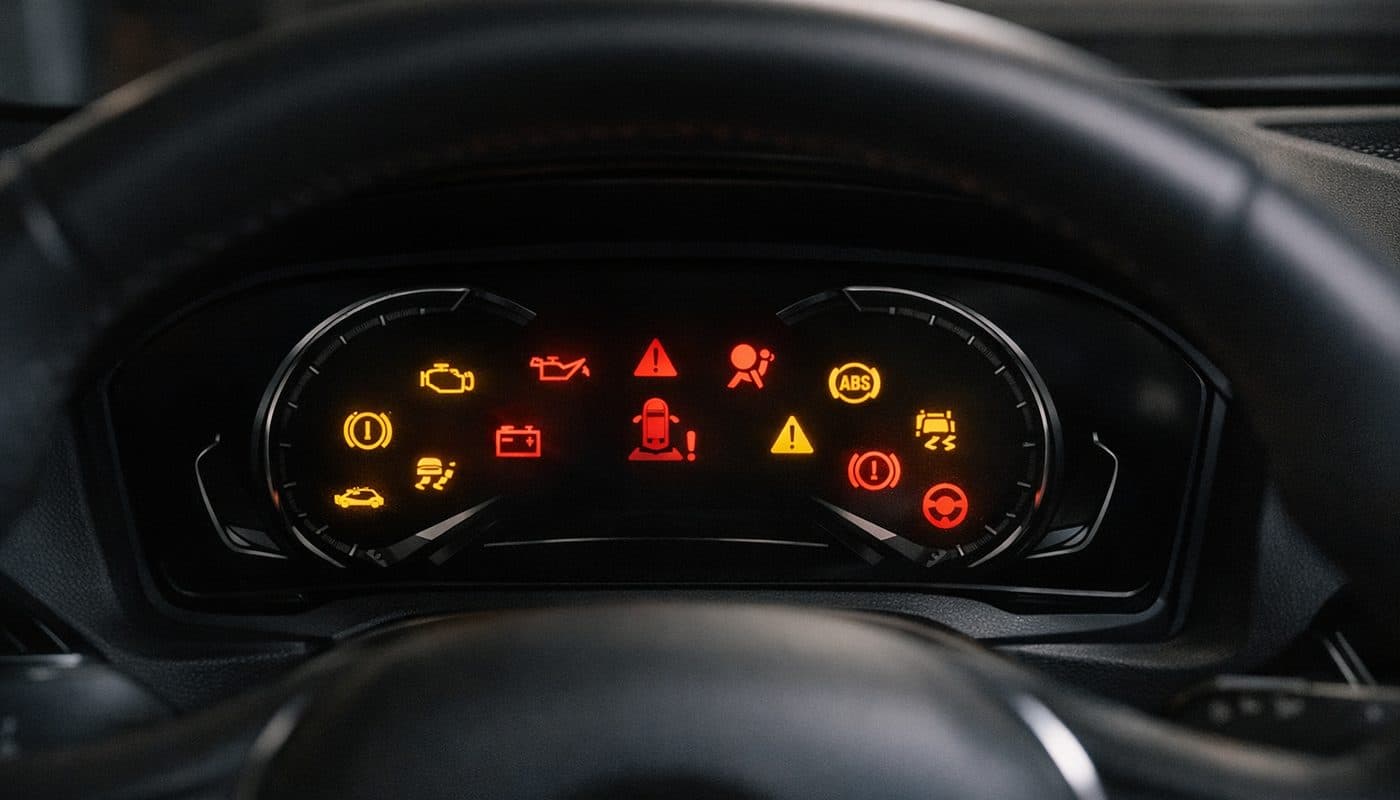
BMW batteries do not forgive. That is the first sentence I give every customer who rolls into my bay asking "what dashcam should I put in my G20". Before we talk Sony STARVIS sensors, before we argue Viofo versus Thinkware, before we even open the A-pillar trim, we need to talk about the Intelligent Battery Sensor bolted to the negative terminal of every 2008-and-newer BMW. That sensor is watching. It knows exactly how much current your accessories are pulling while the car is asleep, and on 2021-and-newer chassis it will actively disable modules one by one, starting with the iDrive head unit, then the instrument cluster, then the comfort-access system, the second you cross a parasitic-draw threshold it has decided is unhealthy. A badly-installed dashcam is the single most common cause of that failure mode I see in the shop. I have pulled three Viofos and one no-name Amazon camera out of customer cars in the last six months, all of them hardwired without a voltage cutoff, all of them dragging the AGM down to 12.0V on weekend storage, all of them triggering the "battery discharge while parked" iDrive message on Monday morning.
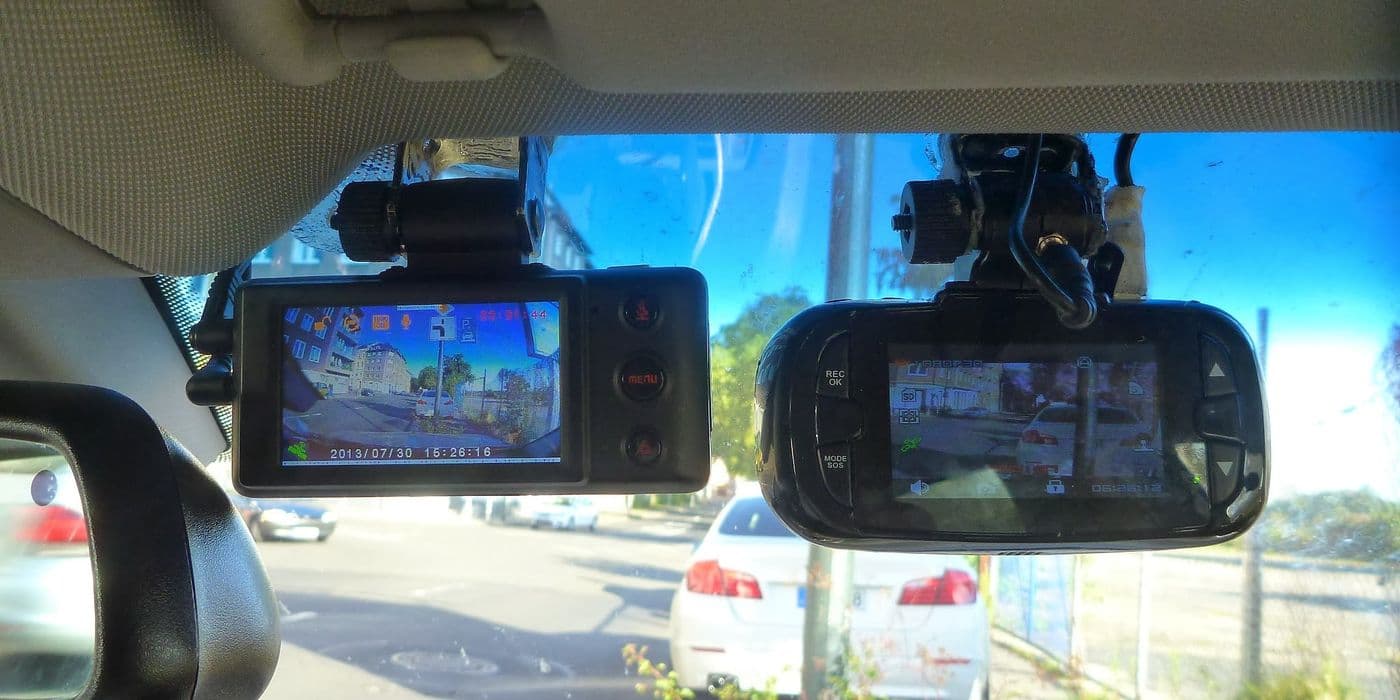
I'm Kamil, I've been wrenching on BMWs for five years, I daily a G20 330i with a Viofo A229 Pro hardwired to F35 under the front panel and a Cellink Neo battery pack in the trunk feeding a BlackVue rear, and I've installed somewhere around 80 dashcams across E46, E60, E90, E92, F10, F15, F25, F30, F32, G01, G05, G07, G20, G22, and G30 chassis. The short version of this guide is that the 2026 best all-around dashcam for any BMW owner who wants one camera, done properly, is the Viofo A329S - 4K front, 2K rear, dual Sony STARVIS 2 sensors, HDR, 5GHz WiFi, the HK4 hardwire cable with proper 4-level voltage cutoff, and a price that undercuts the premium brands by a hundred dollars. The long version is everything below, because every BMW is different, every owner has a different parking situation, and the honest answer to "which one" depends on whether you park in a garage or on the street, whether your car has AGM or flooded battery chemistry, whether you can swing a trim tool, and whether your 2021+ BMW is going to throw fits at the first hint of parasitic draw.
If you skim one section, make it the IBS and voltage-cutoff discussion. If your BMW is a G-chassis built after 2021 and you install a dashcam without a proper voltage cutoff set to 12.2V on AGM, you will kill modules. Not the battery, not eventually, not "might" - you will kill modules, and the fix is a dealer reset or a BimmerCode session. Let's get into it.
Viofo A329S
Best all-around 2026
$150 Redtiger F77
Budget floor
Thinkware U3000 Pro
Parking mode king
60-90 min
DIY hardwire install
| Brand | Model | Resolution | Parking Mode | LTE | Price | Best For |
|---|---|---|---|---|---|---|
| Viofo | A329S | 4K F / 2K R | Motion + impact | No | $300-400 | Best all-around 2026 |
| Thinkware | U3000 Pro | 4K + radar | Radar-triggered | Optional | $400-500 | Parking mode king |
| BlackVue | Elite 9/10 | 4K | Cloud buffered | Yes | $500-700 | Cloud king |
| Redtiger | F77 | 4K F / 2K R | Basic motion | No | $150 | Budget king |
| Garmin | Dash Cam 57 | 1440p | Basic | No | $180 | Small form factor |
| Vueroid | S1 | 4K | Low power LPM | No | $280 | 1yr parking |
Viofo
- Model
- A329S
- Resolution
- 4K F / 2K R
- Parking Mode
- Motion + impact
- LTE
- No
- Price
- $300-400
- Best For
- Best all-around 2026
Thinkware
- Model
- U3000 Pro
- Resolution
- 4K + radar
- Parking Mode
- Radar-triggered
- LTE
- Optional
- Price
- $400-500
- Best For
- Parking mode king
BlackVue
- Model
- Elite 9/10
- Resolution
- 4K
- Parking Mode
- Cloud buffered
- LTE
- Yes
- Price
- $500-700
- Best For
- Cloud king
Redtiger
- Model
- F77
- Resolution
- 4K F / 2K R
- Parking Mode
- Basic motion
- LTE
- No
- Price
- $150
- Best For
- Budget king
Garmin
- Model
- Dash Cam 57
- Resolution
- 1440p
- Parking Mode
- Basic
- LTE
- No
- Price
- $180
- Best For
- Small form factor
Vueroid
- Model
- S1
- Resolution
- 4K
- Parking Mode
- Low power LPM
- LTE
- No
- Price
- $280
- Best For
- 1yr parking
Why BMW Owners Actually Need a Dashcam
The rest of the internet will tell you every driver needs a dashcam. I think that is overblown for a Toyota Corolla and completely correct for a BMW. There are four specific reasons I give my customers, in rough order of how often they come up.
Insurance Claims Against BMW Drivers
BMW drivers are guilty until proven innocent in any fender bender. That is not paranoia, that is what my insurance adjuster buddy tells me every time we get a beer. The moment a BMW is involved in a multi-car incident, the default assumption from the other party's carrier is that the BMW driver was speeding, tailgating, lane-splitting, or driving "aggressively". I have seen clean-footage dashcam recordings reverse at-fault determinations three times in the last two years on cars I work on. Without footage, the argument devolves into competing claims and the BMW driver usually eats at least partial liability because the stereotype is that strong. Spend $300 on a Viofo A329S, mount it properly, and you have 4K evidence that says otherwise.
Vandalism and Parking Lot Damage
BMWs get keyed. They get dinged. They get keyed by people who think the owner deserved it. I have two G20 owners in my customer base who have had their cars keyed in mall parking lots in the last 18 months, and in both cases the front-and-rear dashcam in parking mode caught the perpetrator on camera. One insurance claim got paid in full, one person got charged with criminal mischief. No camera, no evidence, no claim, no consequences. This is the single strongest argument for buying a dashcam with real parking mode (not just "records when you park" but buffered or radar-triggered recording that captures events before the G-sensor trips). If you are escalating your anti-theft game alongside the dashcam, my BMW Warning Lights Explained guide covers the related "battery discharge while parked" and other iDrive warnings that often pop up after a dashcam install goes wrong.
Track Day Evidence
If you do track days or HPDE sessions, a forward-facing dashcam with GPS and G-sensor overlay is an invaluable training tool. It records your lines, your brake points, your throttle application. It also records the incident if another car goes off and collects your fender on the grid. Most tracks require photographic evidence for incident reports, and "the white M4 hit me" without footage is a conversation that goes nowhere. Viofo A229 Pro and A329S both overlay GPS speed, coordinates, and G-force data directly onto the video.
The Hit-and-Run You Did Not See
The most frustrating incident in any BMW owner's life is walking out to the car in the morning and finding a new dent on the fender. No note. No witnesses. Insurance deductible applies because it is a single-car claim. A dashcam with buffered parking mode records the 10-20 seconds before and after any impact, so the one thing you walk out with is a front, rear, and sometimes side view of whoever hit you. That alone is worth the hardware cost for anyone who street-parks a BMW.
The 2026 Best Overall Picks - Four Cameras I Actually Recommend
I have a stack of dashcams in my shop drawer from brands that do not make this list. Garmin Mini 2 in there because I replaced one with a Viofo on a customer car. A no-name Amazon 4K unit I pulled because it was drawing 40mA at idle and killing the G30 AGM. Two FITCAMX units that turned out to look great but record like 2018. The four cameras below are the ones I recommend by name when a customer asks what to buy, and the choice between them is use-case, not quality.
Viofo A329S - Editor's Pick for 2026
Vortex Radar's 2026 Best All-Around Dashcam award went to the A329S after a 13-model head-to-head, and I agree with the call. 4K at 60fps on the front channel, 2K HDR on the rear, dual Sony STARVIS 2 IMX678 sensors front and rear, dual-band 5GHz WiFi, built-in GPS, decent buffered parking mode with G-sensor wake. The reason it wins is the combination of the STARVIS 2 night performance (license plates readable at 30 feet in low light), the HDR that handles the nuclear-bright sun-through-autumn-leaves transitions that ruin lesser cameras on BMW windshields, and the HK4 hardwire cable with a proper 4-level voltage cutoff module. Price lands at $379-$449 depending on sale timing. Pair with the HK4 cable for hardwire install.
The only knock against the A329S for BMW owners is that Viofo's older coax cable ran thick and bulged the headliner trim on G20 and F30 installs. The A329S ships with a slimmer cable that solves this, but if you buy used or grab an A329 non-S at a discount, check the cable thickness before committing to a clean install.
Thinkware U3000 Pro - Parking Mode King
If you park on the street, park in an airport long-term lot, or leave your car at the office for 10 hours a day in summer, the Thinkware U3000 Pro is what you want. 4K front, 2K rear, Sony STARVIS 2, and the feature that nothing else at this price point matches - a built-in radar module. Actual radar, not motion-detect, not G-sensor. The radar wakes the camera before something enters the lens frame, captures the incident, and goes back to sleep, drawing roughly 3-5mA at idle versus 15-25mA for motion-detect parking on a Viofo. That math translates to 2-3 days of vehicle-battery parking versus 6-8 hours on motion-detect. The U3000 Pro also includes Thinkware's Smart Parking Mode thermal protection, which throttles power when cabin temperature exceeds 80 degrees C - a real BMW concern because black-dashboard cabins in the summer sun regularly hit 75-85 degrees.
Price lands at $400-$500 depending on whether you grab the optional LTE module. The downside is Thinkware's app ecosystem is clunkier than BlackVue's cloud and Viofo's bitrate tuning options. If you want "set it and forget it with the best parking mode on the market" this is the pick.
BlackVue Elite 9 / Elite 10 - Cloud King
BlackVue has owned the BMW-community reputation for cleanest install for a decade, primarily because the power coax is thinner than Viofo's and tucks under G-chassis headliner trim without bulging. Elite 9 is the 2025-2026 flagship at $559 - 4K dual-channel with native 4G LTE built in, no external module required. Elite 10 at $579 adds HDR on both channels and STARVIS 2 front and rear. The LTE is the differentiator - push an impact notification to your phone from anywhere, pull live view from the cloud on demand, remote video access without pulling the SD card.
BlackVue Over the Cloud subscription runs $5-10 per month and is effectively mandatory to get the value. If you are not willing to pay the subscription, skip BlackVue and buy a Viofo. If you want to open your phone and see what is happening at your BMW in the parking garage in real time, this is the only camera that delivers it cleanly.
Redtiger F77 - Budget Winner
Consumer Reports named the Redtiger F77 their 2026 top budget pick and I agree. $150 buys you 4K front plus 2K rear, both with STARVIS 2 sensors, plus the hardwire kit in the box. At that price point nothing else comes close on spec sheet or real-world image quality. The app is mediocre, the parking mode is basic motion-detect, the low-light performance trails a Viofo A229 Pro at $319 - but for the BMW owner who wants "I just need something before I park at the airport Friday", the F77 is the answer. The second reason to buy it is for older E90 or E46 chassis where you do not want to drop $400 on a car worth $12,000. $150 is the sweet spot for a budget tier dashcam that does not embarrass the car it is installed in.
BMW Factory Dashcam Options - Drive Recorder and Advanced Car Eye
Before anyone asks, yes, BMW sells a factory dashcam. Two actually. Both have issues. Let me walk through what they are and why I still recommend aftermarket for almost every customer.
BMW Drive Recorder - The Built-In That Is Not Really a Dashcam
Drive Recorder is software that turns the factory surround-view cameras into a loose approximation of a dashcam. It shows up on 2019-and-newer BMWs equipped with Parking Assistant Professional or Surround View cameras, accessed through iDrive under Apps, Drive Recorder. It is free if you have the hardware. That is the one thing going for it.
The specs are brutal. Resolution is 1280x960 SXGA at 15 frames per second. Not 4K, not 1080p, not even 720p HD - SXGA was the monitor standard in 2001. Max clip length is 40 seconds. On collision, the system saves 20 seconds before and 20 seconds after. There is no loop recording. There is no parking mode. There is no cloud. And on most G-chassis the rear camera feed is mirrored left-to-right, which means rear license plates are unreadable. It is, in short, a "surround view camera recording some clips when you ask it to" feature. It is not a dashcam replacement.
The one legitimate use case is as a secondary recording layer on a car that already has a proper aftermarket dashcam. Turn on Drive Recorder, let it run the 40-second clips, and if you ever have an incident you get the factory camera angles (side mirrors, rear bumper) as supporting evidence alongside your Viofo or Thinkware 4K footage. Some aftermarket coders can unlock Drive Recorder on cars that have the hardware but not the software via BimmerCode, which is a nice free bonus. Do not buy Drive Recorder as your only dashcam.
BMW Advanced Car Eye 3.0 and 3.0 Pro - Rebadged Thinkware
Advanced Car Eye is BMW's dealer-installed aftermarket dashcam. The 3.0 is 1440p front only at $433-$495 for parts. The 3.0 Pro is 2K front plus 1440p rear at $570-$676 for parts. Add dealer install labor at roughly $300-$400 and total cost runs $700 to $1,100 for a camera that is functionally identical to a $399 Thinkware Q1000.
It is a rebadged Thinkware unit. BMW commissioned Thinkware to supply a cosmetically OEM-styled version that mounts cleanly behind the rain sensor housing. The internals are Thinkware hardware. The app is a BMW-styled skin on the Thinkware app. The image quality is Thinkware Q1000-tier, which is fine but not flagship, and the missing features (no radar parking mode on the standard, no LTE on any variant) are the same limitations you would get from a cheaper Thinkware off Amazon.
The only honest argument for Advanced Car Eye is "I have never touched a trim tool and I want a dealer install with BMW warranty protection". If that is the buyer, sure, Advanced Car Eye 3.0 Pro is a clean no-stress solution. For anyone willing to DIY, spend $399 on a Thinkware U3000 Pro and keep the $700 difference.
BMW-Specific Install Considerations That Other Guides Ignore
This is where the generic "best dashcam 2026" roundup guides fall apart for BMW owners. The camera is the easy part. The install is where you learn whether the author has ever actually worked on a BMW or copied specs off a press release.
The Intelligent Battery Sensor Will Not Save You
Every BMW from 2008 onward has an Intelligent Battery Sensor bolted to the negative battery terminal. Its job is to measure current, voltage, and temperature continuously, log the parasitic draw when the car sleeps, and report to the DME so that charging strategy and module shutdown can be managed intelligently. On pre-2021 chassis the IBS is advisory - if parasitic draw gets too high, you see a "battery discharge while parked" warning on iDrive but nothing shuts off.
On 2021-and-newer chassis (G20 LCI, G22, G42, G26, G80, G82, G87, G05 LCI, G07 LCI, G30 LCI, G11 LCI, G14 LCI, iX, i4, i7) the IBS actively disables modules if parasitic draw exceeds its threshold. The shutdown order is iDrive first, then the instrument cluster, then comfort access, then the HVAC blower. I have seen this three times in the shop on cars with improperly-installed dashcams. The fix is a dealer reset or a BimmerCode adaptation reset, not a hard problem to resolve, but it should never happen in the first place. For the full walkthrough on setting up BimmerCode to do this reset yourself, see my OBDLink and BimmerCode BMW Coding Guide.
The rule is simple. On any 2021-and-newer BMW, the dashcam hardwire kit must include a voltage cutoff module set to 12.2V for AGM batteries or 12.4V for flooded. The cutoff pulls power from the camera when battery voltage drops, protecting the main battery from deep discharge and keeping parasitic draw at zero after shutoff. Every premium hardwire kit (Viofo HK4, Thinkware OBD/hardwire, BlackVue Power Magic Pro, Redtiger HK3) includes one. If the kit you are looking at does not, buy a different kit.
Delayed ACC Fuses on F and G Chassis
This is the BMW gotcha that surprises every first-time installer. On most BMW chassis (F30, F32, F10, F15, G20, G30, G05), the fuse labeled "ignition" or "ACC" actually stays live for roughly 15 minutes after the car is locked. BMW engineered this to keep the instrument cluster and comfort systems available if you unlock the car within 15 minutes. For dashcam purposes, it means a camera wired to the wrong "ACC" fuse stays in driving mode (full resolution, audio, GPS logging) for 15 minutes after you walk away, rather than immediately transitioning to parking mode.
The fix is to wire ACC to a true ignition-switched circuit. Cigarette lighter circuits usually qualify. Some fuse positions labeled "accessory" in the fuse diagram are actually switched. Multimeter test is mandatory - probe the fuse with the car running, note it reads 12V, then lock the car and wait. If the fuse still reads 12V after 30 seconds, it is delayed ACC. If it drops to 0V within 5 seconds of lock, it is true ignition and correct for dashcam use. On my G20 the correct ACC tap is F78, which drops within 3 seconds of lock.
AGM vs Flooded Battery Voltage Cutoff Math
BMW ships three battery chemistries depending on trim and year. Flooded lead-acid on older base-trim E and F chassis. AGM (Absorbent Glass Mat) on any trim with Start/Stop, and on nearly all 2015-and-newer BMWs. Li-ion auxiliary batteries on some hybrids and all electric BMWs. Voltage cutoff differs between chemistries because AGM tolerates deeper discharge better than flooded.
Correct settings on the HK4 or equivalent 4-level cutoff module: 12.2V for AGM on any BMW with Start/Stop or 2015+ build date. 12.4V for flooded on older base-trim cars. 12.0V only in short-term emergency scenarios (long trip, known-short parking window, willing to accept battery wear). Never set cutoff below 12.0V on any BMW, because below 12.0V the AGM is actively damaged and repeated cycles will halve its lifespan. I have seen five-year-old BMW AGMs that should have lasted eight years die prematurely because their owners ran dashcams with cutoffs set to 11.8V to maximize parking-mode runtime. False economy.
Cellink Neo Battery Pack for Street Parkers
Any BMW owner who street-parks 5 days per week, parks at the airport for vacations, or stores the car over winter should stop trying to solve parking mode with the main battery and buy a Cellink Neo. $250-$400 depending on capacity. The Neo is a 74Wh LiFePO4 battery pack that lives in the trunk, charges only on accessory power (so it never touches the main battery during parking mode), and feeds the dashcam directly. Forum consensus on BimmerPost and DashCamTalk is near-unanimous - this is the parking mode solution for BMW.
The Neo runs 24-48 hours of typical parking mode on a full charge. It charges from empty to full in roughly 35 minutes of highway driving. There is no risk of draining the main battery because the Neo is physically isolated. For BMW owners with 2021+ cars where the IBS is paranoid, the Neo is the cleanest way to run unlimited parking mode without triggering module shutdown.
Hardwire vs OBD Adapter vs Plug-In - The Three Install Paths
There are three ways to power a BMW dashcam. They are not equal. One is right for almost everyone, one is right for a specific subset, and one should basically never happen.
Hardwire to Fuse Box - The Correct Install for 95% of BMW Owners
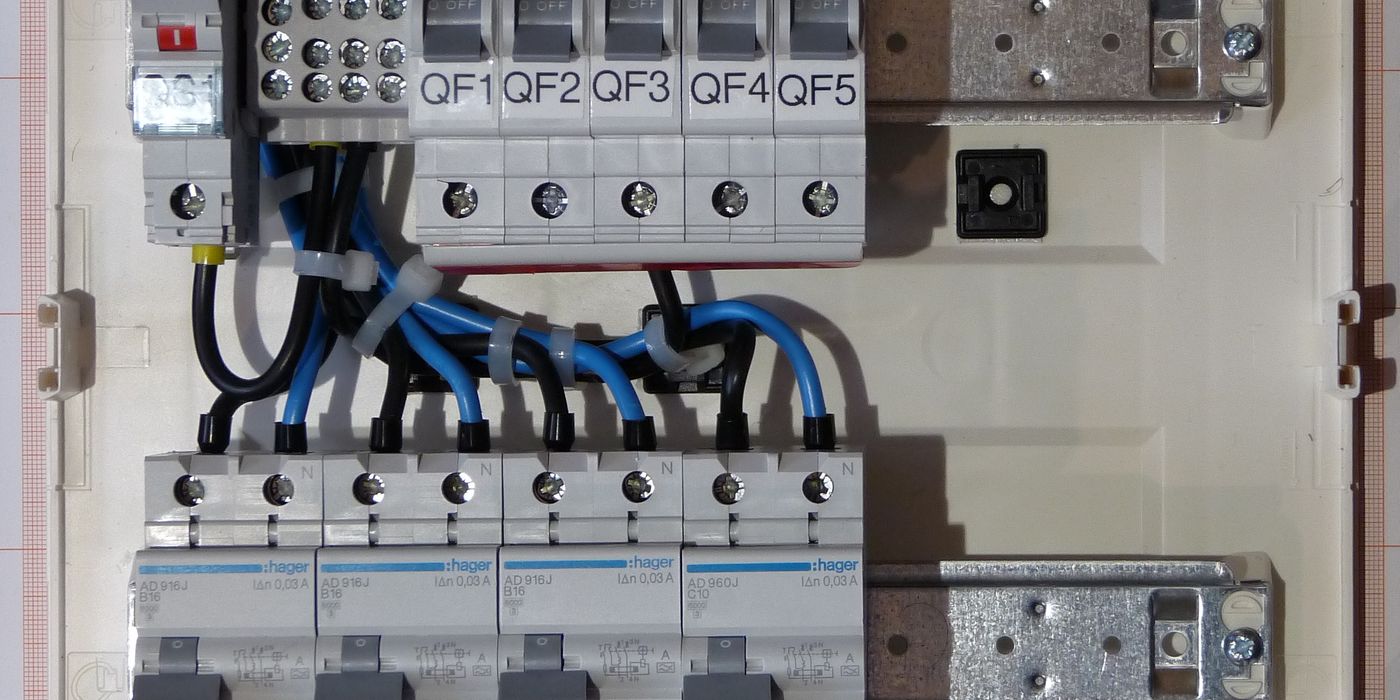
Hardwire is the cleanest, most reliable, and most BMW-compatible install. Three wires from the kit - constant 12V to one fuse, switched 12V (true ACC) to another fuse, ground to a chassis bolt. Voltage cutoff module built into the kit. Set cutoff to 12.2V on AGM. Route the camera cable through the headliner, down the A-pillar, behind the kick panel, to the fuse box. One to one-and-a-half hours of DIY time with trim tools, a multimeter, and a torx driver. Fully reversible.
The advantages are comprehensive. Proper parking mode works (both buffered and motion-detect). Voltage cutoff protects the main battery. Camera cable is invisible behind trim. No OBD port interference with BimmerCode sessions. Works identically on every BMW chassis from E46 to iX. If you are technically competent enough to remove a trim panel, hardwire is the answer.
OBD Power Adapter - Plug-and-Play With Caveats
Various brands (Pulsar, BlackSys, Thinkware OBD-II cable, Viofo OBD adapter, others) sell an adapter that plugs into the OBD port under the steering column. Zero install work. Plug in, route cable to the windshield, done. Roughly $25-$50 accessory cost.
The problems are BMW-specific and real. First, most BMWs from 2011 onward switch the OBD port on ignition to prevent theft scanning - which means the OBD port does not deliver constant power needed for parking mode, and the dashcam cuts off the moment you lock the car. Some adapters work around this with proprietary handshakes; most do not. Second, some F-chassis BMWs (F15 especially, some F30) throw a tamper alarm when an OBD device is present during sleep, requiring BimmerCode to disable tamper detection. Third, having an OBD adapter in the port physically interferes with plugging in an OBDLink MX+ or BimmerCode adapter for coding sessions. You have to unplug the dashcam OBD adapter every time you want to code anything.
The OBD path is only viable on 2010-and-older BMWs where the OBD port is constant-power, tamper detection is simpler, and nobody is running regular BimmerCode sessions. On any 2011+ BMW, hardwire is the right answer. Do not use OBD power.
Dongar Rearview Mirror Adapter - 20-Minute Install on Some Chassis
Dongar Technologies sells a $20-90 plug-and-play harness that unplugs the BMW auto-dimming mirror connector, plugs inline, and exposes a USB-C power output at the headliner. No fuse tap, no A-pillar removal for the wire, no multimeter work. The kit takes 20 minutes to install and pairs beautifully with small-form-factor cameras like the Garmin Mini 2 or Viofo A119 Mini 2.
The caveats are twofold. First, Dongar only sells chassis-specific harnesses - G20, G22, G26, G30, G05, G07, F30, F32, F10, F15, E90 all have compatibility sheets and variants. Check the Dongar compatibility page before ordering. Second, on some BMW configurations the mirror harness is always-hot (not ignition-switched), meaning the dashcam is always drawing power and parking mode is always active. Read Dongar's notes on your specific car's compatibility, because the behavior varies year-to-year and trim-to-trim.
Dongar is the right answer for the BMW owner who wants a clean 20-minute install, does not want to pull trim, and accepts a small-form-factor camera. For anyone who wants 4K dual-channel with radar parking mode, hardwire is the right answer.
Chassis Install Walkthroughs - Fuse Locations Per Car
Generic "how to hardwire a dashcam" tutorials skip the part where BMW fuse boxes move location per chassis generation and the fuse numbering changes with every facelift. Here are the specifics for the most common chassis I see.
G20 3 Series and G22 4 Series (2019+)
Front fuse box lives on the passenger-side kick panel, under the front-panel trim. Pop the lower trim with a plastic pry tool, the fuse panel rotates out on a hinge. F12 is a solid constant-power slot for the front camera (always-hot, roughly 5-10A available). F35 is a switched ACC slot that drops within 3 seconds of lock on my G20, so it is true ACC not delayed. F78 is another ACC option.
Rear fuse box sits in the trunk under the right-side floor mat, behind a cover labeled "fuse". Constant-power slots for the rear camera are plentiful - any slot on the trunk-light or outlet circuit works. Ground to the comms-module bolt directly next to the trunk fuse panel for a factory-clean connection.
Total install time for front-and-rear on G20 is 60-90 minutes with trim tools, a multimeter, a fuse tap kit, and patience with the A-pillar airbag harness routing.
G30 5 Series and G05 X5 (2017-2023)
Same two-panel layout as G20 but the trunk fuse panel is larger and further back. On G30 sedan the trunk panel sits behind the right-side carpet panel, not under the floor mat. On G05 X5 the trunk panel is on the left-side cargo-area sidewall. Constant-power slots share circuits with trunk lighting; ACC on slots shared with the liftgate motor for SUVs. Routing the rear camera on G05 requires fishing wire through the right-side rubber boot that connects the chassis to the liftgate - the right boot typically has more room than the left.
Total time on G05 runs 90-120 minutes because the liftgate boot routing is finicky.
F30 3 Series and F32 4 Series (2012-2019)
Fuse box lives behind the glovebox on the passenger side. Drop the glovebox by releasing the side clips and lowering on the hinge. Circuits 13-17 are typical constant-power slots, depending on model year. ACC on the cigarette lighter circuit is the cleanest true-ACC option because the delayed-ACC issue does not apply to the lighter socket on F30.
F30 is the sweet spot chassis for DIY dashcam installs. The glovebox drops easily, the fuse layout is well-documented on F30 BimmerPost forums, and the A-pillar trim pulls off with a single upward yank once the clips are released. 60-75 minutes total.
F15 X5 (2014-2018) and F25 X3 (2011-2017)
Same glovebox fuse panel as F30 but with different numbering, and an F-chassis-specific gotcha. F15 owners have reported that OBD-powered dashcams trigger the panic alarm if the OBD device remains plugged in after the car is locked. The fix is either full hardwire (skip the OBD path entirely) or BimmerCode tamper-detection disable. Since the panic alarm sounds at 3 a.m. in your garage, this is not a theoretical concern.
F15 rear camera install through the liftgate boot adds 20-30 minutes versus a sedan. Budget 120 minutes for front-and-rear hardwire on F15.
E90 3 Series (2006-2013) and Older E-Chassis
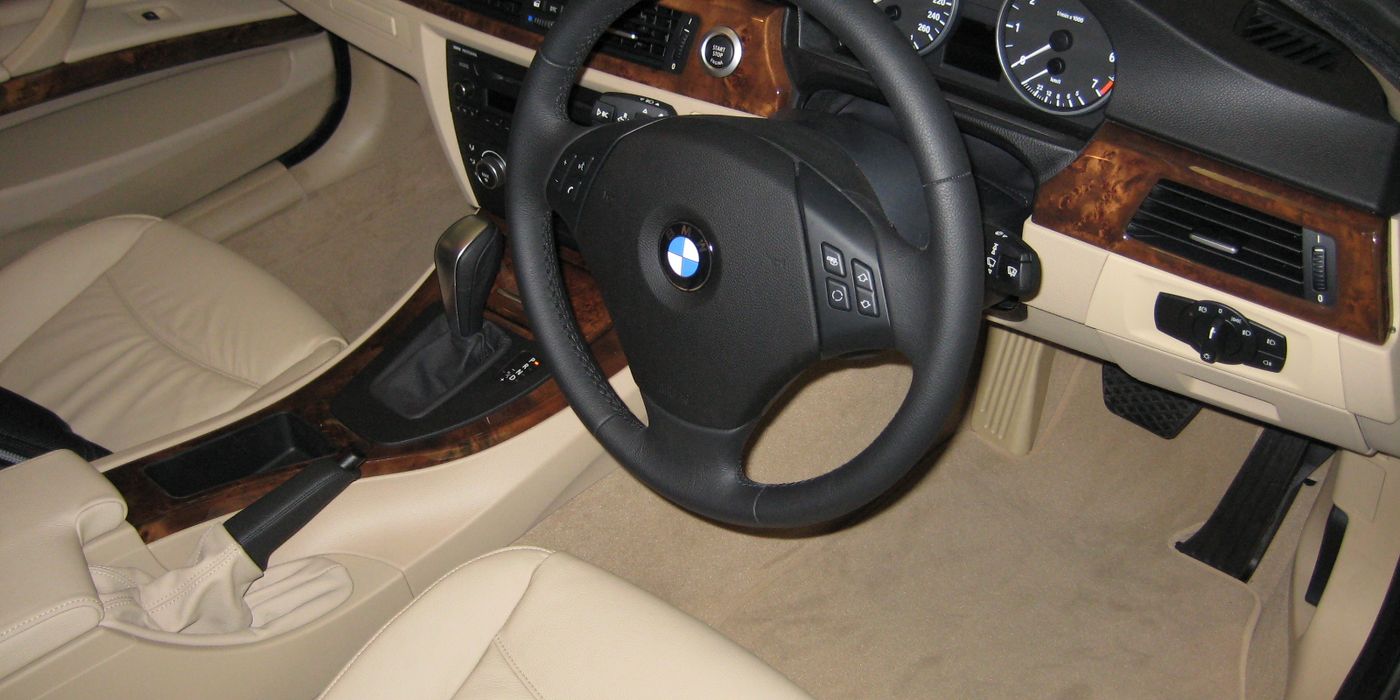
Older chassis have smaller fuse panels, less-paranoid battery management, and an option that newer cars do not have - tapping the rearview mirror harness for switched 12V. Forum consensus on E90post is that the mirror harness is already switched on ignition, draws less current than the sunroof, and avoids any fuse-tap work entirely. Unplug the auto-dimming mirror, splice into the 12V line with a $5 Posi-Tap, plug the mirror back in. 30-minute install.
The main caveat on E-chassis is battery health. An E90 with the original 2011 AGM is almost certainly past end-of-life by 2026, and a dashcam in parking mode will finish it off. Test or replace the battery before installing any parking-mode-capable dashcam on an older BMW.
Convertibles - The Rear Cam Problem
G23 4 Series Convertible, F33 4er convertible, E93 convertible, and older E46/E36 convertibles all share the same problem - there is no headliner to route a rear cable through, because the roof folds into the trunk. Rear cam install on any BMW convertible is either a shop job (3+ hours of creative routing through the soft-top frame) or a surface-mount on the rear roll hoop, which looks terrible. My honest recommendation for convertible owners is to run a front-only dashcam and skip the rear entirely, unless you are willing to pay a shop $300-$500 to do the rear routing properly.
Feature Deep Dive - What Matters and What Does Not
Dashcam spec sheets are like audio spec sheets, full of numbers that look important and mostly are not. Here are the features that actually matter on a BMW install.
Sony STARVIS 2 Sensor
STARVIS is Sony's low-light-optimized CMOS sensor line. STARVIS 2, introduced in 2023, doubles the low-light sensitivity of STARVIS 1 and adds on-sensor HDR. In practice, STARVIS 2 is the difference between "I can read the license plate" and "I cannot read the license plate" in night footage from a BMW windshield. Every premium 2026 dashcam ships with STARVIS 2 - Viofo A229 Pro, A329, A329S, Thinkware U3000 Pro, BlackVue Elite 10, Redtiger F77, Vantrue N4 Pro S. If the spec sheet does not say STARVIS 2 explicitly, assume STARVIS 1 or a cheaper sensor and expect 30-40% worse night performance.
Parking Mode - Motion vs Buffered vs Radar
Motion-detect parking mode keeps the camera powered and watching, records only when motion appears in the frame. False-trigger rate is high - leaves, pedestrians, passing cars. Power draw at idle is 15-25mA. Cheapest implementation and included on every dashcam.
Buffered parking mode keeps a continuous 15-30 second RAM buffer, commits to the SD card only when the G-sensor trips. Captures the 10-20 seconds before and after impact, which is the whole point of parking-mode capture. Power draw at idle is similar to motion-detect (15-25mA). Required for any parking mode that actually catches hit-and-runs. All Viofo premium cameras, Thinkware Q1000/U3000, BlackVue all variants support buffered.
Radar parking mode, currently exclusive to Thinkware U3000 Pro and older U1000/Q1000 with the optional radar module, uses an actual RF radar to detect motion before it enters the camera frame. Wakes the camera 1-2 seconds before an impact. Power draw at idle is 3-5mA, roughly 5x lower than motion-detect. This is the most sophisticated parking mode on the market in 2026 and it is what makes Thinkware the parking mode king.
Time-lapse parking mode records at 1-15 fps continuously. Catches slow events that motion and radar miss - someone leaning on the car, someone keying slowly, someone walking around the car three times before damaging it. Uses more SD card space and draws slightly more power (25-35mA) because the camera records continuously. Few cameras implement it well; Viofo A229 Pro and A329S both do.
LTE Cloud Connectivity
BlackVue Over the Cloud on Elite 9 and Elite 10 is the only polished LTE cloud ecosystem in 2026. Push notifications, live view from anywhere, remote video access. Requires a subscription ($5-10 per month) and a SIM card (Elite 9/10 includes one year free). Nextbase iQ is a distant second with its Protect subscription model. Thinkware has an optional LTE accessory but the app is clunkier than BlackVue's. For the BMW owner who wants real-time remote monitoring, BlackVue is the only viable pick.
Built-In GPS
Most premium dashcams include GPS. Overlays speed, coordinates, and G-sensor data on the video. Critical for track day usage (lap timing overlay) and insurance (speed evidence on incident footage). Not a differentiator because nearly every camera in the $250+ tier includes it. Confirm it is present before buying a budget camera - the cheapest Redtiger and Vantrue models sometimes skip GPS. If you are troubleshooting a dashcam that is not recording, or a parking-mode install that killed your battery, the companion Best OBD Scanner for BMW covers the diagnostic tools that read the BMW-specific battery-management fault codes a bad dashcam install can throw.
5GHz WiFi vs 2.4GHz WiFi
The WiFi is what transfers footage from camera to phone. 5GHz dual-band transfers at roughly 6-10 MB per second in ideal conditions; 2.4GHz single-band transfers at 1-2 MB per second. On a 4K dashcam, a 3-minute incident clip is 400-600MB. At 5GHz that transfers in 60-90 seconds; at 2.4GHz it takes 5-10 minutes. Every 2026 premium camera has 5GHz. Budget cameras still ship 2.4GHz, which is not a deal-breaker but is annoying on incident day.
Cabin Camera for Rideshare
If you drive for Uber, Lyft, or any rideshare platform, an interior-facing cabin camera is mandatory. Most rideshare drivers run Vantrue N4 Pro or N4 Pro S three-channel units - front plus cabin plus rear. The cabin camera includes IR LEDs for night recording without a visible red light. Viofo A139 Pro 3CH is the enthusiast alternative with Sony sensors on all three channels. If you do not drive rideshare, skip the cabin camera - it adds cost, complexity, and BMW passengers find it awkward.
Budget Tier Breakdown - What You Get at Each Price Point
Price tiers for dashcams in 2026 break cleanly. Here is what each tier buys you and which BMW owner it fits.
Budget - $150 and Under
Redtiger F77 is the winner at $150. STARVIS 2 front and rear, 4K plus 2K, hardwire kit included. Rove R2-4K Dual at $99-140 is an acceptable alternative. The Galphi 4K Mini at $49 and the Terunsoul 4K Dual at $109 are entry-level options for owners who do not want to spend more. The ceiling of this tier is "fine for an E46 or E90 where you do not want to put a $400 camera on a $12,000 car". The floor is "cheap Chinese unit that fails in 18 months".
Mid Tier - $250 to $400
This is the enthusiast-value sweet spot. Viofo A229 Pro at $319. Viofo A329 (non-S) at $349. Viofo A139 Pro 3CH at $369 for rideshare. Vueroid S1 at $280. Thinkware Q1000 at $399. Any camera in this tier has STARVIS 2, buffered parking mode, 5GHz WiFi, GPS, dual-channel front-and-rear. The A229 Pro is the single best value dashcam on the market in 2026 if you do not need 4K front resolution. Most BMW owners live happily here.
Premium - $400 to $600
Viofo A329S at $379-449. Thinkware U3000 Pro at $400-500. BlackVue DR900X-2CH at $470. Nextbase iQ 4K at $500. This is where you get the 4K-front-plus-2K-rear dual STARVIS 2 combination plus premium features like radar parking mode (Thinkware) or native LTE (BlackVue). The value proposition gets marginal above $400 for most owners, but if you park on the street in a rough area or care about cloud connectivity, premium is the right tier.
Flagship - $600+
BlackVue Elite 9 at $559 and Elite 10 at $579. Nextbase iQ 4K with Protect Plus subscription. Vantrue N4 Pro S at $380 for rideshare three-channel flagship. You get LTE cloud, the best app ecosystems, HDR on every channel, the quietest parking modes. For most BMW owners this tier is overkill. For specific use cases (cloud monitoring, commercial rideshare, ultra-high-security parking situations) it is the right pick.
OEM Integration - $189-219 via FITCAMX
FITCAMX is its own tier. $189-219 buys you a chassis-specific OEM-style dashcam that integrates into the factory rearview mirror housing or rain sensor housing with zero visible wiring. Models for G20, G22, G80, G82 (2020-2024), G45 X3 (2025-2026), G05 X5 / G06 X6 (2024-2026), iX, Z4, iX1, X1 U11. Image quality is 4K on paper but the tiny sensor does not compete with Viofo A329 or BlackVue Elite on actual night footage. You trade image quality for OEM aesthetics. For owners who want "nobody can tell there's a dashcam on my car" this is the only option.
Feature Matrix - Cross-Shopping the Top Picks
| Model | Price 2026 | Front Res | Rear Res | STARVIS 2 | Parking Mode | LTE | BMW Install |
|---|---|---|---|---|---|---|---|
| Thinkware U3000 Pro | $449 | 4K | 2K | Yes | Radar | Optional | Moderate |
| BlackVue Elite 10 | $579 | 4K | 4K | Yes | Buffered + cloud | Yes | Moderate |
| Viofo A329S | $429 | 4K | 2K | Yes | Motion + buffered | No | Moderate |
| Viofo A229 Pro | $319 | 2K | 2K | Yes | Motion + buffered | No | Moderate |
| Viofo A139 Pro 3CH | $369 | 4K | 1080p | Yes | Motion | No | Moderate |
| Nextbase iQ 4K | $500 | 4K | None | Yes | Smart Sense | Yes | Easy |
| Garmin Dash Cam 57 | $200 | 1440p | None | No | Basic | No | Easy |
| FITCAMX BMW G20 | $189 | 4K | None | No | Optional | No | OEM |
| Redtiger F77 | $150 | 4K | 2K | Yes | Motion | No | Moderate |
| BMW Advanced Car Eye 3 Pro | $676 | 2K | 1440p | No | Motion | No | Dealer |
Thinkware U3000 Pro
- Price 2026
- $449
- Front Res
- 4K
- Rear Res
- 2K
- STARVIS 2
- Yes
- Parking Mode
- Radar
- LTE
- Optional
- BMW Install
- Moderate
BlackVue Elite 10
- Price 2026
- $579
- Front Res
- 4K
- Rear Res
- 4K
- STARVIS 2
- Yes
- Parking Mode
- Buffered + cloud
- LTE
- Yes
- BMW Install
- Moderate
Viofo A329S
- Price 2026
- $429
- Front Res
- 4K
- Rear Res
- 2K
- STARVIS 2
- Yes
- Parking Mode
- Motion + buffered
- LTE
- No
- BMW Install
- Moderate
Viofo A229 Pro
- Price 2026
- $319
- Front Res
- 2K
- Rear Res
- 2K
- STARVIS 2
- Yes
- Parking Mode
- Motion + buffered
- LTE
- No
- BMW Install
- Moderate
Viofo A139 Pro 3CH
- Price 2026
- $369
- Front Res
- 4K
- Rear Res
- 1080p
- STARVIS 2
- Yes
- Parking Mode
- Motion
- LTE
- No
- BMW Install
- Moderate
Nextbase iQ 4K
- Price 2026
- $500
- Front Res
- 4K
- Rear Res
- None
- STARVIS 2
- Yes
- Parking Mode
- Smart Sense
- LTE
- Yes
- BMW Install
- Easy
Garmin Dash Cam 57
- Price 2026
- $200
- Front Res
- 1440p
- Rear Res
- None
- STARVIS 2
- No
- Parking Mode
- Basic
- LTE
- No
- BMW Install
- Easy
FITCAMX BMW G20
- Price 2026
- $189
- Front Res
- 4K
- Rear Res
- None
- STARVIS 2
- No
- Parking Mode
- Optional
- LTE
- No
- BMW Install
- OEM
Redtiger F77
- Price 2026
- $150
- Front Res
- 4K
- Rear Res
- 2K
- STARVIS 2
- Yes
- Parking Mode
- Motion
- LTE
- No
- BMW Install
- Moderate
BMW Advanced Car Eye 3 Pro
- Price 2026
- $676
- Front Res
- 2K
- Rear Res
- 1440p
- STARVIS 2
- No
- Parking Mode
- Motion
- LTE
- No
- BMW Install
- Dealer
Top Pick by Use Case
Every BMW owner has a different use case. Here are my picks per situation.
Best Overall for Any 2019+ BMW
Viofo A329S. 4K front, 2K rear, dual STARVIS 2, HDR, GPS, 5GHz WiFi, HK4 hardwire cable with proper voltage cutoff. $379-449 depending on sale. The combination of Vortex Radar's 2026 Best All-Around Dashcam award and the BMW-friendly HK4 cable's 4-level cutoff makes this the default recommendation. Buy this if you do not have a specific reason to buy something else.
Best for Street Parkers
Thinkware U3000 Pro. Radar parking mode is the real differentiator, and if you park on the street 5 days a week you want the lowest possible idle power draw plus the lowest false-trigger rate. Pair with a Cellink Neo for unlimited parking mode and nothing else in the BMW aftermarket comes close.
Best for Cloud Monitoring
BlackVue Elite 10. Native LTE, real-time phone notifications, remote live view from anywhere. If you want to open your phone and check on your BMW in the parking garage at your office, this is the only camera that does it cleanly.
Best Budget
Redtiger F77. $150, STARVIS 2 front and rear, 4K plus 2K, hardwire kit included. Nothing cheaper is worth buying. Nothing in the $150-250 tier beats it on spec.
Best OEM-Look for G20 or X5
FITCAMX chassis-specific kit. $189-219, integrates into the factory rearview mirror housing, no visible wiring. Image quality trails the premium Viofo and Thinkware options, but for owners who prioritize "zero visible aftermarket presence" this is the only path.
Best for Rideshare Drivers
Vantrue N4 Pro S. Three STARVIS 2 channels (front 4K, cabin 1080p, rear 2.5K), IR LEDs for night cabin recording, dedicated rideshare voice commands. Best image quality of any three-channel camera in the BMW aftermarket.
Best for Tiny Form Factor
Garmin Dash Cam 57 or Mini 2. Both are small enough to hide behind the rearview mirror on any BMW. Mini 2 pairs perfectly with Dongar adapter for a 20-minute install. Neither is 4K, neither has radar parking, neither has LTE. For owners who prioritize "I do not want to see the camera" over features, Garmin is the right pick.
Best for Track Day Recording
Viofo A229 Pro or A329S. The G-sensor and GPS overlay on Viofo cameras are the cleanest in the aftermarket for lap-timing and incident review. Some serious track day drivers run a separate VBOX or GoPro for lap timing and use the dashcam purely for incident evidence; either approach works.
Frequently Asked Questions
What is the best dashcam for a BMW in 2026
The Viofo A329S is the best all-around pick for any 2019+ BMW. Vortex Radar named it 2026's Best All-Around Dashcam after a 13-model head-to-head. It ships with dual Sony STARVIS 2 sensors, 4K front and 2K rear, HDR, built-in GPS, dual-band 5GHz WiFi, and the HK4 hardwire cable with a proper 4-level voltage cutoff that protects the BMW AGM battery. Pricing lands at $379-449. For street parkers the Thinkware U3000 Pro with radar parking mode is a closer call, and for cloud-connected monitoring the BlackVue Elite 10 wins, but for most BMW owners the A329S is the right answer.
Does hardwiring a dashcam void my BMW warranty
No, as long as the install is clean and reversible. The Magnuson-Moss Warranty Act in the US (and equivalent EU consumer protection) requires the manufacturer to demonstrate that an aftermarket accessory caused a warranty issue before they can deny coverage. A properly-installed dashcam, tapped to a spare fuse slot with a fuse tap adapter, grounded to a chassis bolt, and equipped with a voltage cutoff module, has zero impact on any unrelated warranty claim. The dealer may grumble; they cannot legally deny coverage without cause. Where warranty concerns are legitimate is when the install triggers a module shutdown on a 2021+ BMW because of missing voltage cutoff, or when an OBD-adapter dashcam triggers a tamper alarm that requires a dealer reset. Install properly and warranty is not an issue.
Will a dashcam drain my BMW battery
Only if installed incorrectly. A proper hardwire with a voltage cutoff set to 12.2V on AGM will pull power from the camera when battery voltage drops below threshold, protecting the main battery. Idle parking-mode draw on a premium camera runs 3-25mA depending on parking mode type (radar lowest, time-lapse highest). A healthy BMW AGM battery handles that draw for 2-5 days without issue. Problems arise when (1) the voltage cutoff is missing or disabled, (2) the battery is more than 5 years old and already close to end-of-life, or (3) the car is stored for 2+ weeks without driving. For storage or long-term parking, use a Cellink Neo battery pack that charges only on accessory power and never touches the main battery.
Where is the fuse box for a dashcam hardwire on a G20 3 Series
Two fuse boxes. Front fuse box is on the passenger-side kick panel, behind the lower trim. Access by popping the trim panel with a plastic pry tool. F12 is the constant-power slot for front camera. F35 or F78 is the true-ACC switched slot. Rear fuse box is in the trunk under the right-side floor mat. Ground to the comms module bolt next to the rear fuse panel for a factory-clean chassis ground. Use a fuse tap adapter, never cut factory wiring.
Can I use the OBD port to power a dashcam in my BMW
On 2010-and-older BMWs, yes, but with caveats. On 2011+ BMWs, the OBD port is switched on ignition for anti-theft, so OBD power adapters lose power when the car sleeps and parking mode does not work. On F-chassis (F15 especially), OBD-powered devices can trigger the tamper alarm when the car is locked. And on any BMW owned by someone who codes with BimmerCode or BimmerLink, the OBD adapter physically blocks the OBD port and has to be unplugged for every coding session. Hardwire to the fuse box is the correct path for 95% of BMW owners. OBD power is not recommended.
What is the BMW Drive Recorder and does it replace a dashcam
Drive Recorder is a software feature on 2019+ BMWs equipped with Parking Assistant Professional or Surround View cameras. It saves 40-second clips at 1280x960 resolution and 15fps, with no loop recording, no parking mode, and the rear camera feed mirrored (making license plates unreadable). It is a useful safety bonus if your car has the hardware, but it is not a dashcam replacement. Use it alongside a real aftermarket dashcam, not instead of one. BimmerCode can unlock Drive Recorder on some cars that have the hardware but not the software activation.
Is the BMW Advanced Car Eye worth it compared to Thinkware or BlackVue
No, not for most owners. Advanced Car Eye 3.0 Pro is a rebadged Thinkware unit with a BMW-styled mount and app skin. Parts cost $570-676. Dealer install adds $300-400. Total $700-1,100 for functionality identical to a $399 Thinkware Q1000. The one honest argument for Advanced Car Eye is "I will never touch a trim tool and I want a dealer install with BMW warranty paperwork". For anyone willing to DIY with a multimeter and trim tools, buy a Thinkware U3000 Pro and keep the $700 difference.
How do I hide dashcam wires in a BMW F30 or G20
Standard routing path. Camera mounted behind the rain sensor housing. Power cable runs up from the camera into the gap between the windshield and headliner trim, along the passenger-side headliner seam, down the A-pillar behind the curtain airbag harness (zip-tied to the existing harness, never across the airbag deployment path), under the weatherstripping at the top of the door seal, down to the kick panel, and into the fuse box. On F30 and G20 the A-pillar trim pops off with a single upward yank once the clips release. Takes 60-90 minutes for a clean front-and-rear install. BlackVue coax is thinner than Viofo older-gen coax and tucks in without bulging; Viofo A229 Pro and A329S ship slimmer cable than older A119/A129 kits.
How long can a dashcam record in parking mode on a BMW
Depends on parking mode type and battery. On motion-detect parking with a healthy BMW AGM battery and 12.2V cutoff, expect 8-12 hours of coverage before the cutoff engages. On buffered mode, similar. On radar parking (Thinkware U3000 Pro), expect 2-3 days of coverage because idle draw is 3-5mA versus 15-25mA for motion-detect. On a Cellink Neo battery pack, expect 24-48 hours of motion-detect or 3-5 days of radar, depending on Neo capacity. For multi-week storage, the only correct answer is to unplug the camera or use a dedicated battery isolator.
What voltage cutoff should I set for a BMW AGM battery
12.2V for AGM batteries (any BMW with Start/Stop, any 2015+ BMW). 12.4V for flooded lead-acid batteries (older base-trim E and F chassis). Never set below 12.0V on any BMW because below 12.0V the battery is actively damaged and repeated cycles will halve its lifespan. The HK4 hardwire kit on Viofo cameras has four levels (11.8V, 12.0V, 12.2V, 12.4V) - use 12.2V on AGM, which is the correct default for most 2026 BMW owners.
Do I need a Cellink Neo battery pack for my BMW dashcam
Not mandatory for daily-driver BMWs that get driven at least every 2-3 days. Highly recommended for street parkers, airport long-term parkers, and anyone who stores their BMW for 1+ weeks at a time. The Neo charges only on accessory power so it never touches the main battery during parking mode, eliminating the risk of module shutdown on 2021+ cars. $250-400 cost, 45-minute install, 24-48 hours of parking mode runtime on a full charge. Forum consensus on BimmerPost and DashCamTalk is near-unanimous that the Neo is the parking mode solution for BMW.
Can I install a dashcam on a BMW convertible
Front camera, yes, same install path as a sedan. Rear camera, hard. Convertibles (G23 4 Series, F33 4er, E93, older E46/E36) have no headliner, so there is no channel to route a rear cable through. Options are surface-mount on the rear roll hoop (looks bad) or route through the soft-top frame (3+ hours of shop labor, $300-500). My honest recommendation for convertible owners is to run a front-only dashcam and skip the rear.
Will a dashcam interfere with BimmerCode or BMW coding
Only if it is OBD-powered. An OBD dashcam adapter physically occupies the OBD port and has to be unplugged every time you run a BimmerCode or BimmerLink session. A hardwired dashcam does not touch the OBD port and has zero impact on coding. If you are a BimmerCode regular (and most enthusiast BMW owners are), hardwire is the only reasonable path. See my OBDLink and BimmerCode BMW Coding Guide for the full coding setup that does not conflict with dashcam install.
What is the difference between hardwire and OBD power for a BMW dashcam
Hardwire taps two fuses in the BMW fuse box (constant 12V and switched ACC) plus a chassis ground. OBD plugs into the OBD-II port under the steering column. Hardwire delivers reliable constant power plus proper parking mode, does not interfere with BimmerCode, works on every BMW chassis, and is fully reversible. OBD is faster to install (plug and play, no trim removal) but on 2011+ BMWs loses power when the car sleeps, triggers tamper alarms on some F-chassis, and blocks the OBD port for coding. Hardwire is the right answer for 95% of BMW owners.
Do I need 4K front resolution on my dashcam
No. 2K resolution is sufficient for license plate capture at 20-30 feet, which covers every incident scenario except very-high-speed highway hit-and-run. The Viofo A229 Pro at $319 with 2K front resolution and STARVIS 2 is the highest-value camera in the BMW aftermarket in 2026. 4K is a nice-to-have that costs an extra $100 at the Viofo A329S. If budget is tight, buy the A229 Pro. If budget is not tight, buy the A329S. Do not buy a 4K camera that skips STARVIS 2, because the sensor matters more than the resolution for license plate readability.
Internal Link Hub and Closing Verdict
This is the hub for the BimmerTalk dashcam and parking-electronics cluster. For the companion guides, my OBDLink and BimmerCode BMW Coding Guide covers the coding setup that does not conflict with dashcam hardwire. The Best OBD Scanner for BMW article walks through which diagnostic scanners work with BMW-specific codes including the ones a dashcam install can occasionally trigger. For the broader question of what your iDrive warning messages actually mean when a dashcam install goes sideways, read BMW Warning Lights Explained. And if you are adding remote start to your BMW alongside the dashcam for a full smart-car experience, BMW Remote Start covers the aftermarket options.
Closing verdict. If you own any 2019+ BMW and want one dashcam done properly, buy the Viofo A329S, hardwire it to your chassis-specific fuse locations with the HK4 cable set to 12.2V cutoff on AGM, and spend a Saturday morning routing the cable through the A-pillar. The whole build lands at $400-450 all-in, takes 60-90 minutes, protects your AGM battery from discharge, delivers 4K STARVIS 2 front footage plus 2K rear, and does not interfere with your BimmerCode sessions. If you are a street parker, swap the A329S for a Thinkware U3000 Pro and add a Cellink Neo in the trunk. If you want cloud monitoring, swap to a BlackVue Elite 10. If you are on a tight budget, swap to a Redtiger F77. If you want OEM aesthetics, swap to a FITCAMX chassis-specific kit. If you drive rideshare, swap to a Vantrue N4 Pro S.
The one thing that is not negotiable on any BMW built in 2021 or later is the voltage cutoff module. Do not skip it. Do not disable it. Do not set it below 12.2V on AGM. The Intelligent Battery Sensor is watching, and the cost of getting the cutoff wrong is a cascade of module shutdowns that requires a dealer visit or a BimmerCode session to reset. Install the camera properly, set the cutoff correctly, and your BMW will not notice the camera exists. That is the whole goal.