
Best Brake Rotors for BMW - Street, Track, OEM
Affiliate disclosure. BimmerTalk is a proud partner of the Amazon Associates Program and Turner Motorsport. We may earn a small commission on qualifying purchases through our links, at no extra cost to you. Read the full disclosure.

Every BMW brake rotor question I get in my shop ends the same way. Somebody walks in with a cart full of drilled-slotted rotors from Amazon, asks me if they should run EBC Yellowstuff or Hawk HPS, and I tell them to take the box back and swap it for a plain Zimmermann Coated pair plus Akebono Euro pads. Then I explain why, usually for the next twenty minutes, while they watch me bolt up the same unglamorous combo to whatever F30 or G20 is on my lift that week. The forum consensus on this has been unanimous for at least a decade - Zimmermann plus Akebono Euro is the default, drilled rotors are cosmetic, and the 335i or M3 you are worried about warping is almost certainly not warping, it just has pad deposits from somebody running hot pads onto a cold rotor.
I have been working on BMWs for five years, first inside a BMW dealer service bay during the E9X era and now on my own G20 330i plus whatever friends and customers roll in. I have installed Zimmermann rotors on nearly every chassis from E46 up to G80, tested Girodisc 2-piece floating rotors on a tracked F80 M3, and fought with enough counterfeit Brembo boxes to know that the same $120 rotor from ECS Tuning and the same $120 rotor from a sketchy eBay seller are not actually the same rotor. The difference between a cheap Amazon blank and a real European-cast Zimmermann coated disc is so visible I can spot it across my shop floor. Metallurgy matters, coating matters, and where the rotor is cast matters even more.
This guide is the one I wish had existed when I was buying my first brake rotors for an E46 back in 2011. It covers what rotor types actually do versus what the marketing says they do, which brands own which tier of the market in 2026, how to match pads to rotors without destroying both, when a Big Brake Kit is worth five grand and when it is a vanity project, and exactly what to run on every chassis from E46 up to G80 whether you are a daily driver or an HPDE regular. No recycled affiliate copy, no Amazon-warrior drilled rotor recommendations, no pretending a $200 R1 Concepts kit is the same as a $1,800 Girodisc setup.
30-60k miles
OEM rotor life daily
15-25k miles
Tuned 335i rotor life
$160-400 axle
Zimmermann Coated pair 2026
$3,959 installed
BBK front StopTech ST60
| Chassis | Years | Best Pick | Price Range |
|---|---|---|---|
| E46 325i-330i | 1999-2006 | Zimmermann Coated + Akebono Euro | $160-280 |
| E46 M3 S54 | 2000-2006 | Zimmermann Coated or Girodisc 2-piece | $280-1,800 |
| E9X 328i-335i | 2006-2013 | Zimmermann Coated + Hawk HPS 5.0 | $180-350 |
| E9X M3 S65 | 2008-2013 | Girodisc 2-piece front + Pagid RSL29 | $1,500-2,200 |
| F30 328i-340i | 2012-2019 | Zimmermann Coated + Akebono Euro | $200-380 |
| F80 M3 - F82 M4 | 2015-2019 | Girodisc 2-piece + Pagid RSL29 | $1,600-2,400 |
| G20 330i-M340i | 2019-now | Zimmermann Coated + Akebono Euro | $220-420 |
| G80 M3 - G82 M4 | 2021-now | Girodisc 2-piece iron + RSL29 | $1,800-2,800 |
| X3 G01 - X5 G05 | 2018-now | Zimmermann Coated + Akebono Euro | $280-500 |
| X5M - X6M | 2019-now | OEM M or Girodisc 2-piece | $800-3,000 |
E46 325i-330i
- Years
- 1999-2006
- Best Pick
- Zimmermann Coated + Akebono Euro
- Price Range
- $160-280
E46 M3 S54
- Years
- 2000-2006
- Best Pick
- Zimmermann Coated or Girodisc 2-piece
- Price Range
- $280-1,800
E9X 328i-335i
- Years
- 2006-2013
- Best Pick
- Zimmermann Coated + Hawk HPS 5.0
- Price Range
- $180-350
E9X M3 S65
- Years
- 2008-2013
- Best Pick
- Girodisc 2-piece front + Pagid RSL29
- Price Range
- $1,500-2,200
F30 328i-340i
- Years
- 2012-2019
- Best Pick
- Zimmermann Coated + Akebono Euro
- Price Range
- $200-380
F80 M3 - F82 M4
- Years
- 2015-2019
- Best Pick
- Girodisc 2-piece + Pagid RSL29
- Price Range
- $1,600-2,400
G20 330i-M340i
- Years
- 2019-now
- Best Pick
- Zimmermann Coated + Akebono Euro
- Price Range
- $220-420
G80 M3 - G82 M4
- Years
- 2021-now
- Best Pick
- Girodisc 2-piece iron + RSL29
- Price Range
- $1,800-2,800
X3 G01 - X5 G05
- Years
- 2018-now
- Best Pick
- Zimmermann Coated + Akebono Euro
- Price Range
- $280-500
X5M - X6M
- Years
- 2019-now
- Best Pick
- OEM M or Girodisc 2-piece
- Price Range
- $800-3,000
The Honest Truth About Drilled Rotors
I am going to bury this myth before we talk about anything else, because nothing wastes more BMW brake budgets than people buying drilled rotors for the wrong reasons. Drilled rotors are cosmetic. They look aggressive through a set of wheel spokes, they make great Instagram content, and on a daily BMW that never sees a track they will brake just fine because the daily thermal load is nowhere near their failure threshold. That is the entire upside.
The downsides are physics. Every hole drilled through a rotor face is a stress concentration, which in metallurgy-speak means a pre-engineered crack starting point. Feed a drilled rotor a twenty-five minute HPDE session with a hot pad and you will find cracks radiating from those holes, sometimes visible after a single weekend. This is why every professional sports car series I watch - IMSA WeatherTech, SRO GT3, even the spec-class classes - runs slotted or plain rotors. They never run drilled. The teams that actually pay for their own brake parts figured this out decades ago.
Forum thread E46Fanatics 895156 said it cleanly years ago - slotted and drilled rotors have become nearly obsolete for street use because newer pad compounds no longer produce the outgassing that those holes were originally designed to vent. The 1960s and 1970s pad chemistry that drilled rotors were invented for literally does not exist in modern ceramic or semi-metallic pads. The holes solve a problem that was solved another way in 1995.
For a cosmetic daily build where you never track the car, a drilled-slotted rotor is a fine choice if you understand what you are paying for. Just do not expect them to outbrake a plain coated Zimmermann on the same pads, and do not put them on a tracked M car.
Slotted Rotors and When They Actually Matter
Slotted rotors are a different conversation. A slot is a shallow radial groove machined across the friction face. Unlike a hole, it does not cut through the rotor, so the structural strength is almost untouched. Slots scrape the outer glaze off the pad face every revolution, which keeps the friction coefficient consistent through a long track session where heat would otherwise polish the pad surface smooth. They also clear water out of the pad-rotor interface faster in heavy rain.
The tradeoffs are real but manageable. Slotted rotors eat pads slightly faster because of the physical abrasion on the pad face. They make a small amount of extra noise at low speeds. They cost more than plain rotors. But they solve a genuine problem for track use on stock calipers, and they do not crack the way drilled rotors do under repeated heat cycles.
If your BMW sees occasional track days or weekend canyon runs with a performance pad, slotted rotors make sense. StopTech Sport slotted on most F-chassis and E9X M cars is the classic application. For a pure daily driver with a commuter pad, the benefit is marginal and the added pad wear is not worth it. Stay with plain coated rotors.
Two-Piece Floating Rotors - The Girodisc Effect
The biggest single upgrade you can make to a BMW brake system without buying a Big Brake Kit is a 2-piece floating rotor, and on this side of the market Girodisc has been the reference for most of the last decade. A 2-piece rotor bolts a cast-iron friction ring to a machined 6061-T6 aluminum hat using stainless-steel floating drive pins. The ring can expand radially under heat without coning or cracking, the rotational mass drops by four to eight pounds per corner depending on chassis, and when the iron ring eventually wears out you replace just the ring and keep the $300 aluminum hats.
I have run Girodisc fronts on an F80 M3 at two different tracks and the pedal feel through the second half of a twenty-minute session is the clearest evidence these things work. A one-piece OEM rotor at the same mileage on the same pads gives up progressively as the metal stretches and cones under sustained heat. The Girodisc ring floats on those pins and keeps the friction face flat, so the bite on lap fifteen is the bite on lap one. That difference is worth every dollar of the $1,600 entry.
Paragon Performance makes a genuinely competitive US-built 2-piece in the same size range for most E9X, F8X, and G8X fitments. RacingBrake and Alcon both make two-piece rotors too. For any serious tracked M car where you are not ready to commit to a full BBK, a Girodisc or Paragon front 2-piece with OEM rears and a pro track pad is the move. Save yourself the BBK labor and fluid bleed time for next year.
Rotor Construction Primer
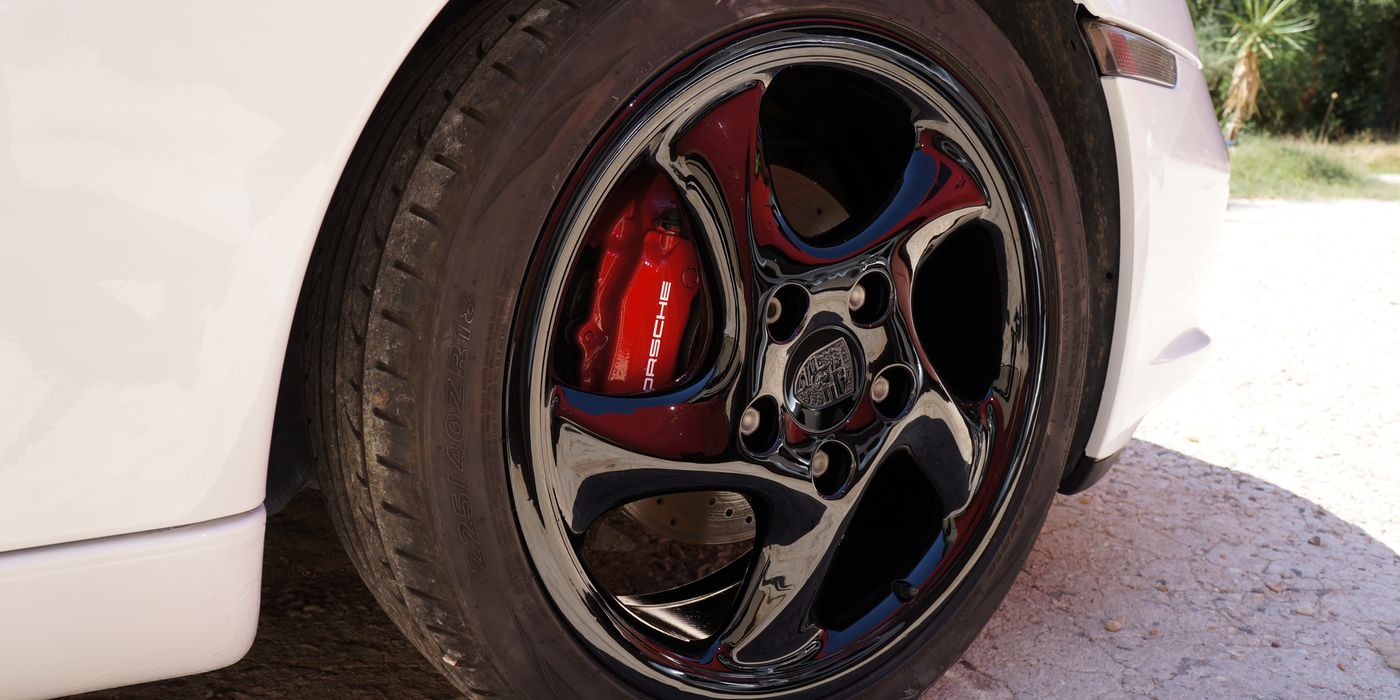
If you strip the marketing away, every BMW road car rotor from E30 onward has been vented, meaning the disc is cast with internal vanes that pump air through the rotor as it spins. Vented is not an upgrade, it is the baseline. Solid rotors are found only on rear axles of entry-trim cars and on some motorcycles. If you read an Amazon listing that brags about a vented design, you are reading an advertisement for a BMW rotor meeting 1980s factory specs.
What matters is how the rotor is cast, what grade of iron, how clean the vane geometry is, and whether it has a coating on the non-friction surfaces. BMW OE rotors use G3000 high-carbon grey iron with carefully controlled vane geometry. Zimmermann and Brembo OE are often literally the same casting with a different sticker. Budget rotors from generic Amazon brands use lower-grade iron that machines faster, warps easier, and rust-belts itself in six months. A $40 Amazon rotor and a $120 Zimmermann coated rotor look almost identical. They do not perform the same, they do not wear the same, and they do not last the same.
Cast Iron One-Piece
This is the OEM standard. The entire rotor - hat, friction ring, vanes - is cast as one unit. Cheap, reliable, easy to manufacture, and thermally adequate for every non-track BMW. The upgrade path inside one-piece is mostly about iron grade and coating quality, which is where Zimmermann and Brembo OE earn their premium.
Two-Piece Floating
Cast-iron friction ring, 6061-T6 aluminum hat, stainless floating pins. See the Girodisc section above. Four to eight pounds lighter per corner, better thermal management, replaceable ring. The serious aftermarket upgrade on stock calipers.
Carbon Ceramic
Factory option on F8X and G8X M3/M4, M5, M8, X5M, X6M. Fifty percent lighter than steel, near-zero fade, genuinely massive street-use lifespan of 100k miles or more. But replacement cost is terrifying - a full G80 M3 CCB rotor set is upwards of $3,000 per corner with factory pads, and track use shortens CCB life because the ceramic matrix hates repeated 800C heat cycles. Most serious F8X and G8X track drivers I know either skip CCB at spec time or retrofit back to iron before their first HPDE season. BimmerWorld and ECS both sell CCB-to-iron conversion kits.
OEM Spec Replacement Tier - The Gold Standard Daily Setup
This is where 95 percent of my customers end up when I do the math with them. The OEM-spec tier is rotors that were engineered to BMW's factory specs or are literally the factory rotor sold in a different box. These are the rotors I install on any non-tracked BMW without hesitation.
Zimmermann Coated - The Default Answer
Zimmermann is a German Tier 1 supplier to BMW for a surprising number of chassis, which means a Zimmermann Coated box from a reputable retailer is often the factory rotor with a different paint pen. Coated refers to the zinc-dichromate anti-corrosion treatment on the non-friction surfaces, which keeps the vanes and hub area from rusting even through a Midwest winter. Typical 2026 pair pricing runs $160 to $400 per axle depending on chassis, with G20 and F30 pairs usually landing in the $220-320 range and E46 pairs as low as $160.
I have replaced Zimmermanns with Zimmermanns on the same car three times over 180,000 miles. Zero warping, zero judder, zero excuses. They just work.
Brembo OE - Identical Daily Performance Different Box
Brembo OE, not Brembo Sport or Brembo GT, is the other factory-grade option. Same quality standard as Zimmermann, same daily behavior, sometimes a few dollars less or more depending on chassis. The one critical warning is counterfeits. Brembo boxes on Amazon and eBay are faked aggressively, and I have pulled visually convincing fakes off customer cars that failed basic hardness testing. Buy Brembo OE only from ECS Tuning, Turner Motorsport, BimmerWorld, FCP Euro, or the BMW parts counter. If the price is too good, it is too good.

Brembo UV Coated Vented Front Brake Rotor for BMW OE# 34116793244
$115.17
Akebono Euro Pads - The Forum-Standard Daily Pair
You cannot have a rotor conversation without the pad conversation. The universal pair to Zimmermann or Brembo OE rotors is Akebono Euro Ultra Premium ceramic pads. They are the lowest-dust pads I have tested on a BMW, they bite cold without squeal, they hit 30-50k mile life on a daily, and they put zero stress on the rotor face. Akebono builds OEM pads for multiple Japanese and European manufacturers, and the Euro compound was tuned specifically for German platforms with more aggressive cold bite than their domestic compound.
For any non-M, non-tracked BMW, Akebono Euro is the default. Pair them with a Zimmermann or Brembo OE rotor and you have built the exact brake setup the E46Fanatics and Bimmerfest veterans have been recommending for five years.

Akebono Euro Ultra-Premium Slotted Ceramic Brake Pad Set — F30/F32/M2/M3/M4
$196.95

Akebono Euro Ultra-Premium Ceramic Brake Pad Set — E70/F15 X5 & E71/F16 X6
$157.95

Akebono Euro Ultra-Premium Rear Brake Pads — BMW 2011–2018
$86.25
Textar, ATE, Pagid OE, TRW
All four are genuine Tier 1 European suppliers. Textar is the OEM pad on many BMW chassis straight from the factory. ATE makes OEM rotors for several BMW models. Pagid OE is the street-compound arm of the same brand that makes the RS29 track pad. TRW has a narrower BMW footprint but where they are available the quality is identical to the others. For someone who wants a genuine factory replacement and happens to find a good price on any of these, buy without hesitation.


Centric Premium and StopTech Street
Centric and StopTech share a parent company, so Centric Premium and StopTech Street are effectively the same rotor. American-made, high-carbon iron, decent black coating, consistently cheaper than Zimmermann by $40 to $100 an axle. Forum threads give them a solid recommendation for daily use, particularly for owners who want a budget-respectable OEM-style replacement and do not want to import from Germany. A Centric front pair with Akebono Euro pads is a completely valid daily setup at a slightly lower price point than the Zimmermann stack.
Mid-Tier Sport Rotors for Spirited Drivers
Between the OEM tier and the serious track tier sits the sport-rotor segment. These are slotted or drilled-slotted rotors built on stock diameter sizes for street cars that want a little more than factory behavior without jumping to 2-piece money.
StopTech Sport and StopTech Aero
StopTech Sport slotted rotors are the benchmark in this tier. Slotted face, coated finish, priced between $200 and $350 per rotor depending on chassis. I have run them on my G20 for a season of spirited driving and they do exactly what they promise - consistent pedal through hard canyon driving without the cracking worry you get from drilled. For anyone who wants a clear step up from pure OEM but does not want to spend 2-piece money, this is the right rotor.

StopTech G-Coated Drilled & Slotted Front Brake Rotors for BMW 2/3/4 Series X1
$121.95
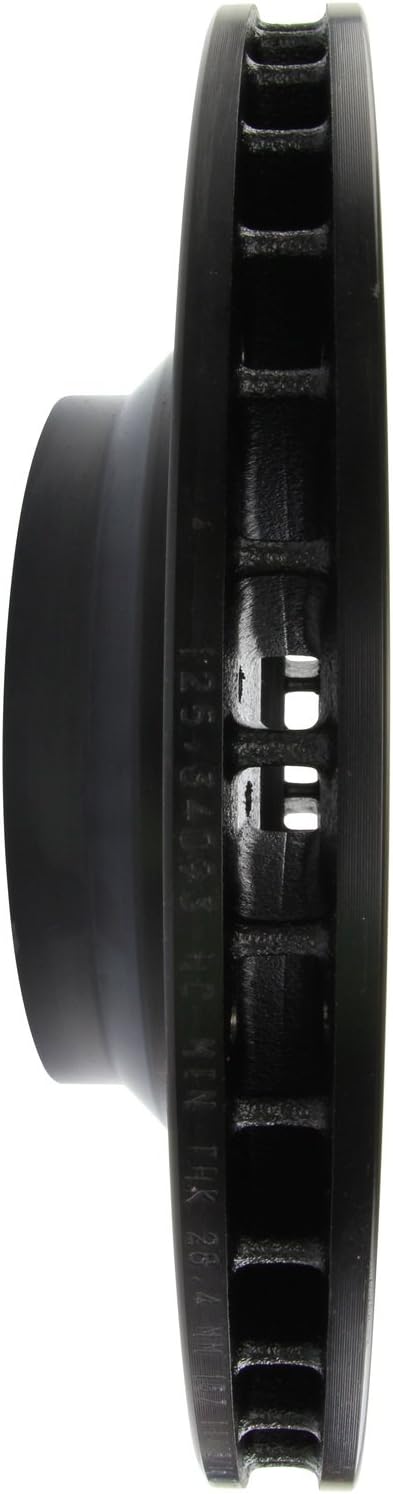
StopTech Drilled & Slotted Front Left Brake Rotor — E90 335i/335d/X1
$207.73
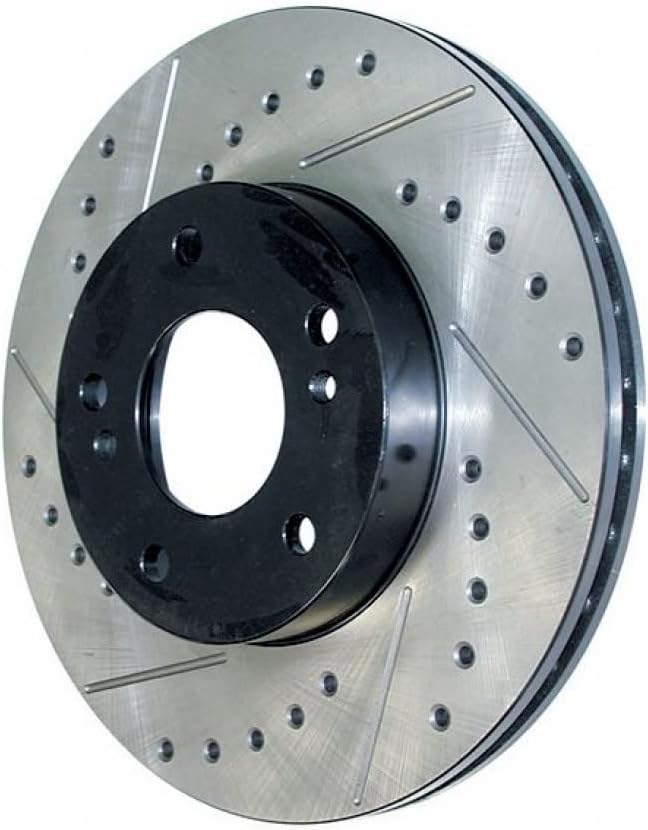
StopTech Sport Drilled & Slotted Brake Rotor — F30 340i Rear Right
$272.31
Centric Premium Sport and EBC Performance
Centric Premium Sport (slotted) is another budget-sport option at a lower price point than StopTech. EBC Premium sits here too, though I am honest with customers about EBC's mixed reputation - some chassis get great rotors, some see fast warping complaints in forum threads. EBC is genuinely better at pads than rotors in my experience. If you want EBC, buy their pads (Yellowstuff or Bluestuff) and run them against Zimmermann or Centric blanks.
Power Stop Z23 and Z26
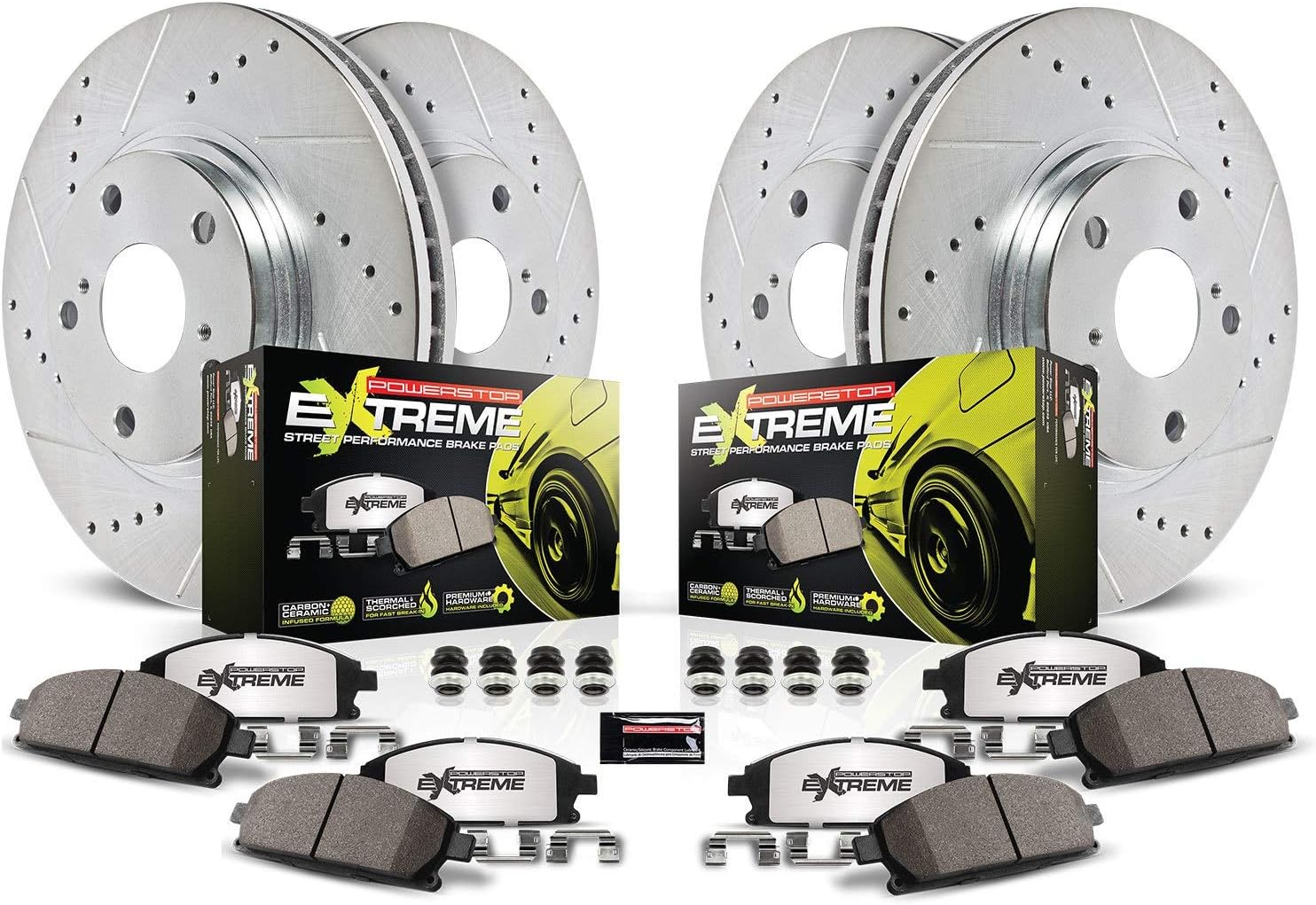
Power Stop is the king of the affiliate-listicle recommendation crowd because their drilled-slotted full kits (rotors, pads, hardware) retail for $250-500 per axle, which is irresistible on a budget. For an actual daily driver who wants the drilled-slotted look without committing to Zimmermann money, these kits are fine. I have installed them on customer cars with no complaints through 30k miles of mixed driving. Do not track them, do not put them on a 500-horsepower 335i, but for a base F30 328i daily they work.
Power Stop Z26 Street Warrior Brake Pad & Rotor Kit — F30/F32
$667.73

Power Stop Z23 Front & Rear Brake Kit (Pads & Rotors) — F30
$524.05
Serious Track Rotors on Stock Calipers
This is the tier where the 2-piece floating rotor conversation dominates. If you track your BMW more than twice a year and you are not ready to commit to a BBK, upgrading to a 2-piece rotor on the stock caliper is the correct move.
Girodisc 2-Piece - The Reference
I have already covered Girodisc above but the brand deserves its own section. Girodisc builds its own proprietary 72 curved directional vane pattern for optimized airflow, uses aerospace-grade stainless drive pins, and the replacement-ring pricing model means long-term cost of ownership drops below a cheap one-piece rotor setup after the second ring change. Full pair front is typically $800 to $1,500 depending on chassis. Replacement rings alone run $400 to $500.
Fitments exist for E46 M3, E9X M3, E82 1M, F8X M3/M4, G8X M3/M4, and now G20 M340i. For serious track use on stock calipers, Girodisc is the first brand you should research.
Paragon Performance
US-built 2-piece rotors competitive with Girodisc on performance and typically slightly cheaper. Paragon offers multiple diameter options for E9X M3 and F8X/G8X (360, 370, 378, 380mm) which gives you some flexibility on caliper clearance and thermal mass. Several of my track-regular customers run Paragon and have zero complaints.
RacingBrake, Alcon Two-Piece, AP Racing
RacingBrake offers 2-piece and BBK upgrade paths on E9X and F8X, generally at a slightly more approachable price point than Girodisc. Alcon makes 2-piece floating rotors for G80 M3 in 380x36mm spec that are genuinely race-grade - Alcon supplies factory M4 GT3 and Porsche Cup hardware, so their street-legal 2-piece is serious kit. AP Racing builds competition-grade 2-piece rotors as part of their Radi-CAL BBK lineup rather than as a standalone street-car upgrade, which we will cover under BBK.
Pad Pairing - The Other Half of the Brake Equation
A rotor can only be as good as the pad against it, and buying a $1,500 Girodisc rotor pair and pairing it with a $40 generic pad is a decision I have talked customers out of more times than I can count. Here are the four practical tiers for BMW owners.
Tier 1 OEM Feel Ceramic - The Daily Standard
Akebono Euro Ultra Premium, Textar, Ferodo Premier, Hawk Performance Ceramic (HPS 5.0 in some grades). Low dust, quiet, no cold bite drama, 30-50k mile life. Akebono Euro is the overall winner here for most BMWs.

Tier 2 Fast Street - Spirited Daily and Canyon
Hawk HPS 5.0 for balanced daily-plus-spirited behavior, EBC Yellowstuff for aggressive warm bite with a dust tradeoff, Ferodo DS2500 as the most linear performance street pad on European cars. HPS 5.0 is the best daily-plus-canyon compromise I have tested on BMW. DS2500 is the gold standard in the European fast-street segment but costs more and is harder to find in US fitments.


EBC Yellowstuff 4000 Series Performance Brake Pads — BMW
$117.80

EBC Brakes Yellowstuff 4000 Series Street Brake Pads — DP41118R
$96.19
Tier 3 Track Capable Street - HPDE Weekends Plus Drive Home
Hawk HP+, EBC Bluestuff NDX, Pagid RSL29, Carbotech XP8. XP8 and RSL29 dominate F8X and G8X track threads because they survive a 25-minute session without fade and still have enough cold bite to drive home without terrifying yourself. All four will squeal cold on the street. That is the cost of pad chemistry that works at 600 Celsius. Accept it or run two sets of pads.
Tier 4 Pure Track - Race Compound Only
Pagid RS29, Hawk DTC-60 and DTC-70, Carbotech XP10 and XP12, Ferodo DS1.11. Race-only. Cold bite is essentially zero below 150 Celsius rotor temperature. Carbotech XP12 is the pad my tracked M3 friend calls "scary when cold" because it literally does not bite until the rotor is hot. Do not daily these pads. Do not put them on a carbon-ceramic rotor ever.
Big Brake Kits - When the Rotor Swap Is Not Enough
A BBK is a caliper, rotor, bracket, pad, and brake line package engineered as a unit to replace the factory caliper and rotor with larger, stiffer hardware. The question is always when - when does a rotor upgrade stop being enough and when does a BBK become the right spend.
My honest answer after installing dozens of them - a BBK is justified when any of these are true. You are making 450+ wheel horsepower. You track the car four or more weekends a year. You autocross competitively at the pointy end of your class. You have jumped to staggered wheel sizes large enough that stock rotor thermal mass is a genuine limitation. Otherwise, a $1,800 Girodisc 2-piece front plus a proper pad plus fresh fluid handles 95 percent of BMW use cases at half the money.
StopTech ST40 and ST60 Trophy Sport
AutoBild Magazine named StopTech the best-performing BBK in a comparison test a few years back, and the ST40 (4-piston forged caliper) and ST60 (6-piston forged caliper) are the two most popular BMW BBK fitments I install in my shop. The ST60 380mm front kit is the reference BBK for F8X and G8X M cars, priced around $3,959 for a complete front kit in Q1 2026. Brembo GT is more expensive and more famous, AP Racing Radi-CAL is more expensive and more focused, but StopTech ST60 delivers 95 percent of the braking for 65 percent of the cost and that makes it the rational pick for most BMW owners.
Brembo GT - The Famous Name
Brembo GT is a monobloc caliper machined from a single aluminum billet, which means the caliper itself is stiffer under load than a bolted two-piece caliper body. Four, six, and eight-piston options exist depending on chassis. Street refinement is legendary. Pricing 2026 runs $3,500 for a front-only 4-piston kit up to $6,500 for an 8-piston full front. Brembo also launched the newer Pista line, a more competition-oriented kit that Motor1 reviewed as a new king at the street-capable race-ready end.
AP Racing Radi-CAL Essex Kits
Formula-1 heritage, Radi-CAL caliper geometry reduces caliper mass without sacrificing rigidity, widely considered the default endurance-racing BBK. Essex Parts imports the CP9668 and CP9660 Radi-CAL kits for BMW chassis. Pricing is $4,500 to $7,500 front. If you are tracking a G80 M3 at twenty-plus weekends a year, this is the kit. For a street-heavy M car that sees two track days a summer, it is overkill.
Alcon, Wilwood, Brembo GT-R
Alcon is British, supplies factory M4 GT4 and Porsche Cup, monobloc billet calipers, premium pricing $5,500 to $10,000 front for a complete kit. Wilwood is American value, strong on autocross and E30/E36 chassis where factory brakes are undersized, less BMW-refined on newer chassis. Brembo GT-R at $8,000-plus sits squarely in race-car territory and exists for cars that see 20-plus track days a year.
Carbon Ceramic Retrofit
Owners who specced CCB on an F8X or G8X M car and then got into serious track use often retrofit back to iron. BimmerWorld and ECS Tuning both sell complete CCB-to-iron conversion kits ranging from $8,000 to $14,000 depending on whether you want to reuse stock calipers or go full BBK at the same time. The rationale is simple - iron rotors are $400 to replace, CCB rotors are $3,000 per corner, and track use eats CCB faster than it eats iron. For a once-a-year canyon blast with CCB, leave it alone. For 20 track sessions a year, convert.
Chassis Fit Matrix - What to Run on Your BMW
| Chassis | Front Rotor Size | Daily Pick | Spirited Pick | Track Pick |
|---|---|---|---|---|
| E46 325i-330i | 300mm | Zimmermann Coated | StopTech Sport slotted | Girodisc 2-piece front |
| E46 M3 | 325mm | Zimmermann Coated | StopTech Sport slotted | Girodisc or Paragon 2-piece |
| E9X 328i | 312mm | Zimmermann Coated | StopTech Sport slotted | Girodisc 2-piece |
| E9X 335i | 330mm M-Sport | Zimmermann + Hawk HPS 5.0 | StopTech Sport | StopTech ST60 BBK |
| E9X M3 | 360mm | Zimmermann Coated | Paragon 2-piece | Girodisc + RSL29 |
| F30 328i | 312mm | Zimmermann Coated | StopTech Sport | Girodisc 2-piece |
| F30 335i-340i | 330-340mm | Zimmermann + HPS 5.0 | StopTech Sport | StopTech ST60 BBK |
| F80 M3 - F82 M4 | 380mm | Zimmermann Coated | Girodisc 2-piece | StopTech ST60 or AP Radi-CAL |
| F87 M2 | 380mm Comp | Zimmermann Coated | Girodisc 2-piece | Girodisc + RS29 |
| G20 330i | 312-348mm | Zimmermann + Akebono | StopTech Sport | Girodisc 2-piece |
| G20 M340i | 348-374mm | Zimmermann Coated | 034 Motorsport 2-piece | Girodisc + Pagid RSL29 |
| G80 M3 - G82 M4 iron | 380mm | OEM iron | Girodisc 2-piece | Alcon 2-piece or AP Radi-CAL |
| G80 G82 CCB | 400mm | OEM CCB daily | OEM CCB daily | Retrofit to iron |
| X3 G01 - X4 G02 | 348mm | Zimmermann Coated | Zimmermann + HPS | Not recommended track |
| X5 G05 - X6 G06 | 365mm | Zimmermann Coated | Zimmermann + HPS | Not recommended track |
| X5M - X6M | 395mm | OEM M | OEM M | Girodisc or retrofit iron |
E46 325i-330i
- Front Rotor Size
- 300mm
- Daily Pick
- Zimmermann Coated
- Spirited Pick
- StopTech Sport slotted
- Track Pick
- Girodisc 2-piece front
E46 M3
- Front Rotor Size
- 325mm
- Daily Pick
- Zimmermann Coated
- Spirited Pick
- StopTech Sport slotted
- Track Pick
- Girodisc or Paragon 2-piece
E9X 328i
- Front Rotor Size
- 312mm
- Daily Pick
- Zimmermann Coated
- Spirited Pick
- StopTech Sport slotted
- Track Pick
- Girodisc 2-piece
E9X 335i
- Front Rotor Size
- 330mm M-Sport
- Daily Pick
- Zimmermann + Hawk HPS 5.0
- Spirited Pick
- StopTech Sport
- Track Pick
- StopTech ST60 BBK
E9X M3
- Front Rotor Size
- 360mm
- Daily Pick
- Zimmermann Coated
- Spirited Pick
- Paragon 2-piece
- Track Pick
- Girodisc + RSL29
F30 328i
- Front Rotor Size
- 312mm
- Daily Pick
- Zimmermann Coated
- Spirited Pick
- StopTech Sport
- Track Pick
- Girodisc 2-piece
F30 335i-340i
- Front Rotor Size
- 330-340mm
- Daily Pick
- Zimmermann + HPS 5.0
- Spirited Pick
- StopTech Sport
- Track Pick
- StopTech ST60 BBK
F80 M3 - F82 M4
- Front Rotor Size
- 380mm
- Daily Pick
- Zimmermann Coated
- Spirited Pick
- Girodisc 2-piece
- Track Pick
- StopTech ST60 or AP Radi-CAL
F87 M2
- Front Rotor Size
- 380mm Comp
- Daily Pick
- Zimmermann Coated
- Spirited Pick
- Girodisc 2-piece
- Track Pick
- Girodisc + RS29
G20 330i
- Front Rotor Size
- 312-348mm
- Daily Pick
- Zimmermann + Akebono
- Spirited Pick
- StopTech Sport
- Track Pick
- Girodisc 2-piece
G20 M340i
- Front Rotor Size
- 348-374mm
- Daily Pick
- Zimmermann Coated
- Spirited Pick
- 034 Motorsport 2-piece
- Track Pick
- Girodisc + Pagid RSL29
G80 M3 - G82 M4 iron
- Front Rotor Size
- 380mm
- Daily Pick
- OEM iron
- Spirited Pick
- Girodisc 2-piece
- Track Pick
- Alcon 2-piece or AP Radi-CAL
G80 G82 CCB
- Front Rotor Size
- 400mm
- Daily Pick
- OEM CCB daily
- Spirited Pick
- OEM CCB daily
- Track Pick
- Retrofit to iron
X3 G01 - X4 G02
- Front Rotor Size
- 348mm
- Daily Pick
- Zimmermann Coated
- Spirited Pick
- Zimmermann + HPS
- Track Pick
- Not recommended track
X5 G05 - X6 G06
- Front Rotor Size
- 365mm
- Daily Pick
- Zimmermann Coated
- Spirited Pick
- Zimmermann + HPS
- Track Pick
- Not recommended track
X5M - X6M
- Front Rotor Size
- 395mm
- Daily Pick
- OEM M
- Spirited Pick
- OEM M
- Track Pick
- Girodisc or retrofit iron
E46 Chassis (1999-2006)
325i, 328i, and 330i run a 300mm front and 294mm rear rotor. Stock hardware is fine to 300 horsepower. Zimmermann Coated plus Akebono Euro or EBC Yellowstuff is the daily move. For E46 M3 (S54, 325mm front) the forum-classic upgrade path is CSL floating rotors, Euro 2-piece, Paragon 2-piece, or ECS 2-piece. Slotted StopTech is popular on spirited street cars, and for a tracked M3 the BBK of choice has historically been StopTech ST60 380mm.
E9X Chassis (2006-2013)
The 328i runs 312mm front, 335i runs 330mm front on M Sport package. The 335i specifically is the chassis that eats factory rotors - combine 300-plus turbo horsepower with the under-sized base brake system and you get 15-20k mile rotor life under spirited driving. Upgrade path is Zimmermann Coated plus Hawk HPS 5.0 for daily, StopTech Sport slotted for spirited, and full StopTech ST60 380mm BBK for tuned N54s. For E9X M3 (S65, 360mm front) Girodisc, Paragon, and Alcon 2-pieces are all common track picks. Budget BBK path is StopTech ST60. For a step-by-step brake pad replacement walkthrough that covers the F30 but applies to E9X as well, the process is nearly identical.
F3X and F8X Chassis (2012-2019)
F30 328i and 330i run 312mm front (base) or 330mm (M Sport). Stock is fine for street, not for tuned cars. F30 335i and 340i run 330mm front standard or 340mm M Sport. Zimmermann plus Hawk HPS 5.0 is the stock-feeling daily upgrade. StopTech BBK is the move for tuned N55 and B58 cars. F80 M3 and F82 M4 (S55, 380mm iron front, 370mm iron rear) average 20-40k miles on stock rotors under daily plus HPDE use. Girodisc or Paragon 2-piece on stock calipers is the smart upgrade, or AP Racing Radi-CAL / StopTech ST60 for serious track. F87 M2 Competition follows the same logic as F80. For M3-specific pad replacement the process is well-documented on the forums and worth reading before your first DIY.
G2X and G8X Chassis (2019-present)
G20 330i runs 312 or 348mm front. Non-demanding, OE rotor life is good, run Zimmermann Coated plus Akebono Euro and be done. G20 M340i runs 348mm front on M Sport standard or 374mm front with the Motorsport Engineering package. Front 2-piece upgrade from 034 Motorsport is a popular tuned B58 choice. G80 M3 and G82 M4 run 380mm iron front, 370mm rear (CCB option 400mm front, 380mm rear). Girodisc, Paragon, and Alcon all offer 2-piece kits. CCB-to-iron retrofits are common for track-focused owners who specced CCB and regret it.
X-Chassis SUVs
X3 G01 and X4 G02 run 348mm front on M Sport, 345mm rear. Zimmermann Coated pricing runs $119-197 per front rotor depending on vendor. Street use only - 5,000 pound SUV on a track is not a brake conversation, it is a tire and suspension conversation. X5 G05 and X6 G06 run similar sizes, Zimmermann sale pricing around $222 front pair and $305 regular. X5M, X6M, X3M, X4M run M-compound brakes 395mm front, 380mm rear with CCB option on X5M and X6M. Treat these like M-cars - Girodisc or OEM M, not generic aftermarket.
Brake Fluid Pairing - Often Forgotten Never Unimportant
Every rotor upgrade article on the internet ignores brake fluid and every brake fluid article ignores rotors, which is weird because they are the same system. Fluid boiling point matters the moment rotor temperature rises. For a daily BMW, BMW DOT 4 low-moisture or ATE Type 200 (dry boiling 536F) is plenty. For spirited street or occasional track, step up to Motul RBF600 (dry boiling 593F). For dedicated track use, Castrol SRF or Motul RBF700 at 608-626F dry is the right answer.
Flush fluid every two years on a street car, every event on a tracked car. Most "warping" complaints I investigate turn out to be either pad deposits or old boiled fluid, not actual rotor warp. Fresh fluid fixes more brake problems than new rotors do. If you are at this level of build detail you should also read my complete BMW brake fluid flush guide and the proper brake bleed procedure so you are not fighting spongy pedal after your rotor install.

Motul RBF 600 Factory Line DOT-4 Racing Brake Fluid — 500ml 2-Pack
$43.65

Motul RBF 600 DOT 4 Synthetic Racing Brake Fluid — 3 Pack
$56.25

ATE TYP 200 Racing Quality DOT 4 Brake Fluid - 1 Liter
$26.77

Pentosin DOT 4 LV Low Viscosity Brake Fluid - 1 Liter
$31.99
2026 Pricing Reality Check
All numbers below are pair prices (left plus right for one axle) in USD sourced from ECS Tuning, Turner Motorsport, BimmerWorld, and direct vendors in Q1 2026.
OEM-spec coated rotor pair (Zimmermann, Brembo OE, ATE) costs $160 to $400 per axle depending on chassis, with $222 being a representative G05 X5 front pair on sale. Zimmermann Sport drilled or slotted pair runs $300-500 per axle. StopTech Sport slotted pair runs $400-700 per axle. Centric Premium pair runs $120-240 per axle (value tier). Power Stop drilled-slotted full kit with rotors, pads, and hardware for one axle runs $250-500.
Jumping into serious territory - Girodisc 2-piece pair is $1,500-2,500 per axle new, with replacement rings at $800-1,200. Paragon 2-piece pair is $1,400-2,300. Alcon 2-piece pair is $1,800-3,000. Complete BBK front kit pricing - StopTech ST40 around $2,500, ST60 380mm around $3,959, Brembo GT $3,500-6,500, AP Racing Radi-CAL $4,500-7,500, Alcon $5,500-10,000. Carbon-ceramic OEM replacement rotor $2,500-3,500 per corner, and a full CCB retrofit with calipers is $8,000-14,000.
Installation labor - front rotor and pad set at an independent BMW shop typically runs $200-400. BBK installation runs $400-900 because of bracket fit-up, bleeding, and bed-in. Factor that into your budget. A $3,959 ST60 kit is $4,600-ish out the door.
Install Considerations and Bed-In Procedure
Rotor install on any BMW is one of the more approachable DIYs, but the bed-in afterwards is the step most owners skip and it is the single biggest reason people later complain about judder. Here is the process I follow on every install.
Install Basics
Lift the car on jack stands, pull the wheels, retract the caliper piston with a proper caliper tool (or c-clamp if you must), unbolt the caliper bracket, remove the rotor retaining screw, pull the old rotor. Clean the new rotor face with brake cleaner to remove the shipping oil. Slide it onto the hub, thread the retaining screw, reinstall the caliper bracket to BMW torque spec, install new pads with anti-squeal shims and a light film of high-temp grease on the pad back plates (never on the friction face), bolt the caliper back up, pump the brake pedal until it firms, check fluid level, reinstall wheels. Total time for a competent DIYer on a front axle is 90 minutes.
Bed-In Procedure
This is where most owners mess up. After install, drive gently for the first 200 feet, then perform ten progressive stops from 60 to 10 mph with increasing pressure, not full emergency stops. Each stop should raise the rotor temperature progressively. After the tenth stop, drive for five minutes without coming to a full stop so the rotor can cool evenly while you keep moving. Coming to a stop with hot pads against a cold rotor is exactly how you transfer uneven pad material onto the rotor face. That uneven deposit feels like warping when you brake at highway speed. It is not warping, it is pad deposit, and it is caused by skipping this bed-in.
Do not drag-brake during bed-in, do not sit at a traffic light with the pedal depressed on hot pads, do not flog the new rotors for the first 500 miles. Treat them with respect, bed them properly, and they will never judder.
FAQ
What are the best brake rotors for a BMW daily driver
Zimmermann Coated with Akebono Euro Ultra Premium ceramic pads is the universal answer for any non-M, non-tracked BMW from E46 through G20. Low dust, quiet, 30-50k mile life, OEM-grade iron. Total cost for a front axle set is under $400 in most chassis. Skip the drilled-slotted kits from Amazon. Brembo OE and Textar OE are fine alternates if Zimmermann is out of stock or cheaper for your chassis. Pair with DOT 4 low-moisture fluid and flush every two years.
Are drilled brake rotors bad for BMW
Drilled rotors are not dangerous on a daily driven BMW that never sees a track. They are cosmetic, brake marginally better in heavy rain, and cost about 20 percent more than plain rotors. On a tracked BMW or a car driven hard on mountain roads, drilled rotors crack. The holes are stress concentrations and repeated heat cycles seed cracks that propagate. Every professional racing series runs slotted or plain, never drilled. For daily use they are fine if you like the look, for spirited use upgrade to slotted, for track use go to 2-piece floating.
Are slotted brake rotors worth it on a BMW 335i
Yes for an E9X 335i that sees spirited driving, autocross, or occasional track days. Slotted rotors scrape the glaze off the pad face every revolution, which keeps the friction coefficient consistent during heavy use. StopTech Sport slotted is the benchmark. For a pure commuter 335i that only sees highway miles, slotted is unnecessary and you should stay with plain Zimmermann Coated. The 335i is the chassis that eats factory brakes under tuning, so a slotted upgrade plus Hawk HPS 5.0 pads is a reasonable move on any N54 or N55 car that sees 400 wheel horsepower.
How long do OEM BMW rotors last
30,000 to 60,000 miles for a non-M BMW under normal daily driving. Tuned 335i or 340i cars that see aggressive driving drop to 15,000-25,000 miles. M cars under daily plus HPDE use average 20,000-40,000 miles per rotor set. Carbon-ceramic rotors on M cars last 100,000-plus miles in street use but drop sharply under track use. Pad replacement intervals are typically half the rotor interval, so you change pads twice before you change rotors once on most BMWs.
Can I mix Zimmermann rotors with aftermarket pads
Yes, and this is exactly what every BMW forum recommends. Zimmermann Coated rotors with Akebono Euro ceramic pads is the most commonly recommended daily pairing. Zimmermann plus Hawk HPS 5.0 is the spirited-street pairing. Zimmermann plus EBC Yellowstuff is the fast-street pairing. The only pad combinations to avoid are track-only race pads on a cold daily rotor, which will not bite below operating temperature, and any metallic track pad against a carbon-ceramic rotor, which destroys the CCB matrix.
Do BMW carbon-ceramic brakes need replacing
Yes, eventually. In pure street use CCB rotors regularly last 100,000 miles or more. Under track use they can wear out in two seasons. Factory replacement cost is brutal - $3,000 per corner for a G80 M3 CCB rotor with factory pads. Owners who track their CCB-equipped M cars frequently retrofit to iron via BimmerWorld or ECS conversion kits that cost $8,000-14,000 but are cheaper than replacing CCB rotors every two years. For a street-only CCB car, leave it alone and enjoy the fade resistance.
What rotors fit the G80 M3 without carbon ceramics
Stock iron G80 M3 rotors are 380mm front and 370mm rear. OEM-spec replacement is available from Zimmermann Coated and Brembo OE. Upgrade path is Girodisc 2-piece 380x36mm front or Paragon 2-piece 380mm front, both of which drop significant unsprung mass and improve thermal management on track. Alcon makes a 380x36mm race-grade 2-piece for G80 as well. For a serious track car, AP Racing Radi-CAL BBK from Essex Parts is the endurance-racing choice, and StopTech ST60 380mm is the budget BBK alternative.
Is StopTech or Brembo better for BMW
They target slightly different segments. Brembo OE is equivalent to Zimmermann Coated for daily replacement. StopTech Street and Centric Premium (same parent) are budget-respectable daily alternatives. StopTech Sport slotted is the mid-tier sport rotor benchmark. Brembo GT is the famous monobloc BBK at premium pricing, StopTech ST40 and ST60 are the value BBK options at 65 percent of the Brembo GT price with 95 percent of the performance. For most BMW owners StopTech delivers better bang for the buck, Brembo delivers more prestige. Both are genuine Tier 1 hardware.
What is a big brake kit and do I need one on my BMW
A BBK is a matched caliper, rotor, bracket, brake line, and pad package engineered to replace the factory caliper and rotor with larger and stiffer hardware. You need one if you make 450-plus wheel horsepower, track the car four-plus weekends a year, autocross competitively, or have jumped to wheel and tire sizes that demand larger rotor thermal mass. For everyone else a BBK is vanity. A Zimmermann rotor plus the correct pad plus fresh fluid handles 95 percent of BMW use cases at one-tenth the cost. Do not buy a BBK to solve mild daily brake dust complaints, solve that with Akebono Euro pads instead.
How much does it cost to replace brake rotors on a BMW X5
For a G05 X5 the Zimmermann Coated front pair is around $222 on sale or $305 regular in Q1 2026 pricing. Akebono Euro front pads run $90-150. Labor at an independent BMW shop is $200-400 for front rotors and pads. Total out-the-door cost is $550-900 for a front axle. Rear axle is similar but slightly cheaper on rotors. Full four-corner Zimmermann plus Akebono plus labor sits around $1,100-1,600 depending on shop rate.

Are Power Stop rotors safe for BMW
For a base F30 328i or G20 330i daily driver that will never see a track, Power Stop Z23 or Z26 kits are safe and functional. I have installed them on customer cars with zero safety issues through 30,000 miles of mixed driving. They are not OEM-grade iron, they do not last as long as Zimmermann, and they do not belong on a tuned 335i or a tracked M car, but for a budget daily build they work. Do not use them with aggressive track pads and do not expect them to match Zimmermann longevity.
Can I put F30 M Sport brakes on a 328i
Yes, the M Sport brake upgrade is one of the most popular F30 modifications. M Sport package cars run 340mm front rotors versus the base 312mm rotors on a standard 328i. You need M Sport calipers, M Sport rotors, M Sport pads, and the correct splash shields. Used sets pop up on Bimmerfest and F30Post regularly at around $600-900 complete. Install takes four hours on a lift. The bigger rotor is a real upgrade on the 328i platform and the resale value holds if you ever remove the kit later.
What are the best track pads for a BMW M3
For F8X and G8X M3 HPDE plus drive-home use, the top three choices are Pagid RSL29, Carbotech XP8, and Hawk DTC-60. RSL29 is the forum favorite on both chassis for balanced pedal feel and reasonable cold bite. XP8 is popular among owners who value longer pad life across a long track weekend. DTC-60 is the Hawk aggressive track pad and shines at the high-heat end but squeals badly cold. For pure track with a separate street pad set, Pagid RS29 or Hawk DTC-70 are the next step up. Never daily any of these pads, they are not designed for cold-bite commuter duty.
Do I need to replace pads when replacing BMW rotors
Yes, always replace pads with rotors. A used pad has a wear pattern molded to the old rotor face, and bolting it against a new flat rotor leaves uneven pad-rotor contact that causes squeal, accelerated pad wear, and uneven rotor wear. The pad cost is small relative to the rotor cost, the labor is nearly free since you already have the caliper off, and the performance is dramatically better. Replace them together every time. Keep the old pads as emergency backup if you want, but install fresh ones with the new rotor.

Brembo Ceramic Brake Pad & Rotor Kit — Rear (P06101 / 09.D096.13)
$539.41
Why do my BMW rotors warp so quickly
They probably are not warping. Nine out of ten "warped rotor" complaints I investigate turn out to be uneven pad deposit from bed-in errors or hot-pad-on-cold-rotor behavior (sitting at a traffic light with the pedal pressed after a hard stop). True warping from actual metal deformation is rare on a properly bedded Zimmermann or Brembo OE rotor. The fix is not a new rotor, the fix is proper bed-in on the next install, fresh fluid, and discipline about not parking on hot brakes. Cheap Amazon rotors with poor metallurgy do warp faster than OEM-grade rotors, which is why I keep recommending Zimmermann every time.
Final Verdict - Three Decision Trees
If you are a daily driver with a non-M BMW and you never plan to track the car, buy Zimmermann Coated rotors plus Akebono Euro Ultra Premium pads plus fresh ATE Type 200 or DOT 4 low-moisture fluid. Total cost for a front axle sits under $450 in parts and the setup will outlast whatever other mods you add to the car. Do not buy drilled, do not buy slotted, do not buy BBK. This is the universal answer and it has been the universal answer on BMW forums for five years.
If you are a spirited street driver with a tuned 335i, 340i, M340i, or M-car that sees occasional canyon runs and maybe one track day per year, upgrade to StopTech Sport slotted rotors or Zimmermann Coated plus Hawk HPS 5.0 pads, install stainless steel brake lines, and use Motul RBF600 fluid. Budget roughly $700-1,000 in parts for a front axle. If your car has under 400 wheel horsepower, this setup handles everything you will throw at it without warping, fading, or crying.
If you are a dedicated track driver or serious HPDE regular with an M3, M4, or heavily tuned M340i, build the brake system as a complete package - Girodisc or Paragon 2-piece rotors, Pagid RSL29 or Carbotech XP8 pads, Motul RBF600 or Castrol SRF fluid, stainless lines, and a brake duct kit for sustained sessions. Budget $2,000-2,800 for a front axle. If you need more, step to a full StopTech ST60 or AP Racing Radi-CAL BBK and commit to the full track-weekend bleed routine every event. For M-car specific work start with my M3 brake pad replacement guide. And if you are planning a BBK install on staggered wheels, double-check caliper clearance before you buy - wheel fitment on BBK cars is covered in detail in my best wheels for BMW M3 guide which includes the clearance charts for ST60 and AP Racing kits.
Three decision trees, three correct answers, one truth at the center - Zimmermann plus Akebono Euro is the default, drilled is cosmetic, and fresh fluid fixes more brake problems than new rotors ever will. Build the rotor you actually need, not the rotor the marketing wants you to buy. That is how I have specced BMW brakes for five years and that is how the forum veterans have been telling the truth about this topic since the E46 era. Keep it simple, keep it OEM-grade, keep it bedded properly, and your brakes will outlast your love affair with the car.


