Best Turbo Upgrade for BMW N55 - From Stage 1 to Single Turbo
Affiliate disclosure. BimmerTalk is a proud partner of the Amazon Associates Program and Turner Motorsport. We may earn a small commission on qualifying purchases through our links, at no extra cost to you. Read the full disclosure.

I have been wrenching on BMWs for five years. I have owned an F30 335i, I daily drive a G20 330i, and I spent a year inside BMW marketing service bay before I went independent. I have installed Pure Stage 2 hybrids on F30 335i xDrive cars, I have swapped VTT GC units into F87 M2s, I have watched customers spend $5,000 chasing numbers their N55 was never going to hit without another $5,000 on top of that. So when somebody messages me asking what the best turbo upgrade for a BMW N55 is, I do not read off a product catalog. I ask how much money they actually have and whether they still want to be driving this car in two years. The answer shifts the entire recommendation.
Here is the honest version nobody else on page one of Google will write for you. The N55 is a 400-whp engine on its stock turbo with pump gas, and a 500-whp engine at the top of the hybrid tier with full fueling. Past 500 wheel-horsepower the costs go vertical, the rods start listening, and you end up staring down a build budget that would have bought an N54 car outright and still left you ten grand for parts. On an N54, 500 wheel is a tune, meth, inlets, and a fuel pump - about two thousand dollars. On an N55, 500 wheel is a hybrid turbo, an LPFP, port injection, a charge pipe, an intercooler, a downpipe, and a tune - closer to seven thousand. That is not my opinion. That is the accepted answer on SpoolStreet and r/BMW, and I have built cars on both platforms to confirm it.
None of that means the N55 is a bad engine. It is a brilliant engine. It is smoother, quieter, more emissions-friendly, and a lot cheaper to insure than an N54. It makes great torque down low, it pulls clean to redline, and with a Pure Stage 2 or a VTT GC it turns any F30 335i or F87 M2 into a car that humbles almost everything it meets on a street roll. You just need to know what tier you are playing in before you spend a dollar, and you need to plan the fueling and supporting mods around the turbo from day one. That is what this guide is for. By the end, you will know which N55 you have (PWG or EWG), how far the stock turbo really goes, which hybrid is worth the money, when port injection becomes non-negotiable, and when you should just accept the ceiling and enjoy the car the way BMW built it.
380-400whp
Stock N55 Turbo Ceiling
450-530whp
Hybrid Tier Sweet Spot
$5,500-7,500
Cost to 500whp (N55)
$1,500-2,000
Cost to 500whp (N54)
| Tier | Option | WHP Pump/E85/Meth | Fueling | Total Cost |
|---|---|---|---|---|
| Hybrid | Pure500 | 450/480/500 | Walbro LPFP | $5,500 |
| Hybrid Plus | Pure Stage 2 / VTT GC | 475/510/520 | LPFP + meth | $7,200 |
| Hybrid Top | Pure600 | 500/550/580 | PI + HPFP upgrade | $9,500 |
| Big Drop | Pure750 / CTS BOSS | 550/608/625 | Full PI + Dorch HPFP | $13,000 |
| Single Conv | On3 top mount | 550+ | Full build fueling | $9,000-14,000 |
Hybrid
- Option
- Pure500
- WHP Pump/E85/Meth
- 450/480/500
- Fueling
- Walbro LPFP
- Total Cost
- $5,500
Hybrid Plus
- Option
- Pure Stage 2 / VTT GC
- WHP Pump/E85/Meth
- 475/510/520
- Fueling
- LPFP + meth
- Total Cost
- $7,200
Hybrid Top
- Option
- Pure600
- WHP Pump/E85/Meth
- 500/550/580
- Fueling
- PI + HPFP upgrade
- Total Cost
- $9,500
Big Drop
- Option
- Pure750 / CTS BOSS
- WHP Pump/E85/Meth
- 550/608/625
- Fueling
- Full PI + Dorch HPFP
- Total Cost
- $13,000
Single Conv
- Option
- On3 top mount
- WHP Pump/E85/Meth
- 550+
- Fueling
- Full build fueling
- Total Cost
- $9,000-14,000
What Best Actually Means for an N55
I want to be clear about the word "best" because every listicle on this topic cheats the definition. The Pure750 is not the best turbo for your F30 335i if you drive it to work every morning and you pump 93 octane. A top-mount On3 is not the best turbo for your F87 M2 if you actually like the way the car drives. Best is a function of your budget, your fuel, your tolerance for downtime, and your honest answer about whether you will ever see a road course or just the occasional highway pull.
For 90 percent of N55 owners - people who daily the car, who want it faster but do not want to commit to a full fueling overhaul - the best turbo is a Pure500 or a Pure Stage 2 with supporting mods and an MHD flash. That puts you in the 450 to 500 wheel-horsepower band on pump plus a little meth, it keeps the stock engine bay look, and the install is a weekend of work in a home garage. I have done this exact build for a dozen customers and the complaint rate is near zero.
For the 9 percent who want E85, who are okay running port injection, and who are willing to do the intake manifold pull to install it, the best is a Pure Stage 2 or VTT GC on full fueling. You gain another 30 to 60 wheel horsepower over pump-only and you get the ethanol safety margin for your pistons.
For the 1 percent chasing 600-plus, the best is a Pure750 drop-in if you want to keep factory fitment, or a single-turbo conversion (On3, BigBoost, Speedtech) if you have accepted that the car is now a project. Both paths cost five figures before labor, both demand rod work at some point, and both stop being daily drivers.
Everything in this guide maps to one of those three tiers. Pick your tier before you pick your turbo, not the other way around.
N55 vs N54 - The Honest Cost Comparison
This is the section most competing articles either skip or soft-pedal, and it is the single most important paragraph on this page. If you came here because you want a fast BMW inline-six on a budget, you need to hear this out.
The N54 and the N55 share the same 3.0L displacement, the same direct injection, the same chassis codes for the most part (E9X, F3X, F1X). From the driver's seat they are cousins. From a tuner's perspective they are in different economic universes.
The N54 has two small turbos, each replaceable with a hybrid CHRA for around $1,200 a pair. Its HPFP can run twin pumps. Its LPFP is easily swapped. Its rods are forged and its crank is forged, so it holds 600 wheel-horsepower with stock internals. The aftermarket is deep, mature, and priced competitively because Doc Race, RB, Pure, Xona, and a dozen others all compete in the space. A 500 wheel-horsepower N54 with a meth kit, inlets, an LPFP, and a tune is a two thousand dollar build done in a weekend. A 600 wheel-horsepower N54 on RB or Pure Stage 2 turbos is a four thousand dollar parts bill and still sits on stock internals.
The N55 has one twin-scroll turbo integrated with its exhaust manifold. Bigger means re-engineering the manifold - there is no "just swap the CHRA" path. The HPFP is a single-pump DI system that falls off at about 470 wheel-horsepower. The LPFP has less headroom. The rods are weaker than the N54's, and the crank is cast, not forged. The platform starts breaking at 600 wheel, while the N54 is just getting warm.
Here is the money math for a reliable 500 wheel-horsepower build in 2026 parts prices:
| Build Path | Tune | Turbo | Fueling | Charge/FMIC/DP | Total Parts |
|---|---|---|---|---|---|
| N54 to 500whp | MHD ($350) | Stock twins | Walbro + inlets ($500) | $900 | ~$1,750 |
| N55 to 500whp | MHD ($350) | Pure Stage 2 ($3,000) | LPFP + PI kit ($1,800) | $1,400 | ~$6,550 |
N54 to 500whp
- Tune
- MHD ($350)
- Turbo
- Stock twins
- Fueling
- Walbro + inlets ($500)
- Charge/FMIC/DP
- $900
- Total Parts
- ~$1,750
N55 to 500whp
- Tune
- MHD ($350)
- Turbo
- Pure Stage 2 ($3,000)
- Fueling
- LPFP + PI kit ($1,800)
- Charge/FMIC/DP
- $1,400
- Total Parts
- ~$6,550
That is nearly a four-to-one cost ratio for the same wheel number. And the N54 has more headroom left when it hits 500, while the N55 is already approaching its rod-safe ceiling.
So when does building the N55 make sense anyway? When you already own the car and you love it. The F87 M2 in particular is a chassis worth keeping - shorter wheelbase, wider track, S55 cooling on the LCI N55B30T0, better pistons. The F30 335i xDrive sedan is a sleeper that cannot be replicated on any N54 platform because the N54 never came with xDrive in the US (the N54 335xi is European-only trim mapping). The F15 X5 35i is a silent family hauler that will humble EV crossovers. If those are your reasons, build the car to its honest ceiling - around 500 wheel - and stop. The joy drops off sharply past that number and the bills do not.
For a deeper comparison of the two engines side by side, I wrote a separate piece at N54 vs N55 vs B58, and the dedicated cost angle for the N54 path is at best turbo upgrade for BMW N54.
Know Your N55 - PWG vs EWG and Which Chassis You Have
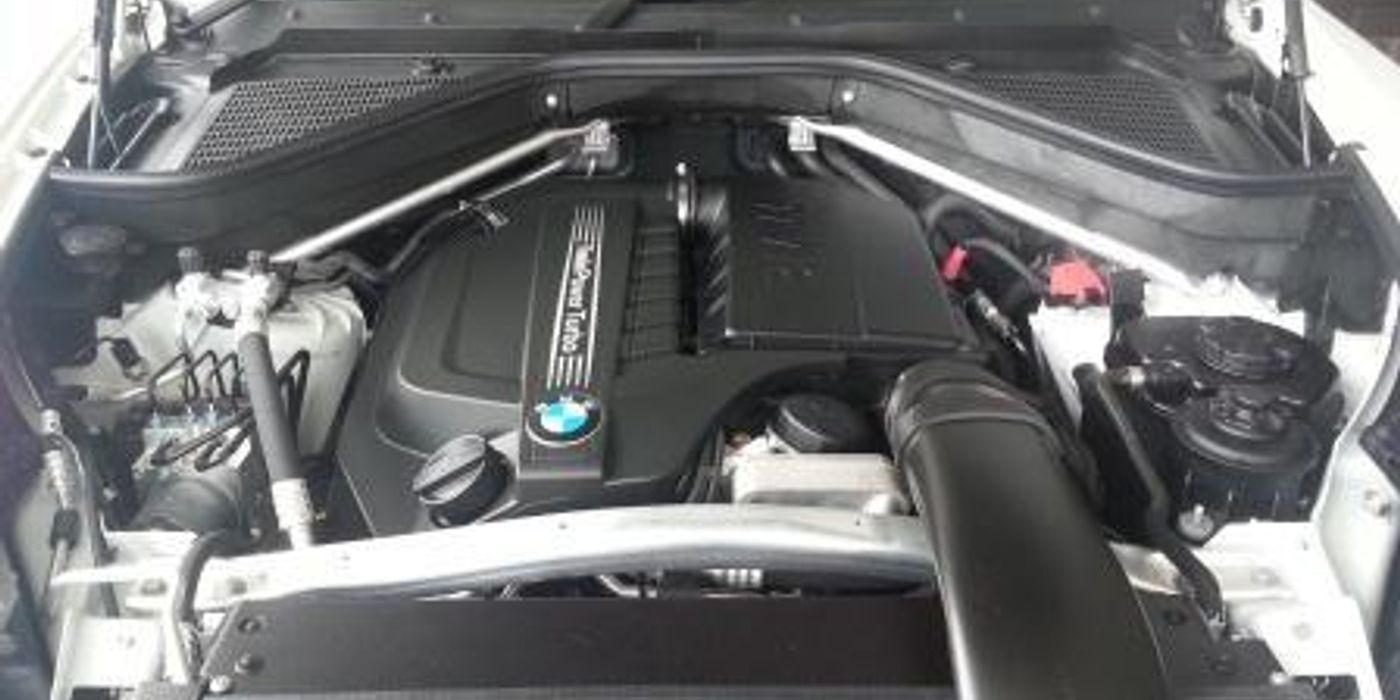
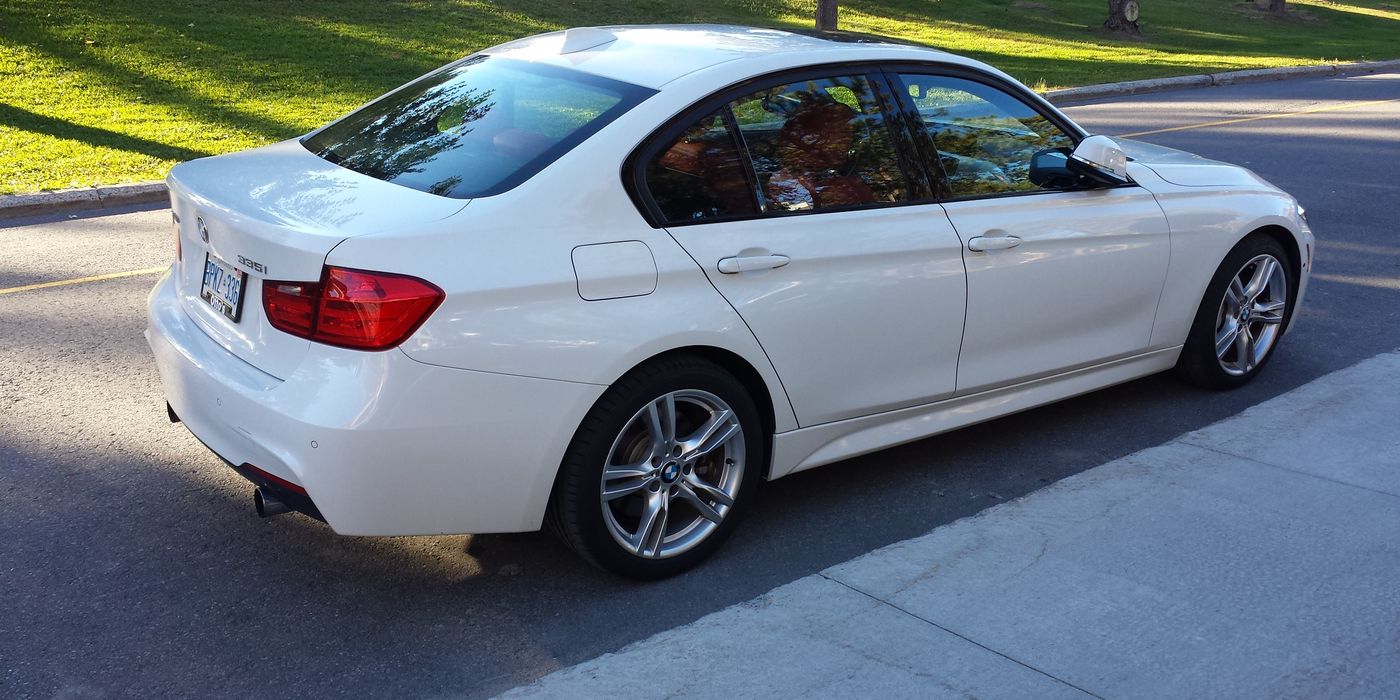
Before you buy a single part, you need to know whether your N55 has a pneumatic wastegate (PWG) or an electronic wastegate (EWG). The difference changes which turbo fits, which actuator you need, and how much boost control headroom you have.
Pneumatic Wastegate (PWG) N55s
PWG was the original N55 layout, used from 2011 through about mid-2013 on most F-series cars and throughout the E-series run (E82 135i, E90/E92 335is, E89 Z4 sDrive35iS). The wastegate is actuated by a pneumatic diaphragm - boost pressure pushes an arm that opens the wastegate flapper. It is simple, it is cheap to produce, and it develops two predictable problems on high-mileage cars.
Problem one is wastegate rattle. The actuator arm develops slack around 80,000 miles and rattles at idle and light throttle. Problem two is boost control at redline - once you tune a PWG N55 past stock, the diaphragm can no longer hold the wastegate flapper closed at peak RPM, so boost drops two to four psi from the midrange to redline. This is a known and persistent PWG limitation.
Solutions range from cheap to comprehensive. The washer shim mod on the factory actuator is a free DIY that cuts rattle and sometimes helps with boost drop. The Pure Turbos Heavy Duty Pneumatic Wastegate Actuator is a $180 drop-in that adds about 2 psi of retention capacity and usually eliminates rattle. Hybrid turbos typically ship with a better actuator pre-installed. If you are going past Stage 2, consider upgrading the actuator independent of the turbo if you are not swapping the turbo yet.
Electronic Wastegate (EWG) N55s
EWG came in on F-chassis cars around mid-2013 to 2014 and was standard on every F87 M2, most F3X 335i from 2014 forward, the F15 X5 35i, and the F30 ActiveHybrid 3. The wastegate is actuated by a motor controlled directly by the DME. Boost hold at redline is dramatically cleaner. Rattle is not a thing. Tuners can command precise wastegate duty cycle through MHD and BM3.
If you have an EWG car, you start with an advantage. A Pure Stage 2 EWG or VTT GC EWG will hold flat boost to redline without the mid-RPM sag that plagues PWG builds. You do not need an actuator upgrade, you do not need a wastegate washer mod, and your tune is simpler because the DME actually knows what the wastegate is doing.
To identify which you have: pop the hood, look at the right-hand side of the turbo (exhaust side), and check whether the wastegate arm is controlled by a motor with a wiring connector (EWG) or a rubber vacuum hose going to a diaphragm canister (PWG). In 30 seconds you will know.
Chassis Breakdown - Which N55 Is in Your Car
The N55 went into a remarkably wide range of BMWs. Here is what I see most in my shop and what each chassis brings to the turbo upgrade conversation:
F30 335i / F31 335i Touring (2012-2015) is the single most common N55 car on US roads. It is the sleeper benchmark. RWD and xDrive both exist, both tune identically, and all the hybrid turbos fit the same bolt pattern. The early PWG cars (2012-2013) need the actuator work. The 2014+ EWG cars do not. I covered a complete FBO and tune plan for this car at F30 335i sleeper build guide.
F22 M235i (2014-2016) shares the N55 with the F30 but in a smaller, lighter, two-door body. Same tunes, same turbos, same parts catalog, better power-to-weight. EWG standard from launch. The M235i is maybe my favorite N55 chassis on a per-dollar-per-smile basis.
F87 M2 (2016-2018, non-Competition) uses the N55B30T0 - a tighter-tolerance N55 with forged pistons, S55-class cooling, a different oil pan, and slightly uprated internals. Everything bolts up the same as a regular F-chassis N55. The M2 in particular tolerates 500 wheel-horsepower better than any other N55 because the engine was built for it. EWG from factory. For serious M2 turbo builds, see forum threads on SpoolStreet and f87.bimmerpost.
E82 135i / E88 135i (2011-2013) got the N55 in the facelift. PWG only. Still a cult car, but the E-chassis PWG boost-drop issue is very real on tuned examples. If you have one, plan on the Pure HD actuator and a very careful tune.
E90 / E92 / E93 335is (2011-2013) are N54 cars with an N55 variant in some markets - actually the "335is" sub-model used a higher-output N54 in the US. The N55 E-chassis 335i (no "s") is what we are talking about here. PWG, standard N55 tuning rules apply.
F10 535i / F11 535i Touring / F07 5GT (2011-2016) is an N55 5 Series. Turbos bolt up the same, but the engine bay is deeper and the charge pipe and downpipe routes are different. Use N55-specific F10-spec parts. Same 400-whp stock ceiling.
F12 640i / F13 640i / F06 640i Gran Coupe use the N55. Rare as build platforms because of the weight, but the tuning works identically.
F01 740i - yes, the 7 Series 740i runs an N55. Rare as a tuning target, but I mention it so you know your slugs for charge pipes on a 7 Series are different from a 3 Series.
E70 / F15 X5 35i, E71 / F16 X6 35i - N55 in the SAV lineup. PWG on early E-chassis, EWG on later F-chassis. X5/X6 builds work but the weight tax is real. Expect 350 to 400 wheel with Stage 2 hybrid due to drivetrain losses and chassis heft.
E84 X1 xDrive28i / F25 X3 xDrive35i / F26 X4 xDrive35i also got the N55 in some markets. Small SAVs. Same parts, different fitment. The X3/X4 35i are actually quick once tuned.
E89 Z4 sDrive35is (2011-2016) - N55 variant of the Z4 with the sDrive35is trim. Limited production, PWG only. Cool car, limited turbo options specifically certified for it but the core N55 parts work.
Stock N55 Turbo - How Far Can It Really Go
Before you buy any hybrid, you should know what the stock turbo actually delivers. Every shop message board has wildly different numbers on this because people confuse pump gas, E30 blends, and meth injection. Here is what I see on the dyno, consistently, across F-chassis cars with a clean FBO setup and a good tune:
Stock turbo, 93 octane only, MHD Stage 2 FBO: 360 to 380 wheel-horsepower, 400 to 420 lb-ft of torque. This is where the factory turbo is genuinely happy. It will live a long life here.
Stock turbo, E30 blend, FBO: 390 to 410 wheel-horsepower. Gains come from more aggressive timing and higher boost that the ethanol allows without knock.
Stock turbo, E50 or meth injection, FBO: up to 420 wheel-horsepower but the HPFP starts falling off here. You are at the fueling ceiling before you are at the turbo ceiling.
Stock turbo, pushed past 18 psi: the compressor wheel spins out of its efficiency island, intake temps climb fast, and you start seeing timing pull and fueling corrections. Some cars will pass 420 wheel momentarily, but it is not repeatable and it is not safe long-term.
The hard practical ceiling on a factory N55 twin-scroll is about 400 wheel-horsepower on pump and 420 wheel-horsepower on blended fuel. Past that number you have two choices - live with it, or upgrade the turbo. There is no third path.
The other constraint at this power level is the HPFP. Stock N55 high-pressure fuel pump can deliver enough fuel for about 470 wheel-horsepower on pump gas, slightly less on high ethanol. That means even if you put a bigger turbo on, you will run into fueling before you run into turbo capacity. Upgrading fueling has to happen alongside any meaningful turbo upgrade past Stage 1 hybrid.
Tier 1 Hybrids - The Sweet Spot for Most Owners
Tier 1 is drop-in hybrid turbos that replace the internals of the factory twin-scroll unit while keeping the OEM-shape housings and stock connections for oil, water, charge pipe, and downpipe. Install is a weekend in a home garage. Price is $2,000 to $3,500 for the turbo itself. Target power is 450 to 530 wheel-horsepower depending on fueling and tune.
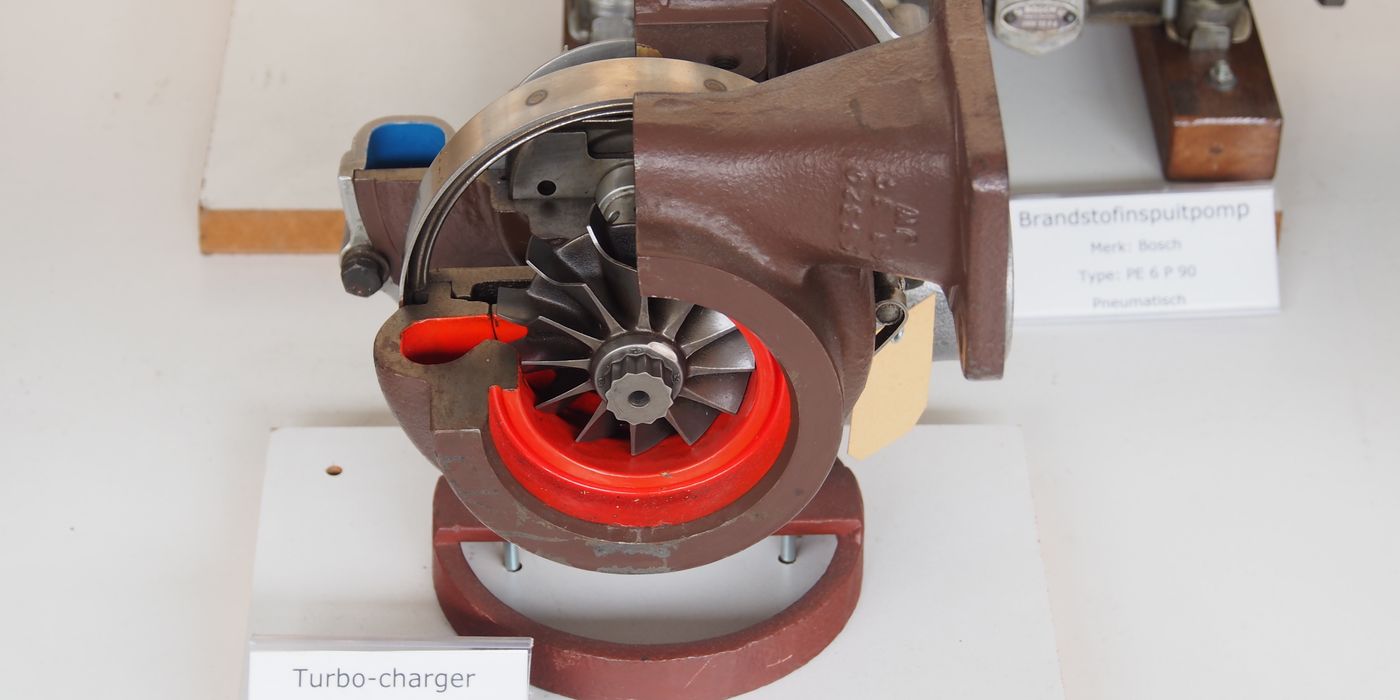
Pure Turbos N55 Pure500
Formerly known as the Pure Stage 1, the Pure500 is the entry point for N55 hybrids. Billet compressor wheel, high-flow turbine, upgraded bearing housing, and the OEM-shape housings so it drops in without custom charge pipe or downpipe work.
Target power is 450 to 480 wheel-horsepower on 93 octane with FBO, 490 to 500 wheel with light meth or an E30 blend. The reason to pick this over a Pure Stage 2 is if you are strictly a pump-gas driver and you do not plan to ever run port injection. The Pure500 maxes out where the stock fueling system starts falling off anyway, so you are not leaving power on the table that you could not have accessed without another $1,500 in fueling hardware.
2026 street price is about $2,000 to $2,200 depending on core status. With a Walbro LPFP, a VRSF charge pipe, a downpipe, an intercooler, and an MHD tune, your total spend for a 470-whp 93-octane build lands around $5,500. For a lot of owners, this is the stop.
Pure Turbos N55 Pure Stage 2
The Pure Stage 2 is the reliability benchmark for N55 hybrids - years of dyno data from SpoolStreet, a reputation that is hard to overstate, and a clear power step above the Pure500. Same drop-in fitment, but the compressor and turbine wheels are bigger and the spool is slightly softer (full boost around 2,400-2,600 RPM vs 2,200-2,400 for the stock turbo).
Target power is 470 to 510 wheel-horsepower on 93 plus meth, up to 530 wheel with port injection and E50+. The SpoolStreet F-series Pure Stage 2 results thread shows 452 whp / 478 wtq as a typical F30 335i dyno number with 93 and meth on a clean FBO setup.
2026 street price is about $2,495 plus $500 core. Core is waived or discounted if you send in your stock turbo. With fueling and supporting mods this is the Stage 2+ tier build, and your total parts budget for 500 wheel comes in around $7,200.
VTT N55 GC and GC Plus
Vargas Turbo Technologies builds the GC and GC+ series around a Garrett GTX3076R-class CHRA dropped into a custom cast stainless steel turbine housing that matches the factory N55 bolt pattern. So it is a true drop-in - factory oil, water, downpipe, charge pipe connections - but with real Garrett internals.
Target power is 500 wheel easily, 600 wheel possible on the GC+ with full supporting mods. The EWG version of the GC+ gives better boost control at high RPM and is the one to pick on an F-chassis build.
2026 street price is about $2,895 for the GC, $3,295 for the GC+. Vargas pitches the spool preservation as the big selling point - the CHRA is tuned to keep factory response feel - and in my experience the claim holds up. The GC+ also plays well with E85 and port injection once you are ready to add fueling.
BQ Tuning and MFR Performance Hybrids
These are the European options. BQ Tuning (UK) and MFR Performance offer N55 hybrids targeting similar power bands to the Pure Stage 2, usually priced slightly below the US market. US dyno data on them is thin because they do not ship in volume to North America. If you are in the EU, they are worth considering. In the US, stick with Pure or VTT for warranty and support reasons.

Aosuracing Turbo Inlet Pipe — N55 F2x/F3x/F87
$158.00
Tier 2 - Big Drop-In Hybrids
Tier 2 is where the hybrid concept gets stretched. Larger compressor and turbine wheels, sometimes a bigger housing, still (mostly) drop-in with OEM connections. The spool compromise is real - you give up 200 to 400 RPM of response to gain another 50 to 100 wheel-horsepower. This tier is for people who have already gone to full fueling and want to push past the Pure Stage 2 ceiling without committing to a single-turbo conversion.
Pure Turbos Pure600
The Pure600 sits between the Stage 2 and the Pure750. New cast housings, no core required on some SKUs, slightly bigger wheels than the Stage 2. Target power is 500 to 580 wheel-horsepower with E85 and port injection. Spool is noticeably softer than a Stage 2 - you feel it on part-throttle street driving, where the car wakes up a beat later than the smaller hybrid.
2026 street price is about $2,495 without core, $2,695 with larger parts kit. Best fit is owners who have already committed to port injection and an HPFP upgrade and want a serious power jump without losing factory fitment.
Pure Turbos Pure750 (drop-in tier)
The Pure750 is the flagship drop-in. New stainless turbofold that cuts spool 400 to 500 RPM versus previous big drop-ins, OEM housing footprint, full EWG and PWG variants. SpoolStreet has verified 608 wheel-horsepower on E30 plus meth at 25 psi on a Pure750 build. E85 plus full port injection and a Dorch HPFP will push 650 to 720 wheel depending on the build.
2026 street price is $3,495 to $3,995 for the cast version. This is where rod bearing inspection becomes non-negotiable if your engine has over 80,000 miles, because you are now operating on the ragged edge of what the stock bottom end will tolerate.
CTS Turbo EWG BOSS Kit
The CTS BOSS is a complete big-drop-in kit with a 4-inch high-flow cat downpipe included. EWG only. Pairs a mid-tier hybrid with a downpipe in one box, which simplifies the install and standardizes the exhaust path. 2026 price is $3,500 to $4,500 for the full kit. Less dyno data than Pure or VTT equivalents but a solid option for people who want everything from one vendor.
Tier 3 - Single Turbo Conversions
Tier 3 ditches the factory exhaust manifold and integrated twin-scroll housing entirely. You install a custom manifold, a big single turbo (top-mount or bottom-mount), an external wastegate, and rebuild the entire intake and exhaust routing. This is a full project. Your car is off the road for weeks. Your budget triples. Your reliability goes down because you now have handmade parts in hot, high-pressure locations.
On3 Performance Top-Mount Single
On3 is the budget-friendly entry. Top-mount manifold, GT30 to GTX67 turbo options depending on power target. Kit pricing in 2026 is $2,649 to $2,943 delivered, and it is kit-only (no turbo included on some SKUs, others bundle a specific spec). You add fueling, tune, downpipe path, and sometimes manifold bracing. Reputation is that fitment works but it takes shop time to dial in. Expect 550 wheel-horsepower on GT35 spec with full fueling, 700 plus on GTX67 with a built bottom end.
BigBoost N55 F-Chassis Stage 3
Twin-scroll manifold with 1.5-inch runners, MPR turbo custom-specified for N55 exhaust flow, EWG external wastegate. Premium build quality, well-fabricated. 2026 price is $5,500 to $7,000 depending on the turbo spec. This is the enthusiast-grade single kit - if you want the best engineered single-turbo path for an F-chassis N55 short of a full custom job, BigBoost is the answer.
Speedtech Bottom-Mount Precision Kit
Speedtech goes bottom-mount with a Precision turbo of your choice and an external wastegate. This is a race-oriented kit. True purpose-built, expensive, and not friendly to daily driving. 2026 price is $6,000 to $8,500 for the kit alone, turbo extra. Reserved for people building dedicated track or drag cars.
When a Single Turbo Makes Sense
Honestly, rarely. On an N55, the single-turbo path almost always costs as much as selling the car and buying an N54 with a comparable build already in place. The exceptions are: you are emotionally attached to your specific chassis (F87 M2 especially), you are building a dedicated drag or track car and you want the power ceiling that a big single provides, or you are chasing a record and the platform is not the bottleneck.
For everyone else, Pure Stage 2 or Pure750 is the answer and a single is a money trap.
Fueling - The Real N55 Ceiling
Turbo is the first thing people think about, but fueling is what actually caps the N55. A hybrid turbo with stock fueling is a car that runs well to 470 wheel-horsepower and then stops pulling because the HPFP has no more fuel to give. Here is the fueling ladder in the order you climb it.
Low-Pressure Fuel Pump (LPFP) Upgrades
The LPFP is in the fuel tank. It supplies fuel to the HPFP. Stock it is marginal past Stage 2. The first upgrade is a Walbro 450 Stage 2 kit - a single 450lph pump that drops into the factory hanger, usually sold by Fuel-It or BMS. It supports about 500 wheel-horsepower on E85 or 550 to 600 wheel on pump and race gas blends. 2026 price is $350 to $450.
Past that, the Walbro Stage 3 dual-450 kit uses two pumps in the same hanger and supports 850 wheel-class builds. 2026 price is $650 to $900. You almost never need this on an N55 unless you are in Tier 3 with a single turbo.
On some cars the EKP (LPFP control module) needs upgrading when the pumps pull more current. Fuel-It and BMS both sell EKP upgrades for around $150.
High-Pressure Fuel Pump (HPFP) Upgrades
The HPFP lives on the cylinder head and feeds the direct injectors. Stock N55 HPFP falls off at about 470 wheel-horsepower on pump and earlier on E85. The common upgrade path is the Dorch Lift Kit (also called DS25) which supports about 650 wheel on pump or 500 wheel on 100 percent E85. 2026 price is $800 to $1,200.
The Dorch Complete DI Package pairs the lift kit with S63 EU5 or M5 EU5 injectors for a 900 wheel-class DI-only capability (750 wheel on full E85). 2026 price is $1,800 to $2,400. This is the top-tier all-DI path.
An alternative is the PFS POD HPFP Upgrade, which uses a planetary overdrive gearbox to spin the factory HPFP about 3x faster. Cheaper than a Dorch full rebuild, similar ultimate flow on pump gas.
Port Injection (PI) - When It Becomes Mandatory
Port injection adds a second set of injectors in the intake manifold runners, driven off the LPFP at low pressure. It is the cleanest way to add fueling headroom for high-ethanol builds and it is mandatory above 500 wheel-horsepower on E85, strongly recommended above 480 wheel for long-term reliability.
The common PI kits are Fuel-It PI (most popular, 6 injectors, bolt-in, around $1,500 to $2,000 complete), Black Market Parts PI (similar scope), and Performance Fueling Solutions V2 (higher-flow rail and injector options). Install requires pulling the intake manifold - 3 to 5 hours of DIY work - which is also when most people install their LPFP upgrade since the tank is already being accessed.
Fueling Matrix - What You Need at Each Stage
| Stage | 93 Only | E30 Blend | E50 Blend | E85 Full |
|---|---|---|---|---|
| Stock turbo FBO | Stock fueling | Stock fueling | Stock OK | HPFP limit |
| Pure500 hybrid | Stock OK | Stock OK | LPFP upgrade | LPFP + HPFP |
| Pure Stage 2 / VTT GC | LPFP for headroom | LPFP | LPFP + HPFP | LPFP + HPFP + PI |
| Pure600 | LPFP | LPFP | LPFP + HPFP | Full PI build |
| Pure750 / big drop | LPFP + HPFP | LPFP + HPFP | Full PI build | Full PI + Dorch |
| Single turbo | Full build | Full build | Full build | Full build |
Stock turbo FBO
- 93 Only
- Stock fueling
- E30 Blend
- Stock fueling
- E50 Blend
- Stock OK
- E85 Full
- HPFP limit
Pure500 hybrid
- 93 Only
- Stock OK
- E30 Blend
- Stock OK
- E50 Blend
- LPFP upgrade
- E85 Full
- LPFP + HPFP
Pure Stage 2 / VTT GC
- 93 Only
- LPFP for headroom
- E30 Blend
- LPFP
- E50 Blend
- LPFP + HPFP
- E85 Full
- LPFP + HPFP + PI
Pure600
- 93 Only
- LPFP
- E30 Blend
- LPFP
- E50 Blend
- LPFP + HPFP
- E85 Full
- Full PI build
Pure750 / big drop
- 93 Only
- LPFP + HPFP
- E30 Blend
- LPFP + HPFP
- E50 Blend
- Full PI build
- E85 Full
- Full PI + Dorch
Single turbo
- 93 Only
- Full build
- E30 Blend
- Full build
- E50 Blend
- Full build
- E85 Full
- Full build
Supporting Mods in the Correct Order
The supporting mods list for an N55 hybrid is not optional. Every single one addresses a specific weak point that shows up at higher boost. Install them in the order below and you will have fewer headaches than 90 percent of the forum posts complaining about their hybrid build.
Charge Pipe - Install First, Always
Factory N55 charge pipe is plastic. It will split under any increased boost, sometimes at stock boost on high-mileage cars. Aluminum charge pipes from VRSF, CTS Turbo, and Mishimoto are all solid. I have run a VRSF aluminum charge pipe on my old F30 335i for two years with zero issues.

BMS FTP Motorsport Charge & Boost Pipe Kit BMW F2X F3X F87 N55
$370.00
For F10/F12/F15 chassis owners, the routing is different - grab a chassis-specific pipe.
Full category overview at best charge pipe for BMW, and install walkthrough at how to replace charge pipe BMW N55.
Turbo Inlet Pipe
Factory plastic inlet cracks on tuned cars and pulls unmetered air. Aluminum inlet kits from CTS Turbo, VRSF, and Pure all work. Mandatory for any hybrid install.
Downpipe
Factory N55 downpipe has two restrictive catalytic converters. Aftermarket high-flow catted or catless downpipes add 25 to 40 wheel-horsepower on top of whatever the turbo does. VRSF and CTS Turbo are the two most common. I ran a VRSF 4-inch catted downpipe on my F30 for years, no codes, no emissions failures.

VRSF 4" Turbo Downpipe for BMW N55 M135i M235i 335i 435i M2 F30/F20
$257.98
Full breakdown at best downpipe for BMW N55.
Intercooler
Stock intercooler saturates past Stage 1. Intake air temps climb, timing pulls, power drops. FMIC options range from bang-for-buck (VRSF HD 5 or 6 inch) to premium race-spec (VRSF 7.5 Stepped Race, CSF Stepped 5.5). For F20/F30 N55 cars, Wagner Evo1 is a strong choice.

Wagner Tuning Evo1 Competition Front Mount Intercooler — F2X/F3X N20/N55
$490.00
Oil Catch Can
N55 PCV system routes oil vapor back to the intake. Over time this carbons up the valves (DI problem) and can cause crankcase pressure issues under boost. A baffled catch can catches the oil before it re-enters the intake.
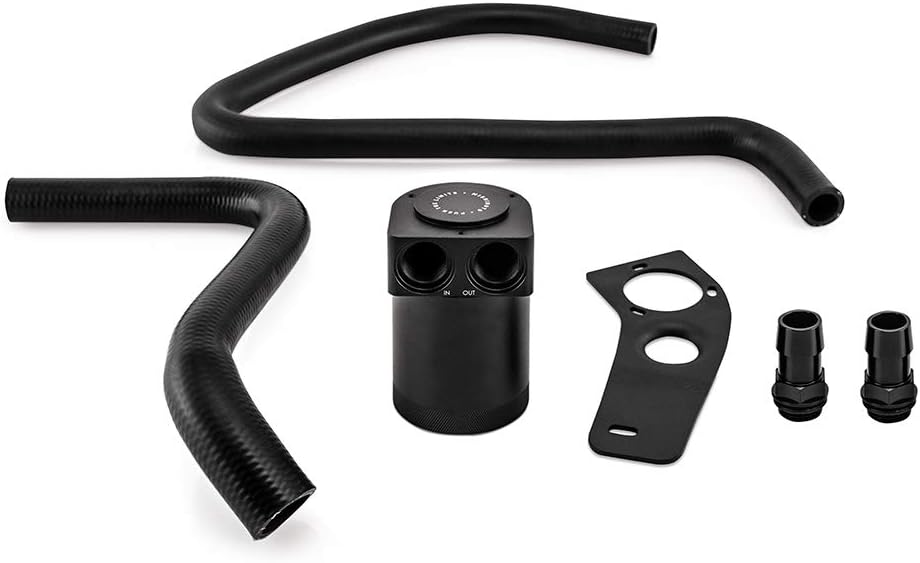
Mishimoto Baffled Oil Catch Can — N55 335i/135i 2011-2013
$272.95
Wastegate Actuator (PWG Cars Only)
If you are on an E-chassis or early F-chassis PWG N55, the factory actuator is a boost-drop liability past Stage 2. Pure Turbos Heavy Duty Pneumatic Wastegate Actuator is a $180 drop-in fix. EWG cars skip this entirely.
Cooling - Oil Cooler and Radiator
For sustained hard use or anything past 450 wheel-horsepower, add an oil cooler kit from Mishimoto or VRSF and consider a CSF Triple Pass Radiator. N55 oil temperatures climb fast on hybrid builds, especially on track or in warm climates.
Rod Bearings at 500-600 whp
The N55 rod bearings are not the constant ticking time bomb that the S65 V8 bearings are, but they are a known failure mode on high-mileage, high-horsepower builds. If your engine has over 80,000 miles and you are targeting 500 wheel-plus, pull the oil pan and inspect the bearing shells while you are doing your turbo install. Preventive replacement at 80K on a built car is cheap insurance. Full rod bearing replacement including rod bolts is around $600 to $1,200 in parts, plus labor.
Tuning Platforms for the N55
Pick one platform and stick with it. Mixing tunes from multiple vendors causes more problems than it solves.
MHD Flasher
MHD is the most popular single-tool choice for N55. Back-end DME flash, $350 license tied to your DME serial, supports 93, 91, E30, E40, E50, E85 maps on both PWG and EWG cars. Logs everything you need through the app. Install via an OBD-Link MX+ or compatible Bluetooth adapter. I use MHD on every N55 build I do.
Bootmod3 (BM3)
Cloud-flash platform, $549 license. Better GUI than MHD, stronger map-switching, strong feature set for advanced users. Stage 1 maps push stock N55 to about 310-335 wheel, Stage 2 maps around 335-390 wheel on stock turbo. Cloud architecture means updates push out faster. Some users prefer MHD's simplicity. Both platforms can tune the same car (one at a time, not simultaneously).
JB4 Piggyback
The BMS JB4 is a hardware piggyback that sits between the DME and the MAP sensors. $479 for the unit. Intercepts boost signals to command more from the turbo. Great for stealth (unplug in 30 seconds for dealer visits). Often paired with MHD as a "JB4 + MHD backend flash stack" - the MHD flash handles fueling and ignition, the JB4 handles hardware-level boost control. Popular with hybrid turbo builds.
xHP Flasher for Transmission
Engine tune alone cannot unlock the ZF 8HP transmission. xHP is the TCU tune for the 8HP and 6HP gearboxes. $250 for the license. Upgrades shift speed, hold logic, and torque limits. I run xHP on my G20 330i and it transformed the transmission. Pair with MHD or BM3 on the engine side.
My Recommended Stack
For a Tier 1 hybrid build (Pure500 or Pure Stage 2 on 93 plus meth): MHD plus xHP. That is it. $600 in software, clean, simple, well-supported.
For a Tier 2 build with port injection and E85: MHD plus xHP plus a JB4 for hardware-level boost control. The JB4 becomes valuable when you are running large boost numbers and you want independent hardware control separate from the flash tune.
For a Tier 3 single-turbo build: custom tune from a qualified shop, usually BM3 or MHD Custom Tune. Off-the-shelf maps do not cover this territory safely.
Full details on software options at ECU tuning for BMW.
Known Issues on Tuned N55s
Every platform has its tuned-car failure modes. Here are the N55-specific ones I see in my shop.
Wastegate Rattle (PWG Cars)
Metallic rattle at idle and light throttle on high-mileage N55s with the pneumatic wastegate. Caused by slack in the actuator arm. Solutions are the washer shim DIY mod, Pure HD actuator upgrade, or full hybrid replacement. EWG cars are immune.
Charge Pipe Failure
Plastic charge pipe splits under any elevated boost. Drivetrain Malfunction warning, limp mode, loud boost leak. Replace before you tune, not after.
Inlet Pipe Cracks
Factory plastic turbo inlet cracks on tuned cars, pulls unmetered air, causes fueling trims and hesitation. Aluminum inlet is mandatory.
HPFP Fall-Off
Stock HPFP starts going lean around 470 wheel-horsepower on pump, earlier on E85. Not a failure per se - it is a performance ceiling.
Rod Bearing Concerns
Covered above. 500+ wheel-horsepower plus age plus mileage equals inspection time.
Oil Starvation on Early N55
Pre-M2 N55 oil pans can starve the pickup in aggressive cornering. The F87 M2 oil pan (and the later N55B30T0) solves this. Track drivers on F30/F22 cars should consider the M2 pan swap.
Carbon Buildup on Valves
Same as every DI BMW. Walnut blast every 60-80K miles. Slightly worse on DI-only N55 than on DI+PI cars once you add port injection (PI helps clean the intake side with fuel).
Oil Leaks at 80K Miles
Valve cover gasket and oil filter housing gasket. Standard N55 stuff. Not caused by tuning. Budget $150-300 in parts, a couple hours of labor, when you see the first seepage.
For a comprehensive N55 failure-point reference, see BMW N55 common problems.
Chassis-Specific Notes
F30 335i and F31 335i Touring
Most common turbo upgrade target on US roads. PWG on 2012-2013, EWG on 2014-2015. F30 335i Sport Line and M Sport are identical for tuning purposes - the M Sport badge is cosmetic and suspension only. RWD and xDrive respond identically to tunes; xDrive cars dyno slightly lower because of drivetrain losses but real-world acceleration is similar. My full build plan for this chassis is at F30 335i sleeper build guide.
F22 M235i
EWG from launch. Lighter than the F30. Best power-to-weight on N55. Same parts as F30 335i for 90 percent of the catalog.
F87 M2
Forged pistons, tighter bearing tolerances, S55-class cooling, M-specific oil pan. Tolerates higher sustained boost than any other N55. EWG standard. For serious M2 builds, the Pure Stage 2 or VTT GC+ EWG with full fueling and port injection will push 550-580 wheel reliably on E85 with no internal work. This is the N55 ceiling done right.
F15 X5 xDrive35i
Same N55, heavier vehicle. Expect 350-400 wheel on Pure Stage 2 due to drivetrain losses and chassis weight. Still a quick SAV. Charge pipe and intercooler routes are different from sedan N55s - specify F15 fitment when you order parts. Family sleeper of choice for a certain type of buyer.
F10 535i
5 Series sedan with N55. More common in Europe than the US. Sleeper business car. Same tune response, different fitment on some parts. Wagner Tuning makes an F10-specific intercooler kit that is the premium choice for this chassis.
E82 135i and E92 335i with N55
E-chassis N55 cars (post-2011 facelift for 135i, some late 335i trims) are all PWG. Plan on the Pure HD actuator. The E-chassis is more cramped for FMIC and charge pipe fitment than the F-chassis - expect slightly more install time.
2026 Pricing Summary
All prices are US street, parts only, no labor. Labor at a qualified shop typically runs $100-150 an hour and install time varies by platform.
| Category | Product | 2026 Price |
|---|---|---|
| Tune | MHD License | $350 |
| Tune | BM3 License | $549 |
| Tune | JB4 Unit | $479 |
| Tune | xHP License | $250 |
| Charge Pipe | VRSF Aluminum | $180-220 |
| Charge Pipe | CTS Turbo | $220-280 |
| Charge Pipe | BMS FTP | $200-260 |
| Inlet | CTS Billet | $180-250 |
| Downpipe | VRSF Catted | $500-650 |
| Downpipe | CTS Turbo | $550-750 |
| Intercooler | VRSF HD 5/6 | $500-700 |
| Intercooler | Wagner Evo1 | $650-900 |
| Intercooler | VRSF 7.5 Race | $800-950 |
| Oil Cooler | Mishimoto Kit | $450-650 |
| Actuator | Pure HD PWG | $150-220 |
| Turbo | Pure500 | $1,995-2,200 |
| Turbo | Pure Stage 2 | $2,495+$500 core |
| Turbo | Pure600 | $2,495-2,695 |
| Turbo | VTT GC | $2,895 |
| Turbo | VTT GC+ | $3,295 |
| Turbo | Pure750 | $3,495-3,995 |
| Turbo | CTS BOSS kit | $3,500-4,500 |
| Kit | On3 Top Mount | $2,649-2,943 |
| Kit | BigBoost Stage 3 | $5,500-7,000 |
| Kit | Speedtech Bottom | $6,000-8,500 |
| Fueling | Walbro 450 LPFP | $350-450 |
| Fueling | Walbro Dual 450 | $650-900 |
| Fueling | Dorch DS25 HPFP | $800-1,200 |
| Fueling | Dorch Complete DI | $1,800-2,400 |
| Fueling | Fuel-It PI Kit | $1,500-2,000 |
Tune
- Product
- MHD License
- 2026 Price
- $350
Tune
- Product
- BM3 License
- 2026 Price
- $549
Tune
- Product
- JB4 Unit
- 2026 Price
- $479
Tune
- Product
- xHP License
- 2026 Price
- $250
Charge Pipe
- Product
- VRSF Aluminum
- 2026 Price
- $180-220
Charge Pipe
- Product
- CTS Turbo
- 2026 Price
- $220-280
Charge Pipe
- Product
- BMS FTP
- 2026 Price
- $200-260
Inlet
- Product
- CTS Billet
- 2026 Price
- $180-250
Downpipe
- Product
- VRSF Catted
- 2026 Price
- $500-650
Downpipe
- Product
- CTS Turbo
- 2026 Price
- $550-750
Intercooler
- Product
- VRSF HD 5/6
- 2026 Price
- $500-700
Intercooler
- Product
- Wagner Evo1
- 2026 Price
- $650-900
Intercooler
- Product
- VRSF 7.5 Race
- 2026 Price
- $800-950
Oil Cooler
- Product
- Mishimoto Kit
- 2026 Price
- $450-650
Actuator
- Product
- Pure HD PWG
- 2026 Price
- $150-220
Turbo
- Product
- Pure500
- 2026 Price
- $1,995-2,200
Turbo
- Product
- Pure Stage 2
- 2026 Price
- $2,495+$500 core
Turbo
- Product
- Pure600
- 2026 Price
- $2,495-2,695
Turbo
- Product
- VTT GC
- 2026 Price
- $2,895
Turbo
- Product
- VTT GC+
- 2026 Price
- $3,295
Turbo
- Product
- Pure750
- 2026 Price
- $3,495-3,995
Turbo
- Product
- CTS BOSS kit
- 2026 Price
- $3,500-4,500
Kit
- Product
- On3 Top Mount
- 2026 Price
- $2,649-2,943
Kit
- Product
- BigBoost Stage 3
- 2026 Price
- $5,500-7,000
Kit
- Product
- Speedtech Bottom
- 2026 Price
- $6,000-8,500
Fueling
- Product
- Walbro 450 LPFP
- 2026 Price
- $350-450
Fueling
- Product
- Walbro Dual 450
- 2026 Price
- $650-900
Fueling
- Product
- Dorch DS25 HPFP
- 2026 Price
- $800-1,200
Fueling
- Product
- Dorch Complete DI
- 2026 Price
- $1,800-2,400
Fueling
- Product
- Fuel-It PI Kit
- 2026 Price
- $1,500-2,000
Frequently Asked Questions
What is the best turbo upgrade for the BMW N55
For most owners, Pure Stage 2 or VTT GC. They are the reliability benchmarks for hybrid-tier N55 turbos, both deliver 450-530 wheel-horsepower with supporting mods, and both drop in with factory connections. If you are strictly pump-gas and will never run port injection, Pure500 is the cheaper entry point. If you are going past 550 wheel, Pure750 or a single conversion becomes the right answer.
How much horsepower can a stock N55 turbo handle
The stock N55 twin-scroll tops out around 380-400 wheel-horsepower on 93 octane with full bolt-ons and a tune, 420 wheel-horsepower with E30 or meth. Past that number the compressor falls off its efficiency map and the HPFP starts running lean. The hard practical ceiling is 420 wheel-horsepower on blended fuel.
Is the N55 Pure Stage 2 better than the VTT GC
Both hit roughly the same power targets (470-530 wheel with supporting mods). Pure Stage 2 has more dyno data behind it and a slightly simpler reputation. VTT GC uses real Garrett GTX3076R internals and holds boost cleaner at high RPM, especially the EWG variant. For EWG F-chassis cars chasing the top of the hybrid tier, VTT GC+ is my pick. For PWG cars or budget-focused builds, Pure Stage 2 is the accepted benchmark.
How much does a Pure Turbos N55 upgrade cost in 2026
Pure500 is $1,995-2,200. Pure Stage 2 is $2,495 plus $500 core. Pure600 is $2,495-2,695 without core. Pure750 is $3,495-3,995 for the cast version. Add supporting mods (charge pipe, inlet, downpipe, intercooler, tune, LPFP) for another $1,500-2,500 minimum. A complete 500 wheel-horsepower build with Pure Stage 2 lands around $6,500-7,200 in parts.
Do I need port injection for a big turbo N55
Above 500 wheel-horsepower on E85 or higher ethanol, yes, port injection is mandatory. Above 480 wheel it is strongly recommended for long-term reliability. On pump gas with methanol injection, you can go to about 480 wheel without port injection if you have an HPFP upgrade. Full E85 builds always need PI because the stock DI system cannot supply enough fuel at high ethanol concentrations.
Can the N55 make 500 wheel-horsepower reliably
Yes, with a Pure Stage 2 or VTT GC, a Walbro LPFP, port injection for E85 (or meth for pump), full supporting mods, and a competent tune. Expect to spend $5,500-7,500 in parts. The engine's internal ceiling is around 600 wheel-horsepower before rods become the limiting factor, so 500 wheel sits comfortably inside the safe operating zone if the engine is healthy.
What is the difference between N55 PWG and EWG for turbo upgrades
PWG uses a pneumatic diaphragm wastegate actuator that cannot hold boost precisely at high RPM and is prone to rattle. EWG uses an electronic motor controlled by the DME, holds boost flat to redline, and does not rattle. All E-chassis N55 cars and early F-chassis (pre-mid-2013) are PWG. Later F-chassis, all F87 M2, and most F15 X5 are EWG. EWG cars tune cleaner and do not need the wastegate actuator upgrade.
Is it worth single-turbo converting an N55
Rarely. The cost of a quality single-turbo kit plus supporting build (BigBoost, Speedtech) will run $10,000-15,000 before labor. That is more than most complete N54 335i cars with a 500 wheel-horsepower build already on them. Unless you are emotionally attached to your specific N55 chassis (F87 M2 being the main case) or you are chasing 700-plus wheel-horsepower, stay in the hybrid tier. Pure750 drop-in reaches 650+ wheel on E85 without the single-conversion overhead.
How much power can the stock N55 HPFP support
About 470 wheel-horsepower on pump gas. Slightly less on E30, and significantly less on E50 or E85. The stock HPFP is a single-pump DI design with lower peak flow than the N54's twin-pump layout. Port injection or an HPFP upgrade (Dorch DS25) becomes the ceiling-lifter.
What supporting mods do I need for a Pure Stage 2 N55
At minimum: aluminum charge pipe, aluminum turbo inlet, catted or catless downpipe, front-mount intercooler, an MHD or BM3 tune, and a Walbro LPFP upgrade for fueling headroom. On PWG cars, add the Pure HD wastegate actuator. For long-term reliability add an oil cooler and (on high-mileage engines) plan for rod bearing inspection.
Is the Pure750 a true drop-in turbo for the N55
Mostly. It keeps OEM manifold bolt pattern, uses stock oil and water connections, and fits the factory downpipe flange. The new stainless turbofold improves spool by 400-500 RPM over previous big drop-ins. Install is similar effort to a Pure Stage 2 - a weekend in a home garage. The fueling demands are much higher though, so budget for full PI and HPFP upgrades at the same time.
Why does my N55 wastegate rattle and how do I fix it
The PWG actuator arm develops slack around 80K miles. You hear a metallic rattle at idle and light throttle. Solutions are the washer shim DIY mod (free, moderate success), the Pure Turbos Heavy Duty Pneumatic Wastegate Actuator (around $180, high success), or a full hybrid turbo replacement (which solves rattle and gains power). EWG cars do not experience this.
How does N55 tuning potential compare to N54
The N54 goes further for less money at every stage. N54 stock turbos hit 500 wheel with meth and a tune. N55 stock turbo caps at 400 wheel. N54 hybrid tier reaches 700 wheel on stock internals. N55 hybrid tier caps around 600 wheel before rods become a concern. A reliable 500 wheel N54 build is $1,500-2,000 in parts. The same number on N55 is $5,500-7,500. If you want maximum power per dollar and you are not chassis-loyal, the N54 is the better tuning platform. Full side-by-side at N54 vs N55 vs B58.
Will a charge pipe upgrade protect against turbo failure on N55
The aluminum charge pipe prevents charge pipe splits that cause limp mode and fuel trim issues. It does not directly protect the turbo from failure. It does, however, prevent the sudden pressure drops that a split charge pipe creates, which can stress the turbo during the pressure spike that precedes the split. Charge pipe is a reliability and drivability upgrade, not a turbo protection upgrade.
What is the reliable horsepower limit for N55 stock internals
Around 500 wheel-horsepower with healthy rod bearings and reasonable mileage (under 80K). Past 500 wheel, the risk curve steepens. At 600 wheel and above, rod bearing failure is a when, not an if, on stock internals. Forged rods and bearings become prerequisite for 600+ wheel reliable daily-driver operation. The F87 M2 with its factory-forged pistons tolerates more sustained boost than a regular N55 but still sits on the same rod design.
My Honest Recommendation by Goal
Here is how I would spec the build for each of the three most common N55 owner profiles, based on what I have actually sold and installed.
Daily Sleeper on 93 Octane
MHD license, VRSF aluminum charge pipe, CTS aluminum inlet, VRSF catted downpipe, VRSF HD intercooler, Pure Stage 2 hybrid, Walbro 450 LPFP, xHP transmission tune. On PWG cars add the Pure HD actuator. Total parts budget: around $6,500. Target power: 450-480 wheel-horsepower on 93 octane. The car still daily-drives perfectly, stock idle, stock cold-start, stock emissions test passing. This is the build I recommend to 8 out of 10 N55 owners who ask me.
Weekend Car on E85 with Port Injection
Same supporting mods as above, plus a Fuel-It PI kit, a Dorch DS25 HPFP lift kit, and E85 maps loaded via MHD. The turbo choice is either Pure Stage 2 or VTT GC+ EWG. Total parts budget lands around $9,500, with target power of 510 to 560 wheel-horsepower on E85. Drives like a regular car on pump gas, unlocks serious numbers when you fill with E85 at a flex-fuel pump. Best-of-both-worlds build.
Track or Dedicated Build to 600 Plus
Pure750 or BigBoost Stage 3 single kit, full Dorch DI package, Fuel-It dual-450 LPFP, rod bearings and ARP head studs preventive, CSF Triple Pass radiator, Mishimoto oil cooler, dedicated tune from a qualified shop. Total parts budget: $13,000-18,000. Target power: 600-700 wheel-horsepower on E85. Not a daily driver anymore. Weekend canyon run or track duty.
Final Verdict
The best turbo upgrade for your BMW N55 is the one that matches your chassis, your fuel, your budget, and your honesty about how fast you actually need to go. For 90 percent of owners that answer is a Pure Stage 2 or VTT GC with full supporting mods and a Walbro LPFP. That build lands at 450-510 wheel-horsepower, it runs on pump gas with light meth, it drives like a factory car at idle and cruise, and it costs around $6,500-7,200 in parts. The remaining 10 percent are either going to Pure750 for 600+ on E85 or they are in the wrong engine family entirely.
If you came here wanting me to tell you the N55 can be cheaply turned into a 700 wheel-horsepower monster, I cannot. The platform is not built for it, the aftermarket economics do not support it, and the rods will not live through it. What the N55 does brilliantly is deliver a silky, reliable, invisible 450-500 wheel-horsepower experience on a bolt-on hybrid - and there is nothing embarrassing about that number in a car that still drives to work every Monday with the factory warranty on the steering rack.
If your goal is a big-number build and you are flexible on chassis, hear me out one more time - sell the N55 and buy an N54 335i. A clean E90/E92 N54 with stock turbos and an MHD tune will keep up with a Pure Stage 2 N55 on any real-world pull, and the parts path to 600 wheel on the N54 is a third of what it costs on the N55. That is the one uncomfortable truth every N55 turbo buyer has to reckon with. If you can accept it, you save yourself thousands of dollars. If you cannot (because you love your F87 M2 or your F30 335i xDrive sleeper), build it right in the hybrid tier and stop.
Next steps. If you have not tuned yet, start with MHD and supporting bolt-ons - charge pipe, downpipe, inlet, FMIC - before you touch the turbo itself. If you are already FBO plus tune on stock turbo, your next money is the Pure Stage 2 or VTT GC plus a Walbro LPFP. If you have already done Stage 2 hybrid and you are ready for E85, budget for the Fuel-It PI kit and the Dorch HPFP upgrade together. At every step, read BMW N55 common problems so you know what to inspect before you tune, and cross-reference with my N54 vs N55 vs B58 piece so you are buying the turbo with full context on where the engine sits in the BMW inline-six family. Kamil out.