BMW JB4 Tuner Guide, Stage 1 and Stage 2 by Chassis from N54 to B58
Affiliate disclosure. BimmerTalk is a proud partner of the Amazon Associates Program and Turner Motorsport. We may earn a small commission on qualifying purchases through our links, at no extra cost to you. Read the full disclosure.

If you've spent any time on the BMW tuning forums, you already know the JB4 name. Burger Motorsports has been making this piggyback tuner since the N54 era, and it's become the default first move for anyone who wants more power without handing their car over to a dealer-detection-proof flash tune. I've been running one in my G20 330i (B48, the 255 HP version) for about two years now, and before that I helped half a dozen friends with installs on everything from E90 335is to F80 M3s. This guide is everything I know about the JB4 laid out by chassis and engine, with honest takes on where it excels and where you're better off looking elsewhere.
This is not a hype piece. The JB4 is not magic. It has real limitations, and for some platforms there are better tools. But for the majority of N54, N55, B58, S55, and S58 owners who want meaningful, reversible power gains with a fallback to stock when the service light comes on, it is still one of the smartest investments you can make. Let's get into the details.
$499-$599 typical
JB4 Price Range
~100 WHP over stock
N54 Peak Gain (Stage 2+)
~400 WHP
B58 Stage 2 Target
~30-50 WHP
S55 Stage 1 Gain
1-3 hours depending on chassis
Install Time
Plug-and-play, undetectable when removed
Reversibility
Yes, via mobile app and BMS desktop software
Datalog Support
What the JB4 Actually Is and How It Works
Most people describe the JB4 as a "piggyback tuner" and leave it at that. That's accurate but incomplete. Understanding the mechanism matters because it's the reason the JB4 behaves differently from a flash tune like MHD or Procede, and it directly affects what you can and can't do with it.
The JB4 intercepts specific sensor signals between the engine's DME (Digital Motor Electronics, BMW's term for the ECU) and the physical sensors on the engine. Depending on the platform, it primarily manipulates the boost pressure sensor signal and, on some cars, the map sensor, intake air temperature sensor, and fuel pressure signals. The DME thinks it's seeing one pressure value; the JB4 is feeding it a slightly lower number while the actual boost in the manifold is higher. The DME responds to what it "sees" and holds boost lower than it normally would to achieve that target - but because the actual boost is higher, the engine makes more power.
This is fundamentally different from a flash tune. A flash tune writes new calibration data directly into the DME's memory. It changes boost targets, ignition timing maps, fuel maps, rev limiters, and anything else the tuner wants to touch. The JB4 doesn't touch the DME at all. It sits between the sensors and the DME, operating as a real-time signal interceptor. The DME's software remains byte-for-byte factory.
The practical implications are significant. When you unplug the JB4 and drive to the dealer, there is nothing in the DME to find. No modified calibration data, no altered maps, no evidence of tuning in any module. This is the core value proposition of the JB4 and the reason it still has a place even though flash tunes have become excellent. On my G20, I've had it to the dealer three times for warranty work. Unplug, drive in, plug back in after pickup. Total time lost: maybe 20 minutes.
The JB4 uses a Bluetooth module for real-time communication with the BMS phone app. You can switch maps on the fly, datalog boost, timing correction (knock), intake air temperatures, throttle position, fuel trims, and more - all without an OBD port dongle. For diagnosing boost leaks, checking for knock on a new tune, or just watching your car pull on the highway, the logging capability is genuinely useful rather than gimmicky.
How the Map Files Work
The JB4 ships with several built-in maps numbered from 0 to 6 or higher depending on the firmware generation you're running. Map 0 is stock, a pass-through. Map 1 is a conservative pump-gas tune. Map 2 steps it up. Maps 5, 6, and 7 (on platforms that support them) are where things get aggressive, with Map 6 and 7 typically requiring supporting mods and premium fuel to run safely.
Beyond the numbered maps, the JB4 supports custom user maps you load via the BMS app or desktop software. This is where the tuning gets serious. Third-party tuners and the BMS community have developed platform-specific maps for virtually every combination of supporting mods. If you're on an N54 with a full downpipe, intake, and charge pipe, there's a community-tested map for that. If you're running E30 flex fuel on a B58, there's a map for that too.
The map file format used by current JB4 units supports adjustable parameters including boost targets at various RPM points, fuel adjustments, and timing corrections. On B58 and S55/S58 platforms, the integration is deeper because the JB4 has more sensor access. On older N54 platforms, the map system is simpler but has been refined over 15+ years of community use.
Stage Definitions and What They Actually Mean
Stage terminology in the BMW tuning world is loosely defined and often abused. For the JB4 specifically, BMS and the community have settled on fairly consistent definitions that I'll use throughout this guide. Understanding these stages upfront will save you from misreading dyno charts and forum posts.
Stage 1 (Software Only)
Stage 1 means the JB4 running on pump gas maps (91 or 93 octane depending on your region and the specific platform) with no supporting hardware modifications beyond possibly an air filter or drop-in replacement. The stock charge pipe, stock intercooler, stock intake, and stock exhaust. On most platforms this is Map 2 or Map 3. Power gains at Stage 1 are real but conservative - the JB4 is limited by what the stock hardware can safely support. You'll feel the difference, especially in the midrange torque, but you're not transforming the car.
Stage 1 is the right choice if your car is under warranty, you're not planning further mods, or you just want a noticeable improvement with zero installation risk beyond the JB4 itself. It's also where I'd recommend starting even if you plan to go further - get a few tanks of fuel through the car on Map 2, datalog it, make sure everything looks healthy, then consider next steps.
Stage 2 (JB4 Plus Supporting Hardware)
Stage 2 adds hardware. Typically this means at minimum an upgraded charge pipe (to prevent collapse under boost) and a catless or high-flow catted downpipe. Some definitions also include an upgraded intercooler and intake. The downpipe is the most impactful single piece of hardware - on turbocharged BMWs, the restrictive factory downpipe is a genuine bottleneck, and removing it allows the turbo to spool faster and breathe better at the top end. The charge pipe is a safety item as much as a performance item; stock plastic charge pipes on N54 and early N55 cars are known to blow off under sustained boost pressure.
Stage 2 allows running more aggressive maps because the supporting hardware reduces intake air temperatures, exhaust backpressure, and the risk of boost leaks. On N54 this is where power gets genuinely impressive. On B58 Stage 2 is when you start talking about 400 WHP targets.
Stage 3 and Beyond (E85/Flex Fuel)
Stage 3 or "Stage 3+" in the JB4 context almost always means adding ethanol (E85 or a custom E30-E40 flex fuel mix) to the equation. E85 has a significantly higher octane rating (around 105-108 AKI equivalent), dramatically better charge cooling from its high latent heat of vaporization, and allows the JB4 to run substantially more boost and timing without knock. The gains over Stage 2 on pump gas can be another 30-60 WHP depending on the platform.
Running E85 on a JB4 setup requires either a flex fuel sensor kit (which tells the JB4 the actual ethanol content of the fuel and adjusts maps accordingly) or a dedicated E85 map if you're running a consistent mix. On most JB4 platforms, the flex fuel kit involves adding an ethanol content sensor inline in the fuel line and wiring it to the JB4. BMS sells this as an add-on and it works well. The car will even compensate for partial fills and varying blends automatically when set up correctly.
The JB4 Product Lineup and the Port Injection Controller
BMS currently makes platform-specific JB4 units. There is not a single universal JB4 that works on everything - the harnesses, sensor intercept points, and firmware are different per engine family. Make sure you're buying the correct unit for your chassis and engine code before ordering. The BMS website has a fitment guide, and it's accurate.
The main JB4 units you'll encounter for the platforms in this guide are the N54/N55 JB4, the B46/B48 JB4, and the B58/S55/S58 JB4. Pricing sits around $499-$599 depending on the current BMS pricing. The units typically ship with a Bluetooth module, the engine-specific harness, basic install instructions, and a Bluetooth adapter.
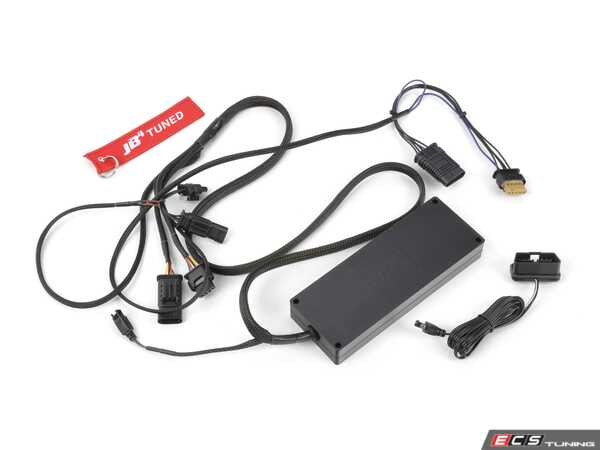
Burger Motorsports JB4 - Tuner for BMW B38 B46 B48
$529.00
For B46 and B48 engines (which cover the G20/G29/F30/F32 430i, 330i, 230i, and related cars), the B46/B48 JB4 is the unit to look at. It runs Maps 1 through 7 on the B48, with Map 7 being the aggressive E85 or flex fuel map. The B48 responds extremely well to boost manipulation - my own G20 330i is a great example of how much headroom these engines have from the factory.
The Port Injection Controller is a separate product that pairs with the JB4 and deserves its own mention. On turbocharged BMWs with direct injection only (which is most of them), running high ethanol content fuels or very aggressive maps can expose the limits of the high-pressure fuel system. The JB4 Port Injection Controller adds a secondary port injection system that supplements the direct injection at high load. It's a sophisticated add-on that unlocks Stage 3+ power levels more safely and also has the side benefit of helping keep intake valves cleaner by wetting them with fuel.
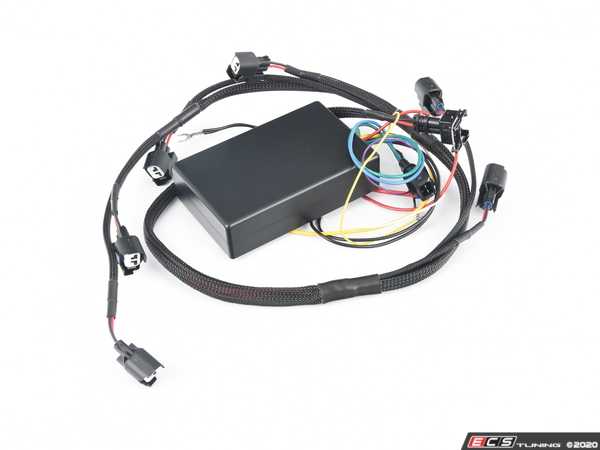
The Port Injection Controller is not a beginner item. It requires mounting injectors in the intake manifold, running new fuel lines, and careful calibration. But for anyone serious about extracting maximum power from a B58, S55, or S58 on ethanol, it's a logical next step after Stage 2.
JB4 vs Flash Tuning - The Real Tradeoffs
I'm going to be direct here because this is the question I get more than any other: "Should I get a JB4 or just get MHD (or Procede, or Cobb, or a custom flash)?" The answer is genuinely platform-dependent and situation-dependent, not a blanket recommendation either way.
Reversibility and Dealer Risk
The JB4 wins this one outright. Unplug it, it's gone. No DME changes, no codes, no evidence. MHD and other flash tunes modify the DME. BMW's dealer diagnostic system (ISTA/D and ISTA/P) reads DME calibration data and a skilled technician with updated software can detect non-factory calibrations. MHD does have a "flash to stock" function, but there's a non-zero risk if you forget to revert, if the flash process is interrupted, or if your dealer has tools specifically looking for tuned cars. For cars under warranty or CPO coverage, this difference matters enormously.
Octane Flexibility
This one is mixed. The JB4's on-the-fly map switching means you can genuinely run Map 1 on 87 octane in a pinch and Map 6 on 93 when you're doing a back-road run. You're not locked into a tune that's optimized for a specific fuel grade. Flash tunes are flashed for a specific octane, and while most have knock protection, they're calibrated for their target fuel. If you're in a region where fuel quality varies, the JB4's flexibility is real value.
Ignition Timing and Deep Calibration
Flash tuning wins here. Because the JB4 doesn't touch the DME's ignition maps directly, it can't optimize timing advance across the entire RPM range the way a flash tune can. The JB4 primarily works through boost manipulation, and while it has some indirect effects on fuel trims and timing (because boosting harder changes the engine's operating conditions and the DME responds), it's not the same as a tuner who has directly optimized the ignition map for your specific setup. On platforms like the N54, where the factory ignition calibration has known conservative areas, a quality flash tune can find gains the JB4 can't access.
Data Logging and Tuneability
Both tools offer data logging, but the JB4's Bluetooth-based system is genuinely excellent for a piggyback device. You get boost, IAT, throttle position, fuel trims, knock correction, and more in real time on your phone. Flash tunes accessed via OBD tools can log more parameters in some cases, but the JB4's no-dongle approach is more convenient for daily use. If you're trying to diagnose a boost leak or check whether your intercooler is heat-soaking, the JB4 app is fast and easy.
Cost
The JB4 typically costs $499-$599. MHD for the B58 costs around $450 for the full feature license (with free updates). Procede is more expensive. Custom tunes on top of MHD can add $200-$500 from a reputable tuner. Pure cost comparison is roughly similar for a base tune, but the JB4 has no subscription fees and the unit retains resale value if you sell the car (you sell the hardware; the software license isn't as easily transferred with a flash tune's backend license).
| Criteria | JB4 Piggyback | MHD Flash Tune |
|---|---|---|
| Dealer Detectability | Undetectable (plug and play) | Detectable unless reflashed to stock |
| Ignition Timing Control | Indirect (via DME response) | Full direct control |
| Octane Flexibility | Map switch on the fly | One tune per octane level |
| Data Logging | Bluetooth, no dongle needed | OBD dongle required |
| Install Complexity | Plug-in harness, 1-2 hours | Software only, 30 minutes |
| Reversibility | Unplug = stock instantly | Flash to stock required |
| E85 Flex Fuel | Yes with flex kit or dedicated map | Yes with flex tune |
| Community Support (N54) | Exceptional (15+ years) | Excellent |
| Cost (base) | ~$499-$599 | ~$400-$500 (license) |
| Best For | Warranty cars, flexible use | Maximum power, pure performance |
Dealer Detectability
- JB4 Piggyback
- Undetectable (plug and play)
- MHD Flash Tune
- Detectable unless reflashed to stock
Ignition Timing Control
- JB4 Piggyback
- Indirect (via DME response)
- MHD Flash Tune
- Full direct control
Octane Flexibility
- JB4 Piggyback
- Map switch on the fly
- MHD Flash Tune
- One tune per octane level
Data Logging
- JB4 Piggyback
- Bluetooth, no dongle needed
- MHD Flash Tune
- OBD dongle required
Install Complexity
- JB4 Piggyback
- Plug-in harness, 1-2 hours
- MHD Flash Tune
- Software only, 30 minutes
Reversibility
- JB4 Piggyback
- Unplug = stock instantly
- MHD Flash Tune
- Flash to stock required
E85 Flex Fuel
- JB4 Piggyback
- Yes with flex kit or dedicated map
- MHD Flash Tune
- Yes with flex tune
Community Support (N54)
- JB4 Piggyback
- Exceptional (15+ years)
- MHD Flash Tune
- Excellent
Cost (base)
- JB4 Piggyback
- ~$499-$599
- MHD Flash Tune
- ~$400-$500 (license)
Best For
- JB4 Piggyback
- Warranty cars, flexible use
- MHD Flash Tune
- Maximum power, pure performance
My personal take: if your car is under any form of warranty or CPO coverage, get the JB4. If the warranty is expired and you want maximum power extraction, a combination of JB4 plus a custom map from an N54 or B58 specialist tuner is actually a popular route - you use the JB4's hardware to manipulate boost but have a tuner write custom maps that are optimized for your specific build. It's not an either/or situation for serious builds.
N54 Platform - E90/E92 335i and E82 135i
The N54 is where the JB4 legend was built. BMW's first twin-turbocharged inline-six, used from 2007 to 2013 in the E90/E92/E93 335i, E82/E88 135i/1M, E60 535i, Z4 35i, and X6 xDrive35i - the N54 has been one of the most-tuned BMW engines ever made. The factory rating was 300 HP and 300 lb-ft of torque from the 3.0-liter twin-scroll twin-turbo setup, and those numbers were conservative enough that the aftermarket found enormous headroom almost immediately.
What the N54 JB4 Does
The N54 JB4 intercepts the boost pressure sensor signal and, critically, also works with the N54's charge pipe pressure transducer on the hot side. This gives it effective control over actual boost levels without the DME pulling timing as aggressively as it would otherwise. The N54's DME (the Siemens/Continental MSD85 or MSD80) is well-understood after 15+ years of community reverse engineering, and the JB4 maps have been refined accordingly.
Stage 1 on the N54 JB4 (Map 2, 93 octane) typically yields around 340-360 WHP and 380-400 lb-ft at the wheels on a healthy car with fresh fuel system maintenance. That's roughly 40-60 WHP over a stock N54 dynoed on the same dyno. The gains are very midrange-focused, which is exactly where you want them for street driving - the N54 becomes noticeably more aggressive in the 2500-4500 RPM range where you're spending most of your time.
N54 Stage 2 Setup
Stage 2 on the N54 is one of the best performance-per-dollar builds in BMW history, full stop. The combination typically involves the JB4 running Map 6 or a custom map, a catless or high-flow catted downpipe, a replacement charge pipe (the OEM plastic N54 charge pipe is infamous for blow-offs), and ideally an upgraded intercooler. With these mods and 93 octane, 380-420 WHP is achievable on the stock twin turbos.
The charge pipe situation on the N54 deserves emphasis. The factory plastic charge pipe on the pressure side has a hose coupler that is known to pop off under sustained boost, especially on a JB4 tune that's pushing the turbo harder. This is not a theoretical risk - it's common enough that I'd call it a required upgrade rather than an optional one the moment you go past Map 2. The charge pipe and boost pipes are safety items on this platform.
For the downpipe, N54 builds typically use a 3-inch catless downpipe or a high-flow catted option if emissions testing is a concern. The factory downpipe has a catalytic converter positioned very close to the turbos and is significantly restrictive. Removing or replacing it is the single biggest hardware gain on the N54 platform. Check out our charge pipe guide for fitment options and what to look for in quality charge pipe upgrades.
If you want to explore ECU tuning options alongside the JB4, the N54 platform has excellent MHD and Procede support, and the JB4 + custom map approach via the BMS backend is very popular. A good custom map from BMS or a reputable N54 tuner accessed through the JB4's custom map slot can find timing-optimized power that the standard numbered maps leave on the table.
~340-360
N54 Stage 1 WHP
~380-420
N54 Stage 2 WHP
~450-500+ (single turbo builds higher)
N54 Stage 3 (E85) WHP
~270-285
Stock N54 WHP
~420-440 lb-ft WTQ
N54 Peak Torque Stage 2
N54 Supporting Modifications Order
If you're building an N54 toward Stage 2 and beyond, the order matters both for performance and for not wasting money. My recommended sequence: first, get the car in good health. N54s are known for failing high-pressure fuel pumps (HPFP), injectors, charge pipe couplers, valve cover gaskets, and cooling system components. An unhealthy N54 on a JB4 is asking for trouble. Once the fundamentals are solid - fresh plugs (N54 spec plugs, gapped properly for your power level), good injectors, solid charge pipe couplers - then install the JB4 and run Map 2 for a few weeks. Log it. Make sure there's no knock, no lean conditions, no anomalies.
Then add the charge pipe upgrade (immediately if you haven't done it already), then the downpipe. Once the downpipe is in, step up to Map 5 or 6. If you want to go further, the next step is an upgraded front-mount intercooler - the factory intercooler heat soaks badly under sustained boost, and you'll see it in the JB4 logs as rising IAT numbers affecting power delivery. After the intercooler, if you want to pursue ethanol, add the flex fuel kit and start working with a BMS map or custom map for your specific fuel blend.
One thing worth noting for N54 E90/E92 owners: the E90/E92 platform is also very coilover-friendly, and if you're making 400+ WHP, you'll appreciate better suspension underneath. Take a look at our coilover guide for E9x-compatible options - a car that handles well makes the power much more usable on real roads.
N55 Platform - F30 335i and F10 535i
The N55 replaced the N54 in 2011-2012 and was used through 2016 in the F30 335i, F32 435i, F10 535i, F15 X5 35i, F16 X6 35i, and various other applications. It's a single twin-scroll turbocharged 3.0-liter inline-six, rated at 300-306 HP and 295-300 lb-ft depending on application. The N55 is a good engine, reliable, and tuneable, but it's not quite the tuner's darling that the N54 was. The single turbo architecture means different boost characteristics, and the Valvetronic variable valve lift system adds complexity to the tuning picture.
N55 JB4 Behavior
The N55 JB4 works similarly to the N54 unit in principle, intercepting boost pressure sensor signals to manipulate boost targets above what the DME would normally request. However, because the N55 uses Valvetronic, the engine's response to boost manipulation is somewhat different from the N54. The DME on the N55 (typically a Bosch MEVD17.2) integrates boost control with the Valvetronic lift control, so the JB4's tuning is designed to work around these interactions.
Stage 1 on the N55 JB4 nets roughly 340-360 WHP on a good car with 93 octane - similar headline numbers to the N54, but the N55 can get there on a single turbo, which means the boost curve is a bit different (slightly later spool but cleaner delivery at the top). The midrange gains are very noticeable on the F30 chassis, which is already a well-sorted car to drive.
N55 Stage 2 and the 535i Specifically
The N55 Stage 2 approach mirrors the N54: charge pipe upgrade (the N55 has similar charge pipe vulnerabilities, especially on the F30 cars with the updated 2012+ design), downpipe, intercooler, and a more aggressive JB4 map. Stage 2 on the N55 typically puts power in the 370-400 WHP range. Not quite N54 Stage 2 numbers on the stock turbo, but respectable and reliably achievable.
The F10 535i is worth a separate mention. The N55 in the F10 5 Series is the same engine, but the F10 platform is heavier and the power-to-weight math is different. A Stage 2 N55 F10 making 390 WHP moves a 4,000+ pound car very quickly, but the additional mass means transmission temperatures and cooling become more significant considerations than they are in the lighter F30. If you're tuning an F10 535i, keeping an eye on automatic transmission fluid quality and change intervals is worth doing before you start hammering the car with a JB4 on an aggressive map. The ZF 8HP used in the F10 is durable but doesn't love sustained high-load heat cycles with degraded fluid.
The N55 also has a known Valvetronic motor wear issue that can cause rough idle and reduced power. Before blaming your JB4 for inconsistent pulls, check for Valvetronic-related fault codes. A worn Valvetronic motor will cause inconsistent power delivery that looks like it might be a tune issue but isn't.
N55 vs N54 for JB4 Tuning
The honest answer is that the N54 is more tuneable at Stage 2 and beyond. The twin turbo setup, the simpler sensor architecture (no Valvetronic), and 15+ years of community development mean the N54 has deeper tuning tools available. The N55 is more reliable as a stock engine and easier to maintain, but it's not the N54's equal as a tuning platform. If you're shopping for a tuner's car and the choice is between an E90 N54 335i in good condition and an F30 N55 335i, for pure tuning potential the N54 still wins. If you want a reliable daily driver that also goes fast, the N55 is the more sensible choice.
B58 Platform - G20 M340i, F30 340i, and Related
The B58 is BMW's current turbocharged inline-six for non-M applications. Used since 2016 in the F30/F32/F34 340i and 440i, the G20/G21 M340i, G14/G15/G16 M440i, G05 X5 40i, G06 X6 40i, G07 X7 40i, G29 Z4 M40i, and the Toyota Supra A90 (which I mention because there's significant crossover in tuning community knowledge), the B58 has proven to be an absolutely exceptional foundation for performance tuning. It's reliable, thermally well-managed compared to the N54, and has enormous latent power potential.
The M340i in the G20 chassis (my own car) deserves particular attention here because it represents the most fully developed B58 application you can buy from BMW in the sedan body. The M340i uses the B58B30O1 engine variant with specific camshaft profiles, a larger turbocharger than the standard 340i/440i B58 variant, and is factory rated at 382 HP and 369 lb-ft. The standard 340i and 440i use the B58B30O0 at 320-326 HP. Both respond very well to the JB4, but the M340i has more headroom by a meaningful margin.
B58 Stage 1 Numbers and Expectations
Stage 1 on the B58 JB4 (Map 2 or 3, 93 octane) produces genuinely strong results. For the standard 340i/440i B58, Stage 1 typically shows 360-380 WHP and around 380-400 lb-ft WTQ. For the M340i with the larger turbo, Stage 1 is pushing 400+ WHP on a solid pull with good fuel. These numbers are on a hub dyno or Mustang dynamometer; wheel dyno numbers will be lower, and the variance between dynos means you should be skeptical of anyone quoting specific WHP without specifying the dyno type and conditions.
What the numbers don't capture is how the B58 delivers power on a JB4 Stage 1 tune. The B58's turbo is a BorgWarner unit that spools very quickly for a single turbo, and on a JB4 Map 2, the boost curve builds fast and the engine hits the boost target and holds it through the rev range in a way that feels more like an N54 Stage 2 car than a mildly tuned six. The power delivery is addictively linear. In my G20, Map 2 on 93 octane fundamentally changed how I use the car's power band on the highway and on mountain roads near my house.
B58 Stage 2 - Getting to 400 WHP
Stage 2 on the B58 is where the platform really separates itself from everything below it in the BMW lineup. With an upgraded charge pipe (the stock B58 charge pipe is better than the N54's but still a weak point under high boost), a catless or catted downpipe, and the JB4 running Map 5 or 6, the standard B58 340i/440i is hitting 400-420 WHP. The M340i on the same setup, with its larger turbo, is pushing 430-450 WHP. These are power numbers that would have required a serious engine build 15 years ago, now available from a stock rotating assembly with bolt-ons and a piggyback tune.
The B58's rotating assembly - forged crankshaft, forged connecting rods, and strong pistons - is factory-built to handle significantly more than stock power. BMW overengineered this engine for the S58 variant that would follow (the twin-turbo S58 in the G80/G82 M3/M4), and the lower-output B58 applications benefit from that engineering conservatism. Most builders report the stock bottom end handling 500+ WHP reliably on methanol injection, though I'd consider 450 WHP the practical safe ceiling for street use on pump gas without additional cooling and fueling support.
For the intercooler upgrade on the B58 Stage 2, the factory intercooler is adequate but heat soaks under hard back-to-back pulls. Upgraded options from Mishimoto, Wagner, and Chargecooler conversions are available and meaningful if you're doing track days or live in a hot climate. On my G20 in the Pacific Northwest, the stock intercooler manages fine for street use, but I've seen it struggle at summer track events. On a pure Stage 2 street build in a moderate climate, the upgraded intercooler is a nice-to-have rather than a must-have - but once you're pushing Map 6 or custom maps with high boost targets, it becomes more important.
The charge pipe upgrade on the B58 is, again, more safety than performance. The factory B58 charge pipe has a silicone coupler section that can blow off under sustained high boost. Given that a charge pipe failure dumps boost and potentially puts debris in the intake, upgrading to a solid aluminum charge pipe with properly clamped silicone couplers before stepping onto aggressive maps is just common sense.
B58 G20 M340i vs F30 340i JB4 Differences
The G20 and F30 chassis both use B58 engines, but there are meaningful differences in JB4 behavior and map availability. The G20 M340i's B58B30O1 has different intake manifold pressure targets and the JB4 maps are specifically calibrated for it. The F30 340i/440i B58B30O0 has its own map set. Don't assume a tune that works perfectly for a friend's F30 440i will be optimal on your G20 M340i - the base boost targets, DME calibration, and sensor setups differ.
The G20 chassis also benefits from BMW's more recent electrical architecture, and some users have reported that the G20 JB4 installation is slightly more involved than the F30 because of revised harness routing and sensor locations. The core install process is similar - you're still intercepting boost pressure sensor signals - but give yourself a bit more time if you're doing a G20 for the first time.
B58 Flex Fuel and E85 with JB4
The B58 on E85 or a flex fuel blend is where the numbers get really exciting. With the JB4 flex fuel kit, a full Stage 2 hardware setup, and E30-E40 ethanol content, the M340i platform is legitimately capable of 500+ WHP with no internal engine modifications. The Port Injection Controller becomes relevant here because at E85 concentrations and high power targets, the B58's direct injection system struggles to supply sufficient fuel. The JB4 Port Injection Controller adds port-injected fuel as a supplement, solving the fueling limitation and also helping keep the intake valves cleaner over time - a known carbon buildup issue with direct injection engines including the B58.
If ethanol is accessible in your area and you're comfortable with fuel management, a B58 Stage 2 + flex fuel setup is genuinely one of the best performance builds available at this power level for the money. You're looking at 450-520 WHP on a car that still rides decently, has all the modern BMW tech, and can be unplugged and driven to the dealer as needed.
B46 and B48 Platform - F30/G20 330i, F32 430i, and Others
The B46 and B48 are BMW's turbocharged 2.0-liter inline-four engines. The B46 is the base tune version (used in markets with specific power regulations), and the B48 is the full-output version rated at 248-255 HP in most applications. The B48 is used in the F30 330i, F32 430i, G20 330i (my daily), G29 Z4 sDrive30i, F44 228i/230i, and numerous X models. It's an incredibly versatile engine that punches above its displacement.
The B48 responds remarkably well to the JB4 for a four-cylinder. Stage 1 on the B48 JB4 consistently shows gains of 30-50 WHP over stock, bringing a G20 330i from its factory 255 WHP to around 290-305 WHP at the wheels. That's a meaningful percentage gain - about 15-20% - that you feel immediately in everyday driving. The power delivery improves in the 2000-3500 RPM range where a direct injection turbo four can feel a bit lazy on stock tune.
Stage 2 on the B48 with a downpipe, charge pipe, and Map 5 or 6 puts power in the 330-360 WHP range at the wheels. For a four-cylinder in a 3,400-pound car, that's a genuinely quick car by any objective measure. My own G20 330i on Stage 2 runs 0-60 in the low 4-second range under ideal conditions, which makes it faster than a stock G20 M340i. Considering the M340i costs significantly more, there's a real argument for the Stage 2 330i as a performance value play.
The B48 has one meaningful limitation compared to the B58: the four-cylinder architecture means the engine has more inherent NVH at high loads and the power ceiling before internal modifications are required is lower. For Stage 1 and Stage 2, the B48 is excellent. For serious E85 builds chasing 400+ WHP, the bottom end starts to become a consideration. Most B48 builders stay in the 350 WHP range on stock internals with pump gas and mild ethanol blends.
If you're looking at other B46/B48 ECU tuning options, it's worth knowing about the alternatives. The Motiv ReFlex+ is a flash-based tuning solution that some B48 owners prefer over the JB4 for its more complete DME access. The Dinan DINANTRONICS Sport is another option, though at lower power targets and without the flexibility of map switching.
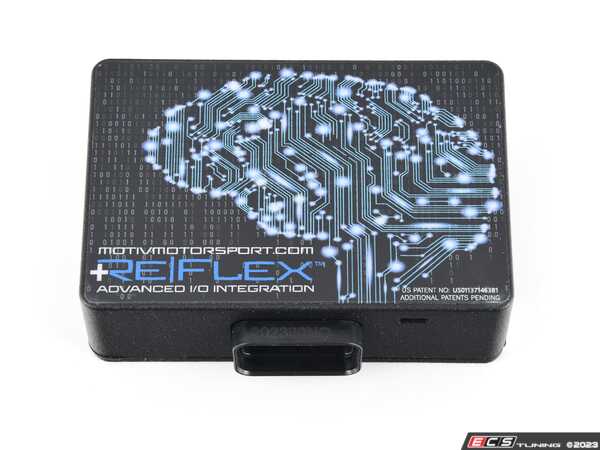
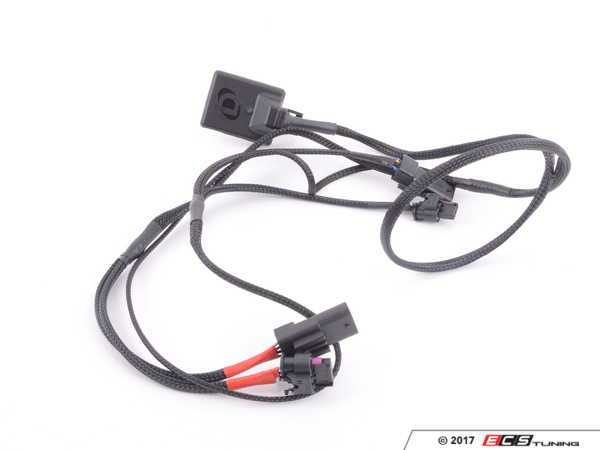
Dinan DINANTRONICS Sport - Tuner for BMW B46 B48 B58
$275.99
S55 Platform - F80 M3 and F82 M4
The S55 is the twin-turbocharged inline-six used in the F80 M3 (2015-2018), F82 M4 coupe (2015-2020), F83 M4 convertible, and F87 M2 Competition. Factory output is 425-444 HP depending on the Competition specification and market. The S55 is a high-revving, aggressively tuned engine from the factory, which means the headroom for piggyback tuning is somewhat less dramatic than with the more conservatively tuned B58 or N54 - but there's still meaningful power to be found.
S55 JB4 Stage 1 Reality Check
Stage 1 on the S55 JB4 (Map 2, 93 octane, stock hardware) typically produces 30-50 WHP over stock at the wheels. The gains are less dramatic in percentage terms than on the B58 or N54 because the S55 is already tuned aggressively by BMW. The S55's DME leaves less conservative headroom by design. What you do get is improved boost response, better pull in the midrange, and a more consistent boost curve - the S55 can show slight boost fluctuation at the top of the rev range on stock tune that the JB4 helps smooth out.
More significantly, the S55 responds very well to 93+ octane optimization. If you're in an area with 93 octane access and the factory tune was calibrated for 91, the JB4 Stage 1 map extracts that octane advantage properly. Many S55 owners report the Stage 1 JB4 gain feels larger than the WHP numbers suggest because the torque delivery improves noticeably.
S55 Stage 2 and Supporting Mods
Stage 2 on the S55 follows the same hardware pattern: upgraded charge pipe (the S55 has a specific charge pipe at risk under high boost), catless or catted downpipes (the F80 M3/F82 M4 have dual downpipes), and a more aggressive JB4 map. Stage 2 on the S55 brings wheel power to approximately 480-520 WHP on 93 octane with the right map, depending on ambient conditions and the specific car. On E30 flex fuel, those numbers go up considerably.
The S55's known weakness is oil consumption and connecting rod bearing wear at high RPM under boost. Before going Stage 2 on an F80/F82, it's worth doing an oil analysis and checking the condition of the rod bearings. BMW extended the S55 oil change intervals in the software, but most serious S55 owners do 5,000-mile or shorter oil changes, and many do the rod bearing replacement proactively at around 40,000-50,000 miles as insurance before making power. Throwing a Stage 2 map at a car with worn rod bearings is a reliable way to have a very expensive failure.
S55 vs B58 Tuning Comparison
This comparison comes up constantly: "My F80 M3 vs a Stage 2 B58 340i, who wins?" On paper and on the highway, a well-sorted Stage 2 B58 M340i gives a Stage 1 S55 F80 M3 a serious run. The B58 has more response and the M340i chassis is no slouch. Stage 2 S55 vs Stage 2 B58 M340i is closer, with the S55's additional displacement giving it an edge especially at high RPM. But we're talking about two cars that both live above 450 WHP at Stage 2 on pump gas - both are genuinely fast cars by any real-world measure.
The more relevant question is total ownership context. The F80 M3 is a purpose-built M car with the DCT or 6-speed manual, M-specific suspension, and an overall driving experience tuned for performance. The G20 M340i with Stage 2 is a fast practical car. They serve different purposes, and the JB4 makes both of them faster but doesn't change what they fundamentally are.
S58 Platform - G80 M3 and G82 M4
The S58 is the current-generation twin-turbocharged inline-six, used in the G80 M3 (2021-present), G82 M4 (2021-present), G87 M2 (2023-present), and G80/G82 CS variants. It's rated at 473 HP in the standard M3/M4 Competition spec and 503 HP in the CS. The S58 is a genuinely impressive engine - it takes the B58 architecture and adds a larger turbo system, revised head, improved cooling, and extensive reinforcement for the increased output.
G80 M3 Stage 1 with JB4
The G80 M3 Stage 1 JB4 (see our ECU tuning overview for context on how this fits in the broader tuning landscape) is a more nuanced proposition than it is on older platforms. The S58 is already making serious power from the factory. Stage 1 gains of 30-50 WHP are typical on 93 octane. The S58's DME is a more advanced system than the S55's, and Burger Motorsports has worked hard to develop JB4 maps that work well with the S58's more complex DME logic.
What makes Stage 1 on the G80 M3 JB4 attractive despite the modest WHP gain is the same thing that makes it attractive everywhere: reversibility. The G80 M3 CS with its 503 HP factory output starts at over $130,000. The standard Competition M3 with xDrive starts around $80,000. These are expensive cars, often under warranty or with aggressive CPO coverage. Running a flash tune and having the warranty voided over a JB4-level power increase is a terrible financial decision. The JB4's clean reversibility is worth every bit as much as the power gain on these expensive platforms.
G80 Stage 2 and E85 Potential
Stage 2 on the G80/G82 with the JB4, catted downpipes, and upgraded charge pipes puts wheel power in the 540-580 WHP range on 93 octane. On E30-E40 flex fuel with the Port Injection Controller, the G80 M3 platform has been documented at 620-680 WHP on stock internals, making it one of the most impressive factory-architecture performance per dollar propositions in modern motorsports. These are race-car power numbers from a car you drove to the grocery store this morning.
The G80/G82 does have one platform-specific consideration for JB4 tuning: the xDrive all-wheel drive system in the M3 xDrive and M4 xDrive variants has a transfer case and front axle that are part of a complex torque vectoring system. BMW's software calibration for xDrive power delivery interacts with the JB4's boost manipulation in ways that the rear-wheel drive cars don't have to deal with. Most G80 JB4 owners report no issues, but if you're seeing unusual AWD behavior after JB4 installation, it's worth checking the BMS support forums for platform-specific notes on xDrive integration.
Per-Chassis JB4 Install Overview
Installation difficulty varies meaningfully by platform, and I want to give you a realistic picture of what you're dealing with before you order. If you're not comfortable working on cars at all, every platform's JB4 install can be done by a shop - but it's also genuinely DIY-accessible on most platforms with basic hand tools and a few hours of patience. The biggest risk is pinching, misrouting, or damaging the harness during installation, which is why going slowly and comparing your routing to documented install guides on the BMS website or the BimmerTalk forums is important.
| Chassis | Engine | Install Difficulty | Approx Time | Key Considerations |
|---|---|---|---|---|
| E90/E92 335i | N54 | Easy-Medium | 1.5-2 hrs | Boost sensor accessible, charge pipe access tight |
| E82 135i | N54 | Easy | 1-1.5 hrs | More engine bay space than E90 |
| F30 335i | N55 | Easy-Medium | 1.5-2 hrs | Similar to N54, Valvetronic adds sensors |
| F10 535i | N55 | Medium | 2-2.5 hrs | More complex engine bay, longer harness routing |
| F30/F32 340i/440i | B58 | Medium | 2-2.5 hrs | Multiple sensor intercepts, tight packaging |
| G20 330i/M340i | B48/B58 | Medium | 2-3 hrs | G2x architecture, revised routing vs F3x |
| F80/F82 M3/M4 | S55 | Medium-Hard | 2.5-3 hrs | Twin turbo complexity, tight piping |
| G80/G82 M3/M4 | S58 | Medium-Hard | 3+ hrs | Complex AWD and DME architecture on xDrive |
| G87 M2 | S58 | Medium | 2-2.5 hrs | Similar to G82 but RWD only, simpler |
| F87 M2 Comp | S55 | Medium | 2-2.5 hrs | Similar to F80/F82 process |
E90/E92 335i
- Engine
- N54
- Install Difficulty
- Easy-Medium
- Approx Time
- 1.5-2 hrs
- Key Considerations
- Boost sensor accessible, charge pipe access tight
E82 135i
- Engine
- N54
- Install Difficulty
- Easy
- Approx Time
- 1-1.5 hrs
- Key Considerations
- More engine bay space than E90
F30 335i
- Engine
- N55
- Install Difficulty
- Easy-Medium
- Approx Time
- 1.5-2 hrs
- Key Considerations
- Similar to N54, Valvetronic adds sensors
F10 535i
- Engine
- N55
- Install Difficulty
- Medium
- Approx Time
- 2-2.5 hrs
- Key Considerations
- More complex engine bay, longer harness routing
F30/F32 340i/440i
- Engine
- B58
- Install Difficulty
- Medium
- Approx Time
- 2-2.5 hrs
- Key Considerations
- Multiple sensor intercepts, tight packaging
G20 330i/M340i
- Engine
- B48/B58
- Install Difficulty
- Medium
- Approx Time
- 2-3 hrs
- Key Considerations
- G2x architecture, revised routing vs F3x
F80/F82 M3/M4
- Engine
- S55
- Install Difficulty
- Medium-Hard
- Approx Time
- 2.5-3 hrs
- Key Considerations
- Twin turbo complexity, tight piping
G80/G82 M3/M4
- Engine
- S58
- Install Difficulty
- Medium-Hard
- Approx Time
- 3+ hrs
- Key Considerations
- Complex AWD and DME architecture on xDrive
G87 M2
- Engine
- S58
- Install Difficulty
- Medium
- Approx Time
- 2-2.5 hrs
- Key Considerations
- Similar to G82 but RWD only, simpler
F87 M2 Comp
- Engine
- S55
- Install Difficulty
- Medium
- Approx Time
- 2-2.5 hrs
- Key Considerations
- Similar to F80/F82 process
General Install Process
The core process is similar across platforms: you disconnect the battery (always - and consult our battery guide for proper BMW battery registration procedure, which matters on modern BMWs when you reconnect), locate the boost pressure sensor, unplug the factory sensor connector, plug the JB4 harness into the factory connector and the sensor, route the main JB4 harness to a mounting location for the unit itself (usually firewall area or intake side of the engine bay), and connect the Bluetooth adapter. Then reconnect the battery, register it if needed, fire the car up, and connect via the BMS app to confirm communication.
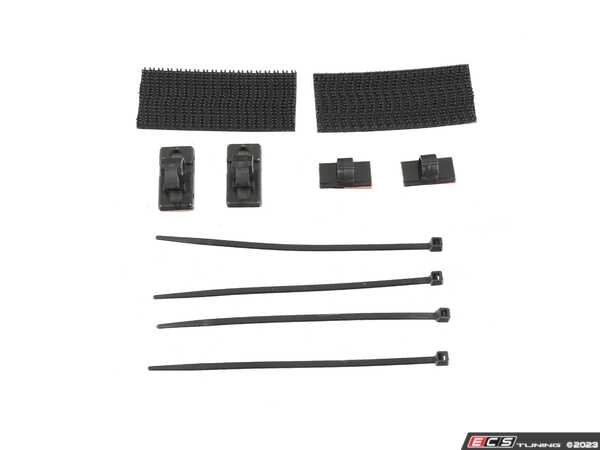
The trickiest part on most platforms is harness routing. The JB4 harness has to go from the sensor location to the unit mounting point without chafing on hot surfaces, sharp edges, or moving components. Take your time routing it and use the provided zip ties. Vibration-induced chafing of an improperly routed harness is the most common cause of intermittent JB4 issues I've seen on friend's cars and in the forums.
For N54 and N55 specifically, the HPFP connector is also part of the JB4 install on some configurations, which is an additional step. Follow the BMS platform-specific install guide exactly - they're well-written and platform-specific, not generic.
JB4 Maps Deep Dive by Platform
The numbered maps in the JB4 are where people get confused, especially when they read forum posts from different years and different firmware versions. Maps are platform-specific and firmware version-specific. A "Map 6" on a 2019 firmware N54 JB4 is not the same as a "Map 6" on a 2024 firmware B58 JB4. What follows is a general guide to map philosophy, not specific boost targets for every firmware version - for those details, always cross-reference with the BMS documentation for your specific unit's firmware version.
Standard Numbered Maps
Map 0. Stock bypass. The JB4 is effectively in pass-through mode. Useful for confirming installation is working and as a diagnostic baseline. Power identical to stock.
Map 1. Conservative fuel-grade agnostic map. Designed to work on 91 octane or lower in markets where that's the best available. Modest boost increase, very conservative tune. Good as a starting point for a new install before you've had a chance to datalog baseline health.
Map 2: 91-93 octane pump gas Stage 1 map. This is where most daily drivers live. Meaningful midrange boost increase, conservative enough that it doesn't stress stock charge pipes or cooling significantly. This is the map I run 90% of the time on my G20.
Map 3: 93 octane optimized Stage 1 aggressive. Pushes harder than Map 2, still within stock hardware limits on most platforms. Requires consistent 93 octane access.
Map 4. Varies by platform - sometimes a 91 octane detuned version of Map 3, sometimes a specific map for a particular configuration. Check your platform's documentation.
Map 5. Stage 2 pump gas map. Designed for use with at minimum a charge pipe and ideally a downpipe. More aggressive boost target, tighter fueling. Not recommended on stock hardware.
Map 6. Stage 2 aggressive or light E30 map on some platforms. This is where the big numbers start. Requires charge pipe, downpipe, ideally intercooler. Some platforms add flex fuel consideration at this map number.
Map 7. High-octane or dedicated E85/E30 map on most current-generation platforms. Requires full Stage 2 hardware and ethanol fuel. Occasionally there's a Map 8 or 9 for specific configurations on the most advanced units.
Custom Maps via BMS Backend
Beyond the numbered maps, the JB4 supports custom user-loadable maps. The BMS backend (accessible via the BMS account system and their desktop software) allows you to load maps developed by BMS's professional tuners, third-party tuners who work with the JB4 platform, or in theory your own maps if you have the skills. For most users, the BMS custom maps developed specifically for common configurations (N54 + catless DP + FMIC, B58 M340i + catted DP + JB4 + Port Injection, etc.) are the way to access fully optimized boost and fueling tables.
Custom maps are where the JB4 gets closest to flash tuning in terms of optimization. A BMS or third-party tuner can write a map that accounts for your specific hardware, elevation, fuel quality, and build goals. The result is meaningfully better than relying on the stock numbered maps for a Stage 2+ build. It's worth the time to find a reputable JB4 tuner for your platform if you're going past Stage 2.
Fueling, Knock, and Data Logging on the JB4
One of the most underrated features of the JB4 system is the data logging capability, and I say this as someone who uses it regularly. The BMS Bluetooth app connects to the JB4 in real time and displays (and records) a range of engine parameters. Understanding what you're looking at in these logs is what separates a JB4 user who's safely extracting performance from one who's doing unknown damage.
Knock Correction Logging
The JB4 reads timing correction values from the DME via the boost sensor signal interpretation (on some platforms it has more direct communication). On platforms with direct communication capability, you can see the DME's actual knock correction values in real time. The metric to watch is timing correction - if the DME is pulling 2-4 degrees of timing, that's mild knock correction and acceptable. If you're seeing 6+ degrees of correction consistently or sudden large pulls (sometimes called "spike knock"), the car is not happy with the current map, boost level, or fuel quality. Get off the map and investigate before continuing.
In my G20, when I first went to Map 5 in hot summer weather, I was seeing 4-5 degree pulls on hard pulls. Dropping back to Map 3 until ambient temps fell solved it. This is exactly the kind of real-time feedback that makes the JB4 safer to use than a fire-and-forget flash tune where you might not know the car is knocking.
Boost Pressure Logging
Logging actual boost versus the JB4's commanded boost is how you find boost leaks. If the JB4 is commanding 22 psi and you're only seeing 18 psi in the log, there's a boost leak somewhere in the system. Common locations on every platform: charge pipe coupler, intercooler pipe connections, intake manifold gasket, turbo inlet connections. A boost leak under a JB4 Stage 2 map is not just a power loss - it can cause lean conditions and damage. The JB4's logging makes this diagnostic process much faster than guessing.
Fuel Trim Monitoring
Long-term and short-term fuel trims accessible via the JB4 app tell you about the car's air-fuel balance. On N54 cars especially, watching fuel trims is essential because aging fuel injectors and HPFP issues show up in fuel trim data before they cause drivability problems. If you're seeing large positive short-term fuel trims on a JB4 Stage 2 tune, investigate the fueling system before going further. The car is asking for more fuel than it's getting.
Alternative Tuning Products for These Platforms
While this guide is JB4-focused, it's worth understanding where other products fit in because context helps you make better decisions. I'm not going to pretend the JB4 is the only tool worth considering - it isn't.
For B48/B58 platforms, the Dinan DINANTRONICS X is worth knowing about. It's a piggyback device (like the JB4) aimed at more conservative power targets, with a warranty-friendly story. The power gains are less dramatic than the JB4, but the Dinan name carries weight with some dealers and the tune is more conservative.
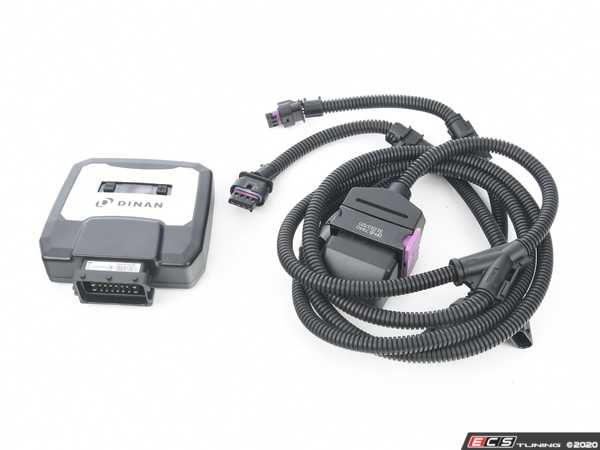
Dinan DINANTRONICS X - Performance Tuner for B46 B48
$665.99
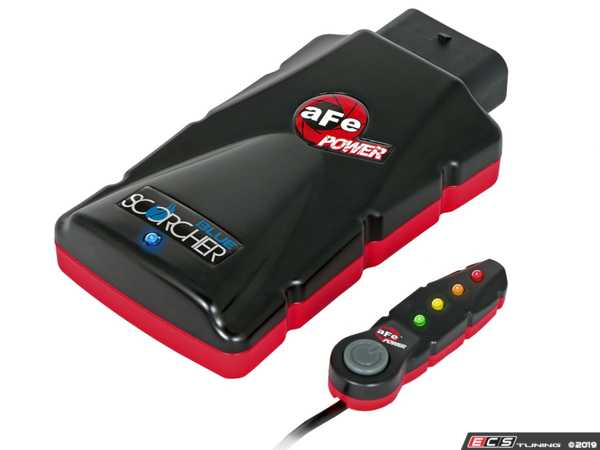
The aFe SCORCHER BLUE is a Bluetooth-managed performance module for B46, B48, and B58 platforms that deserves a mention. It's simpler than the JB4 with fewer map options, but for someone who wants a plug-and-play boost with less complexity in the tuning interface, it's a legitimate option. Power gains are in the Stage 1 range.
The Dinan DinanFlash Handheld Tuner for B58 and B46 is a flash-based tool aimed at daily drivers who want a relatively warranty-friendly flash solution with Dinan's engineering backing. It's not as aggressive as MHD in terms of power targets, but Dinan has existing relationships with BMW dealer networks that can make warranty conversations less fraught in some situations.
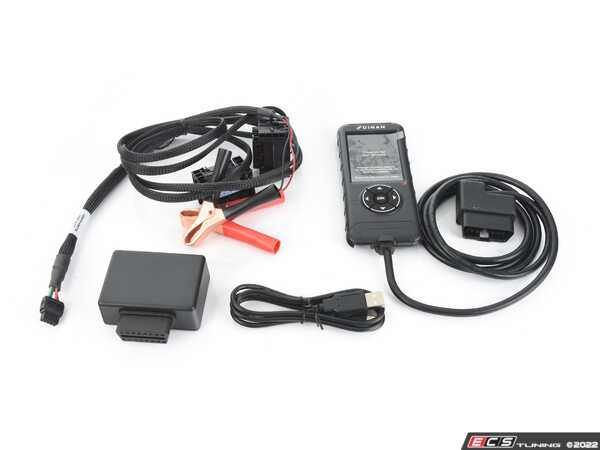
Dinan DinanFlash Handheld Tuner for BMW B58 B46
$767.99
For the S55 and S58 platforms, the Procede Rev6 is the serious flash tuning competition to the JB4. It's a hybrid device with both a flash component and hardware intercept elements. More powerful than a standalone JB4 at the cost of DME modification, so the reversibility advantage of the pure JB4 is reduced (though Procede has strong back-to-stock processes).
The RaceChip products are popular for lower-cost tuning on naturally aspirated and lightly turbocharged applications, but for the platforms in this guide, they don't offer the depth of the JB4 system.
Supporting Modifications in Order
This section is deliberately practical. People ask constantly "what order should I do mods in?" and the answer has real consequences for both power and for not wasting money. I'll give you the sequence I'd recommend for each major platform and why.
N54 E90/E92 335i Mod Order
Step 1 is engine health: fresh plugs (the correct gap for your intended power level - stock gap is too wide for high-boost use), inspect injectors, inspect charge pipe couplers. Step 2 is the JB4 install on Map 1 or 2 for 2-3 weeks of break-in logging. Step 3 is charge pipe upgrade (immediately if you're going to Map 3 or higher). Step 4 is a quality catless or catted 3-inch downpipe. Step 5 is bumping to Map 5-6 and logging results carefully. Step 6, if you're pursuing Stage 2+, is an upgraded front-mount intercooler. Step 7 is flex fuel kit and E30/E40 maps if ethanol is accessible. Everything after that - HPFP upgrade, port injection, upgraded turbos - is Stage 3+ territory and gets expensive quickly.
B58 F30 340i and G20 M340i Mod Order
Step 1. Fresh oil change, check coolant condition (the B58 should have pink BMW coolant; incorrect coolant causes significant cooling system issues - see our coolant guide for details), check charge pipe for cracks. Step 2: JB4 install on Map 2 or 3, datalog for a few tanks. Step 3: Upgraded charge pipe (before Map 5 or higher). Step 4: Catted or catless downpipe. Step 5: Map 5-6 custom maps. Step 6: Upgraded intercooler if doing summer track days or living in a hot climate. Step 7: Port Injection Controller and flex fuel kit for E85 builds. Step 8: If you want to see what else is on the market alongside the JB4, check out the full ECU tuning options for the B58 platform.
S55 F80/F82 M3/M4 Mod Order
Step 1. Oil system health check. S55 rod bearing inspection or proactive replacement if mileage is over 40K-50K. Step 2: JB4 install on Map 2. Step 3: Charge pipe upgrade (the S55 charge pipe situation is the same as N54 - it's a when, not an if, for failure under boost). Step 4: Dual catless or catted downpipes. Step 5: Intercooler (the S55 benefits notably from an intercooler upgrade at Stage 2 boost levels). Step 6: Map 6 or custom maps. Step 7: Port injection and ethanol if chasing maximum power. The S55 suspension can also benefit significantly from coilover upgrades to manage the power effectively; check our coilovers section for S55 F80-compatible options.
| Platform | Stage 1 Gains | Stage 2 Gains | Stage 3 E85 Gains | Notes |
|---|---|---|---|---|
| N54 E90/E92 | +40-60 WHP | +80-120 WHP | +150-200 WHP (full E85) | Twin turbo, incredible headroom |
| N55 F30/F10 | +35-55 WHP | +70-100 WHP | +120-160 WHP | Single turbo, good but not N54-level |
| B48 F30/G20 330i | +30-50 WHP | +60-90 WHP | +80-120 WHP | 4-cyl limit, good Stage 1-2 |
| B58 F30 340i | +50-70 WHP | +90-120 WHP | +150-200 WHP | Exceptional platform |
| B58 G20 M340i | +50-70 WHP | +100-130 WHP | +180-220 WHP | Larger turbo gives more headroom |
| S55 F80/F82 | +30-50 WHP | +60-80 WHP | +100-150 WHP | Less conservative factory tune |
| S58 G80/G82 | +30-50 WHP | +60-90 WHP | +120-180 WHP | Same caveat as S55, but more headroom |
N54 E90/E92
- Stage 1 Gains
- +40-60 WHP
- Stage 2 Gains
- +80-120 WHP
- Stage 3 E85 Gains
- +150-200 WHP (full E85)
- Notes
- Twin turbo, incredible headroom
N55 F30/F10
- Stage 1 Gains
- +35-55 WHP
- Stage 2 Gains
- +70-100 WHP
- Stage 3 E85 Gains
- +120-160 WHP
- Notes
- Single turbo, good but not N54-level
B48 F30/G20 330i
- Stage 1 Gains
- +30-50 WHP
- Stage 2 Gains
- +60-90 WHP
- Stage 3 E85 Gains
- +80-120 WHP
- Notes
- 4-cyl limit, good Stage 1-2
B58 F30 340i
- Stage 1 Gains
- +50-70 WHP
- Stage 2 Gains
- +90-120 WHP
- Stage 3 E85 Gains
- +150-200 WHP
- Notes
- Exceptional platform
B58 G20 M340i
- Stage 1 Gains
- +50-70 WHP
- Stage 2 Gains
- +100-130 WHP
- Stage 3 E85 Gains
- +180-220 WHP
- Notes
- Larger turbo gives more headroom
S55 F80/F82
- Stage 1 Gains
- +30-50 WHP
- Stage 2 Gains
- +60-80 WHP
- Stage 3 E85 Gains
- +100-150 WHP
- Notes
- Less conservative factory tune
S58 G80/G82
- Stage 1 Gains
- +30-50 WHP
- Stage 2 Gains
- +60-90 WHP
- Stage 3 E85 Gains
- +120-180 WHP
- Notes
- Same caveat as S55, but more headroom
Common JB4 Problems and How to Fix Them
The JB4 is reliable hardware, but like any electronics that live in an engine bay, problems happen. Here's what I've seen in my own experience and helping friends with their cars.
Bluetooth Connectivity Issues
This is the most common complaint and usually the least serious. The JB4's Bluetooth module is sensitive to the phone's Bluetooth stack and can have pairing issues with certain Android configurations. iPhone connectivity is generally more consistent. If you're having trouble connecting, try forgetting the device on your phone and re-pairing from scratch. Also check that the Bluetooth module is seated firmly in the JB4 unit - vibration can work it loose. If you're getting intermittent disconnects while driving, the Bluetooth module itself may have a failing solder joint, which BMS support can diagnose and replace under warranty.
Map 0 Reversion (Limp Mode)
If your JB4 reverts to Map 0 unexpectedly, the most common cause is a loose harness connection. The JB4 has a watchdog function that detects abnormal sensor readings and fails safe to Map 0. This is good behavior - it's protecting your engine. Inspect every connector in the JB4 harness for security, check for any chafing that could cause an intermittent short, and make sure the boost sensor connections are clean. If the reversion happens under hard acceleration specifically, suspect a failing boost sensor (not JB4 hardware, but the OEM sensor itself) or a loose charge pipe coupler causing a boost leak that creates unusual sensor readings.
Check Engine Lights
A JB4 Stage 1 installation on a healthy car should not trigger CELs. If you're getting CELs after JB4 installation, investigate what code you're getting before assuming the JB4 caused it. Common codes after JB4 install that are actually JB4-related: P0234 (overboost condition) if the map is too aggressive for current hardware, P0299 (underboost) if there's a boost leak exposed by the JB4 commanding more boost. Codes for things like oxygen sensors or secondary air injection are probably pre-existing issues the JB4 didn't cause.
A catless downpipe will trigger codes for downstream oxygen sensors. This is normal and expected - you either delete the CEL via coding (which has its own considerations for inspection-state cars) or use a catted downpipe to avoid the issue. The coding and diagnostic tools section on BimmerTalk has information on what coding options are available for your chassis.
Power Inconsistency Between Pulls
If your car feels fast on the first pull and slower on subsequent back-to-back pulls, heat soak is the culprit. Either the intercooler, the intake air, or the turbo itself is operating hotter on the second pull. Log IAT values across multiple pulls and you'll see it. Solutions: give more time between pulls, upgrade the intercooler, add water-methanol injection (which the JB4 can integrate with on many platforms), or accept that back-to-back launches aren't what street cars on Stage 2 pump gas setups are optimized for.
Long-Term Reliability Considerations
Running more boost and more power puts additional stress on engine components over the long term. I want to be direct about this rather than pretending a tune is free. The stress is manageable with proper maintenance, but it exists.
Oil change intervals should be shortened on any turbocharged BMW running more than stock boost. BMW's condition-based service intervals are calibrated for stock power levels. On my G20 330i on Stage 2, I change oil every 5,000-6,000 miles using BMW LL-01 spec synthetic (0W-30 or 5W-30 per the spec - check the oil capacity tool for your specific chassis). The oil in a turbocharged engine that's making 30-40% more boost than stock ages faster. Turbos specifically need clean oil - a turbo failure from oil degradation will not be covered under warranty and will cost you several thousand dollars.
Spark plugs on boosted applications should be inspected or replaced more frequently than on stock cars. The higher cylinder pressures on Stage 2 maps accelerate electrode wear. On N54 and N55, gapping plugs correctly for your boost level matters - overgapped plugs misfire under boost, causing rough running and potentially cylinder damage. Standard recommendation for Stage 1-2 N54 is around 0.020-0.022" gap versus the stock 0.028". For B58 and B48, check the current BMS recommendation for your specific map.
Cooling system health is more important on a tuned car. A stage 2 engine making 30% more power is producing proportionally more heat. A failing thermostat, clogged coolant passages, or degraded coolant will cause thermal management issues that show up in JB4 logs as elevated IAT and reduced power. Fresh coolant at the correct concentration using the correct BMW-spec antifreeze is basic maintenance that gets more important, not less, on a tuned car.
The transmission also deserves attention. The ZF 8HP automatic in most of these cars is durable, but it's calibrated for stock torque delivery. Stage 2 torque levels - especially the E85 builds hitting 500+ lb-ft - are beyond the original torque spec in some cases. Fresh automatic transmission fluid (ZF Lifelong is the OEM recommendation; many tuners prefer Pentosin ATF 8 or similar) and keeping an eye on transmission behavior is smart ownership practice on any high-torque build.
JB4 and Smog / Emissions Inspections
This varies enormously by region. In California and other CARB-compliant states, aftermarket tuning devices are technically illegal without a CARB exemption order. The JB4 does not have a CARB EO number. For those states, running a JB4 and a catless downpipe means you will fail a visual inspection and potentially an OBD readiness test.
In most other US states that do annual OBD-based emissions testing (no visual), the JB4 itself is invisible to the OBD test - remember, it doesn't modify the DME. What will cause issues is a catless downpipe triggering oxygen sensor codes. If you're in a smog-test state, use a high-flow catted downpipe rather than a catless one, and make sure those codes are cleared well before inspection (the DME needs enough drive cycles to complete all OBD readiness monitors after clearing codes). The JB4 can simply stay plugged in for a smog test - there's nothing for the OBD tester to detect.
For jurisdictions with annual vehicle inspections that include a visual underhood check, the JB4 is a small device that installs out of obvious sight lines in most engine bays. Many JB4 owners have passed visual inspections without issue. I'm not advising you to deceive an inspector - I'm telling you the reality of what the JB4 looks like when installed.
Buying Guide - What to Check Before You Buy
If you're buying a used BMW with the intent to JB4 tune it, there are specific things to check that matter more on these platforms than on others. I'll break it down by engine family.
Buying a Used N54 E90/E92 335i for Tuning
The N54 has known issues that a prospective buyer should verify are either addressed or reflected in the price. High-pressure fuel pump (HPFP) replacement history - this was a BMW technical service bulletin recall item; if it hasn't been done, budget for it. Injector condition - N54 injectors can develop seal wear causing rough idle and slight oil contamination in combustion chambers; used injector sets are available affordably but it's still a cost. Wastegate rattle - the N54's twin wastegates develop rattle from actuator wear; not a catastrophic issue but annoying and worth knowing about. Cooling system condition - water pumps and thermostats on the N54 are failure points. Check the service history for these items. A well-maintained N54 that has had these issues addressed is a fantastic tuning foundation. An N54 with unknown history and deferred maintenance is a money pit.
Also use our chassis tool to verify the exact production specs and options on any car you're considering - BMW's build data is accessible and can tell you if a car has the specific equipment you want before you buy.
Buying a Used B58 M340i for Tuning
The B58 is more forgiving than the N54 in terms of common failure modes, but there are still things to check. Oil separator (PCV valve) condition - the B58 can have oil separator failures that cause oil consumption and dirty intake passages. Charge pipe condition - look for cracks at the coupler. Cooling system - fresh coolant matters on all BMWs, but B58 cooling systems have shown some sensitivity to incorrect coolant types causing plastic component degradation. Otherwise, the B58 is a strong platform and healthy examples are plentiful as the F30/F32 generation ages into affordability.
Final Thoughts on the JB4 in 2024
I've spent a year and a half running the JB4 in my G20 330i, helped install it on two N54 E90s, one N55 F30, and watched a friend do a full Stage 2 B58 build on his F30 340i. The JB4 is not the only answer, and it's not the most powerful answer, but it is one of the most honest, practical, and well-supported tuning devices available for these BMW platforms.
What impresses me most after all this time is how the JB4 has evolved without losing its core identity. It's still a plug-and-play device that a reasonably handy person can install in an afternoon. It still disappears completely when you unplug it. But the maps have gotten better, the logging capability has improved, the community knowledge base is enormous, and the Port Injection Controller has extended the platform's ceiling substantially. For warranty-covered cars, it's the only sensible choice short of not tuning at all. For older platforms like the N54, it's part of a mature ecosystem where the community has dialed in exactly what works.
The JB4 earns its reputation. Whether you're on an N54 E92 335i chasing 400 WHP, a G20 330i looking for a tasteful 20-30% power bump, or an F80 M3 owner who wants more without risking the warranty, the JB4 has a configuration that works. Start with Stage 1, log obsessively for a few weeks, make sure the fundamentals are healthy, and then make informed decisions about where you want to take it. That's the approach that keeps engines intact and makes the process genuinely enjoyable rather than stressful.
If you have questions about your specific platform, chassis code, or build, the BimmerTalk community forums are a great resource - there's a reason these cars have such dedicated communities, and the collective knowledge is deep. Good luck with the build.
Frequently Asked Questions
Will a JB4 void my BMW warranty?
Technically, BMW can deny warranty claims on components directly damaged by a modification. In the US, the Magnuson-Moss Warranty Act means BMW has to prove the modification caused the failure, not simply that you have a modification. In practice, because the JB4 leaves no trace in the DME and is physically removed before any dealer visit, most JB4 users have had no warranty issues. However, if you blow a turbo seal running Map 7 on E85 with a failing oil separator, there's no scenario where that's covered. Run it responsibly, maintain the car properly, and use the JB4's reversibility as designed.
How much horsepower does a JB4 add to a BMW 335i with the N54?
Stage 1 (Map 2, 93 octane, stock hardware) on a healthy N54 335i typically adds 40-60 wheel horsepower over a stock car on the same dyno. Stage 2 with downpipe, charge pipe, and Map 5-6 adds 80-120 WHP over stock. The variation is real - different dynos, different ambient conditions, fuel quality, and car health all affect the numbers. Stock N54 335i dyno numbers are typically 270-290 WHP on a Mustang dyno. Stage 2 puts you in the 360-400 WHP range. Stage 2+ on E30 or E40 can push 420-460 WHP on the stock twin turbos.
Is the JB4 the same as MHD or a flash tune?
No - fundamentally different. The JB4 is a piggyback device that intercepts sensor signals between the engine's sensors and the DME. The DME itself is not modified. MHD is a flash tune that writes new calibration data directly into the DME's memory. The JB4 can be unplugged and leaves no evidence. MHD requires flashing back to stock to hide tuning. Both have their place - the JB4 is better for warranty protection and flexibility; a quality flash tune can access more of the engine's potential because it directly controls ignition timing maps.
Can I run E85 on a JB4 without the port injection controller?
Yes, on most platforms, you can run a light ethanol blend (E30-E40) on the JB4 with a flex fuel sensor without the Port Injection Controller, and many people do this successfully. The Port Injection Controller becomes necessary when you're pushing high power targets on high ethanol content (E50+) where the direct injection system's fueling capacity is the limit rather than the turbo's boost limit. For Stage 2 E30-40 builds, the standard JB4 with flex fuel kit handles fueling adequately on most platforms. For Stage 3 E85 builds chasing 500+ WHP on B58/S58, the Port Injection Controller is more or less required to do it safely.
What is the best JB4 map for daily driving on 93 octane?
For true daily driving on 93 octane with stock or near-stock hardware, Map 2 or Map 3 depending on your platform and how confident you are in your car's condition. Map 2 is what I run on my G20 330i for everyday driving. It provides meaningful improvement in throttle response and midrange torque without significantly stressing stock components. Map 3 is more aggressive and better on a car you've confirmed is in good health with no boost leaks. Save Maps 5-6 for when the hardware upgrades are in place to support them safely.
How do I install a JB4 on a G20 M340i?
The G20 M340i JB4 install involves locating the boost pressure sensor on the B58 intake manifold (passenger side of the engine bay), unplugging the factory sensor connector, connecting the JB4 harness in-line, routing the harness to the JB4 unit's mounting location (typically firewall area), connecting the Bluetooth adapter, and securing the harness with zip ties away from hot surfaces. Disconnect the battery before starting and register it properly when reconnecting. Total time is 2-3 hours for a first-timer taking their time with reference photos. The BMS platform-specific install guide for the G20/B58 is detailed and well-photographed - follow it step by step.
Does the JB4 work on the G80 M3 and G82 M4 with S58?
Yes. Burger Motorsports makes a JB4 specifically calibrated for the S58. Stage 1 gains are 30-50 WHP over stock. The S58 JB4 supports custom maps through the BMS backend, and Stage 2 builds with the Port Injection Controller on E85 have documented outputs exceeding 650 WHP on stock internals. The G80 xDrive AWD variants work with the JB4 without issues, though the xDrive system's power distribution software means real-world feel of the gains can differ from the RWD cars. The same reversibility advantage applies - G80 M3 under warranty is an ideal JB4 application.
What supporting mods should I do before installing a JB4?
Before any JB4 installation: ensure the engine is in good mechanical health (compression check if you don't know the history, fresh spark plugs at the correct gap for your intended boost level, functional HPFP on N54/N55, no fault codes). An upgraded charge pipe should be installed before going beyond Map 2 on any platform - the stock charge pipe couplers on N54, N55, and B58 are failure points under sustained boost. Everything else (downpipe, intercooler, flex fuel kit) comes after you've confirmed the base JB4 installation is working correctly and the car is logging healthy parameters.
How does the BMW 335i Stage 2 feel on the JB4 compared to stock?
The difference is substantial and immediately apparent. The torque delivery in the 2000-4500 RPM range is fundamentally transformed - the car feels like it has two additional cylinders of displacement. Throttle response is sharper, the midrange pulls harder, and the top end extends with more authority. On an N54 E92 335i, Stage 2 with a catless downpipe and Map 6 makes the car significantly faster than a stock E90 M3 in the real world, at a fraction of the parts cost of an M3 build. The subjective experience is less "slightly quicker" and more "different car." That said, you feel the missing refinement of a full flash tune at the top of the rev range, where a properly optimized DME calibration would find another level of pull that the JB4 approaches but doesn't quite reach.
Is the JB4 detectable by BMW diagnostic tools?
With the JB4 disconnected and removed from the car, there is nothing for BMW's ISTA diagnostic system to detect. The DME calibration is factory stock. No parameters are stored that indicate tuning occurred. With the JB4 plugged in and actively running an aggressive map, a technician running a live data session could potentially see unusual boost pressure readings, but this would require specific attention and knowledge of what to look for. The standard approach is to unplug the JB4 before any dealer visit. The unit stores no data that persists in the car's systems after removal.


