BMW Trailer Hitches
Trailer Hitches for BMW. Compare prices, check fitment, find the right part for your build.
Affiliate disclosure. BimmerTalk is a proud partner of the Amazon Associates Program and Turner Motorsport. We may earn a small commission on qualifying purchases through our links, at no extra cost to you. Read the full disclosure.


B&W Tow and Stow Adjustable Ball Mount - 2 Inch Receiver
B&W Trailer Hitches

B&W Tow and Stow Magnum Adjustable Ball Mount - 2 Inch Receiver
B&W Trailer Hitches

Geteen Adjustable Dual Ball Hitch Mount 10000 lb - 2 Inch Receiver
Geteen
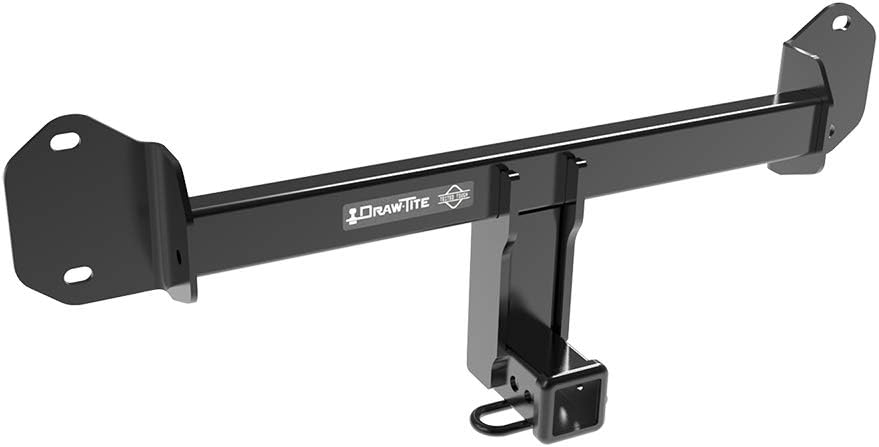
Draw-Tite Class 3 Trailer Hitch for BMW X3 X4 F25 G01 G02
Draw-Tite
If you are shopping a BMW trailer hitch, you are probably in one of two camps. Either you bought the car already knowing it would pull something, or you swore you would never tow with a BMW and then reality showed up with a track tire trailer, a small aluminum boat, a pair of dirt bikes, or a hitch rack loaded with e-bikes. I have seen both. In the BMW world, towing is always more chassis-specific than generic truck advice makes it sound. A G05 X5 xDrive40i with the factory towing package is one thing. An F30 330i with a hitch-mounted bike rack is another. A G20 330i like mine sits somewhere in the middle where the hardware exists, the chassis is more capable than people think, but the details matter a lot.
The part a lot of general trailer guides miss is that BMW owners care about how the hitch integrates with the car. We care about cut lines in the bumper. We care whether PDC freaks out. We care if the rear diffuser still fits, whether the hitch crossbar hangs low enough to mess with departure angle, and whether the body electronics know a trailer is connected. On newer cars, that last part is huge. Stability control, trailer sway mitigation, parking sensors, rear fogs, camera behavior, bulb monitoring, and transmission logic can all be involved depending on chassis and factory equipment.
I spent five years wrenching on BMWs, and I also spent a year doing marketing around BMW and MINI product lines, which means I got to hear both the engineering side and the brochure side. The brochure side always says "versatile." The engineering side says "what axle ratio, what cooling package, what rear carrier, what tongue weight, and are we using a real module or just a powered converter?" That is the side I care about here. This page is the straight answer on BMW trailer hitches, with actual chassis context, real tow capacity ranges, OEM versus Stealth versus Curt and Draw-Tite tradeoffs, and the practical stuff that decides whether your setup is clean and safe or just barely bolted on.
What BMW owners actually need from a trailer hitch
A BMW trailer hitch can mean three different jobs, and if you do not separate them you end up buying the wrong hardware. First is true trailer towing. That means a rated hitch, wiring, trailer lighting logic, and enough cooling, brakes, wheelbase, and rear spring support to control the load. Second is a hitch-mounted accessory, usually bikes or a cargo tray. In that case, tongue weight and receiver stability matter more than wiring, and a hidden receiver often matters most because nobody wants an ugly bar hanging below the bumper of a clean M Sport car. Third is occasional utility use, where someone mostly wants a bike rack but maybe once a year pulls a tiny trailer. That middle case is where a lot of BMW owners live.
The reason this matters is that hitch branding can blur the lines. A hidden hitch may be perfect for a Kuat or 1Up rack and still not be the setup I would choose for regular towing. Likewise, a big exposed class 3 hitch can be excellent under an X3 or X5 and a visual disaster on a G20 or F32. Receiver size can also mislead people. A 2-inch receiver does not magically make the car a tow pig. The car, cooling system, rear axle load limit, and manufacturer rating decide that.
On BMWs specifically, I care about five things before I care about price. First is actual vehicle tow rating for that market and configuration. Second is whether the hitch mounts to structure correctly without weird spacer stacks or trimming that weakens the bumper carrier. Third is wiring integration and coding. Fourth is receiver placement and ground clearance. Fifth is how the hitch affects daily use, especially kick-to-open tailgates, parking sensors, and rear crash beam packaging.
Trailer towing versus bike rack duty
If you are towing a trailer, I want a proper harness and trailer module behavior where possible. That means the car should know a trailer is present. On many newer BMWs that changes DSC logic to include trailer stabilization. It can alter rear PDC behavior and stop the car from screaming at the hitch-mounted coupler every time you back up. It can also protect bulb monitoring and current management by not trying to feed incandescent trailer lamps off circuits that expect LEDs.
If the hitch is just for bikes, the threshold changes. I still want clean fitment and real tongue weight headroom, but I am less worried about a 4-pin flat and more worried about rack wobble, pin access, and whether the hatch opens with the bikes folded down. For that use, a stealth or hidden receiver can be ideal. I have recommended hidden setups to a lot of sedan and coupe owners who would never tow but absolutely needed a stable bike mount.
Why BMW fitment is rarely universal
BMW uses a lot of rear floorpan and bumper carrier variation even within what owners think is the same car. Take the F30 3 Series. A non-M Sport bumper and an M Sport bumper can want different trimming. A sedan and wagon are not the same. xDrive packaging can differ. PHEV and 48-volt mild hybrid models on some later generations can add more packaging constraints. SUVs are easier in some ways because the rear structure tends to be more tow-friendly, but even there the factory tow package can include cooling, hitch receiver structure, wiring modules, and software differences beyond the visible receiver.
This is also why I always tell people to decode the chassis and production month before ordering. If you are not sure what you actually have, use the BMW chassis code tool first. That sounds basic, but it saves a ton of wrong-order pain on F25 versus G01 X3s, E70 versus F15 X5s, and F30 versus G20 3 Series cars where the body style changed enough that a hitch solution from one generation does not teach you much about another.
OEM retractable hitch versus aftermarket hidden and class 3 setups
This is where most shoppers get stuck, and honestly the right answer depends on whether the car was ordered with towing in mind from day one. BMW's factory retractable or factory-integrated hitch setups are excellent when they are there. On G05 X5 and some European-market cars, the OEM retractable hitch is expensive but beautifully integrated. When stowed, it is effectively invisible. Deployment is clean. The trailer module is fully integrated. Trailer stability logic, camera views, PDC behavior, and often cooling provisions are all part of the package. If I were ordering a new X5 to actually tow, I would pick the factory package every time.
Retrofitting OEM factory towing after the fact is where things get painful. BMW does not make this easy on many modern chassis, and by the time you source all the structural pieces, loom sections, modules, trim, and coding, the price can get absurd. On something like a G05 X5, adding OEM after the fact can make sense only if you are obsessive about factory integration and willing to spend accordingly. On a used-market F15 X5 or G01 X3, aftermarket often wins on value without giving up much practical function.
Then there is the hidden aftermarket category, often associated with "stealth" style systems. These are popular on sedans and coupes because they preserve the car's look. Receiver section removable, crossbar tucked up, only minimal visible hardware when in use. For bike racks, these are brilliant. For light towing, they can be very good if the system is properly rated and installed. The weak point is usually not the hitch structure but the total system integration. If the wiring is a basic converter and not a fully coded trailer module, the car will not behave the same way as an OEM tow package car.
The classic exposed class 3 hitch is the utility answer. It is usually cheaper, easier to source, and often gives you a 2-inch receiver with straightforward ball mount options. On a BMW X3 or X5, that can be exactly what you want. On a sedan or coupe, it can look like an afterthought. But I am not too proud to say utility sometimes beats aesthetics. If a friend asked me for a durable, affordable setup on a G01 X3 for bikes plus occasional small trailer use, I would have no issue recommending a quality class 3 receiver over something fancier.
| Hitch type | Best for | Receiver visibility | Wiring integration | Typical cost | My take |
|---|---|---|---|---|---|
| OEM factory retractable | Regular towing on X models | Nearly invisible when stowed | Excellent, full vehicle integration | Highest | Best if factory-equipped, hard to justify as retrofit |
| Aftermarket hidden or stealth | Bike racks, cargo trays, light towing | Low when not in use | Ranges from basic to good depending on harness and coding | High to medium | Ideal for sedans and coupes where appearance matters |
| Exposed class 3 | Utility towing and 2-inch accessory use | Visible under bumper | Usually separate harness solution | Medium to low | Best value on X3 and X5 if you can live with the look |
When OEM is worth paying for
On the X5, especially G05, OEM towing has genuine benefits. The North American rating of up to 7,200 to 7,500 lb depending on year and configuration is not just a number BMW slapped on a brochure. The vehicle can be configured around it with cooling and integrated stability control support. A factory X5 trailer hitch setup is one of the few luxury SUV tow packages that feels properly engineered rather than simply allowed. If you are buying the vehicle with towing in mind, it is easy money.
The same general logic applies to the X7 and some X3 configurations, though the X3 sits lower in the tow hierarchy. Factory integration matters more as load goes up. Once you are regularly dragging 4,000 lb plus, the difference between "receiver bolted on" and "vehicle configured for towing" becomes more than semantics.
When aftermarket is smarter
If your use case is hitch rack first, trailer second, aftermarket is usually the sweet spot. On many BMW sedans and coupes, I would rather spend on a quality hidden receiver and a proper powered harness than sink money into a pseudo-OEM retrofit rabbit hole. On the SUV side, an aftermarket class 3 receiver can deliver excellent value. A good example is the Draw-Tite Class 3 Trailer Hitch for BMW X3 X4 F25 G01 G02. For those chassis, it is a straightforward way to get a 2-inch receiver under the car without factory-package money.
Ball mount choice matters too. A lot of BMW owners buy the hitch, then cheap out on the mount, then wonder why the trailer rides nose-up. On SUVs that see different trailers, I like an adjustable mount. The B&W Tow and Stow Adjustable Ball Mount - 2 Inch Receiver is one of those pieces that feels expensive until you use it for a season and stop juggling fixed drops in your garage. Same idea with the B&W Tow and Stow Magnum Adjustable Ball Mount - 2 Inch Receiver if you want stout hardware and easier height matching.
BMW tow capacity by chassis and what the numbers really mean
This is where towing discussions get messy because BMW ratings vary by market, year, drivetrain, wheel size, and whether the vehicle has trailer package equipment. Europe often lists braked trailer ratings more generously than North America for the same basic chassis. North America also tends to treat sedans differently from SUVs in official guidance. So when people throw around one number for "X5 tow capacity" or "3 Series tow capacity," I tune out pretty quickly.
The headline figures most people search are these. A BMW X5 trailer hitch setup on a properly equipped modern X5 is commonly rated around 7,200 to 7,500 lb braked in North America. A BMW X3 hitch on many U.S. spec F25 and G01 models is typically around 4,400 lb braked when properly equipped. A 3 Series sedan is a different story. In Europe, various E90, F30, and G20 3 Series configurations have legitimate braked trailer ratings in the roughly 1,600 to 1,800 kg range depending on engine and package. In the U.S., BMW often does not emphasize or officially support those same numbers the same way, so owners need to understand both what the vehicle can physically do and what the local legal and manufacturer guidance says.
Tongue weight is just as important. As a rough rule, many passenger-car setups aim around 10 percent of trailer weight on the hitch, but the actual maximum permitted vertical load on the hitch can be lower than owners expect. SUV receiver systems might support 500 to 600 lb tongue weight in some class 3 applications, but that does not mean the rear axle or BMW's own limits want you there all day. Bike racks with two heavy e-bikes can put more real leverage on the receiver than people realize because the load sits farther back than a coupler ball.
| BMW chassis | Typical U.S. tow figure | Common receiver type | Realistic best use | Notes |
|---|---|---|---|---|
| E70 X5 | Up to 6,000 lb depending on engine and package | OEM or aftermarket class 3 | Medium trailers, boats, utility | N55 and diesel cars tow well, cooling condition matters |
| F15 X5 | Up to 6,000 lb | OEM or aftermarket class 3 | Frequent towing | Integrated factory option is nice if present |
| G05 X5 | Up to 7,200 to 7,500 lb | Factory-integrated preferred | Serious SUV towing | Best modern BMW tow platform short of bigger SAVs |
| F25 X3 | Around 4,400 lb | Class 3 2-inch | Small campers, bikes, utility trailer | Very common aftermarket support |
| G01 X3 | Around 4,400 lb | Class 3 2-inch | Light to medium towing | B58 M40i has power, still limited by chassis rating |
| E90 3 Series | Often not emphasized in U.S., lower practical range | Hidden or light-duty hitch | Bike rack, very light trailer | Euro ratings exist, U.S. owners should be cautious |
| F30 3 Series | Commonly treated around 2,000 lb in light-duty discussions | Hidden receiver | Bike rack, tiny utility trailer | Use with realistic expectations |
| G20 3 Series | Similar light-duty practical range in U.S. | Hidden receiver | Bike rack first, light trailer second | My preferred use case is accessory duty |
X5 tow capacity in the real world
The X5 is the one BMW where I will actually tell people, yes, this is a real tow vehicle if equipped correctly. The E70, F15, and especially G05 all have enough mass, wheelbase, brake package, and rear structure to tow confidently inside their ratings. The diesel E70 xDrive35d was especially good at this because the M57 torque arrives low and the chassis stays composed. The G05 xDrive40i with the B58 is just plain effortless. If you are shopping a BMW X5 trailer hitch for actual regular towing, focus first on whether the vehicle has or can properly support the factory-style trailer package behavior.
That means checking not only the receiver but also cooling condition, rear self-leveling if equipped, and service baseline. If the car has 80k miles and the transmission has never been serviced, I would not hook 6,000 lb to it before reading our BMW automatic transmission fluid guide and getting realistic about heat and maintenance. BMW says "lifetime" on a lot of things. Trailers do not care.
X3 tow capacity and the sweet spot
The X3 is the sweet spot for a lot of BMW owners. Big enough to be useful, small enough to still drive like a BMW. F25 and G01 at around 4,400 lb braked capacity cover a ton of actual enthusiast use cases. Tire trailer, pair of jet skis, small enclosed utility trailer, lightweight teardrop, track-day support trailer if you pack carefully. If someone asks me for the best everyday BMW that can still tow without drama, the X3 is high on my list.
It is also where a simple class 3 setup makes a ton of sense. With a 2-inch receiver and a good adjustable ball mount, these chassis become very useful. That is where the Draw-Tite Class 3 Trailer Hitch for BMW X3 X4 F25 G01 G02 is compelling. Pair it with the right drop and you can level a lot of common trailers without stacking adapters.
3 Series and 4 Series owners need restraint
I love the idea of using a 3 Series for everything. The E46 touring and E91 in Europe make everyone here jealous for a reason. But U.S. owners of E90, F30, G20, F32, and similar cars need to be honest. These are fantastic cars for hitch racks and very light towing. They are not trucks, and a class 3 receiver on a passenger car does not rewrite the chassis limits. If your target load creeps much beyond the low-thousands in pounds, you probably bought the wrong BMW for the job.
On my G20 330i with the B48, I would absolutely run a hitch for bikes and a tiny utility trailer. I would not spec my life around towing a big enclosed trailer with it, no matter how smooth the ZF 8HP is. The platform can do more than people assume, but that does not mean it should.
Chassis by chassis fitment guide for the BMW models people actually tow with
This section is the practical fitment map. Not every BMW gets equal support in the hitch world, and some generations are a lot friendlier than others. SUVs are generally straightforward. Sedans and coupes get more nuanced, and M cars deserve special caution because diffuser shape, exhaust routing, and cooling priorities can complicate things fast.
I am focusing on the platforms enthusiasts actually ask about most often. That means E70, F15, G05 X5, F25 and G01 X3, E90 and F30 3 Series, G20 3 Series, F32 4 Series, plus a few side notes on wagons and M cars. If you have a rare combination or a market-specific diesel touring, you already know the pain and you should triple-check production dates and bumper trims before ordering.
| Chassis | Receiver availability | Bumper trim needed | Wiring complexity | Recommended use |
|---|---|---|---|---|
| E70 X5 | Strong OEM and aftermarket support | Usually modest or integrated | Medium | Regular towing |
| F15 X5 | Good support | Varies by bumper | Medium to high | Regular towing and accessories |
| G05 X5 | Best with factory tow package | Factory-integrated if equipped | High if retrofitting | Frequent towing |
| F25 X3 | Excellent aftermarket support | Usually minor | Medium | Utility and small camper towing |
| G01 X3 | Excellent aftermarket support | Usually minor | Medium to high | Best all-around BMW towing crossover |
| E90 sedan | Limited U.S. focused support | Can be significant | Medium | Bike rack and light trailer |
| F30 sedan | Hidden systems common | Often yes | Medium | Bike rack first |
| G20 sedan | Hidden systems available | Often yes, carefully measured | High on newer electronics | Accessory use and light towing |
| F32 coupe | More limited support | Often yes | Medium | Bike rack mostly |
E70 X5 and F15 X5
The E70 is one of those older BMWs that still makes sense as a tow rig. It has the physical size and weight for it, and aftermarket support remains decent. The xDrive35d with the M57 and the xDrive35i with the N55 can both do useful work, though I trust the diesel's torque curve more for trailer life. The biggest caveat now is age-related maintenance. Cooling system condition on an E70 matters more than whatever hitch brand you pick. If that expansion tank is original, if the water pump is suspect, or if the fan clutch and auxiliary fan performance are lazy, sort that before you tow. Our BMW coolant flush guide is worth a read if the system history is fuzzy.
The F15 is newer and generally easier to live with. If it already has the factory tow package, great. If not, aftermarket can still work very well. Just be aware that modern BMW body electronics are less forgiving than old-school tap-and-go harness installs. Proper power supply, trailer light isolation, and coding are worth doing right.
G05 X5
The G05 is the current benchmark if you want one BMW to do everything. B58 power in the 40i is more than enough. The xDrive50e and V8 variants have their own considerations, but from a hitch perspective the key point is simple. If you want a G05 to tow regularly, buy one with the factory tow package if at all possible. Retrofitting the full OEM functionality after purchase is a wallet test I would rather avoid. For bike racks, sure, aftermarket is workable. For towing, factory wins.
This is one of the few cases where I tell people to shop the car around the hitch rather than the hitch around the car. The integrated factory system is that much better.
F25 and G01 X3
The F25 and G01 are the practical kings. I have helped friends install hitches on both. They have enough underbody space, enough rear structure, and enough aftermarket support that the jobs are usually straightforward compared with sedans. If your search term is "bmw x3 hitch," this is likely the platform you own, and the answer is usually class 3, 2-inch, proper wiring, done.
For these cars, I keep coming back to value. The Draw-Tite Class 3 Trailer Hitch for BMW X3 X4 F25 G01 G02 covers exactly the chassis that most people ask me about. On a G01 M40i with the B58, you have all the engine you need for a light trailer, but remember the chassis and package still cap you around X3 territory, not X5 territory. Power does not increase rated tow capacity by itself.
E90 E92 E91 and the older 3 Series family
The E9x family can physically take a hitch, especially in wagon form in other markets, but the U.S. owner conversation is usually about bike racks or tiny trailers. Last summer I helped a buddy with an E92 335i sort out a hitch-mounted bike rack setup because he was tired of roof loading a downhill bike. That is exactly the kind of use I like on these cars. Keep the load close, keep it light, and keep expectations realistic.
On N52 and N54 cars especially, remember that rear subframe and bushing condition, cooling condition, and transmission service matter more now than they did when these cars were ten years younger. Age changes the towing conversation.
F30 F32 G20 and newer small cars
The F30 and G20 are where hidden hitch systems shine. They keep the look intact and let the car do accessory duty without turning the rear view into pickup-truck cosplay. The B48 and B58 cars have plenty of torque for light trailers. The issue is not engine output. It is overall chassis mission. I would use these cars for bike racks all day, and for very small trailers when needed. But if someone starts asking about 3,500 lb enclosed trailers behind a G20 330i, I start nudging them toward an X3.
On newer cars like G20, coding is often part of the installation if you want everything to behave nicely. If you are adding wiring or changing rear electronics behavior, this is where a scan tool helps. Our page on coding and diagnostic tools is relevant because the days of simple splices and no software awareness are mostly gone on modern BMWs.
Wiring harnesses, modules, and coding on modern BMWs
Ask me what separates a clean BMW trailer hitch install from a frustrating one and I will say wiring before I say anything else. Bolting a receiver to the car is the easy part. Making the car play nicely with a trailer is where you either do it right or spend the next six months wondering why the dash occasionally throws bulb warnings and the parking sensors act haunted.
On older BMWs, a powered converter harness can be enough for a light utility trailer. You pull signal from the tail lights, use a powered module so the trailer lamps are not directly loading the car's light circuits, and route a 4-pin flat. That works. It is not elegant, but it works. On newer BMWs with LED lighting, bulb monitoring, and more integrated body electronics, that basic approach can still function, but it is less ideal. Dedicated modules that communicate more cleanly with the vehicle are better.
The best-case scenario is a hitch setup that either uses an OEM trailer module or emulates one closely enough that the car knows a trailer is attached. On many BMWs, trailer detection triggers DSC trailer sway logic. It can disable rear fogs to avoid glare reflecting off the trailer. It can alter PDC. It can affect camera behavior. Those are not gimmicks. They make the vehicle less annoying and more stable when towing.
4-pin versus 7-pin on a BMW
A 4-pin flat gives you tail, brake, and turn functions. That is enough for a small open trailer and fine for many light-duty setups. A 7-pin adds ground, electric brake feed, battery charge line, and reverse where configured. If you are pulling anything with electric trailer brakes, you need to think beyond the basic hitch install. Most X5 and many X3 owners doing real towing should be thinking 7-pin, not 4-pin.
On a 3 Series or 4 Series carrying a bike rack, you may not need any trailer wiring at all. That is another reason I separate use cases early. Do not overcomplicate a bike rack install with unnecessary trailer hardware if you are never towing.
BimmerCode and coding expectations
People ask whether BimmerCode can "activate towing mode." The honest answer is chassis-dependent and not always as magical as forum posts suggest. BimmerCode can help with some convenience settings and behavior changes on some cars, but adding full OEM trailer functionality typically requires more than ticking a checkbox if the hardware is not there. Sometimes you can code out nuisance PDC behavior or adapt certain monitoring settings. Sometimes you need proper VO coding with the right option set. Sometimes you need an actual trailer control module recognized by the car.
That said, having coding capability is still useful. If you are retrofitting any electrical accessory on an F- or G-chassis car, I like having the option to diagnose, clear faults, and adjust settings where appropriate. Again, our coding and diagnostic tools page is worth bookmarking before you start.
Battery health matters more than people think
Trailer wiring modules draw power, and if you are adding charge lines, brake controllers, or just using a lot of lights with a battery already on the edge, BMW energy management will let you know. Low-voltage weirdness on these cars shows up everywhere. If you are installing a hitch and harness on a car with an old battery, test it first. A fresh, properly registered battery can solve a lot of "random" trailer electronics complaints. If yours is due, our BMW battery replacement guide covers the registration side that too many owners skip.
| Wiring approach | Typical use | Pros | Cons | My recommendation |
|---|---|---|---|---|
| Basic powered 4-pin converter | Small open trailers | Cheap, simple | Limited integration, no brake controller support | Fine for light-duty older cars |
| Dedicated vehicle-specific harness | Most SUV towing setups | Cleaner install, better compatibility | More expensive | Best middle ground for X3 and X5 |
| OEM-style trailer module integration | Frequent towing on newer BMWs | Best electronics behavior and stability support | Cost and retrofit complexity | Ideal if towing regularly |
How hitch choice changes with bikes, cargo trays, and small trailers
A lot of people search "bmw trailer hitch" when they do not actually mean trailer. They mean "I need a receiver for a rack." That is not a minor distinction. Bike racks and cargo trays impose load differently than a trailer coupler. The weight is cantilevered farther back, which amplifies leverage on the receiver and the rear structure. Two 55 lb e-bikes plus a 50 lb rack is not a trivial tongue-style load when it sits that far behind the bumper.
For bike racks on sedans and coupes, a hidden receiver is my first choice if available. You preserve the look of the car and get the stability a roof rack cannot match. I am over lifting bikes onto roofs. On SUVs, a class 3 receiver is usually perfect. It is stable, common, and gives you more rack options. Just check tailgate clearance, especially on hatchback and SAV models where the rack can interfere with full liftgate opening.
Cargo trays are where people get lazy and overloaded. A tray invites coolers, generators, fuel cans, and all the random heavy stuff you did not want inside the car. On a BMW, that can add up fast, especially on a 3 Series or 4 Series. Rear axle load and suspension squat matter. Watch your vertical load limits and remember that the farther back the load sits, the worse the leverage gets.
Best hitch style for bike racks
For a G20, F30, F32, E90, or E92, I want the receiver tucked up and removable if possible. The car stays clean, and you are not giving up rear aesthetics every day for a rack you use on weekends. For X3 and X5 models, I am less picky. Utility wins. A solid 2-inch receiver with good rack compatibility is ideal.
If your rack or accessory uses a 2-inch receiver, a class 3 hitch is often the simplest path on SUVs. That also leaves room for a good adjustable mount if you ever do tow. Something like the Geteen Adjustable Dual Ball Hitch Mount 10000 lb - 2 Inch Receiver makes sense if you want one mount ready for different coupler sizes on a vehicle that sees occasional trailer duty.
Best hitch style for real trailer use
If you are actually towing, especially with an X3 or X5, I value receiver rating, clean chain attachment points, predictable ball height, and proper wiring above visual stealth. This is where a visible class 3 can be the right answer. Pair it with a solid adjustable mount. The B&W Tow and Stow Adjustable Ball Mount - 2 Inch Receiver is the kind of hardware I like because you can set the drop correctly for the trailer instead of accepting whatever fixed height the parts store had in stock.
If you tow heavier within class 3 limits and want extra confidence in the hardware, the B&W Tow and Stow Magnum Adjustable Ball Mount - 2 Inch Receiver is a nice step up. Not because BMW suddenly needs "truck stuff," but because proper tongue angle and secure hardware matter just as much on a premium SUV as on a half-ton pickup.
Installation realities on BMW bumpers, undertrays, and rear structure
BMW hitch installs almost always look easier in listing photos than they do with the bumper off in your garage. The actual job can range from simple bolt-on to half-day trim-and-test-fit work. The rear bumper cover, diffuser or lower valance, undertray, heat shielding, and sometimes the crash beam all get involved. On SUVs this is generally manageable. On sedans and coupes, the hidden receiver installations often require more patience than the product page admits.
The most common problem I see is rushed trimming. People eyeball the cutout on the lower valance, get nervous, cut too much, and then stare at an ugly opening every time they walk up to the car. Measure, test-fit, mark, remove, then cut. If the kit includes a template, still verify against the actual receiver location on your car. BMW bumper tolerances are good, but aftermarket hitch tolerances and real-world install stack-up are not perfect.
Another common issue is underbody panel fitment after installation. If the undertray or diffuser wants to occupy the same space as the receiver tube or crossbar, do not force it. Trim cleanly, preserve fastener points, and make sure heat shielding around the exhaust is still doing its job. On turbo BMWs like N55, B48, and B58 cars, rear exhaust heat is real. A melted harness is a very dumb way to end a weekend.
Tools I actually use for hitch installs
- Trim tools that will not gouge painted bumper edges
- Torque wrench, because "tight enough" is not a spec
- Step bits and proper grommets for clean wiring pass-throughs
- Painter's tape for marking trim lines
- A second set of hands for bumper cover removal on newer cars
- Scan tool for checking post-install electrical faults
If you are already under there doing service, it helps to know fluid capacities and maintenance intervals before adding towing loads. Our BMW oil capacity tool is handy if you are refreshing an engine before a tow season trip, especially on B58, B48, N55, or diesel cars where people forget the baseline maintenance matters as much as the hitch.
Chassis-specific install annoyances
On F25 and G01 X3s, bumper removal is not terrible, but you still need to be careful with parking sensor connectors and any foot-activated tailgate hardware. On G05 X5s with more electronics and expensive trim, I would rather have a clean install done once than save a little money and fight fitment twice. On F30 and G20 sedans, getting the lower rear trim to look factory after the receiver opening is the challenge. That is the difference between "nice hidden hitch" and "why is there a rough square cut into your M Sport bumper?"
M cars add one more layer. F80 M3, G80 M3, and G87 M2 owners occasionally ask about hitches for racks. I get it. Track wheels and bikes both need transport. But diffuser shape, quad exhaust placement, and cooling priorities mean these are not my favorite hitch candidates. A hidden receiver for light rack duty may exist depending on chassis, but towing with an M car is a very separate conversation and not one I generally recommend.
Engine, transmission, and cooling considerations before you tow
I know this is a hitch page, but nobody serious about BMWs should talk towing without talking drivetrain health. The hitch is just the interface. The engine, gearbox, cooling stack, brakes, and rear suspension actually carry the load. BMW powertrains can tow beautifully when healthy. They can also expose neglected maintenance fast.
Engine character matters. The naturally aspirated M54 and N52 are smooth and happy towing light loads, but they do not hide weight the way a turbo six does. The N54 has torque, but cooling and charge air heat management matter if you are pulling grades in summer. The N55 is a strong tow motor in SUVs if maintained. The B48 in my G20 is more capable than people assume for light duty, with solid midrange and a great ZF 8HP behind it. The B58 is the star of modern BMW towing because it has broad torque, good thermal management when healthy, and enough headroom not to feel strained in X3 and X5 applications.
Transmissions matter too. The ZF 6HP in older cars is okay when serviced. The ZF 8HP is excellent and one of the reasons modern BMWs tow as well as they do. But "excellent" does not mean immortal. Heat is still heat. If you are towing with an F15, G05, G01, or G20 and have never thought about transmission service, now is the time. Read the BMW automatic transmission fluid guide, understand the pan and fluid specifics for your version, and stop believing lifetime fluid means infinite fluid.
Cooling system check before hitch season
On older chassis, I always inspect the entire cooling system before towing season. That means radiator, expansion tank, hoses, cap, water pump, thermostat, electric fan operation, and any known weak points for that engine family. E46 with M54, E90 with N52, E70 with N55, all of them have age-related cooling realities. On newer turbo cars, intercooler and coolant circuit health matter because towing loads create sustained heat, not just short bursts.
If the service history is vague, start with a baseline. Coolant flush if due, pressure test, and fan verification. Again, use the BMW coolant flush guide as a checklist. I would rather spend an afternoon on cooling service than spend a weekend waiting for a tow truck with a trailer attached.
Suspension and tires are part of towing too
Rear dampers, springs, and bushings absolutely affect trailer stability. A tired X5 with sagging rear dampers is not a good tow rig just because the brochure says 6,000 lb. Same for a G01 X3 on worn rear tires. Tire load rating and inflation pressure matter more than most BMW owners want to admit. Your sticky ultra-high-performance summer tire may be great for an on-ramp and mediocre for trailer stability.
On SUVs I like a fresh alignment and healthy rear suspension before any regular towing. On sedans, I am even stricter, because a shorter wheelbase and lighter rear structure give you less margin. If the car feels floaty unloaded, do not hitch a trailer to it and hope.
Class 3 hitch setups and the hardware I would actually run
"Class 3" gets thrown around as if it is a complete answer. It is not. A class 3 hitch generally means a receiver and rating category, often with a 2-inch opening and capacities up to 5,000 lb GTW and 500 lb tongue weight in many generic applications. But the vehicle's own limits still rule. On a BMW X3 hitch setup, a class 3 receiver is practical and common. On an X5, same story. On a sedan, a class 3 receiver might physically fit in some cases, but it does not mean the car suddenly shares SUV ratings.
Where class 3 makes sense is accessory compatibility and hardware availability. Most quality bike racks, cargo carriers, and ball mounts in North America are happiest in a 2-inch receiver. That is why the phrase "class 3 hitch" shows up so often in BMW searches. X3 and X5 owners want the same ecosystem of accessories truck and SUV owners get, without cobbling together adapters.
If I am setting up an X3 or X5 for multiple trailer types, I want a quality adjustable ball mount, not a fixed one-size-fits-none setup. BMW ride heights and trailer coupler heights vary enough that being able to fine-tune drop or rise is worth real money.
Hardware picks that make sense
For F25 and G01 X3, I like the straightforward utility of the Draw-Tite Class 3 Trailer Hitch for BMW X3 X4 F25 G01 G02. It fits the use case those vehicles were born for. Pair it with a mount that lets you dial in level trailer attitude, because a nose-up trailer towed by a crossover is a fast way to make a stable chassis feel less stable.
The B&W Tow and Stow Adjustable Ball Mount - 2 Inch Receiver is probably the one I would buy first for a BMW SUV that sees mixed duty. Clean machining, easy height changes, and it stores neatly. If you want heavier-duty feel and do not mind the chunkier hardware, the B&W Tow and Stow Magnum Adjustable Ball Mount - 2 Inch Receiver is also a good fit.
If the budget is tighter or you just want a practical dual-ball option ready to go, the Geteen Adjustable Dual Ball Hitch Mount 10000 lb - 2 Inch Receiver covers a lot of common trailers with less fuss. Again, those product ratings exceed what many BMWs themselves are rated to do. That is fine. The mount can be stronger than the car. The car remains the limiting factor.
Ball size, drop, and trailer level
Do not guess on ball size. Common couplers are 1-7/8 inch, 2 inch, and 2-5/16 inch. Verify the coupler stamping and match it correctly. More important than people realize, set the drop so the trailer rides level. An inch or two off can change tongue weight distribution enough to affect stability and braking feel. BMW suspensions are sensitive enough that you will feel it.
I keep repeating trailer level because it matters. You can have a beautiful hitch install and still have a bad tow setup if the ball height is wrong. Adjustable mounts solve this. Fixed mounts assume your trailer and your BMW happen to live at the same geometry. They rarely do.
BMW-specific towing opinions that I think enthusiasts should hear
First, BMW owners often underrate SUVs and overrate sedans for towing. That sounds obvious, but I see the opposite all the time because enthusiasts love making the wrong car do the cool job. Yes, your B58 G20 has torque. No, that does not make it a better tow vehicle than a G01 X3 30i with less power but the right chassis and hitch support. The correct answer is often the less romantic one.
Second, a hidden hitch is not automatically better. If you mostly carry bikes on a G20 or F32, yes, hidden is better. If you actually tow an open trailer a few weekends a month with an X3, the practical exposed class 3 setup is better. Visual stealth is not a performance metric. Receiver position, chain access, and repeatable ball height are.
Third, M cars are usually the wrong answer. F80 M3, G80 M3, and G87 M2 owners always have a compelling reason for a hitch, usually bikes or extra wheels. For racks, okay, maybe. For towing, no thanks. I would rather preserve the rear aero and cooling priorities and use a different vehicle for the job.
Fourth, Europe and North America do not always talk about towing the same way. You will see Euro-spec E46, E91, and F31 wagons towing things that would make U.S. owners nervous. Sometimes that is because the ratings are genuinely different, sometimes it is because regulations, speeds, and hitch standards differ. Do not blindly apply a Euro brochure number to your U.S. car and call it engineering.
My picks by use case
- If you tow regularly and can choose the vehicle - G05 X5 with factory tow package
- If you want the best daily-driver and occasional tow balance - G01 X3 with a class 3 receiver
- If you only need a bike rack on a sedan - G20 or F30 with a hidden receiver
- If you own an older X5 - E70 or F15 can still be great, but maintenance baseline comes first
- If you are trying to make an M car into a tow rig - I would talk you out of it
What I would do with my own money
If I had to tow real weight often, I would buy the X5 with the factory setup and not look back. If I wanted one BMW to daily, haul bikes, and occasionally pull a small trailer, I would buy a G01 X3 and run a quality class 3 hitch with proper wiring. If I were just adding utility to a sedan like my G20 330i, I would install a hidden receiver and use it mainly for bikes, maybe a tiny utility trailer a few times a year, and I would keep the load conservative.
That may not be the most exciting answer, but it is the one that keeps the car enjoyable and the towing behavior predictable. BMWs reward using the right tool for the job. They also punish wishful thinking.
Buying checklist before you order a BMW trailer hitch
Before you click buy on any BMW trailer hitch, run through a quick checklist. This is the stuff I wish more owners did before ordering parts based on one forum post from a different chassis and bumper trim.
- Confirm exact chassis code and production date using the BMW chassis code tool
- Check bumper style - standard, M Sport, aero package, or model-specific trim
- Decide whether the hitch is for towing, bikes, cargo tray, or all three
- Verify actual vehicle tow and tongue ratings for your market and configuration
- Choose receiver size based on accessory ecosystem, usually 2-inch for X models
- Plan wiring before installation day - 4-pin or 7-pin, converter or dedicated module
- Consider coding needs on F- and G-chassis cars
- Inspect cooling system, transmission service status, brakes, rear suspension, and tires
I also tell people to think about parking and daily life. A fixed exposed receiver on an X5 is not a tragedy, but on a low sedan it can scrape on steep driveways and interfere with rear diffuser lines. A removable receiver can be worth extra money if the car spends 95 percent of life not towing anything.
And finally, be honest about future use. If you think you might move from bikes to a small trailer in a year, buy the receiver and wiring with that in mind now. It is usually cheaper and cleaner to do it once than to retrofit the electrical half later.
FAQ
Can a BMW 3 Series tow a trailer?
Yes, but with caution and realistic expectations. In Europe many 3 Series chassis like E90, F30, and G20 have legitimate braked trailer ratings depending on engine and configuration. In the U.S., BMW often does not emphasize those ratings the same way. For most U.S. owners, I see a 3 Series as ideal for hitch-mounted bike racks and very light trailers, not heavy regular towing.
What is the best BMW X5 trailer hitch setup?
If you are buying an X5 to tow regularly, the best answer is the factory tow package on an E70, F15, or especially G05. The integrated hardware and electronics are better than most retrofits. If the vehicle does not have factory towing and you need utility, a quality aftermarket class 3 receiver with proper wiring can still work well, but factory-equipped is the cleanest solution.
What is the tow capacity of a BMW X3?
For many F25 and G01 X3 models in North America, the commonly cited braked tow capacity is around 4,400 lb when properly equipped. Exact figures depend on year, drivetrain, and market. Tongue weight and trailer setup still matter, and you should verify the specific rating for your VIN and region.
Is a class 3 hitch too much for a BMW?
No, not on the right chassis. A class 3 hitch is very appropriate on X3 and X5 models because it gives you a 2-inch receiver and broad accessory compatibility. On smaller BMW sedans and coupes, the presence of a class 3 style receiver does not increase the vehicle's actual towing limits, so use it mainly for accessory compatibility and light-duty towing where appropriate.
Do I need coding after installing a BMW trailer hitch?
Sometimes. The mechanical hitch itself does not always require coding, but wiring and electronics often do on newer BMWs. If you want proper trailer detection behavior, cleaner PDC operation, and fewer electrical quirks, coding or a vehicle-specific trailer module may be needed. On older cars with a simple powered 4-pin converter, coding may not be necessary.
Can I use BimmerCode for trailer hitch coding?
BimmerCode can help with some settings on some chassis, but it is not a guaranteed one-click solution for full OEM trailer functionality. The result depends on whether the right hardware is installed and what the specific chassis supports. For full OEM-style integration, some cars need module installation and more complete coding than a simple app change.
Is a hidden hitch better than an exposed hitch on a BMW?
For sedans and coupes used mainly with bike racks, yes, I usually prefer a hidden hitch. It preserves the look of the car and keeps the receiver out of sight when not in use. For X3 and X5 models used for actual towing, an exposed class 3 hitch is often the more practical and better-value choice.
Can I tow with my G20 330i?
For light-duty use, yes. A G20 330i with the B48 and ZF 8HP has enough drivetrain capability for a small utility trailer or similar light load, and it is excellent for hitch-mounted bikes. I would not choose it as a regular heavy tow vehicle. If towing is a recurring need, a G01 X3 or G05 X5 is the better BMW platform.
What ball mount should I use with a BMW X3 or X5 hitch?
Use one that matches your receiver size, coupler size, and required drop so the trailer rides level. On most X3 and X5 class 3 setups, a 2-inch receiver adjustable mount makes the most sense. I like adjustable options because BMW ride height and trailer tongue height vary enough that a fixed mount is often a compromise.
Do I need a 7-pin connector on a BMW trailer hitch?
Only if your trailer needs more than basic lights. A 4-pin is enough for many small open trailers with simple lighting. A 7-pin is the right choice if you need electric trailer brakes, a charge line, or broader trailer support. X5 owners and many X3 owners doing real towing should think seriously about 7-pin from the start.
Will a hitch affect parking sensors or kick-to-open tailgate function?
It can. Some BMWs will see the hitch or mounted accessory in the rear parking sensor field, and foot-activated tailgate sensors can become less reliable depending on receiver placement. Better integrated harnesses and coding can reduce annoyance when a trailer is connected, but receiver location still matters. This is one reason chassis-specific hitch design is important.
Can I install a trailer hitch on an M Sport BMW without ruining the bumper?
Usually yes, but it depends on the chassis and the hitch design. Many M Sport rear bumpers need careful trimming for hidden or removable receiver systems. The key is patience and precise measuring. Rush the cut and it will always look aftermarket. On some M cars, fitment gets more difficult because of diffuser shape and exhaust packaging.
Trailer Hitches guides
Expert picks and how-tos for BMW trailer hitches.
Find parts by BMW chassis
Decoder pages with engine specs, common problems, and market range per chassis.