
Affiliate disclosure. BimmerTalk is a proud partner of the Amazon Associates Program and Turner Motorsport. We may earn a small commission on qualifying purchases through our links, at no extra cost to you. Read the full disclosure.

Before we go one sentence further I need to clear up the single biggest mistake that walks into my shop every month. If your BMW is an F80 M3, F82 M4, M4 Competition, E92 M3 DCT, G80 M3 DCT (any non-US market), G80 Competition, or any M car fitted with the Getrag DCT, you do not have a clutch. You have a transmission with internal clutch packs bathed in ATF, commanded by hydraulic solenoids, and they are not something you pedal. When your DCT starts slipping under tune, you are not buying a "clutch kit" - you are buying an SSP SPEC-R or a Dodson Sportsman Plus, you are paying a specialist to open the gearbox, replace the wet plates, pressure-test the clutch basket, and run a TCU relearn. If you searched "best clutch for BMW" because your F80 is slipping at 650 whp, the rest of this guide is still useful context, but the product you need is a DCT clutch pack and I will cover that further down.
The second thing that needs saying up front is the E46 M3 return spring. I have been wrenching on BMWs for five years, spent several of those years in a BMW dealership where I was the guy pulling transmissions for a living, and I still find E46 M3 owners who do not know about the updated reinforced clutch pedal return spring. The original spring is brittle, it snaps, and when it snaps the pedal sinks and you lose reliable disengagement at exactly the worst time. BMW issued a recall-grade revised part and any reputable clutch job on an E46 M3 replaces that spring whether it looks healthy or not. If your shop is not including it in a clutch quote on an S54, find a different shop.
With those two things out of the way, this is a full honest flagship on how to pick the right clutch for a BMW. I will cover friction materials, torque capacity tiers, single versus twin versus triple disc, the dual-mass versus single-mass versus aluminum flywheel decision, every major brand from SPEC to ClutchMasters to South Bend to ACT to the OEM LuK and Sachs stuff, chassis-specific picks from E46 M3 S54 through G80 M3, real install time and shop labor numbers, break-in procedure that is not optional, pedal feel differences, 2026 pricing, and fifteen questions from actual forum threads. My G20 330i is an 8HP50 auto so I do not have a clutch in my own driveway right now, but my shop has installed enough SPEC Stage 2s, ClutchMasters FX400s, and JB Racing flywheels to have strong opinions about every single one.
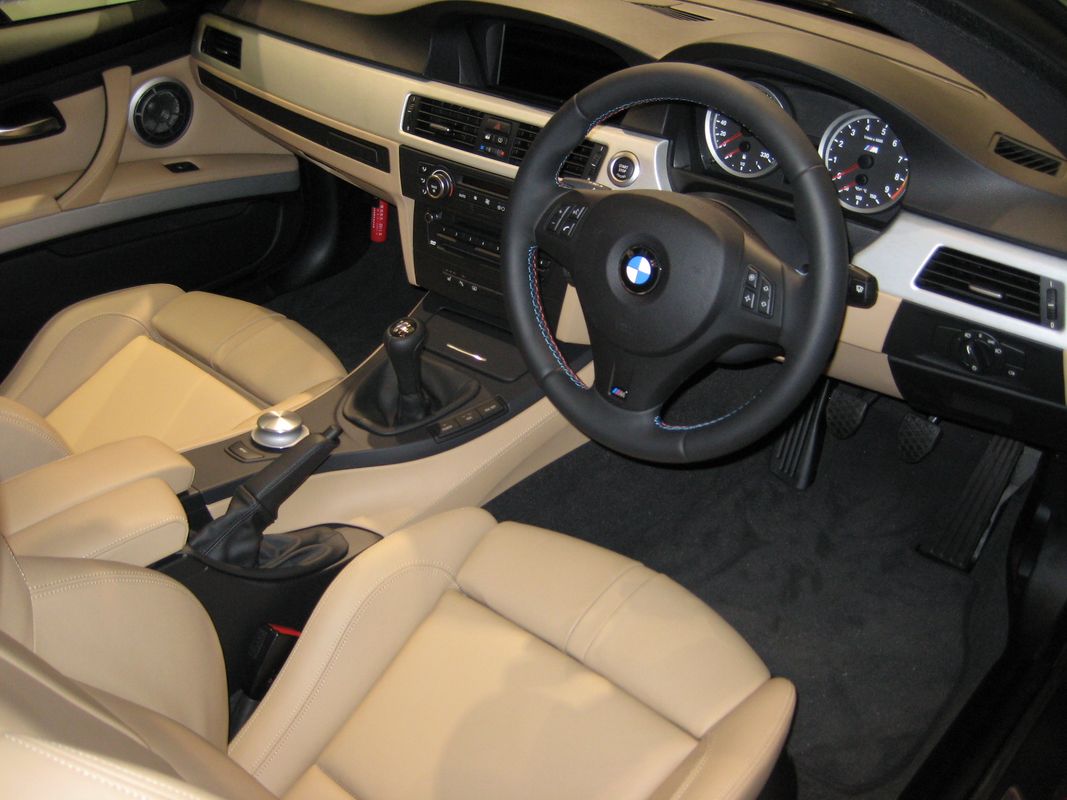
100-200k miles
Stock BMW clutch life
$700-2500
Shop install labor
500 miles minimum
Break-in mandatory
F80/F82/E92 DCT
DCT is NOT a clutch swap
| Tier | Material | Disc Count | Torque | Pedal Feel | Price |
|---|---|---|---|---|---|
| Stock OEM | Organic DMF | Single | 300-400 ft-lb | Smooth | $600-900 |
| HD Organic | Heavy org | Single | 400-500 ft-lb | Near stock | $700-1000 |
| Kevlar | Kevlar org hybrid | Single | 500-600 | Slight grab | $900-1200 |
| Stage 2 Ceramic | Puck ceramic | Single | 600-700 | Grabby | $1000-1400 |
| Twin Disc | Org or Kevlar | Twin | 700-900 | Ok street | $1500-2200 |
| Triple Disc Race | Sintered iron | Triple | 900-1200+ | On/off | $2500-6000 |
| DCT Clutch Pack | OEM spec pack | N/A | Per pack | Auto | $1500-4000 |
Stock OEM
- Material
- Organic DMF
- Disc Count
- Single
- Torque
- 300-400 ft-lb
- Pedal Feel
- Smooth
- Price
- $600-900
HD Organic
- Material
- Heavy org
- Disc Count
- Single
- Torque
- 400-500 ft-lb
- Pedal Feel
- Near stock
- Price
- $700-1000
Kevlar
- Material
- Kevlar org hybrid
- Disc Count
- Single
- Torque
- 500-600
- Pedal Feel
- Slight grab
- Price
- $900-1200
Stage 2 Ceramic
- Material
- Puck ceramic
- Disc Count
- Single
- Torque
- 600-700
- Pedal Feel
- Grabby
- Price
- $1000-1400
Twin Disc
- Material
- Org or Kevlar
- Disc Count
- Twin
- Torque
- 700-900
- Pedal Feel
- Ok street
- Price
- $1500-2200
Triple Disc Race
- Material
- Sintered iron
- Disc Count
- Triple
- Torque
- 900-1200+
- Pedal Feel
- On/off
- Price
- $2500-6000
DCT Clutch Pack
- Material
- OEM spec pack
- Disc Count
- N/A
- Torque
- Per pack
- Pedal Feel
- Auto
- Price
- $1500-4000
Read the table top down. Every row above your horsepower number is either wasted money, wasted drivability, or both. Every row below your number is going to slip, glaze, or grenade the second you step on it in anger. The entire game is matching the correct row to your actual whp, your actual use case, and your actual patience for a grabby pedal in traffic. The rest of this article is the detail you need to pick the right row and not get sold on something you do not need.
DCT Is Not a Traditional Clutch and Here Is Why That Matters
I will keep hammering this because the forums are full of F80 owners who showed up at a transmission shop with a SPEC Stage 2 kit in the trunk and asked to have it installed. You cannot do that. The Getrag 7DCT-GS7D36SG DCT in the E92 M3, F80 M3, F82 M4, and DCT-equipped G80 M3 is a completely different architecture from a manual transmission. There is no clutch master, no clutch fork, no pilot bearing in the crankshaft, no throwout bearing, and no flywheel that you can bolt an aftermarket clutch to. What is inside the bellhousing is two concentric input shafts (one for odd gears, one for even), two wet multi-plate clutch packs submerged in Pentosin FFL-3 or equivalent ATF, a mechatronics unit that fires solenoids to engage either pack, and a pump that keeps the whole thing under pressure.
When that transmission starts slipping, the factory clutch basket is no longer generating enough friction to hold torque. The fix is to pull the mechatronics, drop the pan, and replace the clutch pack assembly with either a stock replacement (if the issue is age-related wear at 80-100k miles) or an upgraded aftermarket pack (if the cause is tuned power exceeding the stock basket rating). The two aftermarket options that matter are SSP Performance SPEC-R and Dodson Motorsport Sportsman Plus. SSP SPEC-R is rated to roughly 900+ ft-lb of input torque on the stock mechatronics. Dodson Sportsman Plus 10-plate is rated to 950 Nm which is about 700 ft-lb. Both require a TCU relearn after install - without the relearn the transmission will shift like it is drunk, hunt between gears, and throw mechatronics fault codes until you do it.
When DCT Clutch Packs Actually Need Service
The factory DCT pack in an F80/F82 is good to roughly 650 whp on a stock basket, which is stock S55 plus bolt-ons plus a Stage 2+ tune on E30. Pure Stage 2 at 750-800 whp starts stressing the basket. Pure 800 or BQ Tuning big-single builds at 900 whp mandate a pack upgrade. Age-wise, factory packs rarely make it past 120k miles with enthusiast use - expect service somewhere between 80k and 110k miles if the car has been driven hard. Telltale symptoms are slipping under hard acceleration in 3rd and 4th gear, jerky low-speed creep in 1st, mechatronics fault codes (0A6D or transmission malfunction warnings), and the pack pressure readings climbing in BimmerCode or Carly logs.
E92 M3 DCT Pack Service Is a Cleaner Job
The Getrag 7DCT-DCT used in the E92 M3 is slightly smaller and a different ratio set than the F8X unit, but the service logic is the same. Factory packs last 80-150k miles with enthusiast use. Upgrade to SSP SPEC-R at 550+ whp on supercharged S65, which is common since the S65 is NA and pack loading in DCT mode under boost is different from the manual gearbox. Plan $3,500-4,500 for a full pack service including basket, plates, and mechatronics relearn.
How Every Clutch Actually Works Before You Pick Stages
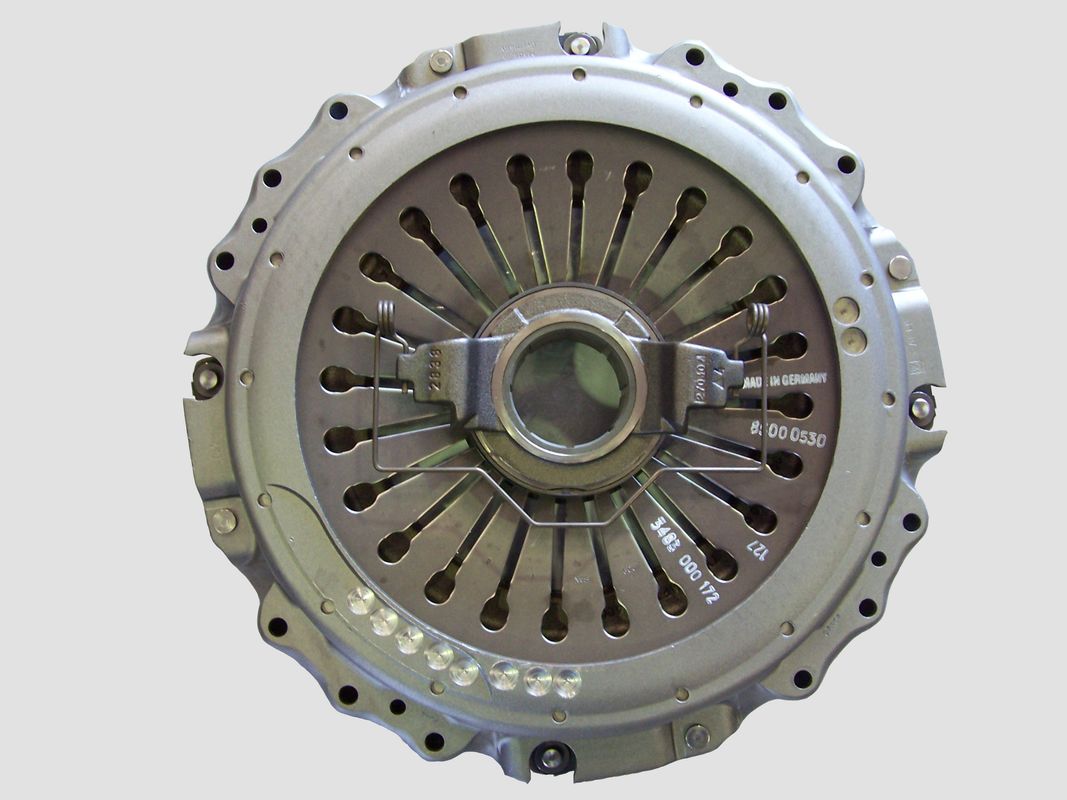
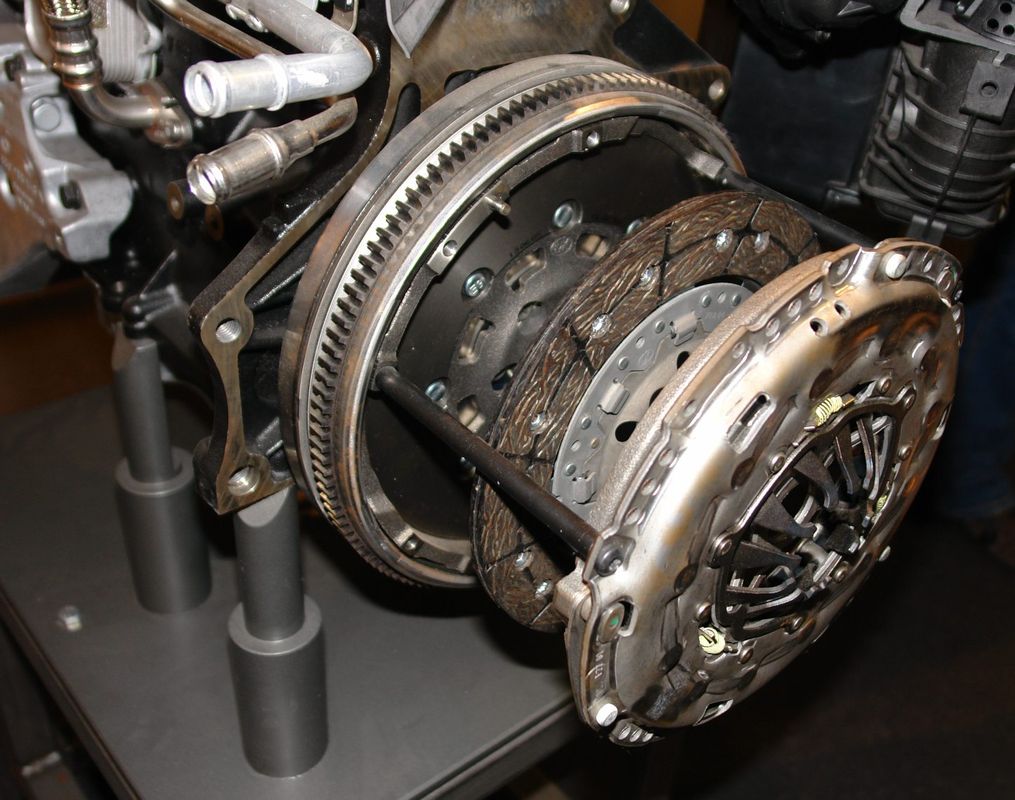
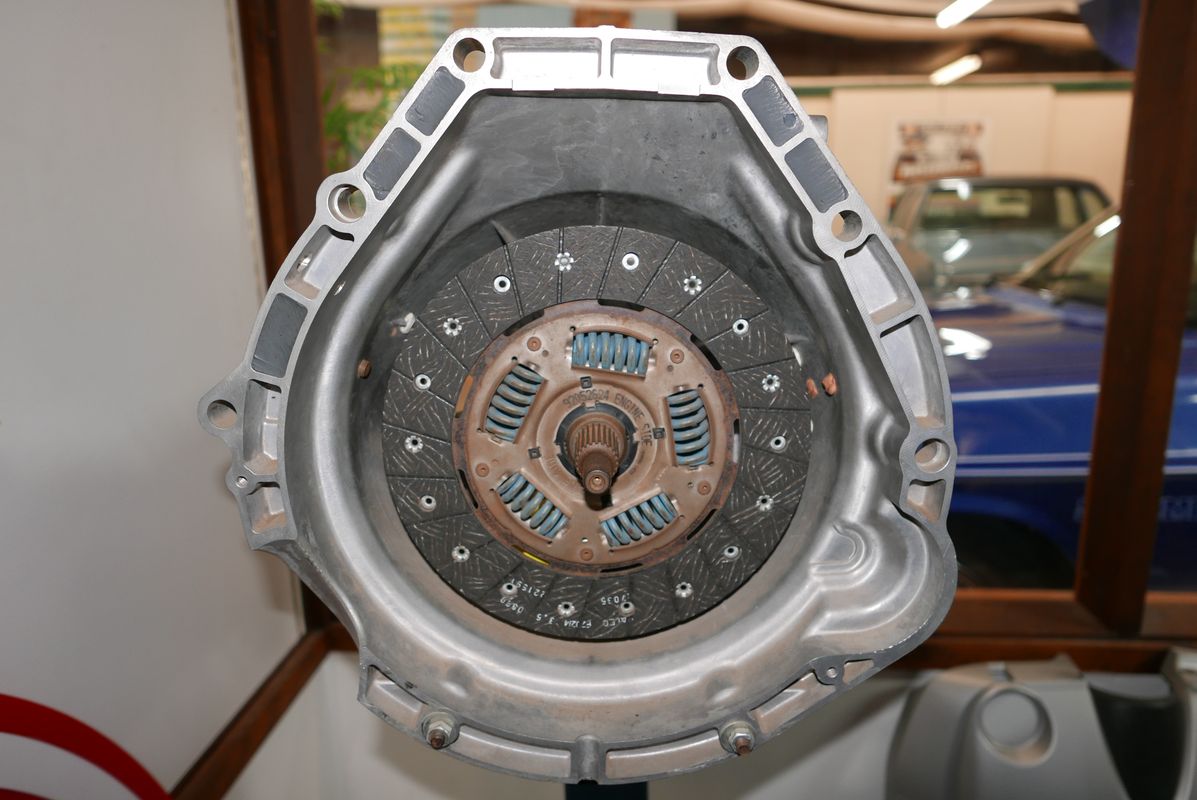
A traditional BMW single-disc clutch is four pieces. The flywheel bolts to the crankshaft and provides one of the two friction surfaces and the rotating mass that keeps your engine from stalling at idle. The clutch disc (the friction disc) is sandwiched between the flywheel and the pressure plate - it has friction material bonded to both faces and a splined hub that slides on the transmission input shaft. The pressure plate bolts to the flywheel and contains a spring-loaded diaphragm that clamps the disc against the flywheel with anywhere from 2,000 to 5,000 lb of force depending on the kit. The release bearing (throwout bearing) sits on the transmission input shaft and pushes against the pressure plate diaphragm fingers when you step on the pedal, releasing the clamp.
When everything is working, the pedal at rest is engaged - the pressure plate clamps the disc to the flywheel, the engine and transmission turn together, torque flows to the driveshaft. Step on the pedal, hydraulic pressure pushes the release bearing forward, release bearing pushes the diaphragm fingers, diaphragm releases the clamp, disc floats free between flywheel and pressure plate, engine spins but transmission does not, you shift gears. Release the pedal, diaphragm re-clamps, torque flows again. The whole mechanism runs on spring force and a thin hydraulic line to the slave cylinder.
Every decision you make on a clutch upgrade affects one of those four pieces. Flywheel choice changes rotating mass and NVH. Disc material changes how much heat and torque that friction interface can handle before slipping. Disc construction (sprung hub versus rigid, full-face versus puck) changes how forgiving or aggressive engagement feels. Pressure plate clamp load changes torque capacity at the expense of pedal effort. Anyone who tries to sell you a clutch without explaining all four is missing the point.
Clutch Friction Materials - Organic, Kevlar, Ceramic, Sintered
Friction material is where the spec sheet numbers come from and where the pedal feel comes from. There are five materials on the BMW market and they trade street manners for heat tolerance on a predictable curve.
Organic - The OEM Baseline
Standard OEM clutches on every BMW from the E36 through the G20 M340i use organic friction material - a woven or molded blend of phenolic resin, fiberglass, brass particles, and various fillers. Organic is smooth, forgiving, quiet, and cheap. Its coefficient of friction is medium and it drops as temperatures climb, which is why organic clutches slip when you tune them past stock torque. Heavy-duty organic (think Sachs OE, LuK uprated, Valeo SAC self-adjusting) pushes the torque ceiling up to about 475 ft-lb without changing pedal feel. Above that, organic gives up.
Kevlar and Carbon-Kevlar
Kevlar (aramid fiber) friction material is the sweet spot for a tuned street BMW. Unlike organic, Kevlar's coefficient of friction actually rises with heat, which means a tracked E46 M3 or N54 335i gets more holding capacity under abuse, not less. Pedal feel is near stock with a slight sharper bite at engagement, drivability in traffic is excellent, and capacity lands in the 400-600 ft-lb range depending on clamp load. Carbon-Kevlar blends (SPEC's Stage 2+ disc, ClutchMasters FX250 sprung, South Bend Stage 3 Endurance) extend that capacity to 550-700 ft-lb with the same street manners. This is the material that covers the vast majority of BMW performance builds that still daily drive.
Ceramic and Cerametallic
Ceramic (sintered copper, bronze, iron powder pressed into pucks) is a race material that people keep buying for street cars and regretting. The coefficient of friction is high and heat tolerance is excellent, but engagement is on-off. A ceramic 6-puck disc does not have a take-up zone - the clutch is either fully engaged or slipping, and the transition between those states is a few millimeters of pedal travel. You get kangaroo hopping in parking lots, stalling at stop signs for the first 500 miles, and a driving experience that requires you to relearn how to drive a stick. Track, autocross, drag strip - ceramic works. Commuter - pass.
Sintered Iron and Full Metallic
This is pure race. Sintered iron discs are what race teams run when they have already blown up a ceramic disc and need more. Chatter is brutal, pedal modulation is nonexistent, and thermal tolerance is extreme. You see this on triple-disc race kits from Tilton, Quartermaster, and Clutch Masters 1000 Series. If you are reading this article you probably do not want sintered iron. If you know you want sintered iron you already know why, and you do not need me telling you it is unpleasant.
Single Versus Twin Versus Triple Disc
Single-disc clutches are the factory layout on every BMW ever produced. They are simple, cheap to service, and good to roughly 700 ft-lb with the right friction material. At that point you run out of friction area - there is a fixed diameter envelope inside the BMW bellhousing and a single disc can only have so much surface. To go higher, you either upgrade material to sintered iron (and suffer the pedal feel) or you add more discs.
Twin-disc clutches stack two smaller discs between the flywheel and pressure plate with an intermediate steel floater plate between them. You double the friction area without increasing overall diameter. Pedal feel stays close to stock because each individual disc needs less clamp to hold the same net torque. Capacity climbs to 700-1000 ft-lb depending on material. Clutch Masters FX250 SS Twin, FX725, FX850, MOTIV Twin Disc for B58/S58, PTB Racing for G80 M3 are the popular BMW options. Pricing starts around $1,800 for the kit and climbs to $2,500 for the big endurance units.
Triple-disc is race territory. Three small discs, two floaters, brutal clamp, 1000+ ft-lb capacity. Tilton, Quartermaster, Clutch Masters 1000 Series. Brittle at low RPM, impossible to modulate in traffic, rebuild intervals measured in race weekends. If you have a 1000 whp N54 or a 1200 whp S58 you might legitimately need this. Otherwise, do not.
The practical rule in my shop is this. Under 500 whp - single disc, Kevlar or carbon-Kevlar, full-face, sprung hub. 500 to 700 whp - single disc Stage 3+ carbon semi-metallic or a twin-disc if you want stock pedal. 700 to 1000 whp - twin-disc. Above 1000 whp - triple-disc. Anyone quoting you a single-disc rigid puck for 900 whp is either lying or hoping you break it before the warranty expires.
| Disc Count | Capacity | Pedal Effort | Modulation | Typical BMW Use |
|---|---|---|---|---|
| Single full-face | 300-700 ft-lb | Light to medium | Excellent to good | Stock, daily, Stage 1-2 tune |
| Single 6-puck | 550-750 ft-lb | Medium-heavy | Fair | Track, drag, boosted street |
| Twin-disc Kevlar | 700-900 ft-lb | Close to stock | Very good | 800 whp N54, tuned G80 M3 |
| Twin-disc carbon | 800-1000 ft-lb | Medium | Good | Race street car, single turbo builds |
| Triple-disc sintered | 1000-1400 ft-lb | Brutal | Awful | Pure race, 1000+ whp builds |
Single full-face
- Capacity
- 300-700 ft-lb
- Pedal Effort
- Light to medium
- Modulation
- Excellent to good
- Typical BMW Use
- Stock, daily, Stage 1-2 tune
Single 6-puck
- Capacity
- 550-750 ft-lb
- Pedal Effort
- Medium-heavy
- Modulation
- Fair
- Typical BMW Use
- Track, drag, boosted street
Twin-disc Kevlar
- Capacity
- 700-900 ft-lb
- Pedal Effort
- Close to stock
- Modulation
- Very good
- Typical BMW Use
- 800 whp N54, tuned G80 M3
Twin-disc carbon
- Capacity
- 800-1000 ft-lb
- Pedal Effort
- Medium
- Modulation
- Good
- Typical BMW Use
- Race street car, single turbo builds
Triple-disc sintered
- Capacity
- 1000-1400 ft-lb
- Pedal Effort
- Brutal
- Modulation
- Awful
- Typical BMW Use
- Pure race, 1000+ whp builds
Flywheel - Dual-Mass Versus Single-Mass Versus Aluminum
The flywheel decision is the one people get emotional about. BMW engineered every crankshaft from 1991 onward assuming there would be a dual-mass damper on the back of it. That matters mechanically and most forum debates ignore it.
Dual-Mass Flywheel - What It Actually Does
A dual-mass flywheel has two rotating masses (primary and secondary) connected by a set of arc springs that act as a torsional vibration damper. The crankshaft spins the primary mass, the springs absorb rotational shock and high-frequency crankshaft harmonics, and the secondary mass (which the clutch disc rides on) delivers smoothed torque to the transmission input shaft. The result is crisp shifts, no gear rattle at idle, and a driveline that feels OEM because it is OEM. The downsides are rotating mass (25-31 lb on most BMW applications), weight, and eventual spring failure. Every BMW DMF has a service life - typically 100-180k miles depending on driving style. When they fail you get rattle at idle, clutch chatter that feels like a worn-out clutch, and eventually spring collapse that destroys the whole unit.
Single-Mass Steel Flywheel
Replace a DMF with a solid steel disc (typically 16-20 lb on BMW inline-six applications) and you save 8-12 lb of rotating mass. You also lose the torsional damper. The car revs up faster, rev drop is quicker, throttle response improves noticeably. Downsides - some gear rattle at idle in neutral (more noticeable in echoing garages next to walls), slightly harder to launch without stalling, more torsional vibration transmitted into the transmission synchros. A sprung-hub clutch disc mostly compensates for the missing damper. Steel SMFW is the best flywheel choice for the majority of tuned BMW street cars. MFactory for N54, SPEC billet steel (22 lb) for E9X 335/135, SPEC lightweight for E46 M3 and E92 M3 S65.
Aluminum Single-Mass Flywheel
Billet aluminum flywheels drop weight further - SPEC billet aluminum is 14 lb, JB Racing aluminum for E46 M3 is 10 lb, Fidanza runs around 12 lb, AdlerSpeed M50/M52/S50/S52/S54 is 10.4 lb. Total weight savings versus stock are 13-17 lb on most BMW applications. The engine revs like a different motor. Throttle response is instant. Track rev matching becomes effortless because the rev drop on upshifts is faster than a DMF can ever be. The tradeoffs get real - noticeable gear rattle at idle with the clutch engaged (especially aluminum), easier to stall until your left foot adapts, and more crankshaft torsional harmonics into the transmission. Over 50-100k miles, aluminum flywheels on a daily driver can chip synchro dogs. A sprung-hub disc plus thicker manual transmission fluid (Red Line MTL or MT-90) softens the synchro stress. E46 M3 SMG owners should avoid the lightest flywheels entirely - the SMG software is tuned for DMF inertia and cannot reliably manage a 10 lb aluminum unit even with a TCU relearn.


SPEC Aluminum Flywheel — E82 1M / E9x 335 535
$557.26

AdlerSpeed Lightweight Aluminum Flywheel — M50/M52/S50/S52/S54
$128.69
Weight Reduction Impact in Real Numbers
Here is what the flywheel weight actually does. Dropping 15 lb of rotating mass on an E46 M3 (stock 25 lb DMF to 10 lb aluminum) does not change peak dyno horsepower - the flywheel rotates at a constant speed during a dyno pull, so it does not show up on a chassis dyno graph. What changes is transient acceleration. The engine does not have to fight as much inertia to change RPM. Felt acceleration improves by roughly 0.1 to 0.2 seconds in the 0-60 window because the engine gets to target RPM faster. Rev-matched downshifts happen more crisply. On track, rev drop between upshifts is measurable - JB Racing's internal testing at Laguna Seca showed approximately 0.4 seconds per lap improvement on a full track just from the rev drop change.
The common phrasing is "lighter flywheel feels like 10-15 extra wheel horsepower." That is correct in felt terms and wrong in dyno terms. Both are true simultaneously, and the gap confuses people.
| Chassis | Stock Flywheel | Aftermarket | Weight Saved | Notes |
|---|---|---|---|---|
| E46 M3 S54 | 25 lb DMF | JB Racing aluminum 10 lb | 15 lb | Canonical lightweight pick |
| E46 M3 S54 | 25 lb DMF | Fidanza aluminum 12 lb | 13 lb | Budget aluminum option |
| E46 M3 S54 | 25 lb DMF | SPEC steel SMFW 17 lb | 8 lb | Quieter at idle |
| N54 335i | 28 lb DMF | MFactory SMFW 14 lb | 14 lb | Most popular N54 pick |
| N54 335i | 28 lb DMF | ClutchMasters aluminum 11 lb | 17 lb | Track/drag pick |
| E92 M3 S65 | 31 lb DMF | SPEC lightweight steel 18 lb | 13 lb | Streetable S65 pick |
E46 M3 S54
- Stock Flywheel
- 25 lb DMF
- Aftermarket
- JB Racing aluminum 10 lb
- Weight Saved
- 15 lb
- Notes
- Canonical lightweight pick
E46 M3 S54
- Stock Flywheel
- 25 lb DMF
- Aftermarket
- Fidanza aluminum 12 lb
- Weight Saved
- 13 lb
- Notes
- Budget aluminum option
E46 M3 S54
- Stock Flywheel
- 25 lb DMF
- Aftermarket
- SPEC steel SMFW 17 lb
- Weight Saved
- 8 lb
- Notes
- Quieter at idle
N54 335i
- Stock Flywheel
- 28 lb DMF
- Aftermarket
- MFactory SMFW 14 lb
- Weight Saved
- 14 lb
- Notes
- Most popular N54 pick
N54 335i
- Stock Flywheel
- 28 lb DMF
- Aftermarket
- ClutchMasters aluminum 11 lb
- Weight Saved
- 17 lb
- Notes
- Track/drag pick
E92 M3 S65
- Stock Flywheel
- 31 lb DMF
- Aftermarket
- SPEC lightweight steel 18 lb
- Weight Saved
- 13 lb
- Notes
- Streetable S65 pick
Brand Deep Dive - SPEC, ClutchMasters, South Bend, ACT, Sachs, LuK, Exedy
These are the brands I actually install. Everyone else is either a rebadge or a price-shopping mistake.
SPEC Clutch
SPEC is the US-based benchmark for BMW performance clutches. Their stage ladder is consistent across all BMW applications and easy to translate between chassis.
- Stage 1 - Full-face organic, stock replacement feel, not worth the upgrade from OEM in my opinion.
- Stage 2 - Carbon-Kevlar full-face, 485 ft-lb class, daily-drivable. The E46 M3 / Z4M / mild N54 pick.
- Stage 2+ - Same material with higher clamp, 545 ft-lb, dual-sided (carbon semi-metallic one face, Kevlar the other). The N54 street-tune sweet spot at Pure Stage 2 power.
- Stage 3 - 6-puck carbon semi-metallic sprung, 650 ft-lb, sharp bite. Not for commuters.
- Stage 3+ - Full-face carbon semi-metallic, 671 ft-lb. The streetable race clutch. My pick for 600 whp N54/S65.
- Stage 4 - Rigid-hub 6-puck, 700+ ft-lb, brutal chatter. Track only.
- Stage 5 / Super Twin - Mini twin-disc, double-sprung, race torque with stock-ish pedal effort.

SPEC Stage 3 Clutch Kit — E82 135i / E90 335i (2007–2010)
$719.10

Spec Tools SN233H - Stage 2+ Clutch Kit for BMW
$467.10
Clutch Masters (FX Series)
ClutchMasters runs an FX nomenclature that does not map cleanly to SPEC stages. The important ones are FX250 (heavy-duty carbon-Kevlar, daily-drivable, 500 ft-lb), FX350 (sprung ceramic, track-popular, 600 ft-lb, more manageable than FX400), FX400 (6-puck sprung ceramic, 650 ft-lb, grabby), FX725 (twin-disc, 900 ft-lb, classic E36/E46/E39 hi-po choice), and the FX1000 (10-inch twin-disc strap-driven plate). FX725 on an E46 M3 supercharger car is one of the most bulletproof combinations I have ever installed. For a street-driven E46 M3 making 400 whp, I prefer FX250 over FX400 because the chatter on a ceramic puck gets old after the first month.
South Bend Clutch
South Bend is the quiet favorite for N54/N55 owners because their sprung-hub carbon-Kevlar discs have close-to-stock pedal feel up to surprisingly high capacities. Stage 2 Daily at 450 ft-lb, Stage 3 Daily at 540 ft-lb, Stage 3 Endurance at 660 ft-lb, Stage 4 Extreme at 750+ ft-lb (rigid puck, not street-friendly). Stage 3 Endurance paired with stock DMF is one of the most forum-endorsed N54 combos for Pure Stage 2 builds. 12-month/12,000-mile defect warranty. US-made. Customer support is actually responsive.
ACT (Advanced Clutch Technology)
ACT is more common in the import tuner scene (EVO, STI, Supra) but their BMW offerings are solid. HDSS (Heavy Duty Street Sprung) at 395 ft-lb, XTSS (Xtreme Street Sprung) at 450-500 ft-lb, HDG6 (Heavy Duty 6-puck) race. ACT's XACT Streetlite Flywheel is a legitimate steel SMFW option for E46 M3 that pairs well with HDSS. ACT pressure plates are SFI 1.1 certified, which matters if you autocross in a sanctioned class.
Sachs, LuK, Valeo - The OEM Supplier Triangle
Sachs (part of ZF now) is the actual OEM clutch supplier for most BMW manuals. Buying a Sachs OE kit is literally buying the part that would have been in the car from the factory. LuK supplies OEM dual-mass flywheels and some clutch kits - quality parity with Sachs. Valeo does self-adjusting clutch kits on some platforms, slightly cheaper than Sachs, equivalent durability. For a stock or lightly modded BMW that needs a replacement, Sachs OE or LuK OE is the right answer and the cheapest long-term. No Stage nonsense, just the part that BMW engineered for that car.

EFT Stage 2 HD Clutch Kit — N52B30 E82 E90 E60 E85 6-Speed
$349.00

XTD Stage 2 Self-Adjusting Clutch Kit — N54/N55 135i, 335i, 535i, Z4
$229.98
Exedy, RedLine, and the Others
Exedy makes Japanese OE clutches primarily but their BMW kits are well-specified, close to OEM feel, sensible pricing. Not as aggressive as SPEC or CM but reliable. RedLine offers semi-race organic discs in the 400-475 whp range - good intermediate for budget builds between OEM and SPEC Stage 2. MOTIV is the B58/S58-era twin-disc specialist - their MOTIV Twin Disc for S58 G80 M3 is emerging as a top-tier choice. PTB/Wagner Racing twin-disc is what the 60-130 mph world-record G80 6MT was running.
Brands I Avoid
I have seen enough generic Amazon clutch kits branded XTD, ClutchMaxPRO at rock-bottom prices, EFT, and similar to know that some of them are genuinely OK budget options and some are garbage. XTD's Stage 2 self-adjusting kit for N54/N55 is an honest entry-level upgrade if money is tight. ClutchMaxPRO's stuff for E36/E34/E39 is 20+ years of experience and reasonable for a stock six-cylinder. EFT and EFORTISSIMO Racing for N52 is Kevlar-infused and decent. Anything unbranded, anything sub-$150 for a performance clutch, anything that claims "SPEC-style" without being from SPEC - skip it.

ClutchMaxPRO Stage 2 Clutch Kit — E36 M3 / E36 / E34 / E39
$142.99

ClutchMaxPRO Heavy Duty Clutch Kit with Chromoly Flywheel — E36/E34/E39
$374.99

ClutchMax Stage 4 Ceramic Clutch Kit for BMW E83 E85
$197.99
Chassis-by-Chassis Clutch Recommendations
This is the section most people skim, so read it slowly. Every chassis has different torque numbers, different DMF reliability patterns, different flywheel options, and different transmission types. A kit that is perfect for one can be completely wrong for another.
E46 M3 S54 - Include the Return Spring
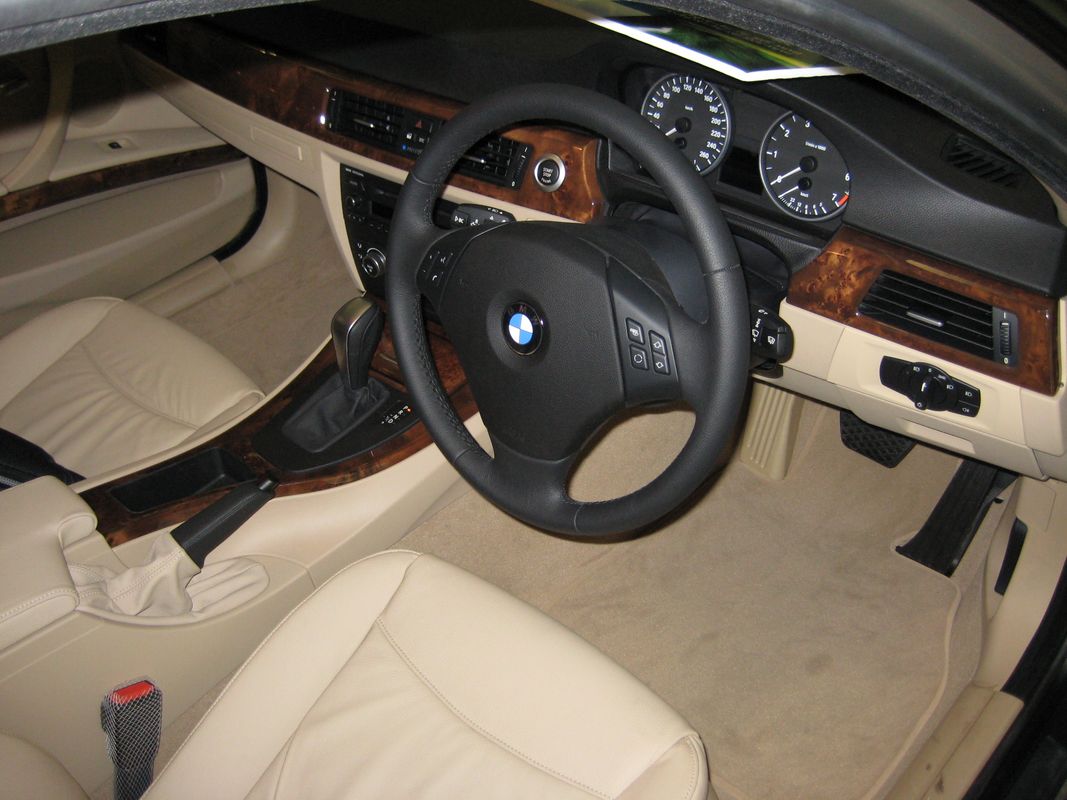
The E46 M3 S54 with a 6MT is the chassis where I have done the most clutch work, and it has a specific pattern of failures that differs from every other BMW. The stock dual-mass flywheel fails before the clutch disc wears out - you get rattle at idle, chatter that feels like a worn clutch even though the disc is still thick, and eventually spring damper collapse. Always replace the flywheel at clutch service on an S54. Always. The other S54-specific item is the clutch pedal return spring. BMW issued a revised reinforced part and any competent E46 M3 clutch job includes it. Missing that spring is the single most common "I got my clutch done and now the pedal feels spongy" forum complaint.
My picks for E46 M3 by use case. Daily driver or mild supercharger at 350-400 whp - SPEC Stage 2 with JB Racing 10 lb aluminum flywheel for the engine character change, or SPEC Stage 2 with an OEM Sachs DMF for quietest idle. Tracked S54 or supercharged 450+ whp - SPEC Stage 3+ or ClutchMasters FX350 with SPEC billet steel SMFW. Dedicated drag or roll race - ClutchMasters FX725 twin-disc. SMG models - avoid anything under 14 lb flywheel. The SMG software cannot reliably manage a 10 lb aluminum unit regardless of how many relearns you do, and a mis-shift on track is how SMG pumps die.
E92 M3 S65 6MT
The S65 V8 in a 6MT E92 is one of the most underrated clutch platforms BMW has produced. Stock Sachs clutch holds NA S65 power (420 hp / 295 ft-lb) comfortably. Replacement at 80-100k miles is typically OEM Sachs or LuK - no reason to upgrade for a stock car. Supercharged 550+ whp S65 needs a real upgrade - SPEC Stage 2 or Stage 3 single carbon-Kevlar disc with OEM DMF or SPEC lightweight steel flywheel. Track-only NA S65 - ClutchMasters FX350 with lightweight flywheel changes the character of the engine, worth every dollar for instructor-level drivers.
E92 M3 DCT
Already covered above - not a traditional clutch swap. DCT clutch pack service interval runs 80-150k miles on factory basket. Upgrade path is SSP SPEC-R when stock packs slip or power exceeds roughly 550 whp (supercharged S65). Dodson has a DCT upgrade as well. TCU relearn is mandatory post-install.
F80 M3 / F82 M4 - DCT Clutch Pack Territory
F80 M3 and F82 M4 are DCT-only in the US and most markets. Stock 7DCT-GS7D36SG basket holds stock S55 plus bolt-ons to Stage 2+ (roughly 600-650 whp on E30). Pure Stage 2 or big-turbo F80 builds need a pack upgrade. SSP SPEC-R is rated 900+ ft-lb and is the most common upgrade path. Dodson Sportsman Plus 10-plate is 950 Nm (approximately 700 ft-lb) and is the other forum-validated choice. Either requires the full transmission service, mechatronics relearn, and typically $4,500-6,500 installed depending on shop.
G80 M3 6MT - The Last Manual M3
G80 M3 6MT is a specific US-market option and the only current manual M3. Stock clutch is rated for 560 whp S58 - good to Stage 1 and most Stage 2 flashes on pump plus downpipe. Stage 2+ hybrid turbos (Pure Stage 2+, CTS Stage 2+) land in the 825-900 whp range and absolutely need a clutch upgrade. Emerging favorites are Wagner-Tuning / PTB twin-disc and ClutchMasters FX250 SS twin-disc. MOTIV Twin Disc for S58 is gaining traction as well. The 60-130 mph world-record G80 6MT ran an upgraded twin-disc. No one is making serious S58 power on a stock G80 clutch for long.
G80 M3 ZF 8HP76 - Not a Clutch
G80 M3 with ZF 8HP76 automatic (which includes most Competition models outside of the 6MT) uses a torque converter, not a clutch. There is nothing to swap. Upgrade path at 900+ whp is a Pure Drivetrain Solutions 8HP76 Stage 2 rebuild - internal clutch packs, valve body work, updated torque converter. This is $6,500-9,500 work and nothing like a manual clutch job.
335i N54 (E90/E91/E92/E93) 6MT
The N54 335i is the most-tuned clutch application in the BMW universe. Stock Sachs holds Stage 1 (380 whp) comfortably. 335is/550i uprated factory clutch holds about 450 whp if you budget-source one. Pure Stage 2 / 450-500 whp - SPEC Stage 2+ with OEM DMF (the most popular choice by a wide margin) or South Bend Stage 3 Daily for stock pedal feel. Single-turbo or big-hybrid 600+ whp - SPEC Stage 3+ with MFactory SMFW (my favorite pairing), or South Bend Stage 3 Drag/Endurance, or ClutchMasters FX400 with SMFW. 800 whp+ N54 - ClutchMasters FX725 twin-disc or MOTIV Twin Disc. Above 1000 whp - triple-disc.
One N54-specific note. The factory DMF on N54 is the same concept as E46 M3, and like the E46 it tends to outlive the disc but not indefinitely. If you are pulling transmission at 80k+ miles, inspect the DMF for spring damper play and replace if suspect. Doing a performance clutch on a tired DMF is false economy - the DMF will fail within 10-15k miles and you pay the same labor twice.

335i / 435i N55 (F30/F32) 6MT
Mechanically similar to N54 with slightly less stock torque. Stock N55 clutch holds Stage 1 (400-425 whp) well. Pure Stage 2 N55 at 450 whp - SPEC Stage 2+ or South Bend Stage 3 Daily. Big-turbo N55 - same twin-disc choices as N54. N55 DMF life is similar to N54 - inspect at 80k+ miles, replace if suspect.
M340i G20 B58 6MT
M340i G20 with 6MT is a US-only option and it is rare. Stock B58 clutch holds Stage 1 (approximately 450 whp pump / 480 whp E30) with no issues and most Stage 2 tunes (around 500 whp) without drama. Stage 2+ hybrid turbos or big upgrades need a clutch upgrade - SPEC Stage 2+ if the part is available for your specific build year (verify with SPEC directly, G20 fitment is newer), or emerging B58-specific kits from MOTIV and ClutchMasters. ZF 8HP50 auto M340i is a torque converter, not a clutch - upgrade is TCU tune and 8HP internals at 700+ whp, which is drivetrain-specialist work.
Install Process - 8 to 12 Hours and What Actually Gets Replaced
A BMW clutch replacement is one of the more labor-intensive jobs on a rear-wheel-drive chassis. Plan 8-12 hours for an experienced independent shop. DIY in a home garage is a full weekend project with two people, a transmission jack, and patience. Shop labor ranges $700-1,200 at a competent independent, $1,500-2,500 in BMW marketing. Labor cost is almost always higher than the clutch kit itself, which is why "while you are in there" part replacement matters so much on this job.
What Has to Come Out
The transmission must come out of the car. On most BMW chassis that means disconnecting and removing the driveshaft (mark the orientation before disconnecting to maintain balance), removing the exhaust mid-section, removing heat shields, unbolting the rear transmission mount and crossmember, unbolting the bellhousing from the engine, supporting the transmission on a jack, and sliding it back off the input shaft. The transmission itself weighs 100-150 lb depending on chassis - always use a trans jack, not a floor jack with a block of wood.
The Smart Parts List
While the transmission is out, replace the following. Skipping any of these means doing the same transmission-out labor again within 20k miles for a $30 part, which is the dumbest financial decision in BMW ownership.
- Clutch slave cylinder - Internal seal fails over time and leaks hydraulic fluid. New slave is $40-80.
- Clutch fork and pivot pin - Wears at the release bearing contact point. Fork is $30-50, pivot pin $10.
- Pilot bearing - Lives inside the crankshaft end and supports the transmission input shaft. Replace every single time. $15-30.
- Throwout bearing - Usually included in the clutch kit. Do not reuse the old one.
- Rear main seal - Engine side, behind the flywheel. Cheap while the engine is exposed. $20-50.
- Clutch pedal return spring - E46 M3 specific updated reinforced part. $10. Non-negotiable.
- Transmission output shaft seal - Behind the driveshaft flange. Starts leaking eventually. $15-25.
- Manual transmission fluid - Drain and refill with Red Line MTL, MT-85, or MT-90 depending on chassis.
Special Tools You Actually Need
Transmission jack or floor jack with a flat wide adapter plate. Clutch alignment tool (usually included with the kit - if not, buy one for $15). Torque wrench that reads in-lb and ft-lb. E46 M3 uses a hall-type clutch switch that differs from normal E46 - do not mis-order. Most BMW transmissions use E-Torx bellhousing bolts, not hex, and you need the right socket set.
Break-In Procedure - The 500-Mile Rule Is Not Optional
Every major clutch manufacturer (SPEC, ClutchMasters, South Bend, ACT, Mantic, MOTIV) mandates a minimum 500 miles of gentle break-in. Skip this and you will kill the clutch or at minimum lose 10-20% of the advertised torque capacity. I have seen new Stage 3+ clutches slip at 550 whp when they were rated to 671 ft-lb, every single time because the owner drove the car hard within the first 200 miles.
What Break-In Actually Does
A fresh clutch disc has microscopically rough friction material. During break-in, a carbon transfer layer builds up between the disc friction surface and the steel flywheel and pressure plate. That transfer layer is what generates the coefficient of friction on the spec sheet. Without a fully developed transfer layer, the disc slips under high loads, glazes, and permanently loses capacity. Glazing is irreversible - a glazed disc cannot be rehabilitated, it must be replaced.
The Actual Break-In Procedure
- Normal street driving in the 1500-3000 RPM range
- No WOT, no hard launches, no track sessions, no aggressive shifting
- Avoid highway-only driving in one gear - you need varied engagement cycles
- Target 300-500 clutch engagements at low RPM - stop-and-go city driving is ideal
- Minimum 500 miles for single-disc organic, Kevlar, and carbon-Kevlar
- Minimum 700-1000 miles for twin-disc units (more friction surfaces to bed in)
- Ceramic discs - same 500-mile minimum, chatter will gradually improve but never fully disappear
Pedal Feel - What Each Tier Actually Drives Like
Pedal effort and modulation quality change noticeably between tiers. If you have only ever driven a stock BMW clutch, a Stage 3+ carbon semi-metallic is going to feel like a completely different machine for the first 2000 miles. Understanding what to expect keeps you from panicking at 100 miles thinking you got a bad clutch.
| Setup | Pedal Effort | Engagement Feel | Modulation | Street Manners |
|---|---|---|---|---|
| OEM Sachs | Light | Smooth, long take-up | Excellent | Perfect |
| SPEC Stage 2 / CM FX250 | Light-medium | Slightly firmer, progressive | Very good | Near stock |
| SPEC Stage 2+ / SB Stage 3 | Medium | Firmer, defined bite | Good | Streetable |
| CM FX350 / SPEC Stage 3 | Medium-heavy | Sharper, shorter | Fair | Track-focused |
| CM FX400 / SPEC Stage 4 | Heavy | Grabby, on-off | Poor | Kangaroo hops |
| Twin-disc (FX725, MOTIV) | Close to stock | Quick but smooth | Very good | Surprisingly livable |
| Race triple-disc | Brutal | On-off | Awful | Unusable in traffic |
OEM Sachs
- Pedal Effort
- Light
- Engagement Feel
- Smooth, long take-up
- Modulation
- Excellent
- Street Manners
- Perfect
SPEC Stage 2 / CM FX250
- Pedal Effort
- Light-medium
- Engagement Feel
- Slightly firmer, progressive
- Modulation
- Very good
- Street Manners
- Near stock
SPEC Stage 2+ / SB Stage 3
- Pedal Effort
- Medium
- Engagement Feel
- Firmer, defined bite
- Modulation
- Good
- Street Manners
- Streetable
CM FX350 / SPEC Stage 3
- Pedal Effort
- Medium-heavy
- Engagement Feel
- Sharper, shorter
- Modulation
- Fair
- Street Manners
- Track-focused
CM FX400 / SPEC Stage 4
- Pedal Effort
- Heavy
- Engagement Feel
- Grabby, on-off
- Modulation
- Poor
- Street Manners
- Kangaroo hops
Twin-disc (FX725, MOTIV)
- Pedal Effort
- Close to stock
- Engagement Feel
- Quick but smooth
- Modulation
- Very good
- Street Manners
- Surprisingly livable
Race triple-disc
- Pedal Effort
- Brutal
- Engagement Feel
- On-off
- Modulation
- Awful
- Street Manners
- Unusable in traffic
The counterintuitive one here is twin-disc. Because pedal effort drops with two smaller discs doing the work of one big one, twin-disc clutches often feel closer to stock than a Stage 3+ single-disc carbon semi-metallic. The FX725 E46 M3 install feels almost exactly like OEM at the pedal while holding 900 ft-lb. That is why they dominate 700+ whp street builds.
2026 Pricing - Kit Only Versus Installed
Pricing has climbed since 2023 alongside every other performance part. Current 2026 reality looks like this:
| Tier | Kit Only | Installed (independent shop) |
|---|---|---|
| OEM Sachs / LuK OE | $400-600 | $1300-1800 |
| SPEC Stage 2 / CM FX200 | $600-900 | $1600-2100 |
| SPEC 2+ / SB Stage 3 Daily | $900-1300 | $1900-2500 |
| SPEC 3+ / CM FX350 | $1000-1500 | $2100-2700 |
| SPEC 4 / CM FX400 ceramic | $1200-1800 | $2400-3000 |
| Twin-disc (FX725, MOTIV, PTB) | $1800-2500 | $3000-4000 |
| Triple-disc (Tilton, FX1000) | $2500-4000 | $4000-6000 |
| DCT SSP SPEC-R pack | $2400-2900 | $4500-6500 |
| DCT Dodson Sportsman Plus | $2800-3400 | $4800-6800 |
OEM Sachs / LuK OE
- Kit Only
- $400-600
- Installed (independent shop)
- $1300-1800
SPEC Stage 2 / CM FX200
- Kit Only
- $600-900
- Installed (independent shop)
- $1600-2100
SPEC 2+ / SB Stage 3 Daily
- Kit Only
- $900-1300
- Installed (independent shop)
- $1900-2500
SPEC 3+ / CM FX350
- Kit Only
- $1000-1500
- Installed (independent shop)
- $2100-2700
SPEC 4 / CM FX400 ceramic
- Kit Only
- $1200-1800
- Installed (independent shop)
- $2400-3000
Twin-disc (FX725, MOTIV, PTB)
- Kit Only
- $1800-2500
- Installed (independent shop)
- $3000-4000
Triple-disc (Tilton, FX1000)
- Kit Only
- $2500-4000
- Installed (independent shop)
- $4000-6000
DCT SSP SPEC-R pack
- Kit Only
- $2400-2900
- Installed (independent shop)
- $4500-6500
DCT Dodson Sportsman Plus
- Kit Only
- $2800-3400
- Installed (independent shop)
- $4800-6800
Flywheel prices add on top of clutch kit pricing. OEM Sachs DMF replacement $400-700, steel SMFW $350-550, aluminum billet $500-800, lightweight chromoly race $600-1000. Plan total kit cost at $900-2400 for most enthusiast upgrades, total installed cost at $2200-4500 for a full clutch+flywheel service.
Frequently Asked Questions
What Is the Best Clutch for a BMW M3
Depends on the M3. E46 M3 S54 6MT running stock to 400 whp - SPEC Stage 2 plus JB Racing aluminum flywheel. E46 M3 supercharged 450+ whp - SPEC Stage 3+ with steel SMFW. E92 M3 S65 6MT supercharged - SPEC Stage 2 or Stage 3 with OEM DMF. E92 M3 DCT / F80 M3 / F82 M4 / G80 DCT - SSP SPEC-R or Dodson Sportsman Plus clutch pack, not a traditional clutch swap. G80 M3 6MT at Stage 2+ - ClutchMasters FX250 SS twin-disc or Wagner-Tuning PTB twin-disc.
How Long Does a BMW Clutch Last
Well-driven stock BMW clutches commonly go 150-250k miles. Aggressive driving or DE/autocross use drops that to 80-120k miles. Stock 335i 6MT clutches have been reported slipping as early as 110k miles when driven hard, and as late as 230k miles with smooth driving. DMF life on E46 M3 and N54 platforms is typically 100-180k miles - the DMF often fails before the disc wears out.
Do I Need to Replace the Flywheel When I Replace the Clutch on a BMW
On an E46 M3 - yes, always, the DMF is a known failure point and costs the same labor to do now versus after the new clutch chatters. On other BMWs, inspect the flywheel for spring damper play (DMF applications) or friction-surface wear and heat spots. If the flywheel looks good, you can reuse it. If the car has 100k+ miles, replacement while you are in there is cheap insurance. On any SMFW conversion, obviously new flywheel.
What Is the Difference Between a SPEC Stage 2 and Stage 3 Clutch
Material and pedal feel. Stage 2 is carbon-Kevlar full-face at 485 ft-lb with light pedal and progressive engagement - a daily driver clutch. Stage 3 is a 6-puck carbon semi-metallic sprung disc at 650 ft-lb with a sharp bite point and medium-heavy pedal - a track-focused clutch. Stage 2+ and Stage 3+ are the full-face higher-capacity versions that keep street manners (545 and 671 ft-lb respectively). For N54 at Pure Stage 2 power, Stage 2+ is the sweet spot. For 600+ whp, Stage 3+ is the street-able upgrade.
Can I Replace a Dual-Mass Flywheel With a Single-Mass on a BMW
Yes, on most manual-transmission BMWs. You lose torsional damping so expect some gear rattle at idle and harder launches until you adapt. Pair with a sprung-hub clutch disc and thicker manual transmission fluid (Red Line MTL or MT-90) to soften the transition. Do NOT convert to ultra-light aluminum SMFW on an E46 M3 SMG - the SMG software will mis-shift. On a 6MT car the conversion works fine with good parts selection.
How Much Does a BMW Clutch Replacement Cost in 2026
OEM Sachs replacement on a stock car - $1,300-1,800 installed at a competent independent shop. Heavy-duty performance clutch (SPEC Stage 2, CM FX200) - $1,600-2,100. Performance kit with flywheel replacement - $2,200-3,000. Twin-disc install - $3,000-4,000. DCT clutch pack service - $4,500-6,800 depending on SSP vs Dodson. BMW dealer labor runs roughly 50% higher than an independent on any of these.
Does the BMW M3 DCT Have a Clutch
Yes, but not a clutch you can pedal or swap in a traditional sense. The DCT uses two wet multi-plate clutch packs submerged in transmission fluid, commanded by the mechatronics unit. When they fail or when tuned power exceeds the factory basket, you replace the internal clutch pack (SSP SPEC-R or Dodson Sportsman Plus) and perform a TCU relearn. No pedal, no flywheel, no pilot bearing - none of the traditional clutch hardware applies.
What Clutch Do I Need for a 500 WHP N54
SPEC Stage 2+ with OEM DMF (most common choice, near-stock pedal, 545 ft-lb), South Bend Stage 3 Daily (stock pedal feel, 540 ft-lb), or ClutchMasters FX250 (carbon-Kevlar, 500 ft-lb). Any of those three will hold 500 whp reliably on a stock DMF. If you plan to go past 550 whp within the next year, skip Stage 2+ and go directly to Stage 3+ with an MFactory SMFW - that combo runs to 650+ whp without breathing hard.
Is an Organic or Ceramic Clutch Better for Daily Driving a BMW
Organic or carbon-Kevlar, every single time. Ceramic clutches are grabby, chattery, require relearning how to pull away smoothly, and make parking lots miserable for the first 500-1000 miles. Ceramic never fully smooths out because the material is designed for on-off engagement under race loads. Pick organic for stock-power cars, pick Kevlar or carbon-Kevlar for tuned street cars, pick ceramic only if you actually track the car and can live with the pedal character.
What Is the Torque Capacity of a Stock BMW 335i Clutch
Stock 335i N54 Sachs clutch is rated for approximately 332 ft-lb (factory torque plus safety margin). Real-world hold is closer to 400 ft-lb - at 450+ ft-lb you start slipping under WOT in 2nd-3rd gear. The 335is and 550i uprated factory assembly (same physical dimensions but different friction material) holds approximately 450 ft-lb. N55 stock is similar, slightly lower. B58 M340i stock clutch holds roughly 475 ft-lb reliably.
How Do I Break In a New BMW Performance Clutch
500 miles of normal street driving, no WOT, no hard launches, avoid highway-only in one gear. Target 300-500 engagement cycles in the first 500 miles - stop and go city driving is ideal. Twin-disc units need 700-1000 miles. A ceramic disc needs the same 500 miles and the chatter will gradually improve but never fully disappear. Skipping break-in causes glazing which is irreversible and permanently loses 10-20% of torque capacity.
What Is the Best Lightweight Flywheel for an E46 M3
JB Racing 10 lb aluminum is the canonical choice for most S54 builds - 15 lb lighter than stock DMF, infinitely rebuildable, matched to OEM specs. Fidanza 12 lb aluminum is the budget alternative. SPEC billet steel at 17 lb is the quieter compromise if aluminum gear rattle bothers you. Avoid ultra-light flywheels on SMG cars - the software cannot manage the reduced inertia reliably.
Does the G80 M3 Need a Clutch Upgrade for Stage 2
G80 M3 6MT at Stage 1 (~560 whp) - no, stock clutch holds it. Stage 2 pump tune (approximately 620 whp) - borderline, the stock clutch will hold but aggressive launches start accelerating wear. Stage 2+ hybrid turbo (Pure Stage 2+, CTS Stage 2+) at 825-900 whp - yes, absolutely needs upgrade. ClutchMasters FX250 SS twin-disc or Wagner-Tuning PTB twin-disc are the current favorites. G80 M3 DCT cars use the 7DCT - Pure/BQ big-turbo builds need a SSP SPEC-R or Dodson pack upgrade, same as F80.
What Is a Twin-Disc Clutch and When Do I Need One
A twin-disc clutch stacks two smaller friction discs with a steel floater plate between them, doubling friction area inside the stock bellhousing diameter. You get 700-1000+ ft-lb capacity with close-to-stock pedal effort because each disc does half the work. You need one when you exceed about 650 ft-lb of torque and want to keep daily drivability - or above 700-800 whp where single-disc options start requiring ceramic or sintered-iron material. Clutch Masters FX725 and MOTIV Twin Disc are the popular BMW picks.
Why Does My BMW Clutch Pedal Feel Spongy After a Clutch Upgrade
Three common causes. First - air in the hydraulic line. Bleed the clutch system properly using the brake reservoir method or a pressure bleeder. Second - on an E46 M3, the revised reinforced clutch pedal return spring was not installed and the original snapped or stretched. Third - the clutch master cylinder seals failed during install stress, common when a vehicle sits with pedal partially depressed during the transmission-out period. Replace the master as well if the pedal stays spongy after bleeding.
Final Verdict - What I Would Buy by Build
Stock or near-stock BMW of any flavor that just needs a replacement - Sachs OE or LuK OE kit with matching OEM DMF. Do not upgrade unless you have a reason. $1,300-1,800 installed, drives like the day the car left the factory, outlasts the rest of the drivetrain.
E46 M3 daily driver with mild mods up to 400 whp - SPEC Stage 2 with JB Racing aluminum flywheel (character change) or SPEC Stage 2 with OEM Sachs DMF (quietest). Always the reinforced pedal return spring. Approximately $2,500 installed with flywheel.
E46 M3 supercharged or tracked - SPEC Stage 3+ with SPEC billet steel SMFW, or ClutchMasters FX350 with lightweight steel. Approximately $3,200 installed.
E92 M3 S65 6MT supercharged - SPEC Stage 2 or Stage 3 with OEM DMF. Approximately $2,400 installed.
E92 M3 DCT, F80 M3, F82 M4 - SSP SPEC-R pack when stock slips or past 650 whp. Approximately $5,500 installed with relearn.
335i N54 Pure Stage 2 at 500 whp - SPEC Stage 2+ with OEM DMF. Approximately $2,000 installed. South Bend Stage 3 Daily at the same price if you want Stage 2+ capacity with stock pedal feel.
335i N54 big hybrid or single turbo 600-800 whp - SPEC Stage 3+ with MFactory SMFW. Approximately $2,800 installed.
335i N54 1000 whp build - ClutchMasters FX725 twin-disc, roughly $3,500-4,000 installed. Above 1000 whp - triple-disc and you are already talking to a drivetrain specialist.
G80 M3 6MT at Stage 2+ - Wagner PTB twin-disc or ClutchMasters FX250 SS twin-disc. Approximately $3,500-4,500 installed.
The pattern across every one of these is simple. Match the clutch tier to your actual horsepower target, buy a real brand (SPEC, ClutchMasters, South Bend, ACT, OEM Sachs/LuK), replace everything else that comes out during the transmission pull (pilot bearing, throwout bearing, slave, fork, pivot, E46 M3 return spring), and break it in for the full 500 miles whether you feel like it or not. Do those four things and you get a clutch that outlasts the next owner. Skip any of them and you get to redo the job.
See the related guides that pair with this one - N54 vs N55 vs B58 engine comparison for which engine you are actually bolting the clutch behind, best year BMW M3 buyer's guide for M3 platform selection, best turbo upgrade for N54 and best turbo upgrade for N55 for the turbo that forced the clutch conversation, best turbo upgrade for B58 for G20 M340i and B58 M3 context, 335i mods path for ordering the full build, E46 mods path for E46 M3 build planning, 335i common problems including DMF failures, BMW transmission service guide for the fluid and maintenance side, and BMW drivetrain malfunction if a clutch failure triggered the warning you are chasing.
If you read this entire guide, pick your tier, call a reputable shop, and do the job right the first time. A BMW clutch done well lasts a very long time. A BMW clutch done wrong fails at 2,000 miles and costs you the same labor again. There is no in-between.


