BMW Seat Covers
Seat Covers for BMW. Compare prices, check fitment, find the right part for your build.
Affiliate disclosure. BimmerTalk is a proud partner of the Amazon Associates Program and Turner Motorsport. We may earn a small commission on qualifying purchases through our links, at no extra cost to you. Read the full disclosure.


FLORICH Nappa Leather Seat Covers - 5 Seat Universal Full Set
FLORICH
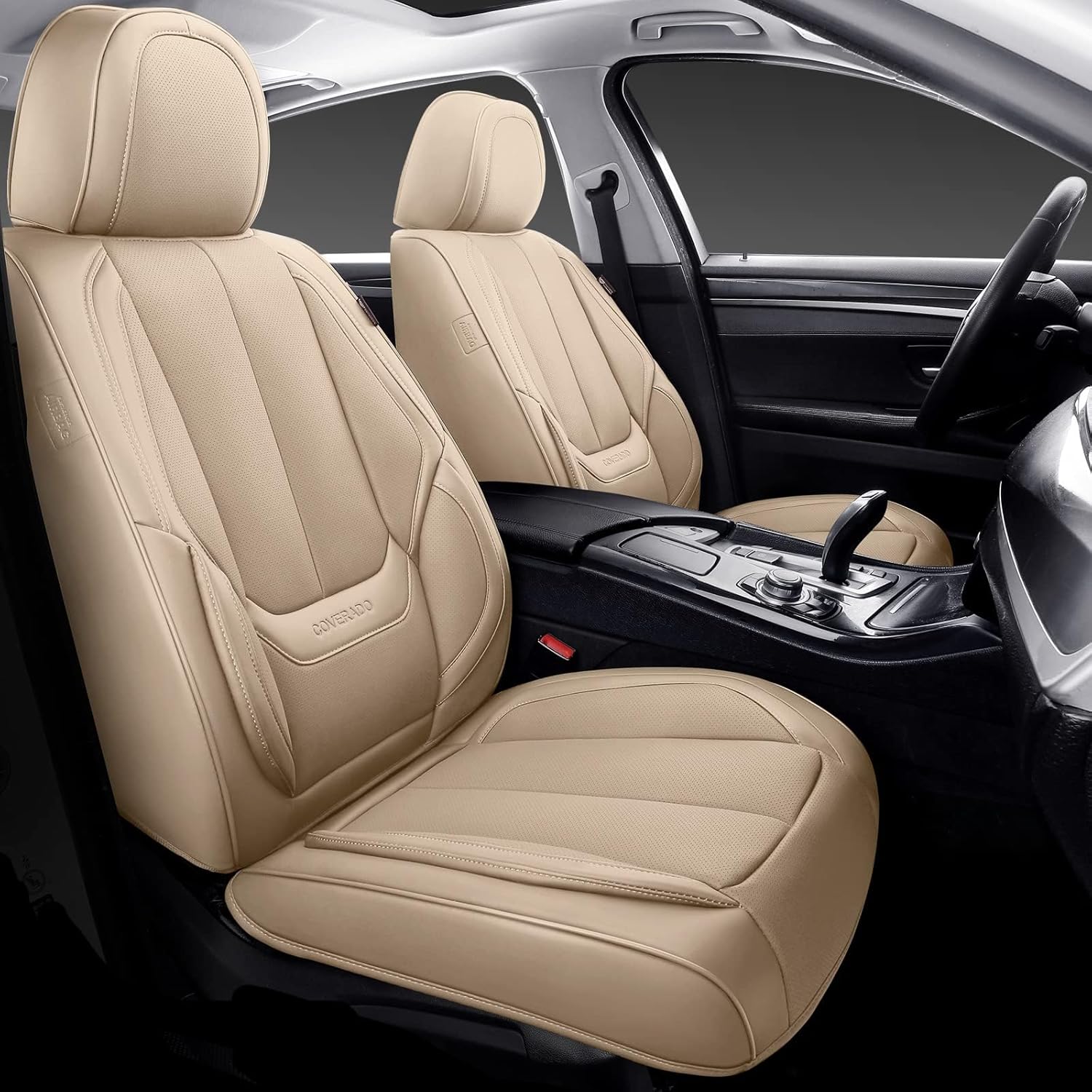
Coverado Nappa Leather Seat Covers Full Set - Beige Universal Fit
Coverado
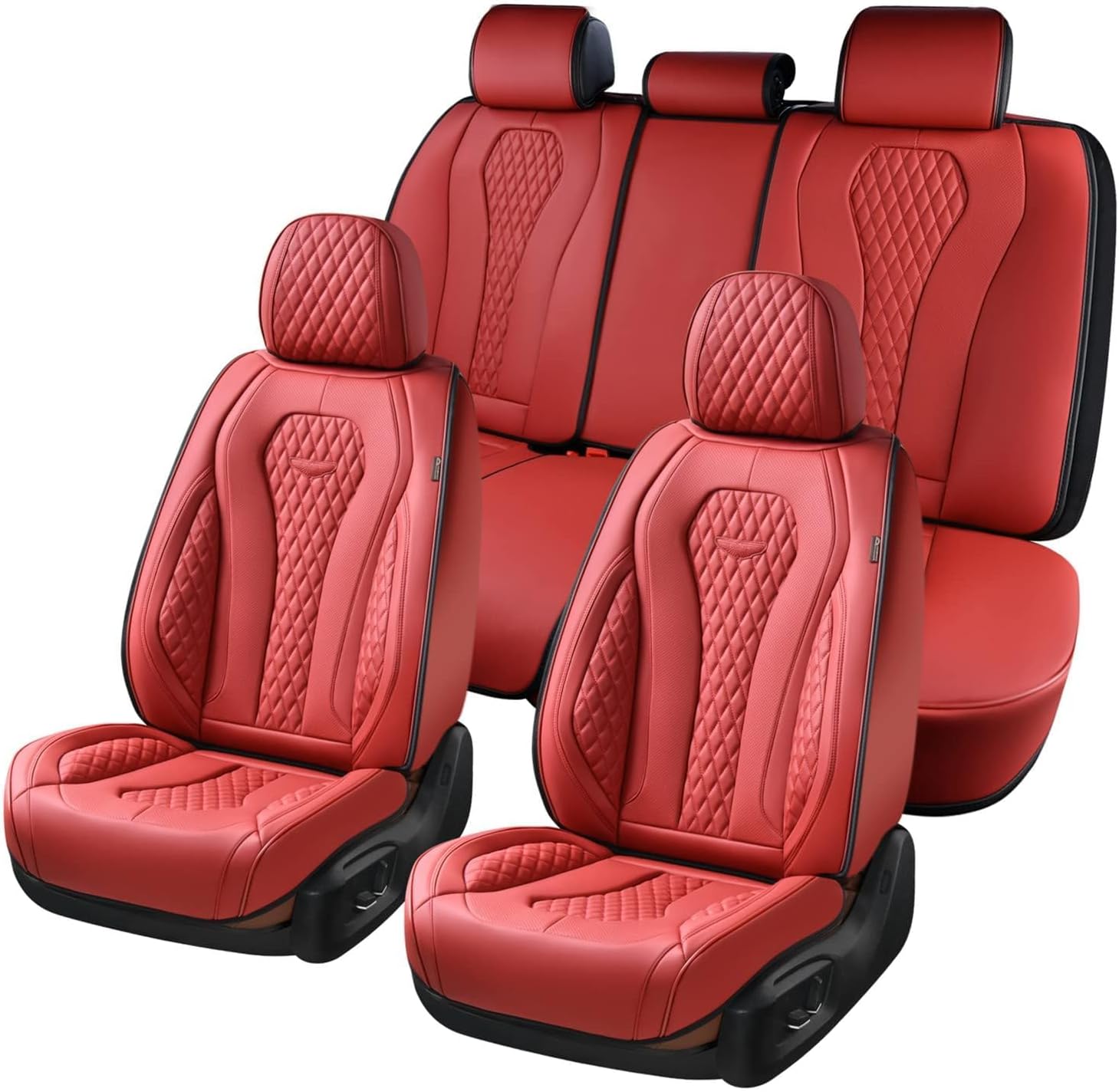
Coverado Nappa Leather Seat Covers - Red, 5 Seat Universal Full Set
Coverado
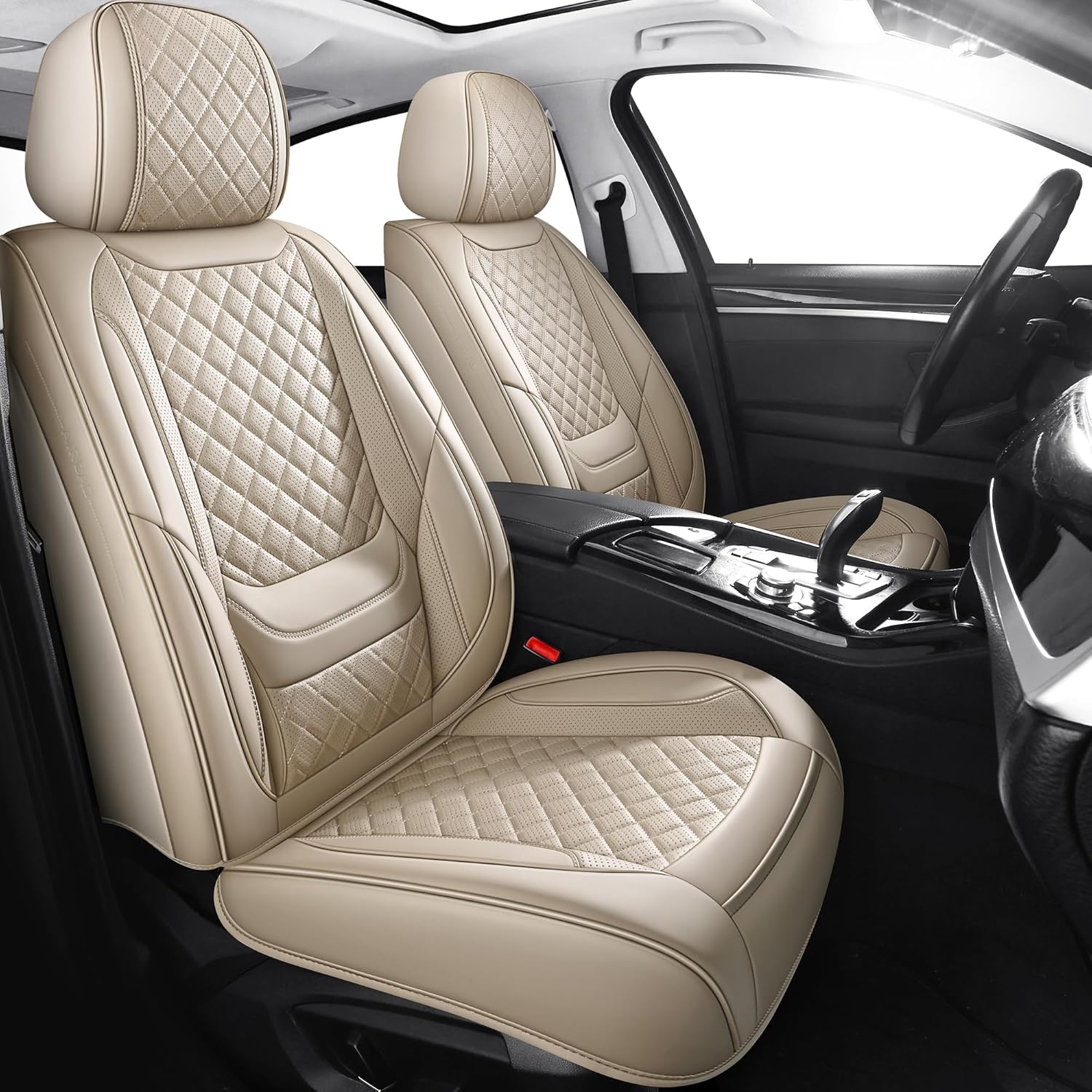
Chezope Leather Seat Covers Front Pair - Beige, Airbag Safe
Chezope
BMW owners usually end up shopping seat covers for one of three reasons. First, they just bought a clean chassis and want to keep the interior that way. Second, the interior is already showing its age, usually on the outboard driver bolster, and they want to slow the slide before they commit to a full upholstery job. Third, the car is actually used like a car - gym bag, kids, dog, jobsite, track day, ski trip, wet jacket, sunscreen, coffee, whatever - and they need protection that works with the seat shape BMW gave them. That last part matters more than people think. BMW seats are not generic rectangles. An E46 sport seat, an F30 base seat, a G20 M Sport seat, and an F15 comfort seat all wear covers differently, and if the cover fights the seat shape, it looks bad, shifts around, and can interfere with side controls or seat-mounted airbags.
I am picky about interiors because BMW cabins age in very visible ways. The mechanical side gets all the forum attention, but your left thigh getting scraped across a Dakota leather bolster every morning is what you actually see and feel. I daily a G20 330i with the B48, and even with a relatively modern cabin, I still think about wear points any time I get in with wet clothes, greasy hands after wrenching, or tools in the back seat. Last summer I helped a buddy clean up an E92 335i with the N54, and the biggest cosmetic problem was not the trim or the wheel - it was the driver seat outer bolster and the rear seat top where gear kept getting tossed. Seat covers are not glamorous, but done right they make real sense.
This page is not going to pretend every BMW needs a full universal leather-look set, and it is not going to tell you a loose Amazon slip-on is somehow "premium". I want to sort out what actually works for BMW seat geometry, M Sport bolsters, heating elements, side airbags, power seat controls, and daily use. If you are looking for bmw seat covers, especially bmw m sport seat covers, leather seat protection, or bmw waterproof covers, the details are what matter. So below I am going chassis by chassis, seat type by seat type, and material by material, with real pros, real compromises, and the fitment issues BMW owners run into all the time.
Why BMW seats need BMW-specific thinking
A lot of accessory categories can survive a universal fit mentality. Floor mats can sometimes. A trunk liner can sometimes. Seat covers are much less forgiving because BMW uses distinct seat frames, distinct foam shapes, and distinct trim layouts even within the same model line. Think about an F30 328i with base seats versus an F30 340i with M Sport package. The lower cushion width, upper backrest shape, headrest geometry, side bolster rise, thigh support arrangement, and side plastic trim are all different enough that one universal pattern may technically go on both cars but will not look or behave the same. That matters if you care about the cabin, which most BMW owners do.
On older cars like the E36, E46, E39, E60, E90, and E92, seat wear is often concentrated on the outer bolster because ingress and egress naturally drags your weight over one exact edge every single day. On newer F and G chassis, the upholstery quality and coatings changed, but the wear pattern is still similar, especially on darker Dakota or Sensatec interiors where jeans friction leaves a shiny patch before cracking or color transfer starts. BMW owners search for seat covers because they know that once the bolster skin is gone, the proper fix is upholstery work, not magic cleaner. A cover buys time, and for hard-use cars, it can preserve resale value in a very direct way.
There is also the BMW seat control problem. Many power seats have switches and trim on the outer base that universal covers love to block. If you own an F10 5 Series, G30 5 Series, F15 X5, G05 X5, or a higher-optioned 3 Series or 4 Series, you know there can be lumbar controls, side bolster controls, memory buttons in the door, and seatback release paths that need to remain accessible. A generic cover with a sloppy skirt can bunch around all of it. It is one of the reasons I usually tell people to think in layers:
- What exact seat shape do you have - base, sport, M Sport, comfort, bucket-like performance seat
- What safety hardware is built into the seat - side airbags, occupancy sensor, heating element, ventilation on some SUVs and 7 Series
- What kind of abuse are you trying to stop - sweat, rain, work dirt, dog claws, dye transfer, child seat scuffing
- Whether you want full-time installed covers or a removable protective layer
BMW seats also have a look issue. The cabin is one of the reasons people buy these cars in the first place. A bad cover can make a nice G20, G30, F32, or E92 look like a rental-spec appliance in ten minutes. If your interior is Oyster, Cognac, Coral Red, Venetian Beige, Black, Mocha, Canberra Beige, or one of the M-specific combinations, a mismatched universal cover can visually flatten the whole car. So yes, function matters, but appearance matters too, especially for owners who maintain the rest of the car properly. If you are the kind of person who knows your chassis code, checks fluid specs instead of guessing, and uses a BMW chassis lookup tool when cross-shopping parts, you should apply that same mindset here.
Seat design differences by BMW chassis
Seat covers live or die by shape compatibility, so before talking materials or brands, it helps to map out how BMW seats changed across generations. I have found that owners often search by model year or engine code, but the seat shape follows trim and chassis more than engine. An F30 320i with Sport Line seats can challenge a cover more than an F30 340i with base seats. Likewise, an E92 coupe seat has different access and shoulder shape than an E90 sedan seat, even though the cars share a lot underneath.
E-chassis patterns and common problem areas
The E36 and E46 are easy to understand because their seat shapes are visibly upright and relatively compact by modern standards. The issue on these cars is wear concentration. The M3 and sport seats, especially on E36 and E46, have pronounced outer bolsters that crack and collapse if the leather is neglected. The E39 5 Series and E60 5 Series move into broader seats with more plush base cushions and more power features, but universal covers still tend to loosen around the upper backrest and pull away around the seat bottom corners.
The E90 sedan and E92 coupe are where owners often underestimate seat variation. Base seats are flatter and more universal-cover friendly. Sport seats have a stronger shoulder taper and taller side bolsters. Coupe front seats also need easy seatback access for rear passengers, and some covers can interfere with the release mechanism or simply make folding awkward. The E70 X5 front seats are larger again, with broader backrests and often more options. A universal front pair can protect them, but rarely looks tailored.
F-chassis changes in seat width and plastics
F30, F32, F10, F15, and F80 seats added more aggressive side plastics, more integrated switch panels, and in many trims a more sculpted lower cushion. The F30 and F32 M Sport seats in particular can make universal seat covers look too tight at the lower cushion and too loose around the upper shoulder area. F10 seats are broad enough that some one-size covers stretch their seams hard across the cushion front, especially on comfort seats. F15 X5 seats have SUV-sized width and height, so any "universal full set" needs to be judged realistically. It may cover the upholstery, but it may not give you the fitted look people imagine from the product photos.
On M cars like the F80 M3, seat shape gets trickier. The bolsters are not race-bucket aggressive in the way later G80 optional seats are, but they are supportive enough that cheap covers bridge over the contours instead of following them. That leaves air gaps and movement. If you are trying to protect an F80 or F82 interior because the car sees occasional track days, I would rather use a removable waterproof or neoprene-style cover for the driver seat on event days than keep a generic fitted set on the car full time.
G-chassis seats and the M Sport fit challenge
The G20 3 Series, G30 5 Series, G05 X5, G80 M3, and G87 M2 all continue the trend toward more integrated and sculpted seats. My G20 330i with the standard sport-oriented seat shape already has enough contour that many universal covers would need careful tensioning and compromises around the side trim. Move up to G20 M Sport or G80 M3 seats and the issue becomes obvious. The shoulder wings, lower bolsters, and headrest transitions can make a generic cover wrinkle at the upper third and pull off-center at the seat base. That is why "bmw m sport seat covers" is its own search intent. Owners are not just asking for a cover that fits a BMW. They are asking for one that works with BMW's more aggressive seat architecture.
| Chassis | Typical seat styles | Universal cover difficulty | Main fitment risk | Best cover approach |
|---|---|---|---|---|
| E36 | Base, sport, Vader on M3 | Medium to high | Bolster mismatch, headrest shape | Front-seat-only protection or tailored classic-fit options |
| E46 | Base, sport, M3 sport | Medium | Outer bolster wear area, seatback contour | Driver-focused protection and careful airbag-safe fit |
| E90 | Base, sport | Medium | Side airbag seam alignment, lower plastics | Universal front pair can work on base seats |
| E92 | Base coupe, sport coupe | High | Seatback folding access, shoulder taper | Removable front covers or coupe-aware fitment |
| F30 | Base, Sport Line, M Sport | Medium to high | Power switch access, bolster contour | Universal works better on base seats than M Sport |
| F10 | Base, sport, comfort | Medium | Wide seat base, control-panel interference | Broader universal covers or front-only protection |
| F15 | Standard, sport, comfort SUV seat | High | Seat width and cushion depth | Measure carefully, often front pair is safer than full set |
| G20 | Standard, sport, M Sport | High on M Sport | Integrated contour and trim access | Well-secured universal or custom-fit only |
| G30 | Standard, sport, comfort | Medium to high | Backrest width, seat functions | Front pair for daily-driver protection |
| G80/G87 | M sport seat, optional carbon bucket on some variants | Very high | Aggressive bolsters, bucket geometry | Removable event-use covers only in most cases |
If you are not sure what exact chassis and generation you are shopping for, use a BMW chassis guide first. It sounds basic, but a lot of bad cover purchases happen because somebody searches "2016 BMW 3 Series seat covers" without confirming whether they have an F30 sedan, F31 wagon in some markets, or F34 Gran Turismo, all of which can differ enough to matter.
Materials that actually matter in daily use
Material choice is where most seat cover marketing gets goofy. You will see "luxury leather", "sport breathable", "waterproof comfort", and all the usual accessory language, but for BMW owners the right question is simpler - what are you trying to protect against, and how much compromise in fit, breathability, and seat feel can you tolerate. A seat cover is always a trade-off. The trick is making the trade-off line up with your use case instead of just buying whatever looks best in photos.
Leather-look and nappa-style synthetic covers
Most of the universal full sets that BMW owners look at online are leather-look synthetic materials. They usually aim to clean up the interior visually and add basic protection against dirt, dye transfer, and light spills. The upside is obvious. They can make a worn cabin look more uniform, they wipe down easily, and they suit owners who want their E90, F30, G20, or X5 interior to still feel somewhat upscale. The downside is that many of these materials are less breathable than cloth or OE leather perforation, and if the fit is not tight enough, the surface can shift when you slide in and out.
As examples, I can see the appeal of a full set like the Coverado Nappa Leather Seat Covers - Red, 5 Seat Universal Full Set or the FLORICH Nappa Leather Seat Covers - 5 Seat Universal Full Set for someone with an older E60, E90, or F10 that needs a visual refresh along with protection. They are not custom BMW upholstery, obviously, but they make more sense than cheap fabric slip-ons if your priority is a cleaner look and straightforward wipe-down care.
For lighter interiors, the Coverado Nappa Leather Seat Covers Full Set - Beige Universal Fit can work as a protective layer if the car spends time with kids or passengers who are hard on seats. Beige-on-beige is still risky if you are obsessive about color match, but on a beige, Venetian Beige, or Canberra-adjacent interior the visual penalty may be acceptable. I would still be realistic with M Sport seats though. A leather-look universal cover can look decent on a flatter F30 base seat and noticeably less convincing on a sculpted G20 M Sport seat.
Neoprene and waterproof use cases
When people search bmw waterproof covers, they usually mean one of two things. They either want an everyday installed cover that resists spills, or they want a temporary barrier for gym, beach, dog, or work use. In my opinion, neoprene-style and truly waterproof covers make the most sense as temporary or task-based protection. If you get in sweaty after training, if you mountain bike, if you surf, if you work construction, or if your dog is on the front passenger seat more than you would like to admit, a waterproof layer is hard to beat. But it often comes at the cost of a thicker, less OE-like feel.
BMW heated seats also complicate the waterproof conversation. Heat can still come through many thinner covers, but thick waterproof materials can blunt the sensation and change how evenly the seat feels. That is not dangerous by itself if the cover is meant for heated-seat use, but it is one more reason I do not blindly recommend heavily insulated covers to every owner. If your G20, G30, F15, or F10 has heated seats and you actually use them in winter, choose a cover that explicitly supports heated-seat compatibility and keep expectations realistic.
Cordura-style work protection
If the car is used for actual dirty work, Cordura-style heavy-duty fabric makes more sense than trying to keep everything pretty with leather-look covers. This is especially true on X models like E70, F15, G05 or on touring and wagon variants where the car is carrying gear. Heavy-duty fabric is usually less elegant but more honest about the job. It resists abrasion from tools, rough clothing, dog gear, and repeated loading much better than soft faux leather. The trade-off is cabin appearance. In an enthusiast daily, many people will accept that on a winter beater or dog-hauler but not on a clean M Sport sedan.
There is also the cleaning side. Leather-look covers are easier to wipe. Heavy-duty woven materials may hold dust and grit more stubbornly. If you are the kind of owner who already keeps a proper maintenance spreadsheet and checks service intervals against guides like BMW coolant flush specs and intervals or fluid capacity tools like BMW oil capacity, you know preventive maintenance is easier than restoration. The same idea applies to interiors. Pick the material that makes your actual cleanup routine easy enough that you will keep doing it.
| Material type | Best use case | Breathability | Water resistance | How it handles BMW bolsters | Typical downside |
|---|---|---|---|---|---|
| Leather-look synthetic | Daily protection, visual refresh | Medium to low | Medium | Can bridge over aggressive bolsters if loose | Can get warm and may shift if not tensioned well |
| Neoprene-style | Gym, beach, wet clothes, dog use | Low to medium | High | Thicker material can smooth over contours | Bulky feel, less OE look |
| Cordura/heavy-duty fabric | Work, tools, abrasion resistance | Medium | Medium | Usually stays put well if strapped correctly | Industrial look, can trap dirt |
| Velour/soft fabric | Comfort and mild everyday use | High | Low | Can drape better on older flatter seats | Poor spill resistance |
Universal versus custom-fit on BMWs
This is the argument most BMW owners are really having with themselves. Do you spend more for something truly fitted, or do you accept the compromises of a universal set because you mainly want basic protection? The honest answer is that both can make sense. What does not make sense is pretending they are equivalent. They are not. A custom-fit cover is trying to follow the seat shape. A universal cover is trying to be adjustable enough to kind of work across dozens of shapes.
If you have a relatively simple seat layout, a universal set can be acceptable. Older E90 base seats, some E60 base seats, some flatter F10 seats, and broad rear benches often tolerate universal covers better than internet lore suggests. If your car has more aggressive seat forms, universal covers become harder to recommend as a permanent installed solution. My cutoff gets pretty strict on M Sport and M-derived seats. F30 M Sport, F32 M Sport, G20 M Sport, G30 sport seats, F80, G80, and especially G87 all punish generic patterns. They may fit, but "fit" and "fit well" are miles apart.
Where universal covers still win is flexibility and cost. A front pair like the Chezope Leather Seat Covers Front Pair - Beige, Airbag Safe can be a smart move if your real problem is front-seat wear, not a full interior re-trim. Most BMWs show the worst wear on the front seats, especially the driver side. If you can protect just those surfaces while leaving the rear cabin alone, that is often enough. It also means less complexity around split-folding rear seats, armrest pass-throughs, and child-seat anchors.
Custom-fit solutions, when available, are better for preserving the BMW seat design and for dealing with M Sport contours. They also tend to be friendlier with power-seat switch access and airbag seam placement because they were designed around a specific seat family. But price matters. A lot of owners with E90, E92, F30, or F10 cars are trying to protect a daily, not restore a concours car. If a $70 to $170 universal setup prevents the original upholstery from getting worse, that can be completely rational. Just go in with the right expectations.
When universal makes sense
- You mainly need spill and dirt protection
- Your seats are base or lightly bolstered
- You want a temporary or seasonal setup
- You are protecting a work car, dog car, or kid-hauler
- You are okay with some wrinkles or non-OE appearance
When custom-fit is worth chasing
- You have M Sport or performance seats
- You care strongly about cabin appearance
- You need precise access to side controls and seatback mechanisms
- You use heated seats often and want better material integration
- You want the cover to live on the car long term
I would put it this way. On an E46 ZHP, E92 335i sport package, F30 M Sport, G20 M Sport, F80 M3, or G80 M3, custom-fit is the only route that gives the kind of result an enthusiast is likely to tolerate. On an E60 528i, F10 528i, E70 X5 family hauler, or a base-seat 320i, universal can absolutely do the job if the product is airbag-safe, the installation is done carefully, and you are honest about the look you are after.
BMW M Sport seat covers and aggressive bolsters
This is where a lot of seat-cover advice falls apart. BMW M Sport seats are not racing buckets, but they are shaped enough that cover fitment becomes a technical issue rather than just an aesthetic one. The lower cushion side bolsters are taller. The backrest often pinches inward more dramatically near the waist and then broadens at the shoulders. Some seats have extendable thigh support, pronounced integrated headrests, or trim transitions that leave less room for a cover to wrap around cleanly. If you own an M Sport car and care how it looks, you already know exactly what I mean.
Take the F30 and F32 M Sport seats. Compared with base seats, the bottom cushion has more rise at the edges, and the backrest shape is noticeably more sculpted. A universal cover often ends up too tight across the lower edges and too loose in the center back. It can also make the thigh support operation clumsy depending on how the lower skirt is attached. The same problem appears on the G20. My own G20 seat shape is one of the reasons I would be very selective with permanent seat covers. A badly tensioned cover would immediately look out of place because the stock seat lines are sharp and modern.
On M cars, the problem gets more obvious. The F80/F82 seats already have enough contour to make universal patterns look generic. The G80 and G87 take that even further depending on seat spec. Once you are near bucket territory, seat covers stop being a "full set" category and become a "specific task" category. I would use a removable driver-seat protector for sweaty post-gym use or for a commute in dirty clothes. I would not try to fake a tailored upholstery look with a universal leather-look set on a carbon bucket style seat. It will not fool anyone, and it may annoy you every time you get in the car.
Where M Sport fit goes wrong
The first failure point is the lower cushion corners. A universal cover wants to pull straight across. The M Sport seat wants material to curve and then tuck around a raised edge. If the material is stiff, it tents. If it is soft, it wrinkles. The second failure point is the shoulder area. Many BMW sport seats flare or taper in ways universal patterns cannot really follow, especially once the headrest opening and upper backrest are integrated into the seat shape. The third is side trim. Power controls, memory interfaces, and plastic side panels can cause a cover skirt to bunch or ride upward over time.
What I would do by chassis
For E46 sport or M3 seats, I would focus on preserving what is there and avoid anything that rubs the leather more than necessary. If I needed protection, I would prioritize a front-only solution and inspect how the cover contacts the outer bolster. For E90/E92 sport seats, especially coupes, I would use front-seat-only airbag-safe covers if the car is a daily and the owner wants function first. For F30/F32 M Sport, I would only use a universal cover if the owner accepts cosmetic compromise. For G20 and G30 M Sport, same story, but I would be even stricter because the interior design is cleaner and poor fit stands out more.
If your search term is specifically bmw m sport seat covers, my advice is simple. Treat "universal" as damage control, not perfection. Use it where the protection benefit is greater than the fitment penalty. If preserving a black Dakota interior in a daily F30 340i M Sport matters more than perfect visuals, then yes, a universal front pair or full set can still make sense. If the car is your pride-and-joy G80 or a very clean F32 with Oyster interior, hold out for something truly shaped to the seat or use removable protection only when needed.
| Seat type | Bolster height tendency | Universal cover success rate | Visual result | Recommended strategy |
|---|---|---|---|---|
| BMW base seat | Low to medium | Good | Usually acceptable | Universal full set or front pair |
| BMW sport seat | Medium | Moderate | Can look decent if installed carefully | Better materials and strong anchoring |
| BMW M Sport seat | Medium to high | Fair to poor | Wrinkles and contour mismatch common | Custom-fit preferred, universal only with realistic expectations |
| BMW M performance seat | High | Poor | Rarely looks right | Temporary protective cover only |
| BMW carbon bucket style seat | Very high and integrated | Very poor | Not suitable for standard universal cover sets | Task-specific removable protection only |
Airbags, heaters, occupancy sensors, and safety concerns
This section matters more than color and style. BMW front seats in modern cars often contain side airbags, seat occupancy sensors, heating elements, and on some models ventilation hardware. A seat cover has to coexist with all of that. If it does not, at best you get a poor fit and reduced comfort. At worst you create a safety or fault-code issue. This is why "airbag compatible" is not just marketing language to ignore. On BMWs, the side airbag deployment path is built into the seat design, so the side panel of the cover matters.
An airbag-safe cover uses seam construction or side-panel design intended to allow the airbag to deploy properly. That is non-negotiable for me on any E90, E92, F30, F10, F15, G20, G30, G05, or newer BMW that has side airbags in the seat. A product like the Chezope Leather Seat Covers Front Pair - Beige, Airbag Safe at least speaks to the right concern. I still want careful installation and I still do not want the side seam twisted around the seat, but I would never use a cover that ignores airbag compatibility entirely.
Occupancy sensors are another BMW-specific headache because many cars will throw restraint system warnings if the seat wiring or sensor mat is disturbed. Seat covers do not normally damage these systems by themselves, but rough installation can. If you are jamming straps under a powered seat, fishing hooks around wiring, or pressing hard into the cushion seams, you can create problems that then look like an electrical fault. On E90/E92 cars especially, occupant sensor issues are already familiar territory. Be careful around the seat base and wiring harnesses.
Heated seat compatibility
Heated seats generally still work through many covers, but the heat transfer changes with material thickness and density. Thin leather-look covers usually let enough warmth through for normal use, though the heat may feel slightly muted and slower to come on. Thick neoprene or multi-layer waterproof covers can noticeably reduce how direct the heat feels. That is not necessarily a deal-breaker, but if you live somewhere cold and rely on heated seats daily, choose accordingly. BMW heating elements in cars like the F30, G20, F10, or G30 are not all equally aggressive to begin with, so a thick cover can take a just-okay heater and make it feel weak.
Seat ventilation and perforation
If your BMW has ventilated seats, which you will see more often on larger models like the 5 Series, 7 Series, X5, and X7, most standard seat covers are a compromise. Covering perforated leather and fan channels with a solid cover naturally reduces airflow. That is not a BMW-only issue, but BMW comfort seats are expensive and the ventilation is part of what you paid for. In that case, I strongly lean away from permanent full-time covers unless the protection need is serious.
Power controls and memory-seat access
BMW power seat controls are often clustered on the side base and can include width adjustment, thigh support, lumbar, and backrest tilt. Any cover that hangs low or wraps too tightly over the side shell can make these controls annoying to use. I have seen this most often on F10 and SUV seats where the side plastics are fairly broad. Before you tighten everything down, sit in the seat, cycle all controls, and make sure nothing is pulling against the switch panel. If you are also doing battery work, coding, or fault checks while sorting interior electronics, a good diagnostic setup helps. Bimmer owners already know the value of proper tools, and if you do your own work, a page on BMW coding and diagnostic tools is worth having in your bookmarks.
Bottom line - if the cover is not airbag-safe, skip it. If it blocks controls, rethink the installation or pick another cover. If it is too thick for your heated or ventilated seat needs, that is a real quality-of-life issue, not nitpicking. BMW interiors are not simple bench seats, and accessories have to respect that.
Installation on power seats and split rear benches
Most complaints about seat covers being junk are actually half product issue and half installation issue. A universal cover that is installed carefully can be acceptable. A decent cover installed lazily will look horrible in a day. BMW seats make this more obvious because the cabins are tidy and the seat contours are visible. If a cover is twisted, untensioned, or bunched around the switch panel, you will notice it every time you drive.
The first rule is to vacuum and clean the seat before installation. Dirt trapped underneath acts like sandpaper. That matters especially on leather or coated synthetic BMW upholstery where movement under the cover can still create wear over time. I always clean the seat, the seat rails, and the side plastics first. If the seat already has cracked leather, put a soft barrier cloth over the damaged area if needed so the cover backing is not grinding directly against rough edges. The point is to protect, not create a new friction pattern.
Second, move power seats through their travel before and after fitting. Slide the seat forward and back, tilt it if possible, and check where straps will sit relative to seat motors, rails, wiring, and trim. On F30, G20, F10, F15, and G30 cars, there is enough hardware under the seat that blindly routing hooks can create rattles or interfere with movement. I prefer straps and anchors that stay away from electrical connectors. Take your time. The ten extra minutes are worth it.
Front seat installation tips
- Align the backrest cover first so the side airbag seam sits where it should
- Check headrest fit before tightening the cushion section
- Keep material clear of seat controls and memory-related trim
- Do not over-tension one side to fix a wrinkle on the other side
- After installation, cycle seat travel fully and sit in it for a few minutes before final adjustments
One thing I have learned on BMWs with stronger bolsters is that symmetry matters. If you pull the cover harder on the outboard side to flatten the visible bolster, you may shift the center seam off-axis. Then the whole seat looks crooked. Better to accept a slight contour mismatch than force the cover into a weird diagonal tension pattern. This is especially true on E92 sport seats and G20 seats with tighter contour lines.
Rear bench complications on BMW sedans and SUVs
Rear seats are usually easier, but BMWs can still complicate things with fold-down sections, center armrests, ski pass-throughs, latch access, ISOFIX points, and split bench ratios. E90, F30, G20, F10, and G30 rear benches can all vary depending on trim and options. SUVs like E70, F15, and G05 add seat angle and bench thickness differences. A universal rear cover may protect the surfaces but limit some functions unless it has thoughtful cutouts or separate sections.
If you often fold the rear seats, carry skis, or use child seats, I would honestly question whether a full universal rear cover is worth the hassle. Sometimes a simpler rear-seat protector or selective protection under a child seat is better than wrapping the whole bench and fighting access all year. Seat covers should make the car easier to live with, not turn every trunk-loading task into a wrestling match.
How long should installation take
For a front pair on a BMW with power seats, expect 30 to 60 minutes if you are being careful. A full set can take 90 minutes or more, especially if you are dialing in the rear bench. Anyone claiming a universal full set snaps on in ten minutes and looks tailored is selling fantasy. On an older E90 or E60 with simpler seats, it can go quicker. On a G20, F15, or G30 with more hardware and tighter trim integration, I would budget more time.
Best use cases for seat covers on real BMWs
Not every BMW owner wants the same thing from a seat cover, and this is where the buying decision gets easier if you are honest about the car. A clean weekend E46 M3 on original Cinnamon leather is not the same use case as an F15 X5 that does school runs and hardware-store trips. A G20 330i commuter with one driver is not the same as an E70 that carries two kids, a dog, and muddy sports gear. So instead of asking "what is the best seat cover," ask what problem you are solving.
Daily commuter protection
This is probably the most common case. The owner wants to preserve the front seats from everyday wear, body oils, sunscreen, coffee splashes, and jeans dye transfer. For that, leather-look front covers or a neat universal full set can make sense. I would rather use something like the FLORICH Nappa Leather Seat Covers - 5 Seat Universal Full Set in a commuter E90, F30, or F10 than let decent original upholstery take pointless abuse. If the car has a light interior, the protection benefit is even bigger because dye transfer and grime show up fast.
On my own G20, if I were doing a long period of heavy commuting in dirty clothes, I would still lean toward a front-only solution or a removable driver-seat protector rather than a permanent full set, because I like the stock seat feel and fit. But on an older daily where originality is less important than preserving what is left, a universal front pair or full set is easy to defend.
Gym, beach, dog, and wet-weather use
This is where bmw waterproof covers earn their keep. If you regularly get into the car sweaty, wet, or sandy, a waterproof layer saves your upholstery from a lot of repeated contamination. Saltwater, sunscreen, wet clothing, dog paws, and muddy gear all age leather and synthetic trim faster than people admit. In that use case, absolute visual perfection matters less. You are using the cover as a sacrificial barrier. Put it on when needed or accept a more utility-focused look full time.
For dog owners especially, think beyond the seat surface. Claws catch side bolsters, and excited dogs tend to push off the outer seat edge, which is exactly where BMW leather often wears first. If your dog rides up front, front-pair protection makes a lot of sense. If your dog lives in the rear, you may be better served by a dedicated rear pet cover rather than a generic full rear seat set. But if a universal full set is what you have, at least you are protecting the bolsters from abrasion and dirt.
Work-car and shop-use scenarios
If you wrench professionally, do construction, landscaping, or anything that puts grit, metal dust, fasteners, sealant, and rough fabric into the cabin, interior preservation gets practical fast. BMWs with black interiors hide abuse longer, but they are still not immune. A work-driven E70 or F15 X5, an E60, or a base-seat F30 can benefit a lot from heavier-duty covers. In this scenario, I care much less about visual integration and more about a cover staying put, cleaning easily, and not interfering with controls.
Family and child-seat protection
Rear seat damage from child seats is real. Compression marks, edge indentations, snack debris, spilled drinks, and dirty shoes all take a toll. On G20, F30, F10, G30, and X5 rear benches, a full rear cover can help, but it can also complicate ISOFIX access and split-fold use. Sometimes the smarter move is protecting the exact child-seat contact area rather than wrapping the entire bench. If you do use a full rear cover, keep an eye on how the child seat sits and whether the cover shifts underneath it over time.
There is a similar logic with front seats if you have young kids. The front passenger seatback gets kicked, and the seat bottom gets climbed on. That is where a straightforward, wipe-clean leather-look option can be worth it even if the fit is only 80 percent ideal. Better that than permanent shoe marks on Oyster leather.
Product styles that make sense in the BimmerTalk catalog
I am not going to pretend there is one magic product that solves every BMW seat issue, but there are a few catalog styles here that fit distinct use cases. The important thing is pairing the product type to the BMW and the owner. I would rather recommend the right imperfect solution than oversell the wrong one.
If you want a full-cabin visual refresh on an older BMW with relatively forgiving seat shapes, the Coverado Nappa Leather Seat Covers - Red, 5 Seat Universal Full Set stands out for owners who want a stronger visual statement. I would see that as more of a styling decision for something like an E60, E90, or older F10 where the rest of the interior is already being updated and the owner wants the seat cover to be part of that. I would be cautious using a bright universal set in a newer G chassis unless the car is already heavily personalized.
For a safer, more neutral full-set route, the FLORICH Nappa Leather Seat Covers - 5 Seat Universal Full Set is easier to imagine in a wider range of BMWs. Black or darker neutrals tend to hide fitment compromises better, and on a black interior E90, F30, or F10 they usually look more coherent than louder colors. If the goal is leather seat protection without drawing too much attention to the cover itself, that is generally the direction I would go.
On lighter interiors or for owners trying to keep a beige cabin from getting destroyed, the Coverado Nappa Leather Seat Covers Full Set - Beige Universal Fit has a very obvious use case. Beige BMW interiors look great when clean and tired when not. If you have an E70, F15, E60, or F10 with a family-duty beige interior, a light-color full set may be more practical than constantly deep-cleaning the stock upholstery. Color matching will never be exact, so again, this is about protection and presentation, not fooling anyone into thinking it is OEM.
If your main concern is front-seat wear and you want to keep the expense down while respecting safety, the Chezope Leather Seat Covers Front Pair - Beige, Airbag Safe is the kind of product I think many BMW owners should consider first. Front seats take the real beating. On E90, E92, F30, F10, G20, and G30 cars, protecting just the fronts often gets you 80 percent of the benefit with less rear-seat complexity. It is also easier to remove or replace later if you decide to change strategy.
| Product | Type | Best BMW use case | Main advantage | Main limitation on BMWs |
|---|---|---|---|---|
| Coverado Nappa Leather Seat Covers - Red, 5 Seat Universal Full Set | Universal full set | Older sedans needing protection plus a styling change | Full-cabin coverage, wipe-clean surface | Color and fit can look less natural on modern M Sport interiors |
| FLORICH Nappa Leather Seat Covers - 5 Seat Universal Full Set | Universal full set | E90, E60, F10, flatter-seat daily drivers | Balanced look and broad utility | Still a universal pattern, not ideal for aggressive bolsters |
| Coverado Nappa Leather Seat Covers Full Set - Beige Universal Fit | Universal full set | Light-interior family cars and SUVs | Helpful on beige cabins that stain easily | Exact BMW beige tone match is unlikely |
| Chezope Leather Seat Covers Front Pair - Beige, Airbag Safe | Front pair | Driver-focused wear protection on most BMWs | Targets the seats that wear fastest and notes airbag safety | Does not solve rear-seat protection or full-cabin visual consistency |
Notice what I am not doing here. I am not claiming any of these become a factory M Performance interior. They are accessories. Good accessories solve a problem cleanly. Bad accessories create a new one. If you go in with that mindset, it is easier to pick the right product.
How seat covers compare with repairing or reconditioning the factory seat
Sometimes a cover is the right answer. Sometimes it is a bandage over a problem that really wants upholstery repair. BMW owners should be honest about which situation they are in. If the driver bolster on an E46, E90, E92, F30, or F10 is just showing wear and dye loss, a cover can preserve what remains and delay bigger expense. If the leather is cracked through, the foam is collapsing, or the seam is split, then a cover may hide the issue but not actually improve the seat long term.
I have seen owners spend money twice by covering up a seat that was already too far gone. The cover rubs, the foam continues to deform, the leather underneath gets worse, and eventually the seat still needs a proper rebuild. On enthusiast cars with real value, especially E46 M3, clean E39s, lower-mile E92s, F80s, or nice G chassis cars, I usually prefer repair plus careful protection over long-term concealment. If the interior is part of the car's appeal, restoring the seat correctly pays back every time you open the door.
That said, there is a very sensible middle ground. Repair the major damage, then use a cover strategically. For example, fix the bolster foam and leather on an E92 335i or F30 340i driver's seat, then use a removable or front-only cover during the dirtiest months or for work commutes. That approach gives you a proper seat underneath and practical protection when you actually need it. It is the same philosophy many of us use elsewhere on BMWs - do the mechanical job correctly, then manage wear proactively. You would not skip a service item and just keep topping off random fluid. If you are checking real procedures for things like BMW automatic transmission fluid or using a BMW battery replacement guide instead of winging it, the same logic applies to the interior.
When I would repair instead of cover
- Collector or enthusiast value matters
- The seat has split seams or collapsed foam
- The car has a special OEM leather color worth preserving
- The seat shape is too aggressive for any universal cover to look decent
- You care strongly about original feel and appearance
When I would cover instead of repair immediately
- The seat is fundamentally sound but wearing fast
- The car is a daily driver or family car
- You want seasonal protection
- The interior is already average and you are not chasing originality
- The budget makes upholstery repair hard to justify right now
One more thing BMW people appreciate - seat covers can help stop secondary damage. Once the driver's seat is worn, people tend to slide more awkwardly, catch belt buckles on trim, and lean harder on adjacent panels. Small interior wear starts to snowball. A protective cover that stabilizes day-to-day use can keep the rest of the cabin from following the same path.
Buying advice by BMW model family
It helps to get brutally specific. If you came here because you want bmw seat covers for a particular chassis, broad theory only goes so far. So here is how I would think about it by family, based on how these cars are actually used and how their seats tend to behave.
3 Series and 4 Series
E36 and E46 - Great candidates for strategic protection, but be careful with visual mismatch. These cars have enough enthusiast value now that a cheap full set can cheapen the cabin quickly. If the goal is to preserve the front seats from further wear, front-only protection usually makes more sense than wrapping the whole cabin. Sport and M3 seats need more thought because of the bolster shapes.
E90 and E92 - Among the most common BMWs to need seat covers because they are still affordable dailies and the interiors are now old enough to show real wear. Base seats take universal covers reasonably well. Sport seats can still work with a careful front-pair install. Coupes need extra care around seatback movement. If you have an E92 with rear passengers often, make sure the cover does not turn seat entry into a pain.
F30 and F32 - Very use-case dependent. Base-seat cars can handle universal covers decently. Sport Line and M Sport cars expose the limits of universal fit. If you have black upholstery and mainly want protection, a subtle universal cover can be fine. If you have Oyster, Coral Red, or a clean M Sport interior, I would be pickier. Front-only airbag-safe protection is often the sweet spot here.
G20 and G22 - Newer interiors, tighter lines, harsher judgment from owners. These cars do not forgive sloppy accessories. On standard seats, a careful front-pair install may be acceptable. On M Sport seats, I would treat universal covers as temporary protection, not a styling solution. Since these are newer cars, many owners are just trying to preserve from new, which makes removable protection very attractive.
5 Series
E39 and E60 - Broad seats, often power-adjusted, and usually used as comfort-oriented dailies now. Universal full sets can make sense here, especially if the car is a commuter or family car rather than a showpiece. Just check side-control access and armrest cutouts. E39 enthusiasts may still prefer to preserve original leather if the car is especially clean.
F10 and G30 - More complex side trim and wider seat forms than many owners expect. Front-only covers often make more sense than full sets, especially if rear-seat use is limited. On comfort seats or ventilated options, be careful because not every cover respects those features. If the car has a premium interior spec, a poor cover fit will stand out.
X models
E70 X5 - A very practical seat-cover chassis because these are often family and utility vehicles now. Front seats are broad, rear seats see heavy use, and lighter interiors get hammered. A universal full set can be a rational choice if the owner values protection over perfect tailoring.
F15 and G05 X5 - Similar logic, but seat size and option complexity go up. Broad cushions, comfort-seat functions, and upscale interiors mean fitment matters more. For people using the X5 hard, waterproof and wipe-clean properties are genuinely valuable. For people trying to preserve a luxury spec interior, I would be more selective and maybe protect the high-contact areas rather than cover every seat full time.
M cars
E46 M3, F80 M3, G80 M3, G87 M2 - My advice is conservative. If the car is special to you, do not suffocate the cabin with a generic full set. Use seat covers only when there is a clear need, and favor removable, event-based, or driver-only protection. These seats are too much a part of the car's identity to hide permanently under ill-fitting universal upholstery. If you own one of these and are still shopping covers, you probably already know you are balancing preservation against aesthetics. I would keep aesthetics winning most of the time.
Care, maintenance, and keeping covers from damaging the original seats
A seat cover can protect the original upholstery, but if you ignore it for months, it can also trap moisture, dirt, and grit. That is why maintenance matters. I do not mean detailing-for-Instagram maintenance. I mean practical checks that stop a cover from becoming an abrasive layer. If you use the car heavily, pull the covers periodically, vacuum both sides, wipe down the original seat, and check for movement points. That is especially important on leather seats where micro-abrasion on the outer bolster can still happen under a cover that shifts every day.
Moisture is a bigger issue than many people realize. Wet jackets, gym clothes, snow melt, and humidity can sit under a cover longer than they would on an exposed seat surface. On older BMWs with aging leather, that is not ideal. If you use waterproof covers regularly, remove and air them out. If you use leather-look covers full time, inspect underneath every so often. It is basic preventive care, like checking underbody plastic clips before they become a highway noise, or verifying cooling-system condition on an N52 or B48 before you are stranded. Little checks prevent bigger headaches.
Simple maintenance schedule I would follow
- Weekly - wipe visible dirt and spills from the cover surface
- Monthly - check strap tension and side-seam position, especially around airbags
- Every 2 to 3 months - remove front covers, vacuum underneath, inspect bolster wear
- Seasonally - deep clean or replace if the cover has stretched, cracked, or started rubbing badly
If the original seat is leather, keep conditioning and cleaning it according to the leather type and condition, even if it is covered most of the time. A neglected seat under a cover does not magically stay healthy. The cover reduces wear exposure, but the underlying material still ages. On BMWs with Sensatec or similar synthetic upholstery, conditioning is less relevant, but cleanliness still matters because trapped grit can dull and abrade the surface.
One thing I would avoid is stacking too many layers. Some owners put towels under covers or extra padding under universal kits to fix fitment issues. Usually that just makes the cover move more and shifts seams where they should not be. If a cover needs that much help to fit, it is the wrong cover for the seat. Better to use a cleaner, simpler setup and accept the limits.
Finally, if the car starts throwing seat-related warnings after installation, do not ignore it. Check wiring under the seat, make sure nothing got snagged, and if necessary scan the car. BMWs are sensitive enough electrically that sloppy under-seat work can create faults unrelated to the cover material itself. Again, proper diagnostics save guessing.
FAQ
Are universal bmw seat covers worth buying for an F30 or G20
For an F30 with base seats, yes, universal covers can be worth it if you mainly want protection. For an F30 M Sport or most G20 M Sport seats, they are more of a compromise. They can still protect the seat, but do not expect a custom look. I would be more comfortable recommending a front-only airbag-safe setup on those cars than a full universal set if appearance matters.
Do seat covers work with BMW side airbags
They can, but only if the cover is explicitly airbag-compatible and installed correctly so the seam sits where it should. I would not use non-airbag-safe covers on any modern BMW with seat-mounted side airbags. Safety comes first here.
Can I use bmw m sport seat covers on aggressive bolstered seats
You can use covers on M Sport seats, but the more aggressive the bolsters, the more important custom-fit becomes. Universal covers tend to wrinkle at the lower cushion and shoulder area. They are fine for protection if you accept the compromise, but not ideal if you want an OEM-like look.
Will seat covers block BMW heated seats
Most thinner covers still allow heated seats to work, but heat transfer can feel weaker or slower. Thick waterproof or heavily padded covers reduce the effect more noticeably. If heated-seat performance matters to you, choose a cover that specifically supports heated-seat use and avoid overly thick materials.
What is the best material for leather seat protection in a BMW daily driver
For most daily drivers, a good leather-look synthetic is the easiest balance of appearance, wipe-down cleaning, and day-to-day protection. If your real problem is sweat, rain, dog use, or beach gear, waterproof material may be better. If you carry tools or abrasive work clothing, heavy-duty fabric makes more sense than faux leather.
Are bmw waterproof covers a good idea for gym or beach use
Yes, that is one of the best reasons to use them. If you regularly get in the car sweaty or wet, a waterproof cover can save the original upholstery from repeated abuse. I especially like them as removable, task-specific protection rather than a permanent full-time solution on nicer BMW interiors.
Should I buy a full 5-seat set or just front seat covers for my BMW
Most wear happens on the front seats, especially the driver seat outer bolster. If your rear seats are in good shape and you mainly want to stop daily wear, a front pair is often the smarter buy. Full sets make more sense for family cars, SUVs, rideshare use, or if you want full-cabin visual consistency.
Do seat covers interfere with BMW power seat controls
They can if the side skirt is bulky or badly positioned. This is common on wider seats in F10, G30, F15, and G05 models. After installation, always test every seat control and make sure the cover is not bunching around the switch panel.
Are seat covers a good fix for cracked BMW leather
They can hide cracked leather and slow further wear, but they are not a real repair. If the leather is split or the foam underneath is collapsing, upholstery repair is the proper fix. A cover is best when the seat is still structurally sound and you are trying to preserve it.
Which BMW chassis are easiest to fit with universal seat covers
Flatter base-seat cars are easiest. Think E90 base seats, some E60 and E39 setups, and some non-sport F10 seats. The hardest are newer M Sport and M-car seats like F30 M Sport, G20 M Sport, F80, G80, and G87, where the bolsters and integrated shapes expose the limits of universal patterns quickly.
How often should I remove seat covers and clean underneath
If the car is used daily, I would check underneath every 2 to 3 months, more often if you deal with sweat, sand, dog hair, or work grime. Dirt trapped under a shifting cover can still abrade the original seat, so periodic cleaning matters.
What is the safest budget option if I only care about front seat wear
A front pair that is explicitly airbag-safe is the best budget play. That is why something like the Chezope front pair makes sense in a lot of BMWs. It targets the seats that wear fastest, keeps cost down, and avoids the added complexity of a full rear installation.
Seat Covers guides
Expert picks and how-tos for BMW seat covers.

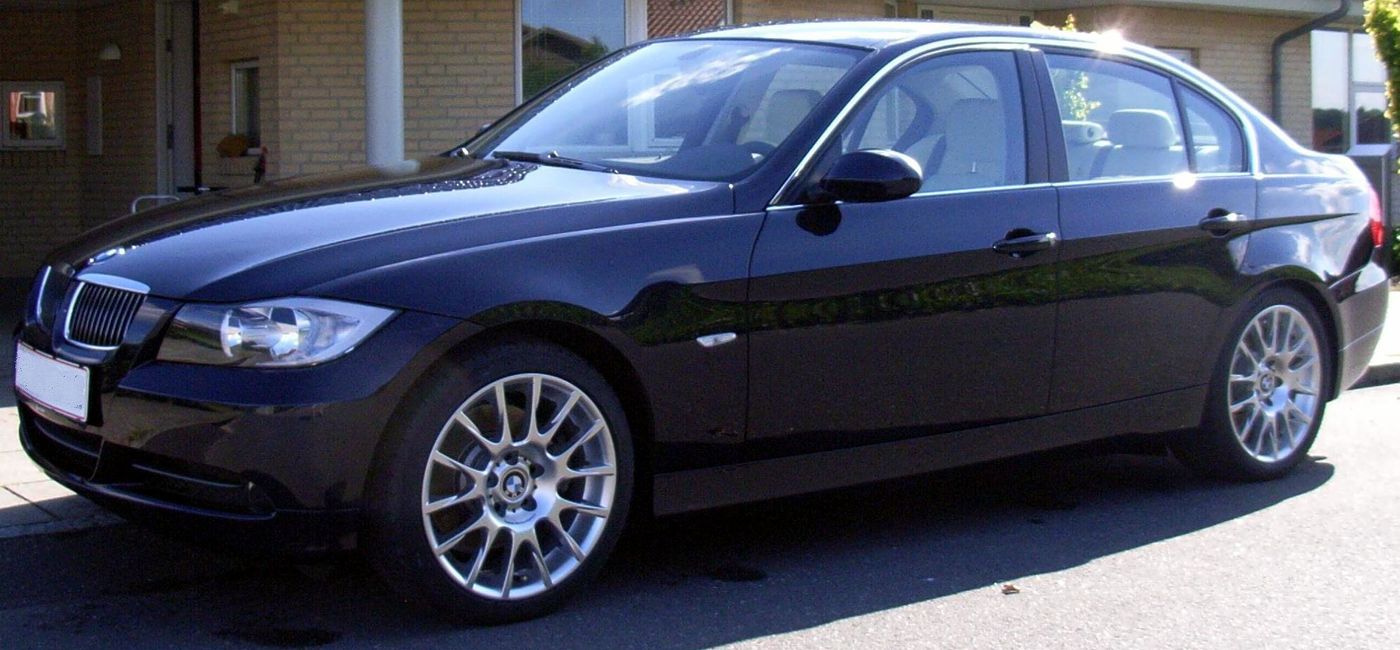
Find parts by BMW chassis
Decoder pages with engine specs, common problems, and market range per chassis.