BMW Sunshades
Sunshades for BMW. Compare prices, check fitment, find the right part for your build.
Affiliate disclosure. BimmerTalk is a proud partner of the Amazon Associates Program and Turner Motorsport. We may earn a small commission on qualifying purchases through our links, at no extra cost to you. Read the full disclosure.



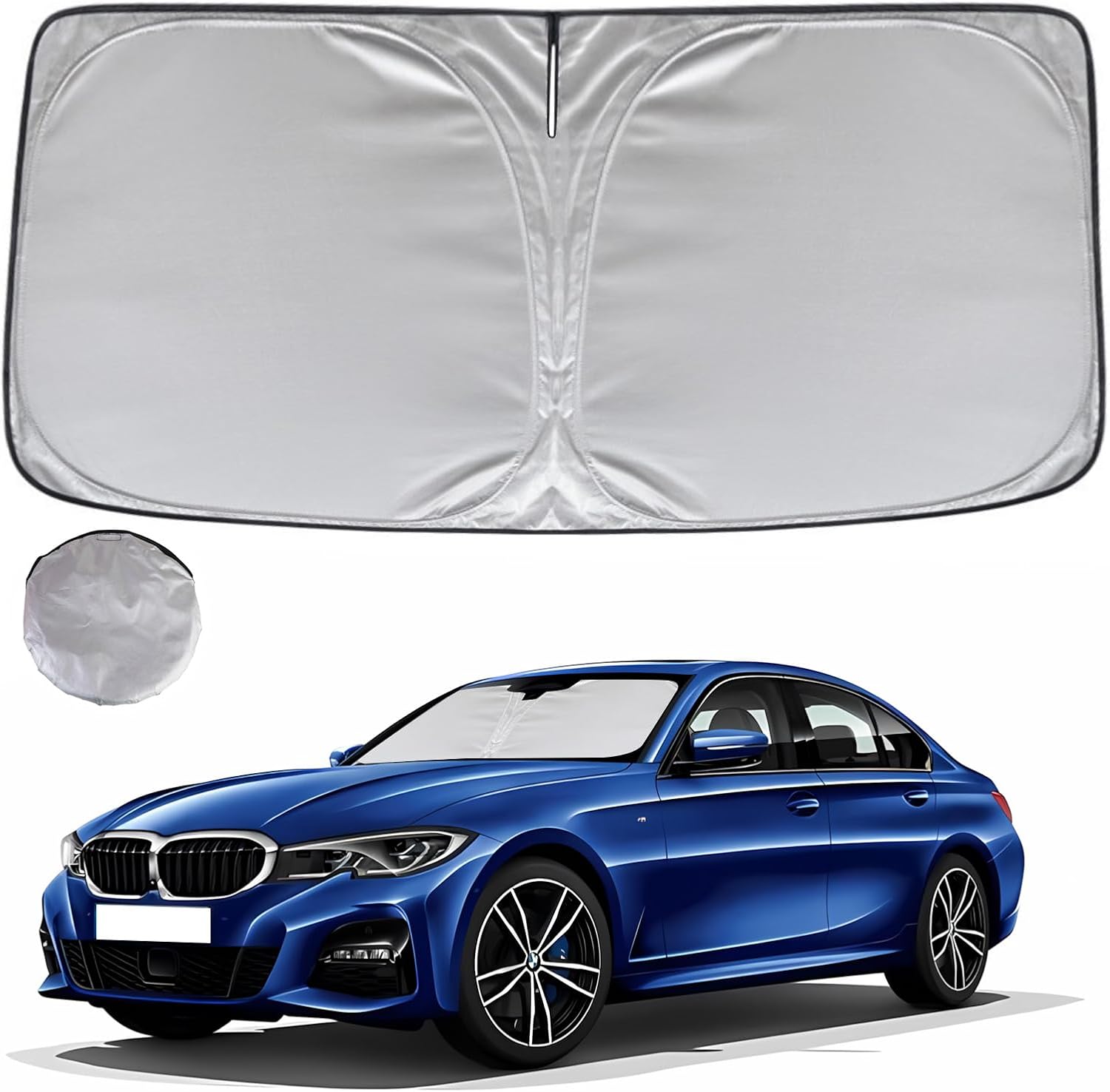
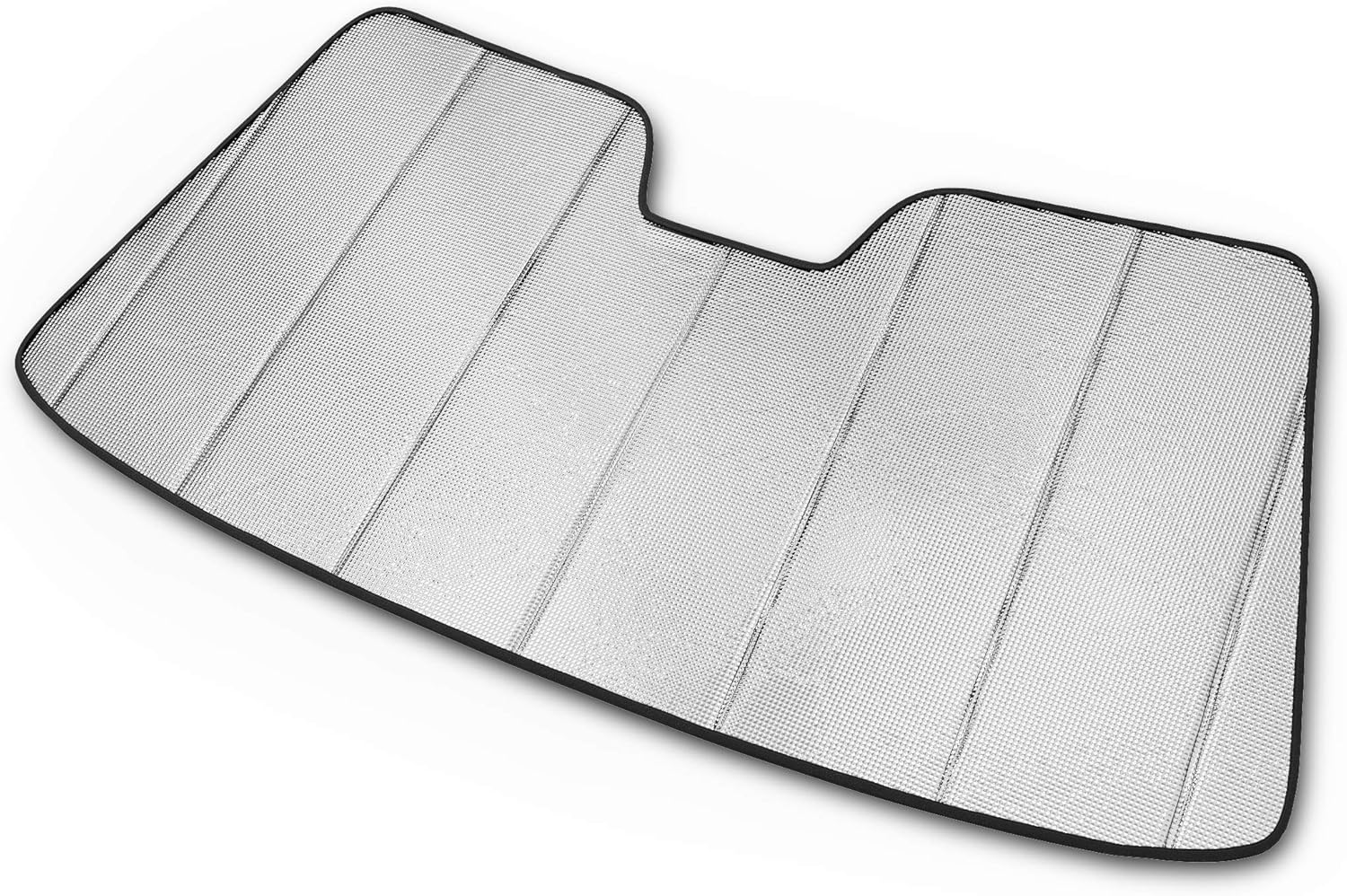
If you own a BMW long enough, you stop thinking of a sunshade as some generic summer accessory and start seeing it as cheap insurance for expensive interior parts. Dash tops shrink, iDrive screens bake, Dakota and Vernasca leather get dry around the bolsters, and black Sensatec can turn the cabin into a pizza oven in about 20 minutes. That is why people search for a BMW sunshade in the first place. Not because it is glamorous, but because the alternative is slowly cooking parts BMW did not price kindly.
I have a pretty boring but hard-earned opinion here. A custom-fit windshield shade is one of the few accessories that is almost always worth buying if the car lives outside, even part time. I daily a G20 330i with the B48, and in summer my car will sit long enough in open lots that a good windshield shade changes the whole ownership experience. Not in the cheesy "transforms your drive" way, but in the practical way where the steering wheel is touchable, the center screen is not radiating heat, and the A-pillars are not constantly soaking UV. After five years wrenching on BMWs, plus a year on the marketing side around BMW and MINI owners, I can tell you this is one of those accessories where fitment and material actually matter.
This page is for owners who care about the differences. E46 coupe versus sedan. E90 with a rain sensor housing. G05 X5 with a giant windshield and more upright glass. Manual rear roller shades on sedans versus magnetic side shades for kids and dogs. Heat reduction versus UV blocking. Custom-fit rigid panel shades like WeatherTech TechShade and Heatshield versus the cheap fold-down accordion design that everyone buys once and complains about later. I am going to get into what works, what is marketing fluff, where BMW OEM makes sense, and when a universal shade is fine enough to save money.
Why BMW cabins benefit more from good sunshades than most cars
BMW interiors usually age well mechanically, but they are not immune to sun damage. In fact, some common BMW traits make heat management more important than it is in a lot of mainstream cars. Large windshield area, dark dashboards, dark headliners on M Sport trims, and broad center screens on newer cars all absorb and hold heat. On older E-chassis cars the issue is material aging. On F and G chassis cars it is electronics, adhesives, and touch surfaces getting hammered over and over.
Think about the range of cabin layouts across the generations. An E36 or E46 has a relatively conventional dash, but once the top surface starts drying and shrinking, repair options are not cheap or simple. E90 and E92 cars add more electronics and more trim surfaces right under the glass. By the time you get into a G20, G30, G05, G80, or G87, you are dealing with larger digital displays, thicker windshield-mounted sensor clusters, and often bigger glazed areas that let a ton of solar load into the cabin. A BMW windshield sunshade on those newer cars is not a cosmetic accessory. It is a way to slow thermal cycling of expensive parts.
Leather and trim matter too. Dakota, Nappa, Merino, and Vernasca all handle sun differently, but none of them enjoy repeated heat soak. The same goes for Sensatec. I have seen black interiors in E70 X5s and F15 X5s get brutally hot because of the combination of large upright windshield and high seating position. Coupes like the E92 and F32 can be just as bad because the cabin volume is smaller, so temperatures spike quickly. Sedans with rear sun exposure, especially if parked nose-out all day, also benefit from a proper BMW rear sunshade or rear side shades if passengers are involved.
The other thing BMW owners know is that replacement parts often cost enough that preventing damage is easier than fixing it. If you have ever priced interior trim, a dashboard top, or a replacement display module, a sunshade starts looking like one of the better cost-per-benefit accessories you can buy.
What a sunshade actually does
A lot of owners expect a windshield shade to make the cabin cool. That is not really the right target. A good shade does three things well:
- Reduces direct radiant heat on dash, steering wheel, seats, and center console
- Blocks UV that fades leather, plastics, and trim over time
- Lowers the peak cabin temperature enough that the AC has less work to do on startup
If you want a rough real-world number, a good custom-fit reflective shade can knock the initial cabin air temperature down by around 10 to 25 degrees F compared with no shade, depending on outside temp, interior color, windshield angle, and how long the car sits. Surface temperatures can drop more than that. The top of the dash and steering wheel are where you notice the biggest difference.
Why universal shades disappoint BMW owners
Universal shades are not worthless, but BMW owners notice fitment problems quickly. Rain sensor housings, mirror stems, camera modules, and the shape of the upper corners make a generic rectangle fit badly on most BMW windshields. A poor fit leaves gaps at the A-pillars and upper edge, and that is exactly where a lot of heat sneaks in. It also means the shade sags, falls down, or needs the visors to crush it in place.
That leads to the classic problem with accordion shades. They look fine on day one, then they crease, bow, and stop sitting flat. On a BMW with a tightly fitted dash top and a steep windshield, they can rest unevenly against the dash edge and start rubbing the same spots over and over. That is one reason I usually recommend custom-fit over universal for anyone parking outside routinely.
| BMW chassis | Typical windshield shape | Heat soak tendency | Best front shade type | Rear shade priority |
|---|---|---|---|---|
| E36 3 Series | Moderate rake, narrower glass | Medium | Custom-fit rigid or semi-rigid | Low unless rear passengers |
| E46 sedan/coupe | Moderate rake, sensor area varies | Medium-high | Custom-fit reflective | Medium on sedan |
| E90/E92 | Larger glass, tighter upper corners | High | Custom-fit windshield shade | Medium-high |
| F30/F32 | Broad windshield, integrated sensor cutout needed | High | Custom-fit foldable or rigid panel | Medium |
| G20 3 Series | Large windshield, camera module area | High | OEM or custom-fit dual layer | Medium |
| G05 X5 | Large upright windshield | Very high | Custom-fit large-format shade | High for family use |
| G30 5 Series | Wide glass, sedan rear exposure | High | Custom-fit windshield shade | High on rear shelf cars |
Custom fit versus universal and why the difference is bigger on BMWs
The biggest buying decision is not brand. It is custom-fit versus universal. If you only remember one thing from this article, make it this: fit matters more than most spec-sheet claims about silver coating, titanium layers, or NASA-grade whatever. If the shade does not cover the glass properly, the best material in the world cannot make up for the gaps.
BMW windshields tend to punish loose-fitting products. Mirror housings are chunky, especially on camera-equipped cars. Rain sensor mounts and lane assist hardware take up space in exactly the area where cheap shades want to lie flat. Add the curvature at the top corners on cars like the F30, G20, G30, and G05, and you can see why a custom fit sunshade BMW owners buy usually gets far better reviews than a universal shade with dimensions that are "close enough."
Custom-fit shades also stay put more naturally. A good one will wedge cleanly within the frame of the windshield and need only light visor pressure. That matters because if you have to force the visors down hard to keep a shade in place, you are putting extra strain on the visor pivots and clips. Not a huge issue once or twice, but every day for years adds up.
Where universal shades still make sense
I am not going to pretend universal shades have no place. If the car is parked outside only occasionally, if you want a backup shade you can move between cars, or if budget matters most, a universal product is still much better than nothing. Something like the YUYOOOSEN UV-Blocking Windshield Sunshade - Universal Fit is the kind of thing I would toss in a secondary car, a loaner family car, or an older chassis where you are less obsessive about exact fit.
On older cars like an E39 5 Series, E46 sedan, E53 X5, or even an E60 if you are just trying to keep the dashboard from roasting during occasional outdoor parking, universal can be acceptable. The key is managing expectations. It is not going to look factory. It will probably leave some gaps. It might need more adjustment around the mirror area. But it can still cut surface temperatures meaningfully.
Why custom-fit wins for daily use
For a daily driver that sits in lots regularly, I would buy custom-fit almost every time. On my G20, I want the shade to go up quickly, sit cleanly around the mirror and sensor cluster, and fold away without being annoying. That is where model-specific products pull away from universal designs. The BMW G20 Windshield Sunshade for 3 Series is a good example of where the exact shape matters enough to justify the cost if you are keeping the car long term.
The same logic applies to bigger BMWs where the windshield is huge. The G05 X5 and G07 X7 especially benefit from a custom shape because the glass area is so large that any uncovered gap becomes a major heat leak. A model-specific option like the Autotech Park Foldable Sunshade for BMW X5 2019-2026 is simply more effective than trying to hold a floppy universal panel across a broad windshield with an SUV mirror housing in the middle.
| Type | Typical fit quality | Ease of use | Heat reduction | UV protection | Best use case |
|---|---|---|---|---|---|
| Custom-fit rigid panel | Excellent | Good | Very good | Very good | Daily parked outside, long-term ownership |
| Custom-fit foldable dual-layer | Very good | Very good | Good-very good | Good | Daily use, easier storage |
| Universal pop-up/foldable | Fair | Good | Fair-good | Good | Occasional use, budget option |
| Accordion cardboard-style | Fair | Fair | Fair | Fair | Temporary use only |
BMW windshield sunshade types and what each one is actually good at
There are a few common constructions on the market, and they behave very differently in the real world. The material description on a listing often sounds similar from one product to another, but the user experience is not. If you are buying a BMW windshield sunshade, you should know which compromise you are accepting.
The first type is the rigid or semi-rigid panel shade. This is usually the best at covering the glass fully and staying in shape over time. It tends to insulate well, especially if it has a reflective outer face and a foam core. The downside is storage. If you have a compact cabin like an E82 1 Series, E92 coupe, or G87 M2, a rigid panel can be awkward when not in use.
The second type is the foldable dual-layer or circular fold style. These are popular because they pack smaller and are easier to stash behind a seat or in the trunk side pocket. A lot of custom-fit options for modern BMWs use this format, including value-oriented products like the KAYZT Dual-Layer Foldable Sunshade for BMW G20 3 Series 2019-2026. If the cut is accurate, this style gives up only a little to a rigid panel in exchange for easier everyday use.
The third type is the universal accordion shade. This is the one you see in auto parts stores and gas stations. It is cheap, usually laminated foil over a lightweight substrate, and it gets the job done in a crude way. I think it belongs in emergency or occasional-use territory, not as the best answer for a car you care about.
Rigid panel shades
Best for maximum coverage and long-term shape retention. On sedans like the F10, G30, and G20, rigid panel shades tend to nest well against the glass and deliver the best seal around the edges. If you park in an office lot all day and the shade goes up and down once or twice, this is often the strongest choice.
They are also kinder to dash surfaces because they do not sag into the dash top the way cheap accordion products can. On older E46 and E39 cars with dashboards that may already have some age-related brittleness, that matters more than people realize.
Foldable dual-layer shades
This is the best middle ground for most owners. Dual-layer foldable shades use spring steel or similar flexible frames and a layered reflective fabric. They are lighter, easier to store, and usually quicker to handle than large rigid boards. On my own car, if I had to choose between perfect thermal performance and a shade I will actually use every day, I often land on the foldable custom-fit option because convenience drives consistency.
If you own a G20 and want a lower-cost alternative to OEM, the KAYZT piece I linked above makes sense in that lane. It is not exotic, but a decent custom-fit foldable shade can be more useful day to day than a theoretically better product that annoys you enough to leave it in the trunk.
Universal pop-up shades
These are usually circular or oval and twist-fold into a small bag. They are light and cheap, but fitment is inconsistent. If you are using one in an E70 X5, G01 X3, or G05 X5, the windshield size alone can make them feel undersized. In a smaller chassis they can work okay, especially as a stopgap.
I would use one if I needed a temporary solution, if I had multiple cars, or if I wanted something I could loan to a friend. For a car I own and care about, I still move to custom fit.
Accordion shades and why I dislike them on BMW dashboards
This is where I have a stronger opinion. The classic accordion shade is not just aesthetically cheap. On some BMWs it creates pressure points and rubbing points against the dash and A-pillar trims. Over time, repeated contact plus trapped grit can leave marks. The folding ribs also deform, making the shade bow outward, which reduces windshield coverage and creates bigger gaps.
I have also noticed that drivers with E90s, F30s, and G20s often shove accordion shades down too far to make them stay, and then the lower edge rests against the dash in a way that can scuff sensitive trim. Is it catastrophic? No. Is it avoidable? Absolutely. That is why I generally steer people away from them if they are buying specifically for a BMW and plan to use it often.
Heat reduction versus UV protection and the trade-offs owners ignore
When people shop for a custom fit sunshade BMW listings often throw around two ideas as if they are the same thing. Heat reduction and UV protection are related, but not identical. You need both, and the best product for one metric is not always best for the other depending on material, fit, and which part of the interior you care about most.
Heat reduction is mainly about reflecting and insulating against solar energy that would otherwise raise cabin and surface temperatures. This is what saves your palms from a scorching steering wheel and keeps your iDrive controller from feeling like it sat on a stove. UV protection is about preventing the ultraviolet component of sunlight from degrading dyes, coatings, leather finishes, stitching, and plastics over time. That is the slower damage people tend not to notice until one side of the cabin ages faster than the other.
A highly reflective silver-faced shade can be excellent at reducing temperature spike, but if the fit is poor and side gaps are large, you still let in UV and visible light. Meanwhile, a darker multi-layer interior-facing shade can sometimes insulate well but reflect less energy outward. The sweet spot is usually a reflective outer layer combined with enough structure or foam to reduce heat transfer, plus a shape that actually seals the opening.
What matters most on older BMWs
On E36, E39, E46, E53, E60, E63, E65, E70, and early E90-era cars, UV protection is arguably just as important as immediate temperature control. Older dashboards, wood trims, rubberized coatings, and leather finishes have already lived a lot of life. Repeated UV exposure accelerates cracking, discoloration, and adhesive failure. If you have an E46 with original black dash and door tops still looking healthy, I would absolutely run a shade if the car sees sun.
The same goes for M cars with rare interior colors. Cinnamon, Fox Red, Natural Brown, Silverstone, extended leather packages, and Individual trims are expensive to preserve and even more expensive to restore correctly.
What matters most on newer BMWs
On F and G chassis cars, heat management jumps up the priority list because of electronics. Display panels, bonded trim, ambient light strips, and glossy surfaces hate extreme repetitive heat soak. It is not that a sunshade prevents every issue, but it lowers the stress. In a G20 or G30 with black dash and digital screens, I notice the startup comfort difference immediately. The AC catches up faster and the cabin feels less abused.
That also helps with battery and electrical load in hot weather because the car is not trying to yank the cabin down from a more extreme temperature every time. If you are already managing battery health on a modern BMW, hot-soak reduction is one small supporting habit. We cover the electrical side in more detail in our BMW battery replacement guide, but the simple version is that lower heat stress on systems is rarely a bad thing.
| Priority | What it protects | Most affected BMW parts | Best shade feature |
|---|---|---|---|
| Heat reduction | Cabin temperature and touch surfaces | Steering wheel, dash top, center console, displays | Reflective outer layer with tight fit |
| UV blocking | Material aging and fading | Leather seats, dash skin, trim, stitching, door tops | High-coverage multi-layer construction |
| Insulation | Slows heat transfer through glass area | Overall cabin and front-seat area | Foam or dual-layer core |
| Fitment | Prevents side leakage of light and heat | Entire front cabin | Model-specific cutouts and dimensions |
Windshield fitment by chassis and where owners get caught out
Fitment is where BMW owners either get a great accessory or buy a disappointment. This is the part that matters most if you have ever tried to force a generic shade around a rain sensor blob or around the top corners of a coupe windshield. BMW windshield shapes vary more than people think, and body style matters just as much as the generation.
If you are not 100 percent sure of your chassis code, check our BMW chassis code tool. I cannot count how many times someone has said "I have a 3 Series" without realizing the shade they are buying fits a sedan but not the coupe, or fits the prior generation but not the current one. E90 and E92 are a perfect example. Same family, very different glass shape and roofline.
Below is a practical fitment breakdown based on how these cars typically behave with front sunshades.
E36 and E46
E36 sedans, coupes, and convertibles are now old enough that interior preservation matters a lot more than absolute cabin comfort. The windshield is not huge by modern standards, which helps. But mirror stems and upper center area fit can still trip up universal shades. E46 sedans and coupes similarly benefit from custom-fit because the upper contour and dashboard meeting point are specific enough that a loose fit looks and works mediocre at best.
If I had a clean E46 ZHP or E46 M3 that saw regular street parking, I would not cheap out here. S54 or M54, it does not matter. The interior parts are too nice and too old to bake unnecessarily.
E90 and E92
E90 sedan and E92 coupe owners should pay close attention to body style. The coupe windshield geometry is different enough that a sedan shade will not cut it. These cars run hot inside, especially with black interiors. Last summer I helped a buddy with his E92 and the difference between a near-fit generic shade and a proper shape-specific one was obvious in minutes. The generic one left triangular gaps at the A-pillars and sat awkwardly under the mirror.
This generation is also where a lot of owners still buy accordion shades, and it is exactly the generation where I think they annoy the most because of the dash shape and glass angle.
F30 and F32
F30 3 Series sedan and F32 4 Series coupe are modern enough that owners often expect OEM-like fit from accessories. Fair expectation. The sensor housing and upper center fit are more demanding than on older cars, and the broad windshield area means poor fit gives away a lot of performance. If you daily an F30 328i with the N20, a 330i with the B46 or B48, or a 340i with the B58, the logic is the same. A proper custom shade is easier to live with and works better.
M cars included. F80 M3 and F82 M4 are not somehow immune because they are weekend cars. If anything, many of them spend more time parked at meets, events, or in lots where a shade helps preserve the interior.
G20 and G80
This is where I have firsthand bias because I live with a G20. The windshield is large enough, the dashboard is expensive enough, and the sensor package is prominent enough that a custom-fit shade feels worth it every single day in summer. The BMW G20 Windshield Sunshade for 3 Series fits the platform logic well. If you want to spend less, the KAYZT Dual-Layer Foldable Sunshade for BMW G20 3 Series 2019-2026 is the right type of alternative because it is still cut for the car.
On G80 M3, I would follow the same thinking. The S58 underhood heat is not the issue here. It is the interior materials, displays, and the reality that many owners spec dark cabins. Custom-fit all day.
G05 X5 and larger BMW SUVs
The X5 is where I think people underestimate the benefit. Bigger windshield, taller cabin, lots of glass, and often family use. A G05 parked in direct sun gets hot fast. I would strongly lean to a dedicated shade like the Autotech Park Foldable Sunshade for BMW X5 2019-2026 because the windshield area is too large to mess around with something universal unless you absolutely have to.
Rear passenger comfort matters more in these cars too, which is where BMW rear sunshade discussions become relevant. If kids or pets ride in the back, the front shade is only half the equation.
| Chassis | Body style note | Mirror/sensor complexity | Universal shade success rate | Recommendation |
|---|---|---|---|---|
| E46 sedan | Different from coupe and wagon | Low-medium | Moderate | Custom-fit preferred |
| E92 coupe | Distinct windshield shape | Medium | Low-moderate | Custom-fit strongly preferred |
| F30 sedan | Broad glass, sensor cutout helpful | Medium-high | Low-moderate | Custom-fit |
| G20 sedan | Tight upper fit around camera area | High | Low | OEM or model-specific foldable |
| G05 X5 | Large upright SUV windshield | High | Low | Model-specific large-format shade |
| G30 sedan | Wide sedan glass and rear shelf exposure | High | Low | Custom-fit plus consider rear shade |
Rear sunshades for BMW sedans and SUVs
Most people start with the front windshield, which makes sense. But if you carry rear passengers, kids, or dogs, a BMW rear sunshade can matter just as much. In sedans especially, rear glass and side glass expose passengers directly to sunlight in a way that front occupants can usually manage with climate control and tinted upper windshield bands. The rear seat gets less air movement, and direct sun there gets miserable fast.
BMW has offered some very good rear sunshade solutions over the years, especially on higher trims and larger sedans. Manual roller rear door shades and power rear-window shades have shown up in various forms on E38, E39, E60, F10, G30, and 7 Series models. When factory-equipped, they are elegant and effective. The challenge is retrofitting them, which is often more work than people expect.
If your car does not have factory rear shades, aftermarket side shades can still help a lot. For family duty in an X5 or 5 Series, I care less about whether the shade looks OEM and more about whether it cuts sun enough for rear passengers without blocking visibility too badly. Magnetic mesh shades and frame-insert shades are the most common choices here.
Manual roller rear shades on sedan models
This is where OEM still feels nicest if the car came with it. The manual roller shade integrated into the rear door or rear parcel shelf looks right and stores cleanly. Sedans like the E60 5 Series and F10 5 Series often had this as an option depending on market and package. G30 5 Series and some 7 Series configurations took it even further with power rear-window shades.
If you are shopping a used sedan and care about rear-passenger comfort, factory rear shade equipment is genuinely nice to have. I would not buy a whole car around it, but on something like a G30 540i or 750i where family use is part of the mission, it is a meaningful option.
Magnetic and clip-in side shades
These make sense for owners who need flexibility and easy installation. They are especially useful in SUVs like the E70, F15, G05 X5 and in 3 Series sedans that regularly carry kids. They reduce glare and UV on the side exposure where a front shade does nothing once the car is moving.
The main trade-off is visibility. Mesh shades preserve outward view better than opaque shades, but they do not block as much heat. Opaque panel-style shades work harder against heat and direct sun but can be annoying if you want maximum visibility or clean window operation. For most people with children, the mesh route is the sensible compromise.
Rear window shades and tint interaction
If your BMW already has rear tint, you may wonder whether a rear shade is redundant. Not always. Tint helps with glare and UV, and depending on film type it can help with heat rejection. But a removable rear shade adds another layer for direct exposure, especially during long parked periods. If the car sits with the rear facing the sun, the rear deck, child seats, and seatbacks still get hot.
This is also worth noting if you are trying to preserve leather on rear seats. I have seen sun-facing rear benches in E90s, F30s, and G30s age unevenly because owners focused only on the front windshield.
Best BMW sunshade choices by use case and budget
Not everyone shops for the same reason. Some owners want the best fit, some want the cheapest decent option, and some want something they can use daily without it turning into a hassle. The best BMW sunshade for you depends more on your parking situation and tolerance for accessory nonsense than on the car alone.
Here is how I would split the market if a friend asked me what to buy for different situations.
Best if you want OEM fit and finish
For a G20 owner who plans to keep the car and uses the shade often, I would look first at the BMW G20 Windshield Sunshade for 3 Series. OEM pieces tend to get the sensor and mirror clearance right, and they usually feel better integrated with the interior dimensions. Price is higher, yes, but if you use it five days a week through every summer, the cost fades quickly.
This type of buy makes the most sense on newer cars with expensive interiors, leased cars you want to return cleanly, or enthusiast-owned cars where details matter. G20, G30, G05, G80, and G87 owners fit this profile well.
Best value for a daily-driven G20
I like the lane occupied by the KAYZT Dual-Layer Foldable Sunshade for BMW G20 3 Series 2019-2026. The reason is simple. It is the right kind of compromise. Foldable enough to store easily, cut to the car, and inexpensive enough that you do not overthink it. If you daily a B46 or B48 G20 and park outside at work, this kind of shade is exactly what most owners should buy.
I would rather see someone buy a decent custom-fit foldable shade and use it every day than buy a pricey rigid panel they stop using because it is awkward. Consistency beats theoretical best performance.
Best for an X5 or larger BMW SUV
The Autotech Park Foldable Sunshade for BMW X5 2019-2026 makes sense because the G05 X5 windshield is large enough that coverage becomes the whole game. In bigger SUVs, poor fit is amplified. This is also one of those cases where the extra money over a generic shade is easier to justify because the cabin volume and glass area are so substantial.
If your X5 is family transport, I would pair a front windshield shade with rear side shades. Front-only protection solves the parked-car dashboard problem but not the rear-passenger comfort problem on the move.
Best budget universal backup
If you need something cheap now, want one shade that can bounce between cars, or are buying for an older chassis where exact fit matters less to you, the YUYOOOSEN UV-Blocking Windshield Sunshade - Universal Fit is the right kind of purchase. Low cost, broad compatibility, and still better than leaving the car bare in the sun.
I would use this on a backup E39, an older E53, or as the emergency shade that lives in the trunk. Just do not expect it to fit like a glove on a G20 or G05.
What I would buy by chassis
- E36, E39, E46 - custom fit if the car is nice, universal acceptable if occasional use
- E90, E92 - custom fit strongly preferred because generic shades fit badly
- F30, F32, F10 - custom fit foldable is the sweet spot
- G20, G30, G80, G87 - OEM or quality model-specific shade worth the premium
- G05, G07 - dedicated SUV-fit shade only, plus consider rear shades for passengers
Installation, storage, and the small habits that make a shade last
Sunshades are simple, but owners still manage to make them annoying. Most of that comes down to install habits and storage habits. A good shade should go in without drama and come out without scraping everything around it. If you find yourself wrestling with it every time, either the fit is poor or the style is wrong for how you use the car.
On most BMWs, I install the top edge first around the mirror and sensor area, then settle the lower corners into place, then bring the visors down lightly. Lightly is the key word. The visors are there to keep the shade from shifting, not to bend it into the windshield opening by force.
On foldable shades, twist-folding technique matters. I have watched people ruin decent shades because they try to crush them flat without following the frame shape. Once the frame deforms, the fit gets worse and the shade starts popping out at the edges. Spend thirty seconds learning how your specific shade folds and you will save yourself months of frustration.
How to avoid dashboard scuffs
Never slide the lower edge of a dirty shade across the dash top. Dust and grit trapped in the fabric edge can mark soft-touch surfaces. This is especially relevant on E90, F30, and G20 dashboards where the upper surface can show rub marks under the right bad habits.
I try to place the shade against the glass rather than drag it down into position. If the fit is custom and correct, it should sit with minimal fiddling. If you have to shove and grind it around, something is off.
Where to store a shade in different BMWs
Storage options vary by chassis. In sedans like the G20 and G30, foldable shades usually fit nicely in the trunk, under the load floor, or behind the front seats depending on the size. Coupes like the E92, F32, and G87 have tighter back-seat access, so I prefer a compact foldable style. SUVs like the G05 have enough cargo area that even larger shades are easy to live with.
For older cars with less organized cargo space, I like a protective sleeve or bag just to keep the reflective surface clean and stop it from snagging on trunk junk. It sounds fussy until you realize a filthy reflective face is less effective and more likely to scratch trim on the way in and out.
When to replace a shade
If the reflective surface is peeling, the frame no longer holds shape, or the fit has degraded enough that the shade leaves major gaps, replace it. These are not forever items. Daily use, summer heat, and folding fatigue wear them out. A quality shade lasts longer, but even good ones age.
The sign I look for is not cosmetic ugliness. It is whether the shade still sits naturally in the windshield opening. Once it starts fighting you every day, it is done.
How sunshades fit into broader BMW heat management and interior preservation
A sunshade is one piece of a larger strategy if you are serious about preserving a BMW. It does not replace proper tint, interior conditioning, clean drains, healthy climate-control operation, or common-sense parking habits. But it is one of the easiest pieces because it works immediately and costs little compared with the parts it protects.
If your cooling system is marginal, a cooler cabin on startup means your AC system does not feel quite as slammed in the first few minutes. No, a windshield shade is not a substitute for maintaining the car. If your coolant is old or your electric fan is acting up, fix that properly. We have a full BMW coolant flush guide for the cooling side of ownership. But reducing cabin heat is still helpful because it reduces the load spike every time you jump into a car that has been cooking for hours.
Likewise, if you care about the longevity of interior electronics and battery load, any reduction in heat soak helps in the margins. Modern BMWs with IBS-managed batteries and lots of wake-up modules already place demands on the electrical system. If you are sorting charging or registration issues, our coding and diagnostic tools page and battery replacement guide are worth keeping handy. Again, the point is not that a sunshade fixes those systems. It is that it supports a less abusive operating environment.
Tint plus sunshade is the best combo
If you want the biggest practical benefit, pair a quality windshield sunshade with good ceramic side and rear tint where legal. The shade handles parked front exposure. The tint helps while driving and continues working on side and rear glass all day. For owners with kids, dogs, or rear-facing child seats, this combination is dramatically better than either one alone.
I am careful here because laws vary on windshield tint. I am not suggesting illegal full windshield tint. But legal side and rear film plus a proper parked-car front shade is a very effective, non-dramatic solution.
Sunroof shades matter too
BMW panoramic roofs and glass moonroofs add another source of heat. F15 and G05 X5 owners know this well. Even with the built-in sunroof blind closed, a glass roof contributes to cabin heat load. If your car has a pano roof and lives outside, the windshield shade is still priority one, but the roof is part of the total picture.
This is why SUVs and wagons often feel hotter than expected even when the windshield is covered. More glass area, more solar gain, more heat retention.
Common myths about BMW sunshades
There is a lot of bad advice floating around because sunshades are simple enough that everyone feels qualified to have a strong opinion. Some of those opinions are wrong or at least incomplete. Here are the myths I hear most often.
A universal shade works the same if the size is close
No. Close dimensions are not the same as proper fit. The shape around the mirror, the top corners, and the side taper matters. On BMWs this matters even more than average because the glass and sensor packaging are not generic. A universal shade can still be useful, but it does not work the same.
The thickest shade is always the best
Not necessarily. Thickness helps insulation, but fit and reflectivity matter more than raw bulk. A thick shade with poor coverage can perform worse than a thinner custom-fit shade that seals the opening properly.
Accordion shades are fine if you are careful
Sometimes, sure. But careful use does not fix structural warping and poor edge fit. If you already own one, use it rather than no shade at all. If you are buying new for a BMW you care about, I still would not recommend it as first choice.
Rear shades are pointless if you have AC vents in back
Tell that to any kid sitting in direct afternoon sun. Rear AC helps cabin temperature, not direct radiant load on skin and seats. Rear side shades absolutely make a difference for comfort.
Only hot climates need sunshades
Also wrong. UV damage happens in more places than Arizona and Florida. Even moderate climates with strong summer sun can slowly fade interiors. If the car sits outside often, a shade is worthwhile in plenty of regions that are not brutally hot year-round.
What I would choose on specific BMWs
This is the opinionated section. No fence-sitting. If these were the cars in my driveway or in a friend group, here is what I would actually do.
E46 330i or M3
Custom-fit, reflective, something with enough structure that it stays put and does not rub the dash. These interiors are too old and too nice to roast. If the car lives in a garage and only goes out on weekends, maybe it matters less. If it is parked outside at work or at school, I would use one religiously.
E90 328i, 335i, or M3
Again, custom-fit. This generation gets hot and universal shades fit badly more often than not. For sedans especially, I would also think about rear side shading if there are regular passengers. N52, N54, N55, S65, it does not matter. The interior deserves better than a floppy gas-station accordion panel.
F30 330i or 340i
Custom-fit foldable is the sweet spot. Easy enough to use daily, compact enough to store, and precise enough to cover the broad windshield correctly. If the car has black interior and no garage, I would consider it basically mandatory summer equipment.
G20 330i or M340i
This is my home turf. I would pick OEM if the budget is there and I plan to keep the car. If not, I would absolutely still run a model-specific foldable like the KAYZT rather than a universal. On the G20, daily use convenience really matters. You want a shade you can deploy in ten seconds and forget.
And yes, in my G20 I run a proper fitted front shade because I got tired of climbing into a heat-soaked cabin and grabbing a steering wheel that felt like cast iron left in the sun.
G05 X5 xDrive40i or M50i
The X5 gets a dedicated custom-fit shade every time. Large glass, family use, and lots of interior surface area to protect. I would also add rear side shades if kids or pets ride regularly. This is one of the easiest cases to justify spending more up front because the heat penalty of doing nothing is huge.
G80 M3 and G87 M2
These cars often have darker cabins and see a mix of street parking, event parking, and weekend sitting. A good front shade is cheap insurance. On the M2 especially, storage size matters, so a compact foldable custom-fit shade gets the nod. On the M3 sedan, OEM or model-specific anything that fits tightly around the upper center hardware is what I would buy.
Buying checklist for the right BMW sunshade
If you are ready to buy and want the short version without missing the important details, here is the checklist I would use. It is not flashy, but it saves mistakes.
Fitment first
- Confirm chassis code and body style
- Make sure the listing is for sedan, coupe, SUV, or wagon specifically
- Check model years carefully, especially around generation changes
- Account for mirror and sensor housing cutout shape
If you are uncertain about whether your car is F30 or G20, E90 or F30, or G05 versus F15, use the chassis tool before ordering.
Decide how often you will actually use it
- Daily outdoor parking - custom-fit is worth it
- Occasional weekend use - universal can be acceptable
- Family hauling - add rear side shades to the plan
- Small trunk or coupe cabin - prioritize storage-friendly foldable design
Match the shade style to the car
- Big SUVs like G05 X5 - larger dedicated foldable or rigid style
- Modern sedans like G20 and G30 - model-specific foldable or OEM
- Older classics - structured custom-fit preferred for interior preservation
- Budget backup across multiple cars - universal pop-up or foldable
Do not overpay for buzzwords
Look for reflective outer material, decent construction, and accurate fit. Ignore listing language that sounds like cookware or space-program marketing. A well-cut, competently made shade with normal materials beats an overhyped universal product with a dramatic product page.
Remember the rest of summer maintenance
Hot weather stresses more than interiors. If you are doing a seasonal prep mindset, it is worth checking cooling system condition, battery health, and service intervals. For fluid-related housekeeping, our BMW automatic transmission fluid guide and oil capacity tool are useful references. A sunshade is part of being proactive, not the whole plan.
FAQ
What is the best BMW sunshade for a G20 3 Series
For a G20, I would choose a model-specific front shade over any universal option. The windshield shape and sensor area reward exact fit. If you want OEM, the BMW G20 Windshield Sunshade for 3 Series is the straightforward pick. If you want a lower-cost custom-fit option, the KAYZT Dual-Layer Foldable Sunshade for BMW G20 3 Series 2019-2026 makes more sense than a universal shade.
Are custom fit sunshades worth it for BMWs
Usually yes. BMWs tend to have windshield shapes, mirror housings, and sensor clusters that make universal shades fit poorly. A custom fit sunshade BMW owners buy will usually cover more glass, stay in place better, and reduce heat and UV more effectively over time.
Do windshield sunshades really lower cabin temperature in a BMW
Yes, but think in terms of reducing peak temperature and surface heat rather than making the cabin cold. A good BMW windshield sunshade can lower the starting cabin temperature noticeably and keep the steering wheel, dash, and screens from getting as brutally hot.
Can a universal sunshade work in an older BMW like an E46 or E39
It can. On older BMWs with smaller windshields, a universal shade is often acceptable if the car is parked outside only occasionally. It still will not fit as neatly as a custom option, but it is better than no shade. The YUYOOOSEN UV-Blocking Windshield Sunshade - Universal Fit is the kind of product that makes sense in that role.
What is better for a BMW X5, universal or custom fit
Custom fit, no question. The X5 has a large upright windshield, so poor fit leaves a lot of exposed glass. A dedicated option like the Autotech Park Foldable Sunshade for BMW X5 2019-2026 is far more effective and easier to live with than trying to make a generic shade work.
Do BMW rear sunshades help if the car already has tinted windows
Yes. Tint helps with glare, UV, and depending on the film, some heat rejection. But a BMW rear sunshade still adds protection from direct sun, especially for rear passengers, child seats, pets, and leather seats exposed through the side windows or rear glass.
Can cheap accordion sunshades damage a BMW dashboard
They usually do not outright damage it, but they can rub, scuff, or sit awkwardly against the dash top over time, especially if dirt gets trapped in the edges. I do not like them for long-term use on BMWs because they warp, fit poorly, and are more likely to create repeat contact points on sensitive surfaces.
Should I use a sunshade on a garaged BMW
If the car spends nearly all its time in a garage, it is less important. But if it is parked outside at work, at the gym, at the airport, or on weekend trips, a sunshade is still worth having. Plenty of enthusiast cars are garaged at home and still spend enough time outside to benefit from one.
Are rear side shades worth it for kids in a BMW sedan or SUV
Absolutely. For kids, rear side shades often matter more than the front windshield shade once the car is moving. They cut direct glare and radiant heat on the rear seat, which makes a big difference in 3 Series sedans, 5 Series sedans, X3s, and X5s.
How do I know my BMW chassis code before ordering a sunshade
If you are unsure whether your car is E90, F30, G20, F15, G05, and so on, use our BMW chassis code tool. Ordering by model name alone causes a lot of mistakes because body style and generation matter for windshield shape.
Does a sunshade help protect BMW leather interiors from fading
Yes. A front shade blocks a lot of UV exposure through the windshield, which helps protect front seats, the dashboard, steering wheel, and center console. For full interior protection, combine a front windshield shade with side and rear tint or rear side shades.
What kind of sunshade would you personally run on a daily BMW
On a daily, I would run a custom-fit foldable or OEM-style windshield shade. It is the best balance of fit, performance, and ease of storage. If the car is a G20, G30, G05, G80, or any modern BMW with a large windshield and expensive interior surfaces, I would not bother with a generic accordion shade.
Sunshades guides
Expert picks and how-tos for BMW sunshades.
Find parts by BMW chassis
Decoder pages with engine specs, common problems, and market range per chassis.