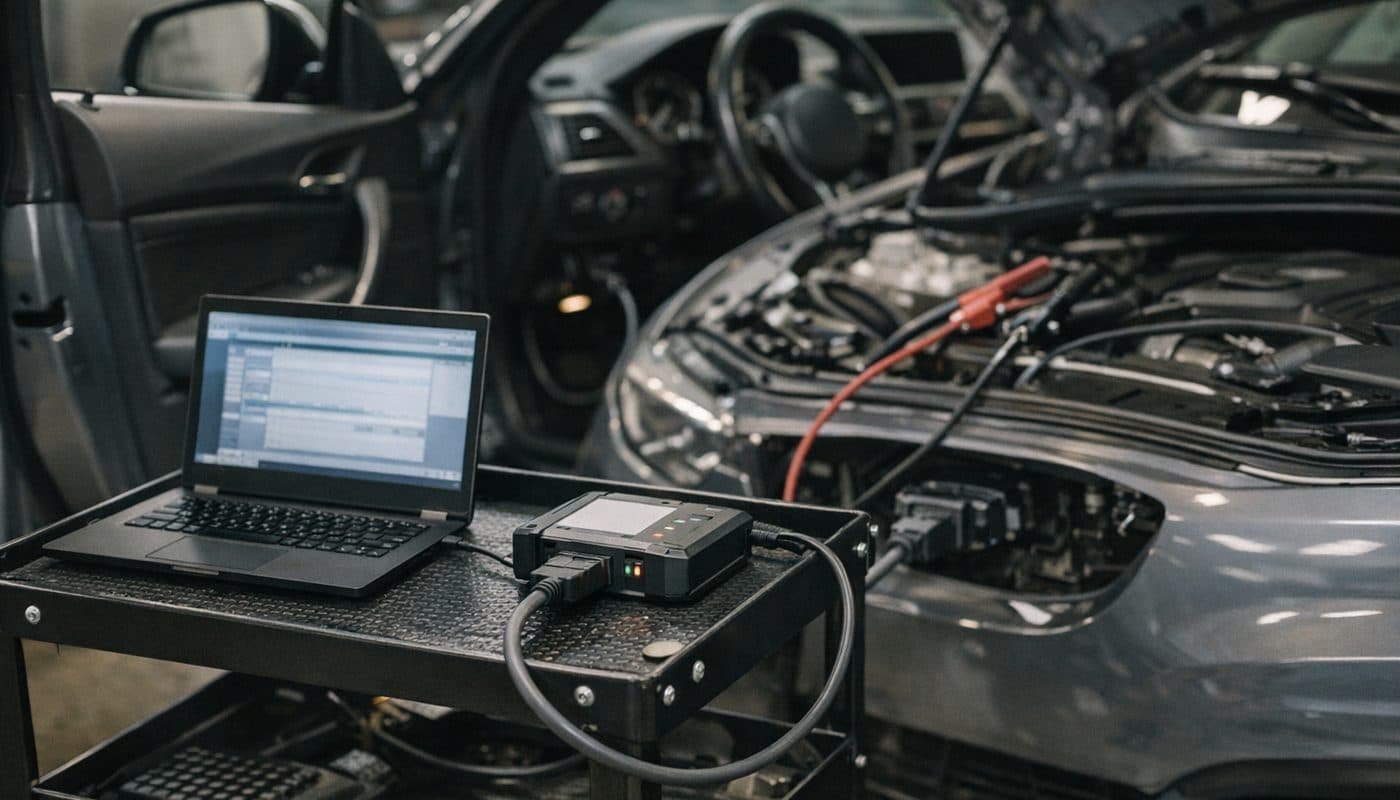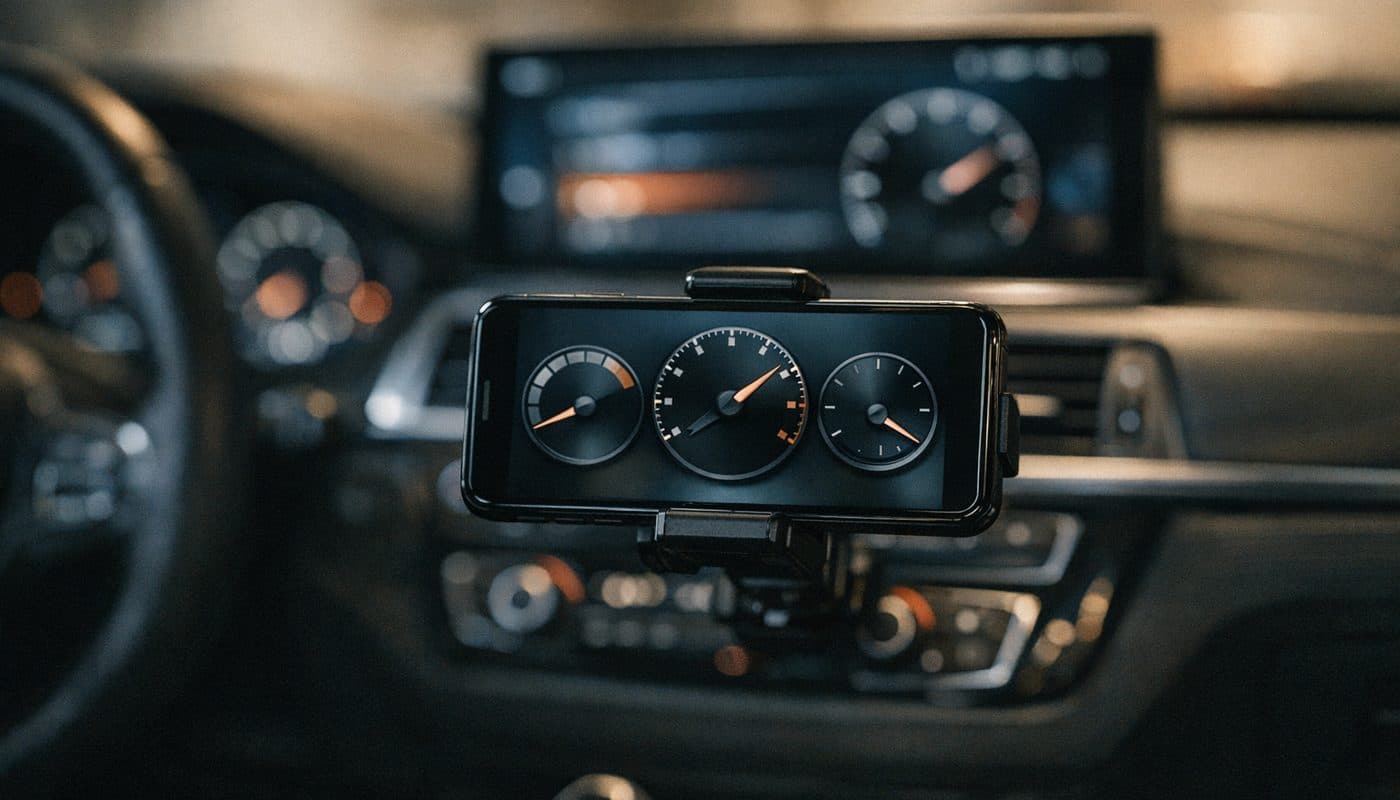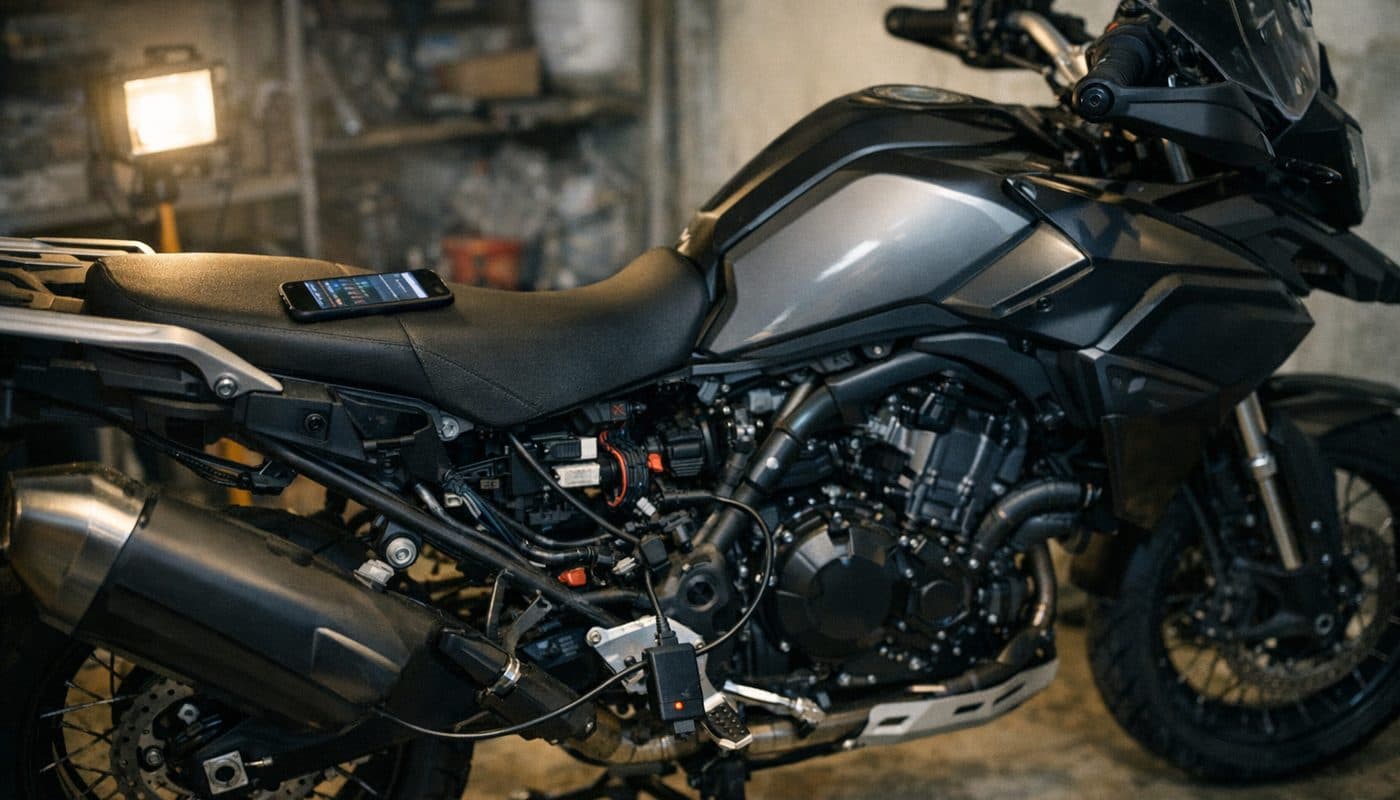
BMW Motorcycle Diagnostic Tools - GS-911, MotoScan and the Alternatives
Affiliate disclosure. BimmerTalk is a proud partner of the Amazon Associates Program and Turner Motorsport. We may earn a small commission on qualifying purchases through our links, at no extra cost to you. Read the full disclosure.

If you own a BMW motorcycle, you already know the story. The service light comes on, the dealer wants a slot in three weeks, and the only thing standing between you and a reset is a piece of software you are not allowed to buy. BMW car owners have lived with this for twenty years. Motorrad owners have exactly the same problem, just with a round plug under the seat instead of a rectangular one under the dash.
Quick honesty up front. I am a car guy. My daily driver is a 2022 G20 330i that I code with BimmerCode and an OBDLink CX, and I spent a year inside BMW and MINI seeing how the dealer side works. I do not own a BMW motorcycle. What I do know is BMW diagnostics, how the brand thinks about locking owners out, and how to read a spec sheet without falling for the marketing. For the bike-specific detail in this article I leaned on HexCode's own documentation, MotoScan's published app notes, and years of threads on ADVrider, BMW MOA, UKGSer and the S1000RR forums. Where riders disagree or the manufacturers are vague, I say so.
This is for the R1250GS owner who wants to reset the service reminder after doing their own oil change, the hexhead rider staring down an integral ABS brake fluid flush, the S1000RR owner chasing a fault code that the dash will not explain, and anyone trying to work out whether a $440 GS-911 is worth it over a $50 phone app. By the end you will know which plug your bike has, which tool talks to it, what each one can actually do, and what I would buy in your position.
GS-911 WiFi street price
around 440 USD
MotoScan Ultimate licence
around 50 EUR one time
10-pin to OBD2 adapter cable
around 10 to 15 USD
Typical US dealer diagnostic minimum
roughly 150 to 250 USD
The Short Answer
There are really only two serious owner-level tools for BMW motorcycles. The HexCode GS-911 is the dedicated, purpose-built device that most riders and independent BMW bike shops treat as the reference. MotoScan is an Android app that pairs with a Bluetooth OBD adapter and covers most of the same routine jobs for a fraction of the money. Everything else is either a dealer tool you cannot buy, a car scanner with a motorcycle sticker on the box, or an eBay cable that only does half the job.
Which one you want depends on how many bikes you touch, whether you live on Android or iPhone, and how deep into the ABS and suspension modules you plan to go. Here is the at-a-glance version.
| Tool | Rough cost | Best for |
|---|---|---|
| HexCode GS-911 WiFi Enthusiast | around 440 USD | Owners who want the proven tool, cross-platform use and the widest function coverage on their own bikes |
| HexCode GS-911 USB | around 330 USD | Windows-only budget route to the same core functions with no upgrade path |
| MotoScan plus adapter | roughly 50 EUR app plus 50 to 100 USD adapter plus cable on older bikes | Android owners doing fault codes, live data, service resets and a good chunk of service routines |
| BMW dealer ISTA | not for sale to owners | Programming, software updates, warranty work and anything the two tools above cannot reach |
| Generic car OBD scanner | 30 to 200 USD | Honestly not much on a BMW bike beyond basic engine codes on some newer models |
HexCode GS-911 WiFi Enthusiast
- Rough cost
- around 440 USD
- Best for
- Owners who want the proven tool, cross-platform use and the widest function coverage on their own bikes
HexCode GS-911 USB
- Rough cost
- around 330 USD
- Best for
- Windows-only budget route to the same core functions with no upgrade path
MotoScan plus adapter
- Rough cost
- roughly 50 EUR app plus 50 to 100 USD adapter plus cable on older bikes
- Best for
- Android owners doing fault codes, live data, service resets and a good chunk of service routines
BMW dealer ISTA
- Rough cost
- not for sale to owners
- Best for
- Programming, software updates, warranty work and anything the two tools above cannot reach
Generic car OBD scanner
- Rough cost
- 30 to 200 USD
- Best for
- Honestly not much on a BMW bike beyond basic engine codes on some newer models
If I had a single 2018 or newer BMW bike today and did not want to think about it, I would buy the GS-911 WiFi OBD-II version. If I had an older 10-pin bike and an Android phone and wanted to spend as little as possible, I would do MotoScan Ultimate with an OBDLink adapter and the 10-pin cable. The rest of this article explains why, and where each option falls down.
Why BMW Bikes Have the Same Tool Problem as the Cars
BMW Motorrad bikes are not simple machines with one engine ECU. A modern R1250GS has an engine controller (BMS), an ABS and stability controller, an instrument cluster, a body controller (the ZFE on many generations), an RDC tyre pressure module, ESA electronic suspension on bikes that have it, and on some models separate controllers for things like the fuel pump. They all talk over a bus, and they all store their own faults.
That matters because a generic OBD-II reader is built around the engine and emissions side of the standard. On a BMW car it will read your DME and ignore your DSC, FEM and KOMBI. I have written about this at length in the piece on the BMW scanner that actually reads every module, and the lesson transfers straight across to the bike. On a Motorrad machine a generic reader is even less useful, because on most models the physical connector is not even OBD-II shaped.
The dealer tool you cannot buy
BMW's own motorcycle diagnostic system runs through ISTA, the same family of software the car dealers use. It does everything, including programming and software updates, but BMW does not sell it to owners. Cracked copies exist for the car side and I have covered why they are a bad idea in the ISTA guide. The motorcycle side is no different, and the number of people who have bricked a bike with pirated software and a weak battery is not small.
The two owner tools that actually exist
So the market filled the gap. HexCode built the GS-911 specifically for BMW Motorrad, with the round 10-pin plug and later an OBD-II version. A German developer built MotoScan as an Android app that speaks BMW's motorcycle protocols through an ordinary Bluetooth OBD adapter. Between those two, riders on the forums have been doing their own service resets, ABS flushes and fault diagnosis for well over a decade.
The Connector Question
Before you buy anything, go and look at your bike. The connector decides the cable, the cable decides the tool, and the tool decides what you can do. Get this wrong and you end up with a $440 device that physically cannot plug into your motorcycle.
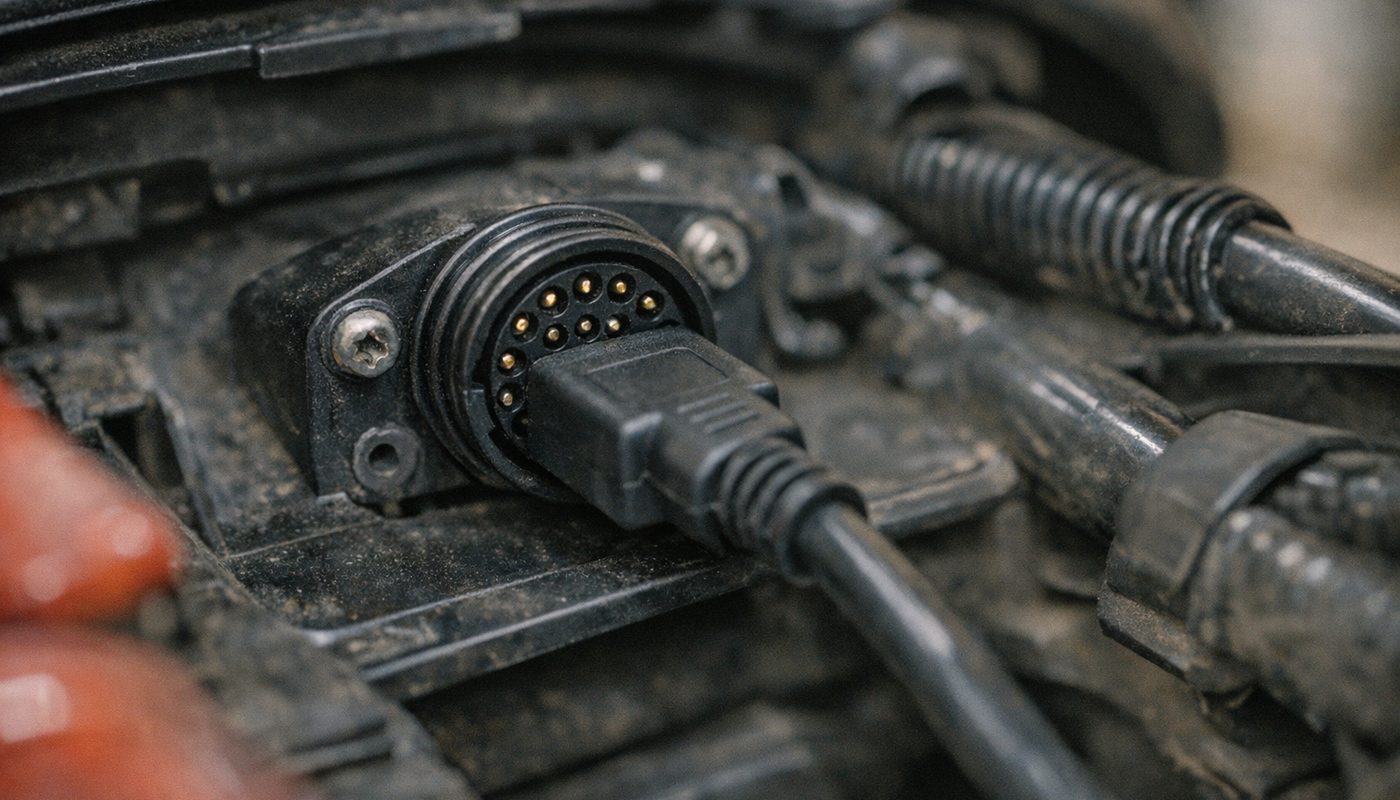
The round 10-pin Motorrad plug
For roughly two decades BMW used a round multi-pin diagnostic socket on its bikes. It shows up on the R1100 and R1150 oilheads, the R1200 hexheads and camheads, the early wetheads, most F650, F700 and F800 models, the K1200, K1300 and K1600, the C-series scooters, and the first generation of S1000RR. Sellers advertise it as covering roughly 1996 to 2016, but that is a shorthand, not a rule. Some models crossed over earlier or later depending on market. The socket is usually under the seat or behind a side panel with a rubber cap on it.
The rectangular OBD-II socket on 2017 and newer bikes
From about 2017 BMW moved most of the range to a standard 16-pin OBD-II shaped socket. The R1250GS, R1300GS, later S1000RR and S1000XR, the F750, F850 and F900, the current K1600 and the newer scooters all use it. Same shape as the port in my G20, and if you want to see what that looks like on the car side, the OBD port location guide has the photos. The shape being the same is where the similarity ends. The protocols behind it are still BMW Motorrad specific, which brings us to the biggest trap in this whole topic.
What the 10-pin adapter cable does and does not do
You can buy a 10-pin to 16-pin adapter cable for around $10 to $15. It is a passive wiring adapter. It moves the pins from the round plug to a rectangular socket so that a 16-pin device can connect. That is all. It does not translate BMW motorcycle communication into generic OBD-II, and it does not make a car scanner understand a bike. If the tool on the other end already speaks BMW Motorrad, the cable is exactly what you need. If it does not, the cable will give you a powered-up scanner and a "no communication" message.

$12.59Amazon price as of Nov 8, 2026 - may change
We may earn a commission if you buy - it never changes what we recommend or what you pay.
The car scanner through an adapter trap
This comes up every week on the forums. Someone has a Foxwell or an Autel that works beautifully on their 3 Series, buys the cable, plugs it into the F800GS, and gets nothing useful. The scanner's software has no idea what a BMS-K engine controller or an integral ABS modulator is. On a few of the newest bikes a car tool may pull a handful of generic engine codes, but the ABS, cluster, RDC, ESA and body controllers will stay invisible. Do not spend money on that assumption.
HexCode GS-911
The GS-911 is the tool that the independent BMW bike shops use, and it is the one that comes up first in every "what diagnostic tool" thread on ADVrider and BMW MOA. HexCode is a South African company that has been building it for BMW Motorrad specifically for a long time, and the depth of model coverage shows it. If you only read one section of this article, read this one.
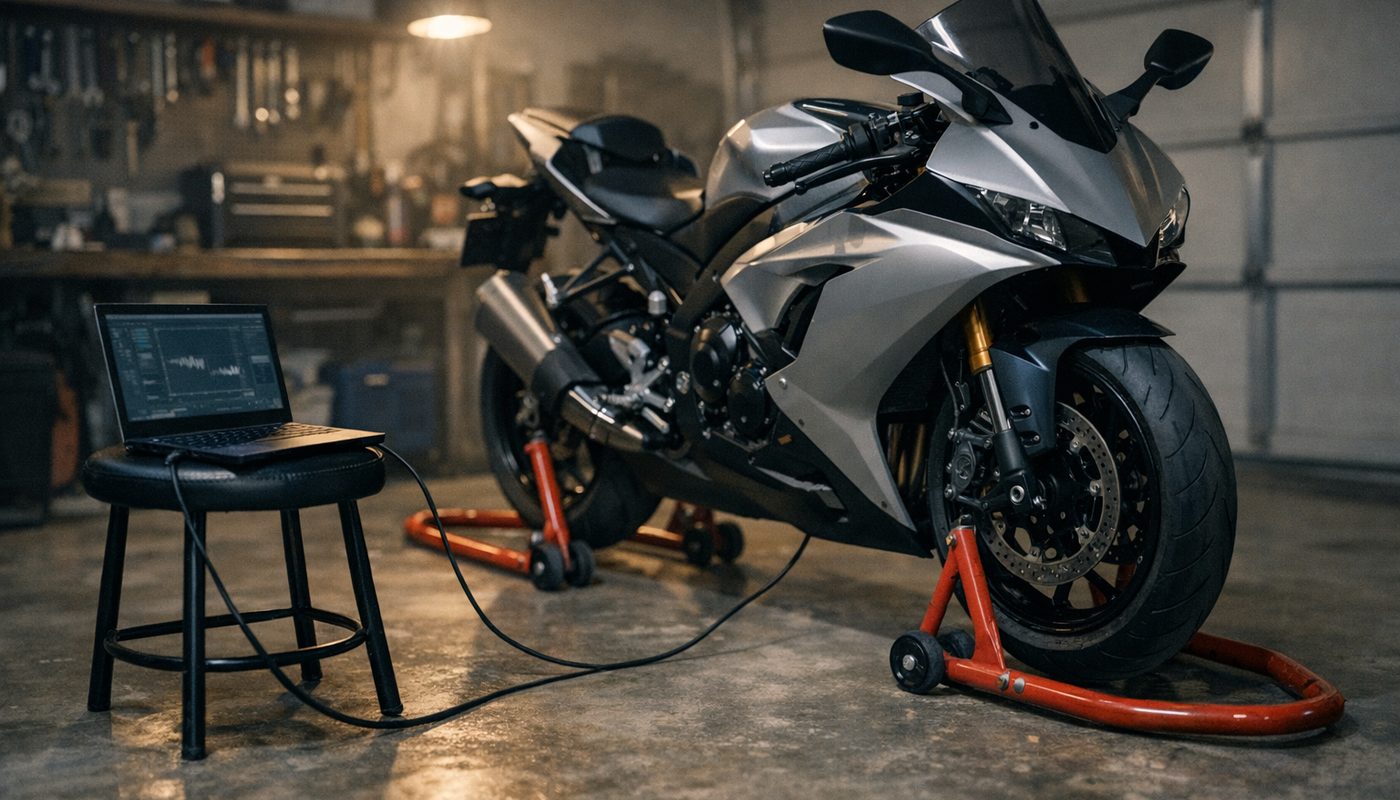
WiFi versus USB
There are two current hardware versions that matter. The GS-911 WiFi connects to a phone, tablet or computer over its own WiFi network or over USB, works on Windows, macOS, iOS and Android through HexCode's software and cloud workflow, and can be upgraded to the Professional licence later. The GS-911 USB is the cheaper unit, around $330 at the time of writing versus around $440 for the WiFi, but it is Windows-only, there is no mobile use, and per HexCode's own product descriptions it cannot be upgraded to Professional. You may also see listings for a "GS-911 Blu". I could not find any reliable current HexCode specification for a product by that name, so treat it as an older or reseller designation and ask the seller for a verifiable model number before paying.
For most owners the WiFi is the one. The extra hundred dollars buys you the ability to stand next to the bike with your phone, use a Mac, and keep the upgrade door open. Riders on BMW MOA do note one wrinkle worth knowing before you buy. Some functions, including certain service reset routines, have been reported as available only in the full computer software and not in the mobile app on some bikes. HexCode moves functions between platforms over time, so check the current function list for your model, but plan on having a laptop available for the first few jobs.
Enthusiast versus Professional and the 10 VIN rule
Every GS-911 ships with the Enthusiast licence. Service functions, meaning anything beyond basic diagnostics, are limited to 10 motorcycles by VIN. Emergency functions, which cover reading and clearing fault codes and viewing basic data, are unlimited on any bike. Once a VIN is registered against your unit it counts, and on the USB version in particular HexCode states that used VIN slots cannot be removed. The Professional licence removes the VIN limit and is aimed at workshops. I was not able to confirm the current price of the Professional upgrade or the exact administration of VIN slots on the WiFi unit from HexCode's public material, so if you ever plan to work on friends' bikes, email HexCode before you buy rather than assuming.
For a private owner with one to three bikes, 10 VINs is more than enough. Ten is also plenty if you change bikes every few years. It only becomes a problem if you are the person everyone in the club brings their GS to, and at that point you are a workshop and should be paying for the Professional licence anyway.
Which connector version to buy
The WiFi unit comes in a 10-pin round version for pre-2017 bikes and an OBD-II version for 2017 and newer. The 10-pin version can be used on newer bikes with a 10-pin to OBD-II adapter, which makes it the flexible choice for a mixed garage. The OBD-II version cannot plug into a round socket without an adapter going the other way. If every bike you will ever touch is a 2017 or later model, buy the OBD-II version and keep it simple. If you have, or plan to buy, an older oilhead or hexhead, buy the 10-pin version and add the adapter cable.

$439.00Amazon price as of Nov 8, 2026 - may change
We may earn a commission if you buy - it never changes what we recommend or what you pay.

$439.00Amazon price as of Nov 8, 2026 - may change
We may earn a commission if you buy - it never changes what we recommend or what you pay.
What it actually does
Per HexCode's documentation and retailer listings, the core set is reading and clearing fault codes across the modules on the bike, ECU identification, live sensor data, component function tests, service reminder reset, and the model-specific service routines. Riders on BMW MOA describe using it to activate the ABS pump during a brake fluid flush on integral ABS bikes, and GS-911 users on the GS forums report using it to register or reassign RDC tyre pressure sensors when switching wheel sets. Coverage of ESA calibration, throttle adaptation and coding is real on supported models but varies by generation, and HexCode publishes a live per-model function list that you should check against your exact bike before buying. I will go through those functions one by one further down.
MotoScan
MotoScan is the budget route, and it is a good one. It is an Android app, developed in Germany, that speaks BMW Motorrad diagnostic protocols through a standard Bluetooth or USB OBD adapter. Forum consensus, and I am quoting the general tone of threads on UKGSer and r1200gs.info rather than any one post, is that MotoScan does something like 90 percent of what a GS-911 does for an owner at a fraction of the price. That 90 percent is a rider estimate, not a measurement, but it is a consistent one.
What you need
Three things. An Android phone or tablet, because MotoScan is Android only and the BMW version per the Play Store listing needs a fairly recent Android release. A supported adapter, where the developer names the OBDLink LX and MX and the UniCarScan UCSI-2000 as recommended, with generic ELM327 clones listed as working "with restrictions" and WiFi adapters generally discouraged. And on a pre-2017 bike with the round socket, the 10-pin to 16-pin cable. Note that my OBDLink CX is not on their list. It is a BimmerCode-focused adapter and I would not assume it works with MotoScan without the developer confirming it.
iPhone owners, I am sorry. There is no MotoScan for iOS at the time of writing. If you are an Apple household and want phone-based diagnostics, the GS-911 WiFi is your route.
Tiers and pricing
MotoScan is a one-time purchase, not a subscription, which I appreciate in a world where every app wants a monthly fee. The tiers reported by owners and third-party reviewers run roughly as follows. Lite is free and gives you identification and limited viewing. Basic at around 15 euros adds fault code reading and clearing and live data. Professional at around 30 euros adds actuator tests, adaptations and service interval functions. Ultimate at around 50 euros adds the fullest set of service functions and coding. I could not verify those exact figures against the developer's own current store page, so check the Play Store before you buy, but the structure is consistent across sources.
Add the adapter at roughly $50 to $100 for a recommended OBDLink and the cable if you need it, and owners on the forums report complete setups in the $150 to $200 range. That is less than half a GS-911 WiFi.
What it does well
Fault codes across multiple modules, not just the engine. Freeze frame and live data. Service reset. Actuator tests. Adaptation reads and resets. On supported bikes, owners report using it for ABS bleeding routines, idle actuator synchronisation on older boxers, and RDC functions. Coverage is described as roughly 1998 onward across the C, F, G, K, R and S families. The newer R1250, F900 and R18 generation has been reported as recognised even when not yet on the published list, which is both reassuring and a reminder that the published list is incomplete.
Where it falls short
The honest limitation is not a missing feature so much as uncertainty. A function being in the app does not mean it is exposed on your bike's specific ECU generation. Bluetooth connections drop. Cheap ELM327 clones fail mid-routine, which during an ABS bleed is the last thing you want. There is no 10 VIN limit that I could find, which is a plus, but there is also no dedicated hardware, no cross-platform support, and no established workshop track record in the way the GS-911 has. If you are the kind of owner who wants to know the tool will work before you start a job, that uncertainty has a cost.
Foxwell, Autel, Launch and the Car Scanner Trap
I get asked about these a lot because they are the brands BMW car owners already know. I have reviewed the Foxwell lineup for cars in the NT510 Elite versus NT530 comparison, and I like them for what they are. For BMW motorcycles, the picture is murkier.
Foxwell NT510 Elite
Foxwell sells a BMW version of the NT510 Elite, and it is a genuinely good all-module tool for E46 through G20 cars. Foxwell also sells a separate motorcycle variant of the NT510 family with its own software packs. The problem is that the "BMW" software pack is a car pack covering BMW, MINI and Rolls-Royce. I could not find a primary Foxwell document confirming a BMW Motorrad pack with model-by-model function coverage, so I am marking motorcycle support as unconfirmed. If a seller tells you an NT510 Elite does BMW bikes, ask for Foxwell's own coverage list naming your model and the modules it reaches. If you own a BMW car as well as the bike, the car version is a sensible buy for the car. Just do not expect it to touch the GS.

$164.99
We may earn a commission if you buy - it never changes what we recommend or what you pay.
Autel and Launch
Same story, bigger price tags. Autel and Launch both make capable tablets, and some of their motorcycle-specific products list BMW among the supported brands. Whether a specific unit covers your specific bike, with the ABS and RDC and ESA modules and the service routines you actually want, is something only their live coverage database can answer. I was not able to confirm it for any single model from reputable sources, so I will not pretend otherwise. If you are a shop that already runs an Autel for cars, it may be worth asking Autel directly for a written Motorrad coverage statement. For a private owner, the GS-911 or MotoScan gets you there with far less guesswork.
Why the cheap eBay kits are mostly cable
You will see "BMW motorcycle diagnostic kit" listings around $100 that are an ELM327 adapter plus the 10-pin cable in a box. That is a MotoScan kit without the app, and it can be fine, but you are paying a premium for someone to put two cheap parts in a bag. The adapter quality is the gamble. Buy the cable separately for a few dollars and spend the savings on an adapter the MotoScan developer actually recommends.
What the Dealer Has and What It Costs
BMW Motorrad dealers run ISTA for bikes. It does everything the owner tools do plus programming, software updates, immobiliser work and the full guided test plans. You cannot buy it, and in my experience from the inside the technicians are good at it but the pricing structure does not reward a quick scan.
The diagnostic minimum
From the pricing I could find, a US BMW Motorrad dealer check-only visit runs roughly $150 to $250 before any repair, and that is a diagnostic minimum, not a national rate. Investigation beyond the initial scan bills at the shop's hourly rate, and a chase through wiring, an intermittent ABS fault or a CAN bus issue can pass the minimum quickly. A scheduled service package in the $280 to $450 range typically includes maintenance work and should not be confused with diagnostics alone. The car side is comparable, and I broke that down in the BMW diagnostic cost guide.
Questions to ask before you hand over the keys
Ask whether the diagnostic fee is credited against the repair. Ask for the fault code printout and the test plan result. Ask whether ABS bleeding, RDC registration, coding or battery charging are billed separately. And ask them to run the VIN for open recalls, because that work is free and on some hexheads it is relevant, which I will come back to in the fuel pump section.
When the dealer is the right answer
Software updates. Replacing a control module that needs to be programmed to the bike. Immobiliser and key work. A servo integral ABS system that you are not confident flushing. Anything under warranty, because a warranty claim with evidence of aftermarket coding is a conversation you do not want. The owner tools are not a replacement for the dealer. They are a way to stop paying $200 to find out your RDC sensor battery is dead.
The Functions That Actually Matter
Owners do not buy a diagnostic tool to admire the live data screen. They buy it for a handful of jobs that the dealer charges real money for. Here is what each one involves and which tool handles it.
Service reminder reset
This is the number one reason people buy a GS-911 or MotoScan, and it pays for the tool the first time you do your own oil change. The workflow is the same on both tools. Connect, ignition on without starting, go to the instrument cluster or service function, enter the next service date and mileage where the bike supports it, execute, cycle the ignition, confirm the reminder is gone. The one caveat from BMW MOA riders is that on some bikes the full reset has been reported as a computer-software function on the GS-911 rather than a mobile app one, so check before you stand in the garage with only your phone. And obviously resetting the reminder does not perform the valve check or the brake fluid change. The bike is trusting you.
Fault codes and what they mean on a bike
BMW motorcycles do not use a single public code list. Depending on the tool and the module you may see a BMW internal hexadecimal code, a plain text description, or on newer bikes a generic P-code. Both GS-911 and MotoScan translate most of these into readable text. My rule from the car side applies exactly here. Record the module, the code, the status and the freeze frame before you clear anything, then reproduce the fault and rescan. A low battery, a corroded connector or a CAN bus hiccup will throw a dozen secondary codes across the ABS, cluster and body modules that have nothing to do with the real problem. I cover the general principle in the read and clear fault codes guide and the deeper decoding in fault codes explained, and if you get a generic P-code off a newer bike you can run it through the free BimmerTalk fault code tool.
On the hexheads specifically, one fault family deserves its own mention. The external fuel pump controller on 2006 to 2008 R1200GS bikes was the subject of a US recall for water intrusion into the housing, and separate fuel pump flange recalls covered a wider range of 2005 to 2011 R-series bikes. A crank-no-start with no pump prime and a fuel pump circuit fault on one of these is a VIN recall check before it is a parts order.
Adaptation reset
Both tools can read and reset learned adaptations on supported engine controllers. Useful after a throttle body clean, an air filter and intake refresh, or when chasing a rough idle that will not settle. On ride-by-wire bikes a throttle learn routine may be exposed. It is not a magic fix and it will not cure a vacuum leak, but it is a legitimate step in a diagnostic sequence that the dealer would otherwise charge for.
TPMS and RDC sensor registration
BMW calls its tyre pressure system RDC. Replacement sensors need their IDs written to the bike, and the same applies when you swap to a second wheel set with its own sensors. GS-911 owners on the GS forums report doing this routinely, and MotoScan users report RDC functions on supported bikes. The sensor must be the right frequency for your market, the internal battery must be alive, and the bike usually needs a short ride before it shows a reading. A dead sensor battery is a new sensor. No tool fixes that.
ESA
Electronic suspension on the GS and RT lines has its own controller with faults, calibration routines and position learning. Fault reading is well supported on both tools. Calibration after an actuator swap or shock replacement is model and generation dependent and is one of the places where the GS-911 function list is more predictable than MotoScan. Check your exact bike before assuming.
Coding
This is where expectations need managing. On the car side, coding means BimmerCode and a long list of comfort features. On the bike side the coding story is much thinner. Both tools offer selected coding on supported modules, and MotoScan puts it in the Ultimate tier, but the catalogue of enableable features is small and varies enormously by model. If someone tells you a tool will "unlock" features on your R1250GS the way a car coder unlocks them on a G20, ask them for the specific function name on the specific module. The GS-911 and MotoScan are diagnostic and service tools first. Coding is a side benefit, not the headline.
ABS Bleeding on Integral ABS Bikes
This is the job that scares people, and rightly. BMW's integral ABS systems link the front and rear brakes and route fluid through a modulator with its own internal circuits. A conventional caliper bleed leaves air in the modulator, and a modulator full of air gives you a lever that feels fine in the garage and goes to the bar on the first hard stop. The diagnostic tool matters here because on many generations you need to activate the pump and valves electronically to push fluid through.
Servo versus non-servo on the R1200 hexhead
The hexhead generation is where it gets confusing, because the ABS system changed partway through. Earlier R1200 bikes, broadly the 2004 to 2006 era, used the servo-assisted Integral ABS with its whine on ignition and separate control and wheel circuits. Later hexheads, broadly 2007 onward, moved to a non-servo Integral ABS that is closer to a conventional system. The reservoir layout, the number of circuits, the bleed points and whether a tool is needed to activate the pump are all different. Owners on UKGSer and BMW MOA are emphatic that you do not apply a late procedure to an early bike. Identify which system you have first, by model year and by looking at the modulator and reservoirs, and only then look up the procedure.
A tool-assisted flush at a high level
I am not going to write the full BMW procedure here because it is generation specific and the sequencing matters. What follows is the shape of a tool-assisted flush on a non-servo integral system, as owners on the GS forums describe it, so you know what the tool is actually doing in the process.
- Put the bike on a stand, connect a battery charger or support unit, and confirm you have the correct DOT fluid in quantity. You will use more than you think.
- Connect the GS-911 or MotoScan, ignition on, and read and record any stored ABS faults before touching anything. A pre-existing wheel speed or pressure sensor fault changes the job.
- Flush the control circuit from the handlebar reservoir through the modulator inlet bleed point until clean fluid appears, keeping the reservoir topped up the entire time.
- Flush the front wheel circuit from the modulator outlet to each front caliper in the sequence your service procedure specifies.
- Repeat for the rear control circuit from the foot pedal reservoir and then the rear wheel circuit.
- Use the tool's ABS activation or bleed routine to cycle the pump and valves, then bleed the modulator points again, because the activation pushes air out of the internal passages into the lines.
- Repeat the activation and bleed cycle until no bubbles appear, then check lever and pedal feel, inspect every joint for leaks, clear the ABS faults you may have generated, and do a careful low-speed test with gentle stops before trusting the brakes on the road.
On a servo-equipped early hexhead the circuit arrangement is more complex, the fluid volumes are larger, and the consequences of a mistake are worse. Plenty of riders do it at home. Plenty of riders also send that one job to a specialist and do everything else themselves. I would be in the second group until I had watched someone do it in person.
Newer wetheads and OBD-II bikes
From the 2013 wethead R1200GS onward and across the R1250 and R1300 range, the ABS systems are more conventional in layout and the tool-assisted routine is simpler, though a bleed function in the ABS module is still the correct way to clear air after a hose or modulator change. Both GS-911 and MotoScan expose the routine on supported bikes. If your bike has a red brake warning, a persistent ABS fault, contaminated fluid or you are not sure what you are looking at, that is dealer or specialist territory and no tool changes that.
Throttle Body Sync and What a Tool Cannot Do
This one comes up because people assume a diagnostic tool replaces the vacuum gauges. On a cable-throttle oilhead or hexhead boxer it does not. Synchronisation is a mechanical adjustment. You warm the engine, confirm valve clearances and intake condition first, hang a pair of balanced gauges or a Twin-Max style differential gauge on the ports, check idle balance, adjust per the model's procedure, hold an elevated rpm and balance the cables, then recheck. The tool's role is to show you the idle actuator and throttle position data, reset adaptations afterwards, and on some bikes run an idle actuator sync that MotoScan users describe. It does not turn screws for you.
The screws you should leave alone
On many BMW throttle bodies the factory stop screws set the baseline and are not meant to be touched. Riders who chase a sync by winding them end up with an idle that no tool can recover without a full reset and re-sync. If the procedure for your bike says do not adjust it, believe the procedure over the YouTube video.
What a sync will not fix
A vacuum leak, a tight valve, a weak coil, low fuel pressure, a dirty injector or a failing throttle position sensor will all produce a rough idle that no amount of balancing cures. This is exactly where the diagnostic tool earns its keep, because live data and fault codes tell you whether you have a balance problem or a component problem before you spend an afternoon on gauges. On ride-by-wire bikes the whole traditional cable sync does not apply, and the tool's throttle learn and adaptation functions are the relevant procedure instead.
Support by Model Family
Here is how coverage shakes out across the BMW range as best I can establish it from HexCode's product descriptions, MotoScan's published coverage and owner reports. "Supported" means the tool talks to the bike and handles the core functions. The exact function list for your bike and year should be checked in the HexCode compatibility database or by trying MotoScan Lite before buying a tier. Where I could not confirm something, the table says so.
| Model family | Connector | GS-911 version | MotoScan status |
|---|---|---|---|
| R1100 and R1150 oilheads | round 10-pin | 10-pin WiFi or USB with 10-pin | supported with cable, function depth varies by ECU |
| R1200 hexhead and camhead 2004 to 2012 | round 10-pin | 10-pin WiFi, widely used for integral ABS work | supported with cable, ABS bleed reported by owners |
| R1200 wethead 2013 to 2018 | round 10-pin on most, check bike | 10-pin WiFi or OBD-II version on late builds | supported, check year |
| R1250GS and R1250RT | rectangular OBD-II | OBD-II WiFi or USB | reported recognised, not fully listed |
| R1300GS | rectangular OBD-II | likely supported, exact function list unconfirmed | unconfirmed at time of writing |
| S1000RR and S1000XR early gen | round 10-pin | 10-pin WiFi | supported with cable |
| S1000RR and M1000RR 2019 onward | rectangular OBD-II | OBD-II WiFi, function list unconfirmed by year | mentioned in third party lists, unconfirmed |
| F650 F700 F800 | round 10-pin | 10-pin WiFi | supported with cable |
| F750 F850 F900 | rectangular OBD-II | OBD-II WiFi | reported recognised |
| K1200 K1300 | round 10-pin | 10-pin WiFi | supported with cable |
| K1600 all generations | 10-pin early, OBD-II later | match to connector | supported, verify year |
| C600 C650 and CE scooters | 10-pin early, OBD-II later | match to connector | C series listed, CE electric unconfirmed |
R1100 and R1150 oilheads
- Connector
- round 10-pin
- GS-911 version
- 10-pin WiFi or USB with 10-pin
- MotoScan status
- supported with cable, function depth varies by ECU
R1200 hexhead and camhead 2004 to 2012
- Connector
- round 10-pin
- GS-911 version
- 10-pin WiFi, widely used for integral ABS work
- MotoScan status
- supported with cable, ABS bleed reported by owners
R1200 wethead 2013 to 2018
- Connector
- round 10-pin on most, check bike
- GS-911 version
- 10-pin WiFi or OBD-II version on late builds
- MotoScan status
- supported, check year
R1250GS and R1250RT
- Connector
- rectangular OBD-II
- GS-911 version
- OBD-II WiFi or USB
- MotoScan status
- reported recognised, not fully listed
R1300GS
- Connector
- rectangular OBD-II
- GS-911 version
- likely supported, exact function list unconfirmed
- MotoScan status
- unconfirmed at time of writing
S1000RR and S1000XR early gen
- Connector
- round 10-pin
- GS-911 version
- 10-pin WiFi
- MotoScan status
- supported with cable
S1000RR and M1000RR 2019 onward
- Connector
- rectangular OBD-II
- GS-911 version
- OBD-II WiFi, function list unconfirmed by year
- MotoScan status
- mentioned in third party lists, unconfirmed
F650 F700 F800
- Connector
- round 10-pin
- GS-911 version
- 10-pin WiFi
- MotoScan status
- supported with cable
F750 F850 F900
- Connector
- rectangular OBD-II
- GS-911 version
- OBD-II WiFi
- MotoScan status
- reported recognised
K1200 K1300
- Connector
- round 10-pin
- GS-911 version
- 10-pin WiFi
- MotoScan status
- supported with cable
K1600 all generations
- Connector
- 10-pin early, OBD-II later
- GS-911 version
- match to connector
- MotoScan status
- supported, verify year
C600 C650 and CE scooters
- Connector
- 10-pin early, OBD-II later
- GS-911 version
- match to connector
- MotoScan status
- C series listed, CE electric unconfirmed
Two things stand out. The R1300GS and the newest S1000RR and M1000RR are where both tools are still catching up with BMW's latest electronics, and anyone with a 2024 or newer bike should check live coverage rather than trusting this table or any other. And the electric CE 04 and CE 02 scooters are a separate question entirely. I could not find solid owner reports of either tool on them, so I am not claiming support.
What the Whole Kit Costs
Prices move, so treat these as the ballpark at the time of writing and check before you order. The point of the table is the total, because a $50 app is not $50 by the time it is connected to a 2009 GS.
| Setup | Hardware | Software | Rough total |
|---|---|---|---|
| GS-911 WiFi OBD-II Enthusiast | around 440 USD | included | around 440 USD |
| GS-911 WiFi 10-pin Enthusiast plus adapter | around 440 USD plus 10 to 15 USD | included | around 455 USD |
| GS-911 USB OBD-II | around 330 USD | included, Windows only | around 330 USD |
| MotoScan Ultimate on a 2017 plus bike | OBDLink class adapter 50 to 100 USD | around 50 EUR one time | roughly 100 to 160 USD |
| MotoScan Ultimate on a 10-pin bike | adapter plus 10 to 15 USD cable | around 50 EUR one time | roughly 115 to 175 USD |
| One dealer diagnostic visit | none | none | roughly 150 to 250 USD before repair |
GS-911 WiFi OBD-II Enthusiast
- Hardware
- around 440 USD
- Software
- included
- Rough total
- around 440 USD
GS-911 WiFi 10-pin Enthusiast plus adapter
- Hardware
- around 440 USD plus 10 to 15 USD
- Software
- included
- Rough total
- around 455 USD
GS-911 USB OBD-II
- Hardware
- around 330 USD
- Software
- included, Windows only
- Rough total
- around 330 USD
MotoScan Ultimate on a 2017 plus bike
- Hardware
- OBDLink class adapter 50 to 100 USD
- Software
- around 50 EUR one time
- Rough total
- roughly 100 to 160 USD
MotoScan Ultimate on a 10-pin bike
- Hardware
- adapter plus 10 to 15 USD cable
- Software
- around 50 EUR one time
- Rough total
- roughly 115 to 175 USD
One dealer diagnostic visit
- Hardware
- none
- Software
- none
- Rough total
- roughly 150 to 250 USD before repair
Framed that way the maths is obvious. Either owner tool pays for itself inside one or two dealer visits, and the GS-911 pays for itself the first time you do an ABS flush and a service reset in the same weekend.
How I Would Choose
I will give you the decision the way I would give it to a friend with a bike in the garage and a credit card out.
One newer bike, want it to just work
GS-911 WiFi OBD-II. It is the tool the specialists use, it works from a phone or a laptop on any platform, the function list is published per model, and the 10 VIN limit is irrelevant to you. The extra money over MotoScan buys predictability, and for brake work I value predictability.
Older 10-pin bike, Android phone, budget matters
MotoScan Ultimate, an OBDLink LX or MX class adapter, and the 10-pin cable. Try Lite first to confirm the bike identifies cleanly. For fault codes, service resets, live data and most service routines this is excellent value, and owners of hexheads and F800s have been running it for years.
Mixed garage of old and new BMW bikes
GS-911 WiFi 10-pin plus the adapter for the newer bike. One device covers everything, and the WiFi unit keeps the Professional upgrade available if the garage keeps growing.
iPhone owner
GS-911 WiFi. MotoScan is not an option and I would not bet on that changing soon.
You also own a BMW car
Do not try to make one tool do both. The bike gets a GS-911 or MotoScan, the car gets whatever fits from my best OBD scanner for BMW roundup, or something from the professional scanner guide if you want all-module depth. The only crossover is the OBDLink adapter, where an LX or MX may serve MotoScan on the bike and a car app in the cab, but confirm each app's adapter list rather than assuming.
FAQ
What is a GS-911
The GS-911 is a BMW Motorrad specific diagnostic tool made by HexCode. It plugs into the bike's diagnostic socket, either the round 10-pin plug on pre-2017 models or the rectangular OBD-II socket on newer ones, and talks to the engine, ABS, cluster, body, RDC and suspension controllers. It reads and clears fault codes, shows live data, resets service reminders, runs component tests and performs model-specific service routines such as ABS pump activation during a brake fluid flush. The Enthusiast version covers service functions on up to 10 bikes by VIN with unlimited fault reading on any bike, and the WiFi hardware can be upgraded to the Professional licence that removes the VIN limit.
Is the BMW Motorrad app free
BMW's own Motorrad Connected app is free to download and handles navigation, ride recording and connecting your phone to the TFT dash on supported bikes. It is not a diagnostic tool. It will not read fault codes from the ABS module, reset your service reminder or bleed your brakes. People sometimes confuse it with MotoScan, which is a third-party diagnostic app from an independent developer and is a paid, tiered one-time purchase after the free Lite version.
Is there a diagnostic tool for motorcycles
Yes, but motorcycle diagnostics are far more brand specific than car diagnostics, because bikes never had the equivalent of the US OBD-II mandate that forced cars onto a common standard. For BMW the two owner-level options are the HexCode GS-911 and the MotoScan app with a compatible adapter. Generic multi-brand motorcycle scanners exist from Foxwell, Autel and others, but whether a given unit covers a given BMW model with the modules and functions you actually need is something you have to confirm against the manufacturer's live coverage list before buying.
Can I use my laptop as an OBD2 scanner
On a BMW motorcycle, yes, if the software on the laptop speaks BMW Motorrad protocols. The GS-911 WiFi and USB both run through HexCode's computer software on Windows, and the WiFi also on macOS. A laptop with a generic ELM327 cable and generic OBD software will not get into the BMW-specific modules on the bike. MotoScan is phone and tablet based, so for that route the laptop stays on the bench.
Will a car OBD2 scanner work on my BMW motorcycle with an adapter
Almost certainly not in any useful way. The 10-pin to 16-pin cable is a passive adapter that changes the plug shape and nothing else. A car scanner that does not have BMW Motorrad software will power up, fail to communicate with the engine controller on older bikes, and at best pull a handful of generic engine codes on some of the newest OBD-II equipped models while ignoring the ABS, cluster, RDC, ESA and body controllers. Buy a tool built for the bike.
Do I need the GS-911 Professional licence
Not unless you run a workshop or are the designated tool owner for a riding club. The Enthusiast licence gives you unlimited fault reading and clearing on any bike and full service functions on 10 VINs, which covers a private owner through several bikes and years of ownership. Only the WiFi hardware can be upgraded later, so if there is any chance you will want Professional down the road, buy the WiFi rather than the USB unit.
Can MotoScan bleed the ABS on my R1200GS
Owners on the GS forums report using MotoScan's ABS routines on R1200 bikes, including hexheads, but support depends on the exact ABS generation and the app tier. The servo integral ABS on early hexheads and the non-servo system on later ones are different procedures with different bleed points, and the tool only activates the pump and valves, it does not know which circuit you are on. Confirm the function appears for your bike in the app before you have the lines open, and if the system is a servo integral one and you have never done it, consider having a specialist handle that single job.
Which GS-911 do I buy for a 2016 bike
Check the socket under the seat rather than trusting the year. The 2017 transition to the rectangular connector was not clean across every model and market, and some 2016 and even some 2017 bikes still have the round 10-pin plug. If it is round, buy the 10-pin WiFi, which also covers any future OBD-II bike with an adapter. If it is rectangular, the OBD-II WiFi is the simpler buy.
Will using an aftermarket tool void my warranty
Reading fault codes and resetting a service reminder is not going to cause a problem. Coding, adaptation writes and ABS routines leave traces in the modules that the dealer's ISTA can see, and if a later warranty claim involves a module you have been writing to, expect questions. Keep your work to diagnostics and documented service procedures while the bike is under warranty, and keep records of what you did and when.
Bottom Line
BMW Motorrad owners have exactly the same locked-out-of-your-own-bike problem that I live with on the car side, and the solutions are better than most people expect. The GS-911 WiFi is the reference tool, costs around $440, works on every platform, and is what I would buy if I wanted to stop thinking about whether a routine will be there when I need it. MotoScan on Android with a proper OBDLink adapter and the right cable gets a huge share of the same capability for a third of the money, with a bit more uncertainty about which functions appear on which bike. The car scanners from Foxwell, Autel and Launch are fine on cars and unproven on BMW bikes, and no passive cable changes that.
Get the connector right first. Then match the tool to how many bikes you touch and which phone is in your pocket. Then put the bike on a charger before you write anything to it. Do those three things and the dealer becomes a place you go for software updates and warranty work, not a place you pay $200 to learn that an RDC sensor battery is flat.
I came at this from the car side, and I have tried to be straight about where my knowledge ends and the forum veterans' begins. If you ride and you have hands-on experience that contradicts something here, I want to hear it, because the whole point of BimmerTalk is owners helping owners get the tools the brand would rather keep for itself. Ride safe, and go check what is under your seat. Kamil.