BMW Diagnostic Cost - Dealer vs Independent vs Doing It Yourself
Affiliate disclosure. BimmerTalk is a proud partner of the Amazon Associates Program and Turner Motorsport. We may earn a small commission on qualifying purchases through our links, at no extra cost to you. Read the full disclosure.

Every BMW owner hits this moment eventually. A light comes on, you call the dealer, and before anyone has even opened the hood the advisor says "there's a diagnostic fee of two hundred and something." Then you sit there wondering whether that is a fair number, whether it comes off the repair bill, and whether the guy at AutoZone with the free code reader could have told you the same thing for nothing.
I've looked at this from both sides. I spent a year working for BMW and MINI, which taught me how a service department thinks about billed time, and for about five years now I've been an owner paying for my own cars. Today I daily a 2022 G20 330i, and I code it with BimmerCode and an OBDLink CX. That is exactly the kind of cheap tool that makes you question why anyone pays a professional to plug in a cable. Sometimes the answer is "you shouldn't." Sometimes the answer is "you absolutely should, and here's why."
This is the price guide I wanted when I was new to BMWs. Real 2026 ranges for a BMW diagnostic at a dealer, at an independent specialist, at a general shop, from a mobile mechanic, from a parts-store free scan, and with a scanner you own. What the fee actually buys. When it gets waived. The break-even on owning your own tool. And four real scenarios, from an N55 check engine light to a battery you swapped yourself, so you can see which option wins in practice.
Roughly 150 to 300 USD
BMW dealer diagnostic fee
Roughly 120 to 250 USD
Independent BMW specialist
Free but engine codes only
Parts store code read
Around 100 USD one time
OBDLink CX plus BimmerLink
The quick answer
If you only read one section, read this one. A BMW diagnostic in 2026 is usually billed as one hour of labour, and the price is set almost entirely by where you take the car. Dealers in the US are landing somewhere around $150 to $300 for an initial diagnosis of a warning light, with the $200 to $285 band being what owners most often report on Bimmerpost and similar forums. Independent BMW specialists are a bit cheaper, general shops cheaper again, and a parts-store scan is free but tells you almost nothing about a BMW beyond the engine. None of these are published BMW prices, because no such thing exists, so treat every figure here as a range and check what your local shop actually quotes.
| Option | Typical 2026 cost | What you actually get |
|---|---|---|
| BMW dealer | Roughly 150 to 300 USD and more for complex faults | Full ISTA scan of every module, factory test plans, often credited to the repair |
| Independent BMW specialist | Roughly 120 to 250 USD | Full module scan with ISTA or a BMW capable aftermarket tool, test plans vary by shop |
| General repair shop | Roughly 80 to 180 USD | Generic or enhanced OBD2 scan, may not see every BMW module |
| Mobile mechanic | Roughly 100 to 250 USD | On site scan and limited inspection, tool quality varies a lot |
| Parts store free scan | Free | Generic P codes from the DME only, no DSC, airbag, EGS or body modules |
| DIY OBDLink CX plus BimmerLink | Around 100 USD once | All module fault read and clear, live data, battery registration, no test plans |
| DIY Foxwell NT510 Elite | Roughly 165 to 250 USD once | Handheld all module scanner with service resets and some active tests |
BMW dealer
- Typical 2026 cost
- Roughly 150 to 300 USD and more for complex faults
- What you actually get
- Full ISTA scan of every module, factory test plans, often credited to the repair
Independent BMW specialist
- Typical 2026 cost
- Roughly 120 to 250 USD
- What you actually get
- Full module scan with ISTA or a BMW capable aftermarket tool, test plans vary by shop
General repair shop
- Typical 2026 cost
- Roughly 80 to 180 USD
- What you actually get
- Generic or enhanced OBD2 scan, may not see every BMW module
Mobile mechanic
- Typical 2026 cost
- Roughly 100 to 250 USD
- What you actually get
- On site scan and limited inspection, tool quality varies a lot
Parts store free scan
- Typical 2026 cost
- Free
- What you actually get
- Generic P codes from the DME only, no DSC, airbag, EGS or body modules
DIY OBDLink CX plus BimmerLink
- Typical 2026 cost
- Around 100 USD once
- What you actually get
- All module fault read and clear, live data, battery registration, no test plans
DIY Foxwell NT510 Elite
- Typical 2026 cost
- Roughly 165 to 250 USD once
- What you actually get
- Handheld all module scanner with service resets and some active tests
The theme you'll see running through this whole article is that a code read and a diagnosis are two different products that happen to share a plug. The free scan and the $100 adapter give you the first one. The $250 dealer hour is supposed to give you the second. Knowing which one you need for the problem in front of you is the entire game.
What a BMW diagnostic fee actually buys
Having spent a year on the inside of BMW and MINI, the thing that surprised me most about the service side is how literal the time billing is. Everything is a labour operation with a time value attached. A diagnostic is no different. When a dealer quotes a diagnostic fee, what they are quoting is a block of technician time, and the fee is that time multiplied by the shop's hourly rate.
One billed hour, in most cases
The standard initial diagnostic authorization at most dealers and good independents is one hour. That is why the fee tracks the labour rate so closely. A shop at $180 an hour quotes around $180, a shop at $285 an hour quotes $285. Some shops use a fixed "diagnostic procedure" price instead, which usually works out to about the same thing. Either way, the first hour is an opening bid. If the technician runs out the hour without a confirmed cause, the advisor is supposed to call you and ask for authorization of more time at the same hourly rate. That second call is where a lot of the sticker shock lives, and I'll come back to which faults tend to trigger it.
A code read versus a diagnosis
A code read is plugging in, pulling the stored faults from one or more modules, reading the short description, and maybe clearing them. On a BMW this takes minutes. A proper diagnosis is a fault isolation process. The technician starts with a full vehicle test in ISTA, which talks to the DME, EGS, DSC, FEM or BDC, KOMBI, airbag module and everything else installed, and records each fault with its status and freeze frame data. Then they interpret which faults are current, which are historic, and which are consequences of something else like a low-voltage event. Then they run the BMW test plan attached to the relevant fault, which walks them through measured values, actuator activations and plausibility checks. Then, if the test plan points at a circuit or a leak, they get out the multimeter or the smoke machine. Then they road test to reproduce the complaint if it's intermittent, and finally they write it up. BMW's own documentation describes ISTA as including fault diagnosis, guided test plans, repair instructions, technical data and wiring diagrams, which is why a dealer-level diagnosis is more than "the scanner said."
If you want the long version of what the software itself does and why it matters, I covered that separately in the BMW ISTA diagnostic software guide. For this article the point is simpler. If all you got for your $250 was a printout of fault codes, you paid for a diagnosis and received a code read.
What should be on the invoice
A defensible diagnostic invoice states what scan was performed, which modules were accessed, the fault codes and their status, what tests were done, what was measured, whether the fault was reproduced, and what remains unconfirmed. Ask for exactly that before you pay. A shop that did the work has no problem producing it. A shop that just pulled codes will get vague.
BMW dealer diagnostic fee in detail
The dealer is the most expensive option and, for certain problems, still the right one. Let's break the number down properly, because "it's expensive" is not useful advice.
Labour rates by region
BMW North America does not publish a national labour rate and dealers set their own. The best I could assemble from owner reports and estimate sites, with the caveat that nobody at BMW will confirm any of this as official, looks roughly like this. Southeast and lower-cost Midwest dealers tend to sit around $150 to $210 an hour. Major Midwest metros around $170 to $230. Mountain West and Southwest around $180 to $240. Northeast and Mid-Atlantic around $190 to $270. Coastal California $200 to $300 and up. The big luxury-market stores in New York, Los Angeles, San Francisco, Boston and DC are reported at $225 to $325 or more. So a $285 diagnostic quote in New Jersey is roughly one hour, while the same $285 in Alabama would be closer to an hour and a half. Divide the quote by the posted rate and you'll know how much time you're actually buying.
Does the fee get credited toward the repair
This is the question everyone asks and the honest answer is "depends on the dealer, and get it in writing." There is no universal BMW policy that forces a dealer to credit the diagnostic charge against the repair. In practice dealers run one of three policies. Some credit it in full if you authorize the recommended repair. Some credit it partially or only against work on the same repair order. Some don't credit it at all on the logic that diagnosis is a completed service whether or not you fix the car there. Owners report all three. The phrase "diagnostic fee waived with repair" is also slipperier than it sounds. It often means the initial hour is waived, not additional diagnostic time, programming time, or anything related to a second fault they found along the way.
Warranty, CPO and Ultimate Care
If your car is under the New Vehicle Limited Warranty and the dealer confirms the complaint is caused by a covered defect, the diagnostic time goes on the warranty claim, not your bill. The catch is in the word "confirms." The dealer has to establish that a warrantable defect is responsible. If they can't reproduce the symptom, if they decide it's normal operation, if the cause is a modification or a maintenance item or physical damage, or if the car is simply out of the coverage period, the fee can land on you. A fairly well-known Bimmerpost thread on the F80 forum goes into exactly this frustration, where the owner felt they were being charged for diagnosis on a car under warranty because BMW pays dealers differently for warranty diagnostic time than for customer-pay time. That thread is old now but the dynamic hasn't changed.
CPO works the same way with a narrower list of covered components. One recent owner report describes a dealer requesting a $285 diagnostic fee on a CPO car, with the expectation it would be dropped if the finding turned out to be a covered component. That's typical. Ask the advisor to write on the repair order that the fee is waived or credited if the cause is confirmed as a warranty or CPO covered defect. Most will.
Ultimate Care is the one people misunderstand most. It is a scheduled maintenance programme, oil services, filters, brake fluid, inspection items. It is not breakdown coverage and it does not promise to pay for a standalone diagnostic of a check engine light or a drivetrain fault. If a diagnostic step is part of performing a covered maintenance operation, it's included in that operation. A warning light investigation on a car that happens to have Ultimate Care is customer-pay unless the resulting repair qualifies under warranty. I could not find any current BMW document saying otherwise, so if your dealer tells you Ultimate Care covers a diagnostic, take the win but don't count on it next time.
Independent BMW specialists
For most out-of-warranty BMWs this is where I'd start. A real BMW specialist has the same access to the car as the dealer, usually charges less for it, and tends to be more willing to talk you through what they found. The planning range I'd use is roughly $120 to $250 for the initial diagnostic, again typically one hour. The spread depends on region and on whether the shop runs genuine ISTA or an aftermarket platform.
ISTA or aftermarket platform
This matters more than people think. A specialist running ISTA with a proper ICOM can execute the same guided test plans the dealer uses, do programming and coding, and handle things like battery registration and steering angle calibration without drama. A specialist running a good aftermarket tool, an Autel tablet for example, can read every module and do most service functions, but may not have the BMW-specific test plan for your exact fault and may hit a wall on newer G-series cars with the security gateway. Neither is "wrong," but the ISTA shop can go deeper on a stubborn electrical fault. It is a fair question to ask and a good shop will answer it straight.
Questions to ask before you drop the keys
Ask what the fee covers. Full-system scan or powertrain only. Diagnostic labour included or just the scan. Live data and electrical testing included. Whether code clearing is included. Whether the fee is credited toward the repair, and under what conditions. Whether there's a cap before they call you for more time. Five questions, two minutes on the phone, and you'll know whether you're comparing like with like when the dealer quotes you $285 and the independent quotes you $160. If the independent's $160 is "we plug in and look," it may not be cheaper at all once the real work starts.
General shops and mobile mechanics
These are the two options where the price looks good and the value is the least predictable. Not because the people are bad, but because the tool on the bench decides what they can see.
General repair shop
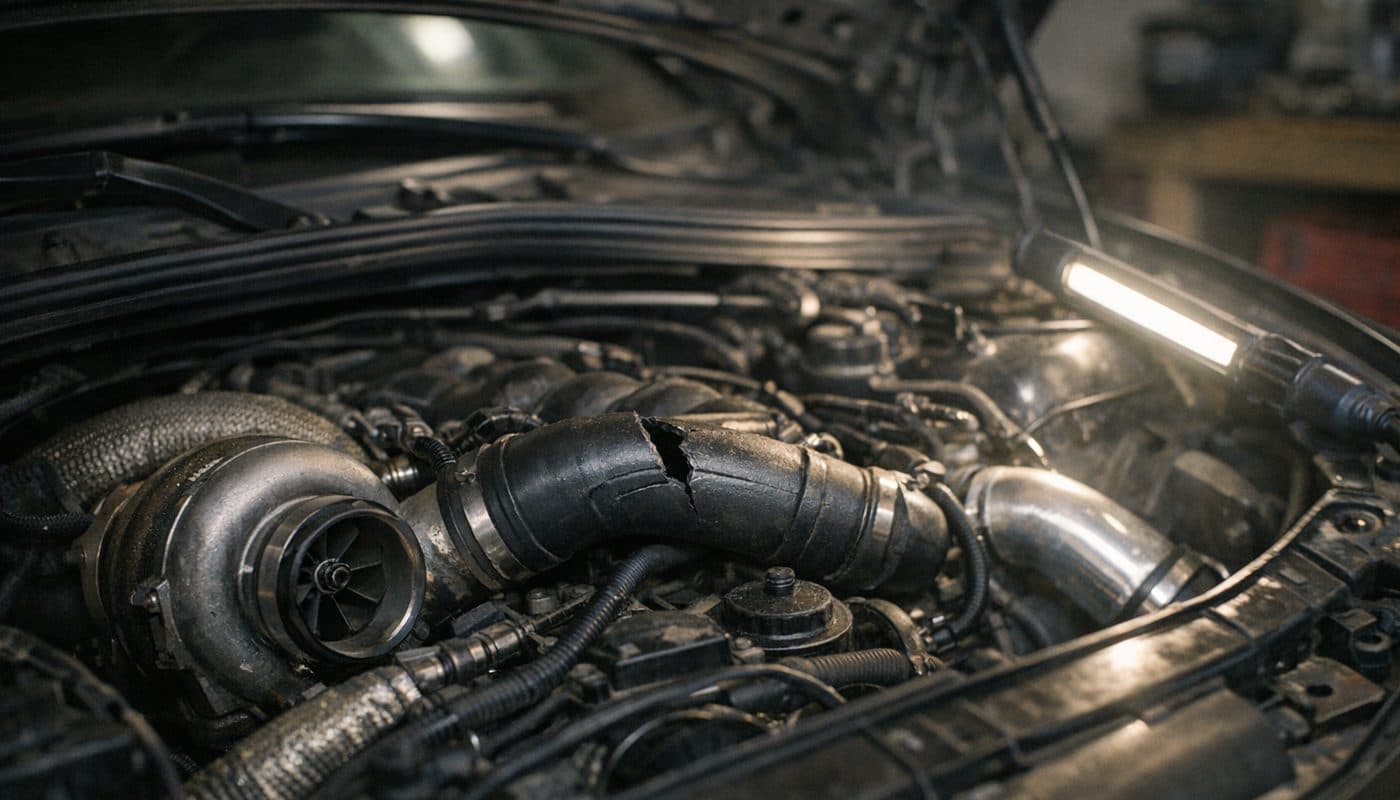
A good general shop will charge roughly $80 to $180 for a diagnostic and will usually run an enhanced OBD2 scan that gets further than a parts-store reader. Whether it reaches the DSC, airbag, EGS and body modules on your particular BMW depends entirely on the scanner and its software version. The classic failure mode here is the shop that reads a boost deviation code from the DME, has no BMW test plan to follow, and quotes a turbo. On an N55 that code is far more often a cracked charge pipe or a leaking intercooler coupler, which a BMW specialist would smoke test in twenty minutes. For simple, well-understood engine faults a general shop is fine. For anything involving a BMW-specific module or anything intermittent, it is often the most expensive cheap option because you end up paying a second time somewhere else.
Mobile diagnostic services
Mobile mechanics have become a real category in the US and the convenience is genuine. Expect roughly $100 to $250 for a visit, sometimes with a separate service call component baked in. The variable is, again, the tool in the bag. Some mobile techs carry a proper all-module scanner and can do a very credible scan and inspection in your driveway. Others carry a generic reader and are effectively doing the parts-store scan for money. Ask what they're plugging in before you book. The other limitation is physical. A driveway visit can read codes and poke at connectors but cannot put the car on a lift, pressure test a cooling system properly, or road test under load for an hour. For a first look at a car that won't start or a "what is this light" question it's reasonable. For a full diagnosis it rarely is.
The free code read at AutoZone, O'Reilly and Advance
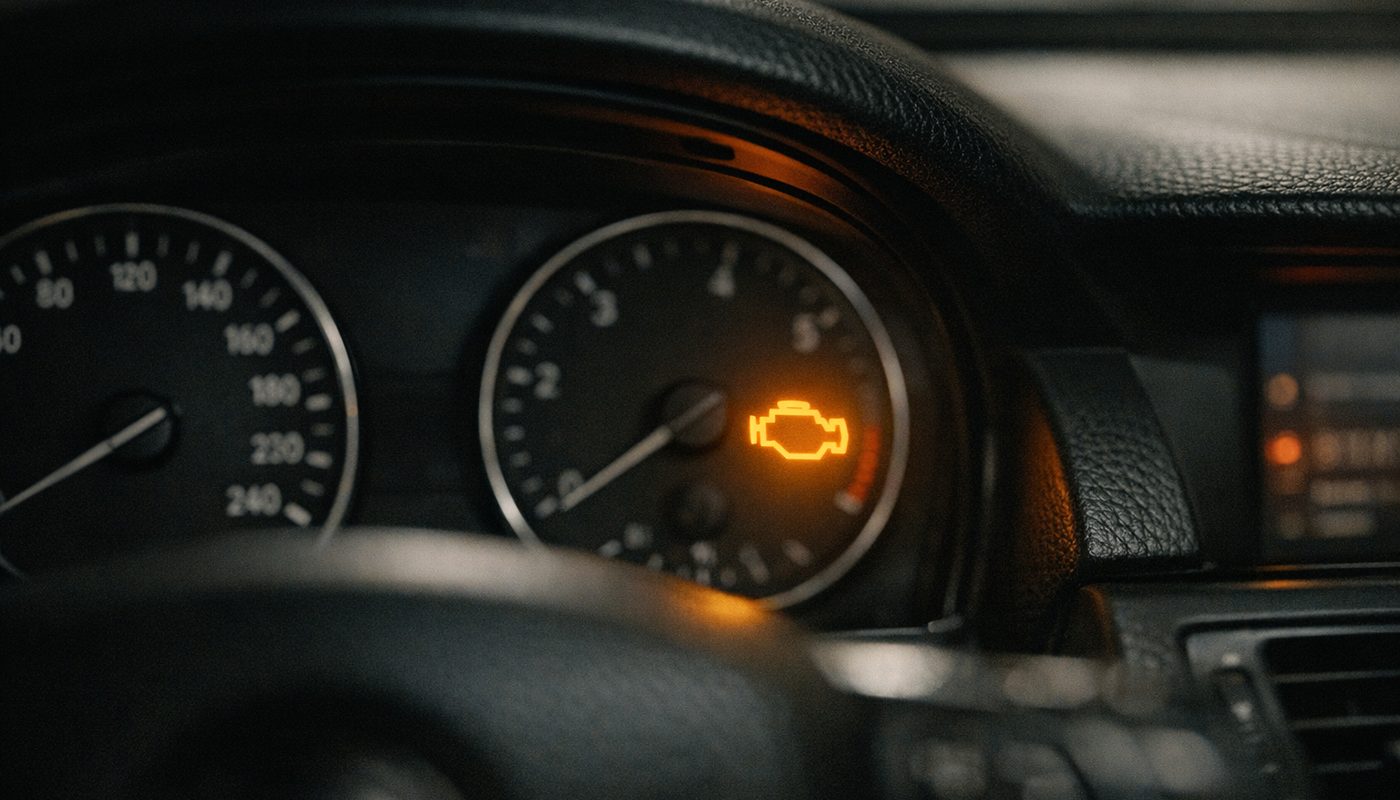
All three big US parts chains advertise a free check engine code read, AutoZone brands theirs Fix Finder, and store policy on whether they'll clear codes or even scan certain vehicles varies by location. The question for a BMW owner is not whether it's free. It's what it can see.
What a parts-store scanner sees on a BMW
A generic OBD2 reader talks to the DME, or the DDE on a diesel, over the standardized emissions protocol. It will read generic P0 codes, show you the standard emissions live data like coolant temperature and fuel trims, show readiness monitors, and clear the check engine light. On a BMW, that is genuinely useful for one specific situation, which is an amber check engine light with no other warnings. A misfire code, an oxygen sensor code, a small EVAP leak, a catalyst efficiency code - these are generic P codes and the free scan will show you one. If you then want to understand what the code means, our BMW fault codes explained article and the free fault code lookup tool will get you further than the printout.
What it cannot see
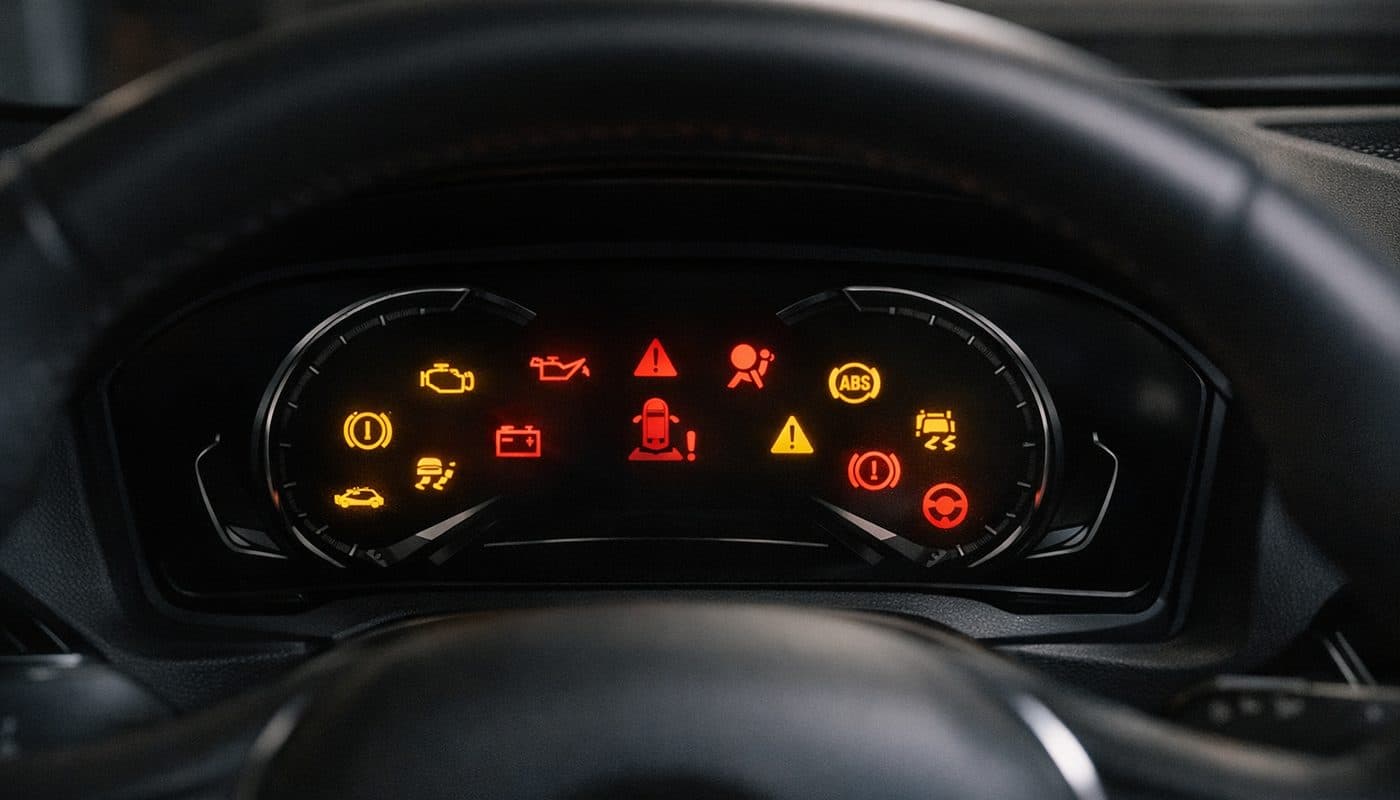
Everything else. BMW stores faults in separate control units and the generic protocol only queries the engine side. A DSC fault, an airbag or seatbelt pretensioner fault, a transmission fault in the EGS, a steering fault in the EPS, a window or lighting or immobilizer problem in the FRM, FEM, CAS or BDC, a parking brake fault, a TPMS fault, a driver assistance fault - none of these show up. Worse, many of them don't even light the check engine lamp, so the parts-store employee plugs in, sees no codes, and tells you the car is fine while the airbag light is glowing at them from the cluster. A yellow "drivetrain malfunction" message on a modern BMW is frequently a DME fault with a BMW-specific description that the generic reader either doesn't show or shows as a bare P code with no context. Our guide to every BMW dashboard warning light is a quick way to tell which lights are engine-side and which are not before you bother driving to the store.
When the free scan is actually enough
Amber check engine light, car driving normally, no other lights, you just want to know whether it's a loose gas cap or a misfire before deciding what to do next. That's the use case. It costs you nothing and gives you a P code to search. It is also a perfectly good second opinion if a shop has quoted you something expensive and you want to see the raw code yourself. What it is not is a certificate that a BMW has no safety system or transmission faults. I would never buy a used BMW on the strength of a clean parts-store scan, and neither should you.
Why BMW diagnostics run past one hour
The first-hour fee is the number everyone quotes. The reason BMW diagnostic bills surprise people is that certain fault types routinely blow through it. Knowing which ones lets you budget honestly and, just as importantly, lets you recognize when a shop asking for a second hour is being reasonable rather than greedy.
Electrical and communication faults
Anything involving multiple modules throwing faults at once, an intermittent no-start, a parasitic drain, or a bus communication error is a multi-hour job. A single low-voltage event on a BMW can seed fault memory across half a dozen modules, so the technician has to do battery and alternator load testing, fuse and ground checks, voltage-drop testing, harness inspection while flexing the loom, and sometimes leave the car to sleep and measure current draw again. Water ingress around the cowl, trunk and footwells is a classic BMW cause and finding it means pulling trim. Replacing the module named in the first code without doing any of this is how owners end up with a new FEM and the same fault. Expect one to three hours, sometimes several sessions.
Intermittent faults
An intermittent misfire, a drivetrain warning that comes and goes, a stall that happens once a week - these need to be reproduced, and reproduction takes time. Cold-start observation, hot-soak observation, road logging under the exact conditions you described, monitoring misfire counters and rail pressure and boost and voltage, then rescanning right after the event. A car that behaves perfectly in the workshop may need an extended road test or a return visit. If a shop claims to have definitively diagnosed an intermittent fault from one historical code in a single hour, be a little suspicious. If they ask for more time, that's usually the honest answer.
Coolant leaks, VANOS and boost leaks
These are the three mechanical categories that most often go past the hour on turbocharged BMWs. A coolant leak that only shows hot or under pressure needs a cold pressure test, a hot pressure test, UV dye, the undertray off, and a long list of suspects from the expansion tank to the oil filter housing to the turbo lines. VANOS and camshaft timing faults are a diagnostic rabbit hole because ignition, boost leaks, crankcase ventilation, oil condition and sensors can all mimic each other, so a proper sequence means comparing commanded versus actual cam angles, activating the solenoids, inspecting screens and connectors, and verifying oil supply before anyone condemns a VANOS unit. Boost faults on an N54, N55 or B58 usually hide until the engine is under load, so the shop has to smoke or pressure test the charge-air system and then road log to confirm. The specialist material I've read on these faults is consistent on one point. A boost deviation code does not mean the turbo is dead, and a shop that quotes a turbo without a smoke test is guessing with your money.
The DIY option and what it really costs
Here's where my own experience comes in, with one honest caveat. The only diagnostic hardware I actually own and use is an OBDLink CX, and I use it with BimmerCode on my G20. I have not personally run every tool below. What I can tell you is what the current prices look like, what each setup can and can't do according to the makers and the owners using them, and how I'd spend the money if I were starting from zero today.
OBDLink CX plus BimmerLink
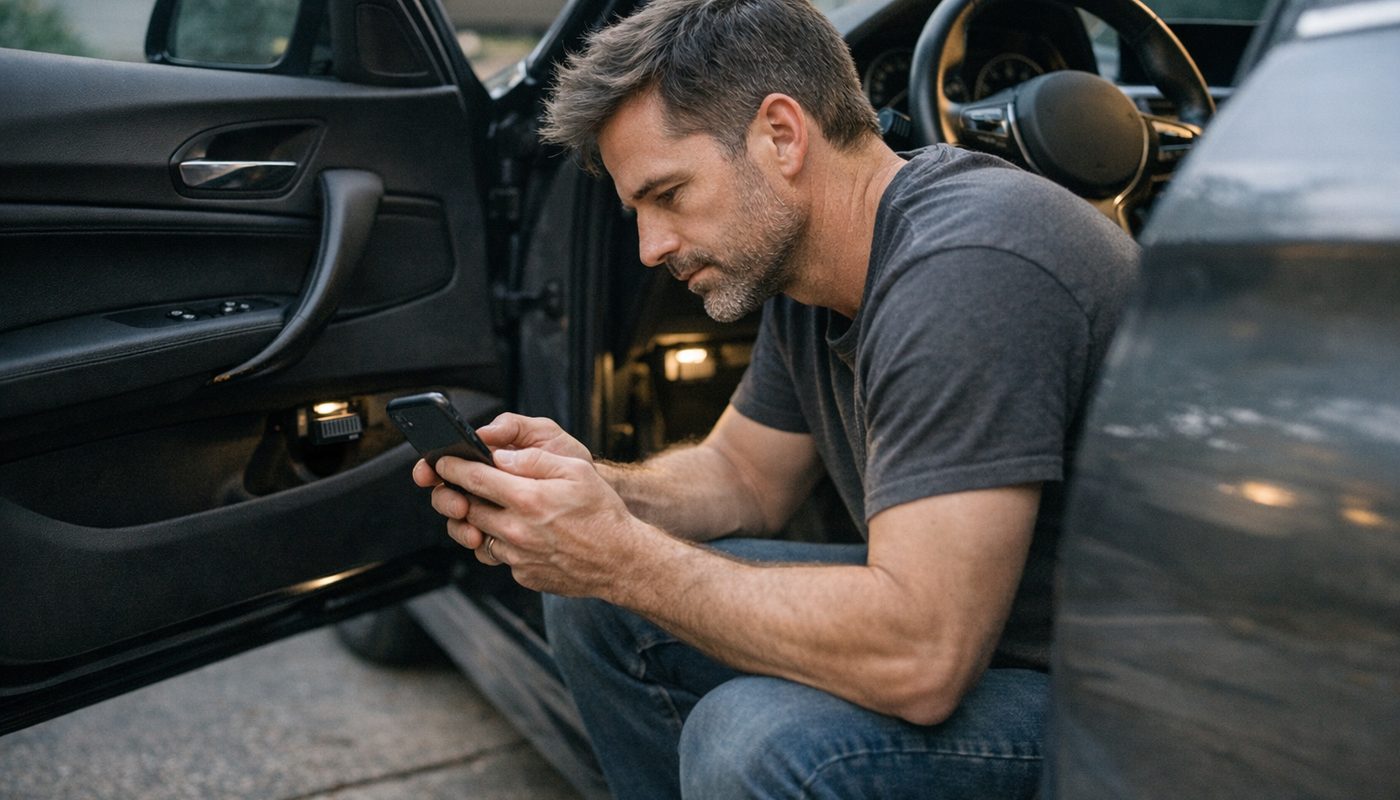
This is the cheapest serious BMW diagnostic setup that exists. The CX is listed around $80, BimmerLink is around $20 as a one-time purchase, so you're at roughly $100 for a package that reads and clears fault memory from every module BimmerLink supports on your chassis, shows live values, registers a replacement battery, resets service intervals, and activates selected components. No subscription. The adapter is a Bluetooth 5.1 dongle that stays in the glovebox and the app lives on your phone. The CX is built specifically for the BimmerCode and BimmerLink apps rather than as a general-purpose OBD adapter, which is a limitation if you also want to scan a Toyota, but a non-issue if you own one BMW. On my car the CX pairs instantly and I've never had a dropped session with BimmerCode, which is a decent sign for how it behaves with BimmerLink since both apps come from the same developer. Our full best OBD scanner for BMW roundup covers it against the alternatives if you want more detail, and the BimmerLink vs BimmerCode companion piece explains which app does what, since people confuse them constantly.

BimmerTalk rating 4.4/5
$79.95Amazon price as of Nov 8, 2026 - may change
We may earn a commission if you buy - it never changes what we recommend or what you pay.
Foxwell NT510 Elite
If you'd rather hold a scanner than a phone, the NT510 Elite with the BMW and MINI software package is the standard handheld answer. Current pricing is somewhere around $165 to $250 depending on bundle and seller, so check the listing you're looking at. Per Foxwell's own spec sheet it reads and clears manufacturer-specific codes across the modules, does CBS service resets, battery registration, and selected active tests, with no mandatory annual subscription. The caveats are that the hardware and interface are showing their age, and G-series coverage depends on the installed software version, so don't assume your G20 or G05 is fully supported until you've confirmed it for the current firmware. For owners running E90s and F30s it's a very comfortable fit. We have a dedicated Foxwell NT510 Elite vs NT530 comparison if you're trying to decide which Foxwell.

$164.99
We may earn a commission if you buy - it never changes what we recommend or what you pay.
Carly and the subscription math
Carly does diagnostics, coding, service resets and used-car checks in one app, and it's slick. The problem is the business model. The useful tier is a subscription reported at roughly $64 to $119 per year depending on region and plan, it generally wants its own adapter, and it auto-renews. Over two years that comfortably passes the cost of an OBDLink CX with both BimmerLink and BimmerCode bought outright, and over five years it's not close. If you'll use the tool once a year and like the hand-holding, fine. If you plan to own the car for a while, buy the tool rather than renting it.
What DIY cannot replace
Be clear-eyed here. A $100 adapter gives you a very good code read and some service functions. It does not give you BMW's guided test plans, it does not do programming or firmware flashing, and it does not come with a smoke machine or a scope. On a simple fault that's plenty. On the multi-hour fault types above, the scanner tells you where to start and then a professional, or a lot of your own weekend, takes it from there. The value of the tool is that you walk into the shop knowing what the codes say, which changes the conversation completely.
The break-even math
Let's do the arithmetic properly, because the "it pays for itself after one visit" line gets thrown around without anyone checking it. Assume a mid-range dealer diagnostic of $225 and a mid-range independent diagnostic of $160. Assume you own the car for three years and have one "what's that light" moment per year, which for a used BMW is optimistic.
| Approach | Year one cost | Three year cost | Notes |
|---|---|---|---|
| Dealer diagnostic each time | Around 225 USD | Around 675 USD | Credited to repair only if you repair there and only if the dealer allows it |
| Independent each time | Around 160 USD | Around 480 USD | Cheaper but still buying the same code read three times |
| OBDLink CX plus BimmerLink | Around 100 USD | Around 100 USD | Breaks even at the first avoided visit |
| Foxwell NT510 Elite | Around 165 to 250 USD | Around 165 to 250 USD | Breaks even at the first or second avoided visit |
| Carly with adapter | Around 100 to 180 USD | Around 250 to 400 USD | Subscription renews whether you use it or not |
| Autel MK808 class tablet | Around 480 to 530 USD | Around 480 to 530 USD plus update fees | Only makes sense with several cars or paid side work |
Dealer diagnostic each time
- Year one cost
- Around 225 USD
- Three year cost
- Around 675 USD
- Notes
- Credited to repair only if you repair there and only if the dealer allows it
Independent each time
- Year one cost
- Around 160 USD
- Three year cost
- Around 480 USD
- Notes
- Cheaper but still buying the same code read three times
OBDLink CX plus BimmerLink
- Year one cost
- Around 100 USD
- Three year cost
- Around 100 USD
- Notes
- Breaks even at the first avoided visit
Foxwell NT510 Elite
- Year one cost
- Around 165 to 250 USD
- Three year cost
- Around 165 to 250 USD
- Notes
- Breaks even at the first or second avoided visit
Carly with adapter
- Year one cost
- Around 100 to 180 USD
- Three year cost
- Around 250 to 400 USD
- Notes
- Subscription renews whether you use it or not
Autel MK808 class tablet
- Year one cost
- Around 480 to 530 USD
- Three year cost
- Around 480 to 530 USD plus update fees
- Notes
- Only makes sense with several cars or paid side work
The honest reading of that table is that the cheap adapter route is a no-brainer for anyone who intends to keep a BMW out of warranty for more than a year. It won't save you a single dollar of actual repair cost, but it eliminates the "what is wrong" fee on every simple fault and it stops you paying for a diagnostic on something you could have fixed in twenty minutes. The Autel-class tablet, which I include because people ask, is a shop tool. For one BMW it's hard to justify unless bidirectional tests on multiple brands are genuinely on your list.
There's also a cost that doesn't show in the table. Owners who scan their own cars tend to catch things early, a slow coolant loss, a misfire counter creeping on one cylinder, a battery that's being reported as weak. Those are cheaper to fix when caught, and that shows up over years in the numbers we lay out in the BMW maintenance cost by model and year guide.
Four real scenarios
Price ranges are abstract. Here's how the options play out on four of the most common reasons a BMW owner ends up googling "diagnostic cost."
Check engine light on an N55
Your F30 335i or E70 X5 lights the amber lamp and drives slightly off. The free parts-store scan will give you a generic P code, maybe a misfire on cylinder 3 or a boost-related code. BimmerLink will give you the BMW-specific fault with the freeze frame, which is far more useful. At that point you have a decision. A single-cylinder misfire on an N55 is a coil or plug swap you can do yourself for the price of the parts, and the only diagnostic cost was your $100 adapter. A boost deviation code on the same engine is a smoke-test job, and that's worth paying an independent $150 to $200 for, because finding a cracked charge pipe in an hour beats buying a turbo you didn't need. Our BMW check engine light guide walks through the common causes if you want to triage before spending anything.
Drivetrain malfunction
The yellow "drivetrain malfunction, drive moderately" message on a modern BMW is the one that sends people to the dealer in a panic, and it's also the one where the parts-store scan is most likely to show nothing useful. It's a DME-generated message that can be triggered by a misfire, a boost or fuel pressure deviation, an ignition fault, or a sensor plausibility problem. It is frequently intermittent. If it happened once, cleared on restart, and you have a BimmerLink setup, read the stored fault and its freeze frame before clearing anything, because once it's cleared the dealer has nothing to look at and you're paying the hour for a "could not duplicate." If it's repeating, this is a case where a proper diagnosis with a road test is worth paying for, and you should budget for the possibility of a second hour. If the car has dropped into reduced power, our BMW limp mode guide covers what to do before you drive it anywhere.
Airbag light
This is the scenario where the free scan is worthless and the cheap adapter earns its keep. The parts-store reader cannot talk to the airbag module at all, so you'll get "no codes found" with the light glaring at you. BimmerLink or a Foxwell will read the restraint module and tell you whether it's a seat occupancy mat, a pretensioner circuit, a connector under the seat or a crash event stored in memory. Knowing that before you walk into a shop turns a $225 "diagnose airbag light" into a focused "replace or repair this specific circuit" conversation. One rule, though. Airbag circuits are safety-critical. Read the codes by all means, but leave any physical work on the restraint system to someone who knows the disconnect procedure.
Battery registration after a DIY battery swap
You replaced the AGM battery in your E90 or F10 yourself, saved a few hundred dollars over the dealer, and now you've read that the car needs to be told about the new battery. Correct, it does. The dealer will often bundle registration into a short labour charge or a diagnostic fee, so you could easily pay $75 to $150 for ninety seconds of work. BimmerLink does it, and the Foxwell does it. This is the single most-cited reason in owner forums for buying one of these tools, and it alone covers the cost of the CX. We have a full walkthrough in the BMW battery registration guide, including when you also need to recode for a different capacity or chemistry.

BimmerTalk rating 4.0/5
$139.95Amazon price as of Nov 8, 2026 - may change
We may earn a commission if you buy - it never changes what we recommend or what you pay.
How to avoid paying twice
The most expensive diagnostic is the one you pay for and then pay for again somewhere else. This happens constantly, usually because the first shop couldn't see the right module, or because the owner cleared the codes before the second shop had a chance to read them. Here's the sequence I'd follow for any warning light on an out-of-warranty BMW.
- Read the codes yourself first, with a BMW-capable tool if you have one, or at a parts store if it's only the check engine light. Screenshot everything including freeze frame data. Do not clear anything yet. If you're unsure how, the how to read and clear BMW fault codes guide covers it step by step.
- Decide whether the fault is a code-read problem or a diagnosis problem. A single clear fault in one module with an obvious cheap fix is the first kind. Multiple modules, anything intermittent, anything involving leaks, boost, timing or voltage is the second kind.
- For the second kind, call two shops, one independent BMW specialist and one dealer. Ask the five questions from the specialist section above, and specifically ask whether they run ISTA.
- Get the fee, the hourly rate for additional time, and the credit-to-repair policy written on the repair order before you authorize. Not verbally. On the order.
- Tell them what you already know. Hand over the screenshots. A technician who starts with your freeze frame data is twenty minutes ahead, which is twenty minutes of your money.
- Ask for the written findings when you collect the car, whether or not you repair it there. Modules scanned, codes, tests done, what was measured, what was confirmed. If you take it elsewhere for the repair, this document is what stops the next shop charging you for a fresh diagnostic.
- Only clear the codes after the repair is done and verified. Clearing early erases the history and resets the readiness monitors, which matters if you have an emissions test coming.
Can you haggle the diagnostic fee
You can negotiate, within limits, and it works better than people expect because diagnostic time is one of the few things on a dealer invoice that isn't tied to a part price. Realistic asks that get a yes fairly often are crediting the fee in full against the repair, waiving it if the cause turns out to be a warranty or CPO defect, capping the initial authorization at one hour with a mandatory call before any more, and matching an independent's quote if you have one in writing. What rarely works is asking for the diagnostic to be free outright on a customer-pay fault. The technician's time is real, and a dealer that gives it away is subsidizing you with the next customer's bill. Independents are usually more flexible, especially on crediting the fee to the repair, because they'd rather have the repair than the hour.
One thing to avoid. Don't try to haggle by withholding information. Owners sometimes keep quiet about a recent coding session or a DIY repair to avoid "giving the dealer an excuse." All that does is send the technician down the wrong path for an hour you'll pay for. Tell them what you did. If it turns out you caused it, better to know in hour one than hour three.

BimmerTalk rating 3.6/5
$39.87Amazon price as of Nov 8, 2026 - may change
We may earn a commission if you buy - it never changes what we recommend or what you pay.
FAQ
How much is a BMW diagnostic test compared to a normal car
A diagnostic on a mainstream car at a general shop is commonly quoted somewhere around $80 to $150, because the labour rate is lower and the scan is simpler. A BMW diagnostic at a dealer runs roughly $150 to $300 in 2026, and the premium is almost entirely the hourly rate plus the fact that a proper BMW scan covers more modules and often needs factory software. The actual plug-in time isn't any longer. You're paying for the rate and the depth, not the minutes.
How much would a full all-module diagnostic cost
Most shops don't price a "full" diagnostic separately. The initial hour at a dealer or BMW specialist already includes a full vehicle test across every module, so the $150 to $300 figure is the all-module price. What costs more is the follow-up, the test plans and pinpoint testing after the scan. If a shop quotes a separate, higher "full system" fee on top of a basic scan fee, ask what the basic scan was skipping, because on a BMW a powertrain-only scan is barely worth running.
What does BMW inspection mean and is it the same as a diagnostic
No. "Inspection" in BMW service language refers to the scheduled maintenance inspection items, Inspection I and II on older cars, or the condition-based service checks on newer ones. It's a checklist of visual and functional checks tied to mileage or time, and it's what Ultimate Care actually covers. A diagnostic is fault-driven work in response to a symptom or warning. The two can happen on the same visit and the advisor may bundle them on the invoice, but they're billed as separate operations and you should expect to see them listed that way.
How do you get a BMW out of diagnostic mode
This question usually means one of two things. If the instrument cluster is showing a test menu with numbered screens, that's the KOMBI service test mode, and you back out by cycling through to the exit option or simply switching the ignition off and on again. If a scanner was disconnected mid-session and the car seems stuck, with lights on or modules unresponsive, lock the car, walk away for a few minutes so it goes to sleep, then start it normally. If the symptoms persist after a full sleep cycle, something was left in a bad state during coding or programming and that's a battery-support-unit-and-proper-tool situation, not a "turn it off and on" one.
Is there a free BMW coding app
Not a useful one. BimmerCode and BimmerLink both have free lite versions that will connect and show you what's supported, but the actual coding and the full module diagnostics are paid, and the one-time prices are low enough that it's not worth hunting. Carly runs a subscription. Anything advertised as a free full-feature BMW coding app is either a demo or a cracked copy, and cracked copies of BMW software are a genuinely bad idea on a car that depends on a stable session to keep its modules happy. The legitimate route costs less than a single dealer hour.
Will AutoZone read my BMW codes
Most stores will plug in and read the engine codes on a BMW with no fuss, though some locations are cautious about European cars or about clearing codes, so it varies. What you'll get is the generic P code from the DME. If your issue is the check engine light, that's helpful. If your issue is any other warning light, or a message like drivetrain malfunction with the amber lamp off, the store scan will come back empty and you've learned nothing.
Do I get the fee back if the shop finds nothing wrong
Generally no. A "could not duplicate" result still consumed the technician's hour and most shops bill it. The exception is a warranty car where a covered defect is later confirmed, in which case some dealers will retroactively credit the earlier diagnostic. The practical defence against paying for "no fault found" is to capture the fault yourself, with screenshots and freeze frame data, before the car has a chance to heal itself on the way to the shop.
Do I need a diagnostic if I already know what's wrong
If you've read a clear code yourself and you're asking a shop to replace a specific part, you can ask to skip the diagnostic and go straight to a repair quote. Many independents will do this. Dealers are more reluctant, partly for liability and partly because their warranty on the repair assumes they confirmed the cause. The compromise is to ask for a short verification charge rather than a full hour. Be aware that if you insist on your own diagnosis and the part doesn't fix it, that's on you, not the shop.
The bottom line
A BMW diagnostic fee of $150 to $300 at a dealer is not a scam. It's an hour of a well-paid technician's time with factory software, and for electrical gremlins, intermittent faults, coolant leaks and anything involving boost or timing on a turbo engine, that hour is worth every dollar because the alternative is guessing with parts. Independent BMW specialists give you most of the same depth for a bit less, and they're where I'd take an out-of-warranty car with a real problem.
But for the simple stuff, the single misfire, the battery registration, the airbag light that turns out to be a seat connector, the drivetrain message that comes and goes - paying someone $225 to tell you what a $100 adapter would have told you in your driveway is the one BMW ownership cost that is entirely optional. Buy the adapter. Read your own codes first. Walk into the shop knowing what the car has stored. Then pay a professional for the part of the job that genuinely needs one, and get the terms written down before you hand over the keys.
My own CX has already paid for itself several times over just in coding on the G20, and if I were starting from zero on an older BMW today, a CX plus BimmerLink is where I'd spend the first hundred dollars, before any part and before any shop. Drive safe, and keep the screenshots.
Kamil