BMW Power Steering Fluid
Power Steering Fluid for BMW. Compare prices, check fitment, find the right part for your build.
Affiliate disclosure. BimmerTalk is a proud partner of the Amazon Associates Program and Turner Motorsport. We may earn a small commission on qualifying purchases through our links, at no extra cost to you. Read the full disclosure.


If you searched for BMW power steering fluid, you are probably in one of three situations. Your steering just started whining on cold starts, you found the reservoir level low and need to know what to pour in, or you are trying to sort out whether your chassis even has hydraulic steering in the first place. On BMWs, that last point matters more than a lot of generic fluid guides admit. An E46 330i, an E70 X5 3.0si, and an F30 328i all wear roundels, but only two of them even have power steering fluid to check. By the time you get into G20, G30, G80, and G87 territory, the answer is usually no fluid at all because the steering assist is electric.
The other reason BMW owners look this up is because the cap and reservoir can be misleading, previous owners can be careless, and parts store advice is often flat-out wrong. A lot of older hydraulic BMW systems want green mineral-synthetic hydraulic fluid, usually Pentosin CHF 11S, not generic red automatic transmission fluid. Mixing those is how you turn a simple top-off into leaking hoses, noisy pumps, and a rack that starts feeling notchy when parking. I have seen it happen on E39s and E90s that were otherwise well kept. It is one of those maintenance topics that sounds basic until you realize BMW changed specs across generations and sometimes even across trims in the same model family.
I have spent enough time under these cars to know this is not a place for vague advice. So this page is chassis-specific, opinionated where it should be, and built around what actually matters when you own and maintain one of these cars. I am going to cover which BMWs use hydraulic fluid, why Pentosin CHF 11S became the standard answer, where CHF 202 fits in, how to diagnose low-fluid symptoms, and how to flush or bleed the system without making a mess. If you daily an older hydraulic car, this stuff matters. If you daily something newer like I do with my G20 330i and its B48, you mostly need to know you do not have a fluid service item here at all.
Why BMW power steering fluid is a real chassis-specific issue
BMW power steering fluid is one of those topics where internet advice gets lazy fast. You will still see blanket statements like "all BMWs use Pentosin" or "just use ATF if it is old." Neither is good enough. BMW used both hydraulic and electric steering systems depending on the era, body style, engine package, and sometimes even market. If you own an E36, E39, E46, E53, E60, E70, E90, or E92, there is a good chance you are dealing with a traditional hydraulic system and an actual fluid reservoir. If you own most F30, F32, G20, G30, G05, G80, or G87 models, steering assist is electric and there is no reservoir to top off.
The first thing I tell people is simple. Ignore random forum certainty for 30 seconds and look at the hardware in front of you. A hydraulic car will have a power steering reservoir, hoses, and a pump driven by the accessory belt. An electric car will not. On older BMWs the reservoir cap often tells you what fluid belongs in the system. If it says CHF 11S Only, believe it. If it says ATF Only, also believe it. If the cap is missing or swapped, then you need to verify by chassis, production date, and part catalog references instead of guessing.
BMW owners tend to care because steering feel is part of the brand's identity. Hydraulic BMWs, especially E36, E46, E39, and E90 cars in good shape, have a level of organic rack feedback that newer electric systems just do differently. If your pump is cavitating from low fluid, or your return hose is drawing air because the clamp is weak, that feel goes away in a hurry. So yes, fluid choice matters, but system condition matters just as much.
Hydraulic BMWs are not all the same
It is tempting to lump all older BMW hydraulic systems together, but there are important differences. Some earlier BMW applications used ATF. Many later ones standardized around central hydraulic fluid, especially Pentosin CHF 11S. Self-leveling and active systems on certain models also overlap with the same fluid family. If you own a late E39 540i, an E46 330i ZHP, or an E70 X5, odds are strong that green CHF is the correct direction. If you own an early car or a car with a cap clearly labeled ATF, you do not get to substitute just because someone online says "all BMWs take Pentosin."
That is why I always tie fluid advice back to chassis and cap labeling. BMW did not build these cars for generic maintenance shortcuts. They built them with specific seals, pump tolerances, and cold-flow expectations. The right fluid keeps the pump quiet in winter, keeps the steering feel consistent when hot, and avoids swelling or drying out seals the wrong way.
Electric vs hydraulic BMW matters before you buy anything
One of the most common search intents behind electric vs hydraulic BMW is simply "do I even need this fluid?" If you have an F30 3 Series, there is a strong chance the answer is no. Same for many F32 4 Series, G20 3 Series, G30 5 Series, G05 X5, G80 M3, and G87 M2 models. There is no fluid reservoir to inspect because steering assist comes from an electric motor integrated with the rack or column. In my own G20 330i with the B48, there is no power steering fluid maintenance item at all. If steering gets heavy or faults out, I am scanning modules and checking voltage, not hunting for a green fluid bottle.
That leads to another practical point. Newer BMW owners sometimes buy bmw psf because they hear a noise while turning. On an electric steering car, that noise is not going to be solved with Pentosin because there is nowhere to put it. In that case I would go straight to fault scanning and electrical diagnosis, and if you need a place to start with tools, coding and diagnostic tools is the right lane, not fluid.
Which BMWs use hydraulic steering fluid and which do not
This is where the article needs to get specific. The cleanest way to avoid mistakes is to break it down by generation. Broadly speaking, most older E chassis BMWs used hydraulic power steering. Many F and nearly all G chassis cars use electric power steering. There are exceptions and transitional cases, so consider the table below a practical starting point, then verify against your reservoir cap or VIN-based parts lookup.
| Chassis | Typical steering assist type | Fluid reservoir present | Common fluid direction | Notes |
|---|---|---|---|---|
| E36 3 Series | Hydraulic | Yes | Depends on cap and production, many ATF, some later applications need verification | Do not assume CHF unless labeled |
| E39 5 Series | Hydraulic | Yes | Many later cars use CHF 11S, verify cap | Very common leak points at reservoir hoses |
| E46 3 Series | Hydraulic | Yes | Often CHF 11S, verify cap | 330i and M3 owners should still check cap labeling |
| E53 X5 | Hydraulic | Yes | Often CHF 11S | Steering and active systems can increase fluid sensitivity |
| E60 5 Series | Hydraulic on many models | Yes on hydraulic cars | Commonly CHF 11S | Varies by model and options |
| E70 X5 | Hydraulic on many models | Yes | Commonly CHF 11S | Heavy chassis makes low-fluid noise obvious |
| E90 and E92 3 Series | Hydraulic on many 6-cyl cars, some 4-cyl/electric variations by market and trim | Usually yes if hydraulic | Often CHF 11S | Always confirm actual hardware |
| F10 5 Series | Mixed, many electric | Often no | None if EPS | Verify before buying fluid |
| F15 X5 | Mostly electric | Usually no | None | Steering issues are not fluid-related |
| F30 and F32 | Mostly electric | No on EPS cars | None | No power steering fluid on most applications |
| G20, G30, G05, G80, G87 | Electric | No | None | Do not search for a reservoir that does not exist |
If you are not sure which generation you actually own, especially if you bought the car used and the dealer ad just said "2011 328i," use our BMW chassis tool. That takes the guesswork out of whether you are dealing with an E90, F30, or something more niche.
For practical ownership, the hydraulic group is where fluid knowledge matters most. E39 525i and 530i with the M54, E46 325i and 330i with the M54, E46 M3 with the S54, many E60 six-cylinder cars with the N52 or N54, E90 325i and 330i with N52, E92 335i with N54 or N55, and E70 X5 six-cylinder and V8 variants are all examples where I would expect owners to know what is in the reservoir and when it was last changed.
When production date and model variant matter
BMW transitions are rarely neat. Mid-cycle changes happen. Caps get swapped. Previous owners dump in whatever was on the shelf. That is why I am careful about saying "many" and "often" in some cases. On the ground, what matters is this sequence:
- Identify the chassis and model
- Confirm whether the steering system is hydraulic or electric
- Read the reservoir cap if the car is hydraulic
- Verify against VIN-based parts data if there is any doubt
- Never mix fluid types to hedge your bets
If your system says ATF only, use the correct ATF. If it says CHF 11S only, use CHF 11S. If the reservoir is missing, stained, or questionable, I would stop and confirm before topping off. A $20 to $120 fluid purchase is cheap. A contaminated rack and pump are not.
How this maps to common BMW engines
Engine code does not determine fluid spec by itself, but enthusiasts often think in engine families, so it helps to orient around them. M50, M52, M54, S54, N52, N54, N55, and S55 cars are often from the hydraulic era. B46, B48, B58, and S58 cars are typically in the electric steering era. That is not a perfect rule, but as a quick shorthand it is pretty useful. My own B48-powered G20 is electric. My friend’s old E92 335i with the N54 was hydraulic and definitely cared about fluid condition and the usual reservoir hose seepage.
Pentosin CHF 11S and why BMW owners keep coming back to it
For the BMW crowd, Pentosin CHF 11S is the fluid name that comes up over and over because it is the right answer for a huge slice of late hydraulic BMW applications. It is a synthetic high-performance central hydraulic fluid with a very broad operating temperature range and stable viscosity behavior that suits power steering systems, level control, and other hydraulic circuits designed around it. In plain English, it flows when cold, holds up when hot, and behaves the way BMW's seals and pumps expect when the system was engineered for CHF.
The "green fluid" description is not just a forum meme. CHF 11S is visually distinct from red ATF, which is useful because contamination often shows up in the reservoir. If I pull the cap on an E46 or E90 that should be on CHF and see fluid that looks reddish-brown, I immediately start asking questions. Was the reservoir replaced and mislabeled? Did someone top it off with Dexron? Was it converted on purpose, or did a quick lube place make an expensive decision on the owner's behalf?
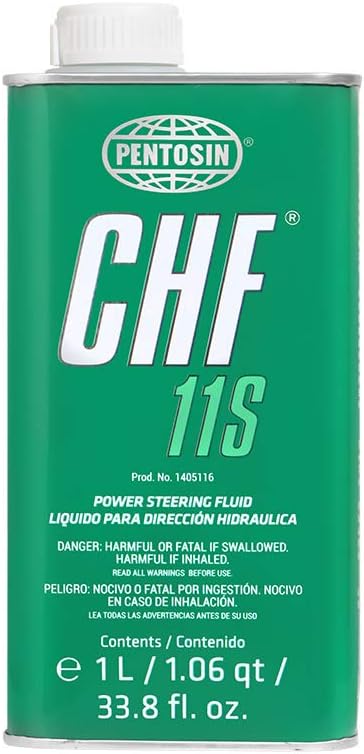
I like genuine Pentosin because it is the benchmark product BMW owners recognize and because it is widely proven in these systems. If you need it, Pentosin CHF 11S Long-Life Synthetic Hydraulic Fluid for BMW - 1 Liter is the straightforward buy for a top-off or a partial service. If you are doing a proper flush on a car with old fluid and want enough on hand to cycle clean fluid through without getting nervous about quantity, the Pentosin CHF 11S High Performance Synthetic Hydraulic Fluid for BMW - 2 Liter size makes more sense.
What makes CHF 11S different from generic power steering fluid
Generic "power steering fluid" is one of those product labels that should make BMW owners pause. It tells you almost nothing about actual spec compatibility. CHF 11S is not just any steering fluid. It is a central hydraulic fluid with a specific viscosity profile and additive package intended for systems designed around it. A bottle that says "works in most European vehicles" is not enough for me unless the manufacturer clearly states CHF 11S compatibility.
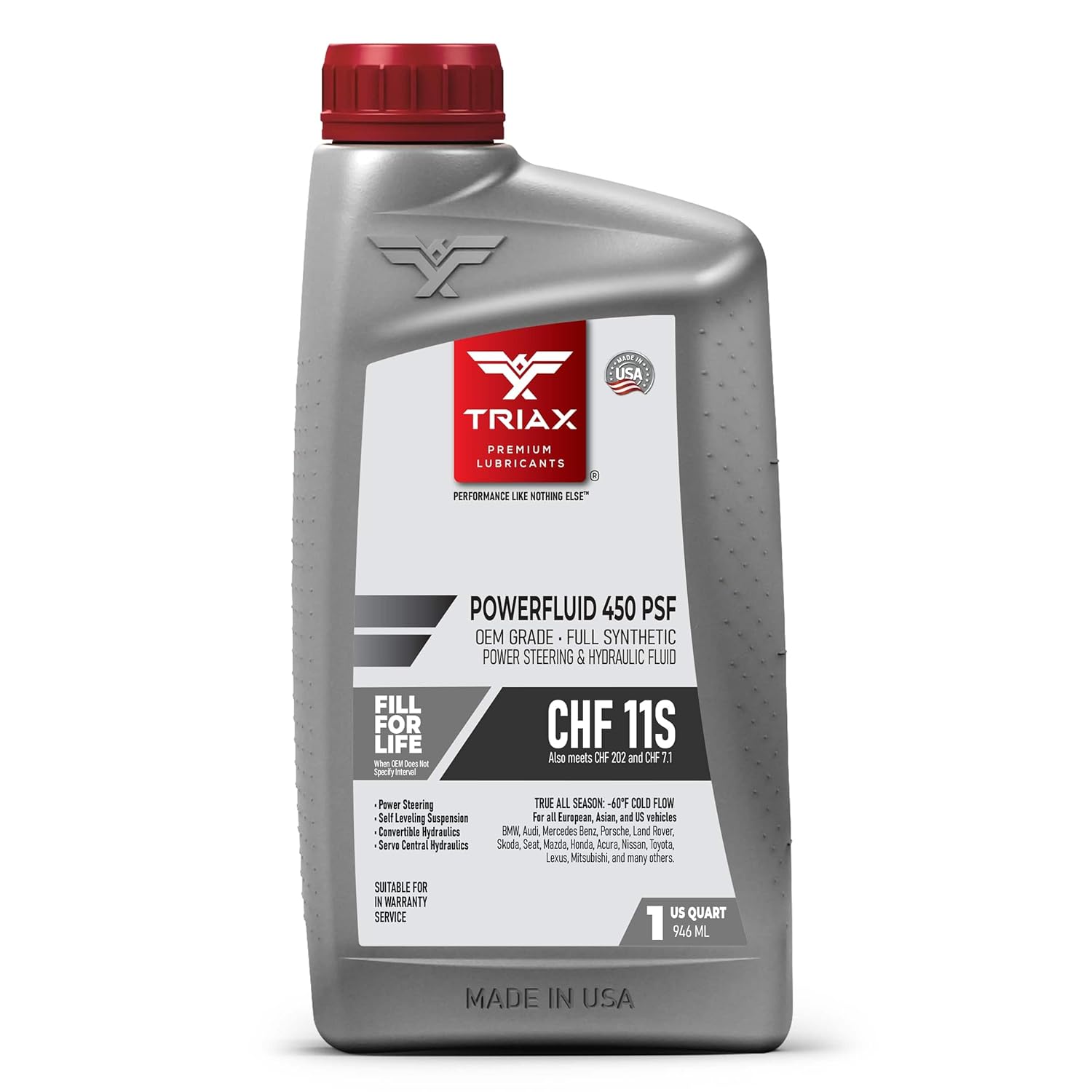
That is why I do not mind alternatives if they are transparent about the target spec. The Triax Powerfluid 450 CHF 11S Synthetic Hydraulic and Power Steering Fluid is one example of a product positioned specifically around CHF 11S applications, which is a much better starting point than vague universal fluid claims. Still, if I am dealing with a car that has had a very clean service history and no fluid drama, I usually stay with Pentosin.
Temperature behavior matters more than people think
Hydraulic steering complaints often show up first in cold weather. You start the car, turn out of the driveway, and hear a groan or whine for the first 30 seconds. Sometimes that is just age and aeration. Sometimes the wrong fluid is making the pump's life harder because cold-flow behavior is off. CHF 11S was developed for systems that need reliable hydraulic response at low temperatures and stable performance when fully hot. That is not trivia. It is part of why a BMW that steers beautifully in October can feel terrible in January after somebody tops it off with whatever red fluid they had left over.
If you live somewhere with real winter, this becomes even more obvious. I have had owners tell me their car "only whines when it is freezing outside." The fluid level is low, the suction side hose is damp, and the fluid in the reservoir is dark enough to make me suspicious. Correcting the fluid and bleeding the system often transforms the behavior. Not every noisy pump is saveable, but you want to give it the best chance with the right hydraulic fluid before writing off hard parts.
CHF 11S vs CHF 202 and where BMW owners get confused
Once you start reading labels, another name appears pretty quickly - CHF 202. This is where people get nervous, usually because they know their car calls for Pentosin CHF 11S and then they see CHF 202 listed as a newer fluid. The short version is that CHF 202 is generally understood as a successor fluid in the same family for many applications and is often discussed as backward-compatible with systems that previously used CHF 11S. But "often discussed" is not the same thing as "ignore all labels and pour whatever in."
My practical stance is simple. If the reservoir or service information specifically calls for CHF 11S and you can easily get CHF 11S, use CHF 11S. It eliminates uncertainty and keeps the service dead simple. There is no prize for being clever with hydraulic fluid. If you are in a situation where CHF 202 is the available approved replacement and you have verified compatibility for your application, fine. But I would not mix randomly or use the existence of CHF 202 as an excuse to get casual.
Part of the confusion comes from the fact that owners hear "newer fluid replaces older fluid" and then mentally translate that into "all fluids in this category are basically the same." That is how systems end up contaminated with universal fluid or Dexron. CHF 11S and CHF 202 are at least in the same conversation. Dexron ATF is a different conversation.
| Fluid | Color | Typical BMW use case | Safe to mix casually | My recommendation |
|---|---|---|---|---|
| Pentosin CHF 11S | Green | Many hydraulic BMW steering systems from later E era and related applications | No casual mixing with other fluid types | Default choice when cap or spec says CHF 11S |
| CHF 202 | Green | Newer central hydraulic applications, often referenced as successor fluid | Do not mix casually without verifying system spec | Use only if verified appropriate for your application |
| Dexron ATF | Red | Certain older BMW hydraulic systems that explicitly call for ATF | No, never mix with CHF systems | Use only if cap or service info clearly says ATF |
| Generic power steering fluid | Varies | Usually not BMW-specific enough | No | Avoid unless explicit CHF 11S compatibility is stated |
What I do on a BMW with unknown service history
If I buy or inspect a hydraulic BMW with unknown history and the cap says CHF 11S, I assume nothing. I look at fluid color, smell, and clarity. I inspect the reservoir and hoses for sludge or varnish. If the fluid looks wrong, I do not just top it off and hope. I schedule a proper flush with enough correct fluid to clear the system. For that job I prefer having the 2-liter Pentosin CHF 11S on hand because I would rather use extra fluid than leave a mystery cocktail circulating through the pump and rack.
That approach has saved more than one pump from getting noisier after a "maintenance" session. Half measures are how contamination lingers. If the car has already been mixed, a full flush is your best chance to reset things before seals, hoses, and rack internals start arguing with each other.
Why I still do not treat CHF 202 as a universal answer
This is mostly an owner-discipline thing. Once people hear a newer fluid can supersede an older one, they stop verifying anything else. For a site aimed at BMW owners who actually know their chassis, that is not good enough. Read the cap. Check the service literature. Verify the actual system. If your E60 says CHF 11S only, use CHF 11S. If your parts documentation and approved fluid data point to CHF 202 for your exact system, fine. But do not let the compatibility discussion become an excuse to stop caring about exact spec.
Why you should never mix CHF with Dexron or random red fluid
This is the most important warning on the page, and it deserves blunt wording. Do not mix Pentosin CHF 11S with Dexron ATF. Do not mix green CHF with random red fluid because the reservoir was low and the store was closing. Do not let a generic shop do it because "power steering fluid is power steering fluid." It is not. BMW hydraulic systems that call for CHF were not designed around Dexron's chemistry, viscosity characteristics, or additive package.
What happens if you mix them? Sometimes the car still steers and the owner thinks they got away with it. Then over time you start seeing seal deterioration, hose sweating, pump noise, foaming, inconsistent assist, and fluid that turns into an ugly discolored blend. The system may not fail overnight, which is part of what makes this mistake so persistent. People top off once, nothing explodes, and they tell the next owner it is fine. Then that next owner inherits a weeping reservoir, a pump that whines at full lock, and a rack that feels less precise than it should.
I helped a buddy last summer with an E92 335i that had exactly this kind of confusion in its history. The cap called for CHF 11S. The fluid in the reservoir looked more amber-red than green. Steering assist was okay when warm, but cold starts came with a groan and visible aeration in the reservoir after a few steering inputs. We flushed the system thoroughly with the correct fluid, replaced the reservoir because the internal filter was tired, and addressed a damp return hose. It improved dramatically. The pump was still not brand new, but it stopped advertising its misery every morning.
Signs your BMW hydraulic system may have mixed fluid
- Fluid color does not match the reservoir cap specification
- Foamy or aerated fluid after turning lock-to-lock
- Persistent whining even after correcting level
- Hoses that seep more than expected after a recent "top-off"
- Steering feel that changes noticeably between cold and hot operation
- Reservoir fluid that looks muddy, brown, or strangely translucent
Some of those signs can also come from simple low fluid or air ingress, so they are not proof of mixing by themselves. But if the car should be on CHF and the fluid does not look greenish at all, I get suspicious fast.
If contamination already happened
The move here is not panic. It is methodical cleanup. A full flush with the correct fluid, ideally after replacing the reservoir if it has an internal filter and years of contamination, gives the system the best chance to recover. If pump noise remains after a proper flush and bleed, then you start thinking about whether the pump was already damaged or whether a hose is still drawing air on the suction side. Simply topping off with the correct fluid after the wrong fluid is in there does not undo the mistake.
This same disciplined thinking applies across fluids on these cars. BMW cooling systems, transmissions, and hydraulic steering all punish lazy generic-fluid logic eventually. If you are sorting the whole car, you might also want to review our BMW coolant flush guide and BMW automatic transmission fluid guide so each system gets the correct chemistry, not just the steering.
Symptoms of low BMW PSF and how to tell low fluid from bigger problems
The classic low BMW PSF symptom is whining while turning, especially at parking-lot speeds or on cold start. The noise usually comes from the pump as it starts drawing air along with fluid, or because the fluid level has dropped enough that the pump is cavitating. Drivers describe it as a groan, buzz, or hydraulic moan that gets worse near full lock. On heavy vehicles like the E70 X5, low fluid is often pretty obvious because the steering load is high and the assist system has no room to hide.
Another clue is a steering wheel that feels jerky or inconsistent during slow maneuvers. Instead of smooth assist, you get a slight pulsing sensation, usually most noticeable when parking. If the level is very low, the reservoir may show obvious turbulence, bubbles, or foam after a few lock-to-lock turns. That is air in the system, and air does not compress and lubricate like fluid. Ignore it long enough and pump wear accelerates.
Fluid on the outside of the reservoir, around the cap, or on the return hose is also common. On a lot of BMWs, the reservoir and low-pressure hoses slowly seep with age. A tiny damp film is not unusual on an older hydraulic car, but active drips or a wet subframe are not normal. The challenge is that owners often discover the noise first, top off the fluid, and never fix the leak. Then they are back in the same spot a month later.
Low fluid vs failing pump
A lot of people jump straight to "the pump is bad" as soon as a BMW starts whining. Sometimes that is true. More often, the right order is level, leak check, fluid condition, bleed procedure, then pump judgment. A pump that whines because it is starved of fluid is not necessarily dead. A pump that still whines after the level is corrected, the system is bled, and the fluid is clean is much more suspect.
Here is how I separate them in practice:
- Low fluid - Reservoir below minimum, intermittent assist, noise changes immediately after topping off, visible aeration
- Air leak on suction side - Fluid may be near correct level but foams repeatedly, noise returns after short drives, hoses or clamps look tired
- Contaminated fluid - Dark or incorrect color, sluggish cold behavior, vague service history, noise that improves but does not disappear after level correction
- Worn pump - Noise persists with correct fluid, proper level, and thorough bleed, sometimes accompanied by metallic feel or reduced assist even when warm
- Rack issue - Heavy steering, uneven assist left vs right, leaks at rack boots or lines, pump may be fine
Do not confuse electric steering faults with hydraulic symptoms
This is where the electric vs hydraulic BMW distinction matters again. If you own an F30, F32, G20, or G30 and steering suddenly gets heavy, low BMW power steering fluid is almost certainly not the reason because there is no fluid circuit to lose. On those cars I would think battery voltage, EPS faults, sensor issues, or rack electronics. BMWs get weird when system voltage is unstable, which is why I am always talking about battery health on newer cars. If that topic is relevant, our BMW battery replacement guide is worth a look because low voltage can create steering and chassis-module complaints that mimic mechanical faults.
That is one of the reasons owners should verify the actual steering system before buying fluid. It saves money, but more importantly it sends you to the right diagnosis path instead of trying to service a non-existent reservoir.
How to check BMW power steering fluid level the right way
Checking BMW power steering fluid is not complicated, but the details matter because an overfilled reservoir can be messy and an underfilled one can hide just enough problem to become a pump complaint later. On most hydraulic BMWs, the reservoir is a black cylindrical container near the front of the engine bay with a screw cap. Depending on chassis, the cap may have an integrated dipstick or level markings. The cap should also indicate the fluid type, which is the most important thing you can read before opening a bottle.
I like checking level on a cool engine with the car parked flat. Wipe around the reservoir cap first so dirt does not fall in. Open the cap carefully, inspect the fluid color, and check the level against the dipstick or reservoir marks. Some reservoirs have clear visual cues, others rely on the cap stem markings. If the fluid is low, do not just fill it to the brim. Add a little, recheck, and stop at the proper level.
If the fluid is below minimum, I also inspect around the reservoir body, hose connections, pump, and steering rack lines before I top off. Low fluid is not a normal wear item like fuel. It had to go somewhere. On E46 and E90-era cars, reservoir and low-pressure hose seepage is common enough that I start there. On older E39s, I also pay attention to the underside for dampness near line connections and cooling loop areas.
What healthy fluid should look like
If your BMW is a CHF 11S car, healthy fluid should generally look green and relatively clear. It should not look opaque, muddy, or heavily browned. Age darkens fluid somewhat, but dramatic discoloration tells me either the fluid is old, contaminated, overheated, or mixed with something it should not be mixed with. A quick top-off is fine when the system has a known small seep and the fluid otherwise looks correct. If the fluid looks wrong, I would lean toward a flush rather than pretending the bottle in your hand is enough.
If you need a small amount to restore level and you know the system is healthy, the 1-liter Pentosin CHF 11S is the sensible size. For a household with more than one hydraulic BMW, or for a flush plan, the 2-liter bottle is easier to live with.
How much fluid does a BMW power steering system take
Total fill volume varies by chassis and system layout, and BMW does not market power steering service as a routine drain-and-fill the way enthusiasts do. In real life, most top-offs are measured in ounces, not liters. A full flush can consume around 1 to 2 liters depending on how clean you want the fluid to come out and how much old fluid remains trapped in the rack and lines. That is why I tell people not to start a flush with just one small bottle unless they are sure the system is already pretty clean.
| BMW chassis | Typical hydraulic fluid service reality | Top-off amount if just low | Practical flush supply | My buy recommendation |
|---|---|---|---|---|
| E46 325i 330i M3 | Reservoir, hoses, rack retain old fluid | 100-300 mL is common for low level correction | 1.0-2.0 liters | 1 liter for top-off, 2 liters for flush |
| E39 525i 530i 540i | Leaks and seepage common on older hoses | 100-250 mL common | 1.5-2.0 liters | 2 liters if history is unknown |
| E60 525i 530i 535i | Often responds well to fluid refresh if noisy | 100-250 mL common | 1.0-2.0 liters | 2 liters for full service margin |
| E90 E92 325i 328i 330i 335i | Common reservoir and hose seepage | 100-300 mL common | 1.0-2.0 liters | 2 liters if flushing after mixed fluid concern |
| E70 X5 | Heavy chassis exposes aeration and low-fluid issues | 150-350 mL common | 1.5-2.0 liters | 2 liters |
Those numbers are practical service estimates, not official dry-fill capacities. The point is to buy enough to do the job once. Running out of the correct fluid in the middle of a flush is one of the more annoying ways to spend an afternoon.
How to bleed and flush a BMW hydraulic steering system without making it worse
The two basic service levels are top-off and bleed, or full flush and bleed. If the fluid is just a little low and still clean, a top-off followed by a careful bleed may solve the noise. If the fluid is wrong, dark, or the service history is unknown, I prefer a proper flush. BMW power steering systems are not especially hard to service, but they can get foamy if you rush or crank the wheel against the stops like you are trying to prove a point.
For a simple bleed after topping off, I like to get the front wheels off the ground if possible. Engine off at first. Fill the reservoir to the proper mark, then slowly turn the steering wheel from lock to lock several times without holding it hard against the stops. This pushes fluid through the rack and starts moving air upward. Recheck fluid level. If it drops, top off again. Then start the engine and repeat the process gently, again avoiding extended full-lock pressure. Watch for bubbles in the reservoir and listen for the pump. Once the fluid stays stable and the noise settles down, lower the car and road test.
For a full flush, the common DIY method is to disconnect the return line from the reservoir, route it into a catch container, cap the reservoir return port, and feed fresh fluid into the reservoir while cycling the steering so old fluid exits the return line. There are a few ways to do this depending on chassis access, but the principle is the same. Keep the reservoir fed so the pump never runs dry, move fluid until what comes out matches what you are pouring in, reconnect everything, and then bleed thoroughly.
My preferred flush workflow
- Confirm fluid spec from the reservoir cap and chassis
- Inspect hoses and clamps before starting, because old return hoses often crack when disturbed
- Use enough correct fluid on hand, usually 2 liters for a true flush
- Catch and compare old fluid color so you know when clean fluid reaches the return stream
- Do not rev the engine or hold steering hard at full lock during the process
- Bleed slowly and recheck level after the test drive
If the car has a very old reservoir with an integrated filter, I seriously consider replacing that reservoir during the flush. It is one of those cheap-ish support parts that makes sense when the fluid is already contaminated or dark. A fresh filter plus fresh fluid gives the system a cleaner baseline than just pushing new fluid through a tired canister.
Common mistakes that create more noise after service
The biggest mistake is introducing more air than you remove. That happens when people run the engine with the reservoir low, spin the steering too quickly, or leave a suction-side hose loose. Another mistake is using too little fluid during a flush and stopping when the outgoing fluid is still discolored. A third is not recognizing a pump that was already on borrowed time and blaming the new fluid for revealing the problem. Fresh correct fluid does not kill healthy pumps. It does, however, remove the masking effect of thick old fluid sometimes, which can expose a pump that was already worn.
On balance, if the system is spec-correct and otherwise healthy, a proper flush helps. It does not hurt. I would much rather start with known-good CHF 11S than gamble on whatever blend has been circulating since the second owner.
Common leak points on E39 E46 E90 E60 and E70 cars
BMW hydraulic steering systems are not usually dramatic leakers until they are very neglected, but they do have predictable seep points. Knowing where to look saves time. On the common late E-chassis cars, the reservoir itself, the return hose connections, and the low-pressure lines are frequent offenders. These do not always dump fluid onto the ground right away. Often they make a slow oily mess that attracts dirt, then the owner notices noise before they notice any visible puddle.
E39 5 Series cars are textbook for this. The reservoir and hose area can get damp enough over time that the entire front corner looks lightly oiled. The M54-powered 525i and 530i especially seem to love marking their territory there once the rubber ages. E46 cars do similar things, and by the time you are into E90 and E92 cars, the pattern is familiar enough that I inspect the reservoir body and clamps almost by reflex.
E70 X5 models add another wrinkle simply because the chassis is heavier and the steering load can make any slight fluid issue feel bigger than it would on a lighter sedan. A low or aerated system on an X5 often complains early. E60 5 Series cars can also develop the usual hose seepage, and because the engine bay is tighter on some variants, owners do not always spot it until the fluid is already below the stick.
Most common places I inspect first
- Reservoir seam and cap area
- Low-pressure return hose at the reservoir
- Suction hose and clamps between reservoir and pump
- Pump body and front seal area
- Pressure line fittings
- Rack boots and line connections near the rack
- Cooling loop sections on cars that use them
If the fluid keeps dropping but you do not see obvious wetness up top, check underneath with the splash shield removed. Steering fluid can travel along subframes and covers in a way that hides the real source. Also remember that old grime can make every component look guilty. I clean suspect areas first, drive the car, then inspect again rather than trying to diagnose through ten years of film.
When a reservoir replacement is worth it
On a lot of BMW hydraulic setups, the reservoir contains an internal filter that is not serviceable separately. If the fluid has been contaminated, severely dark, or mixed with the wrong type, replacing the reservoir during a flush is cheap insurance. If the reservoir body is sweating at the seam or the cap seal looks tired, that is another easy justification. I would rather replace a marginal reservoir once than keep chasing haze and minor aeration with fresh fluid.
This is especially true on E46, E39, and E90 cars where steering feel is one of the reasons people still love driving them. A clean, quiet hydraulic system makes those cars feel "right" again in a way that is very noticeable to anyone who pays attention.
Fluid choices I would actually run and how I think about brands
I am not precious about brands for the sake of branding, but I am strict about specs. For a BMW that calls for CHF 11S, my default choice is still Pentosin CHF 11S because it is the known standard and because it removes any question about intent. The 1-liter Pentosin CHF 11S is what I would buy for a simple top-off or to keep a spare on the shelf if I had an E46 or E90 in the driveway. If I were doing a flush on a newly purchased car with unknown service history, I would buy the 2-liter Pentosin CHF 11S and not think twice.
That said, a clearly labeled CHF 11S-compatible product can make sense, especially if you are servicing multiple hydraulic systems and know exactly what standard you are targeting. The Triax Powerfluid 450 CHF 11S Synthetic Hydraulic and Power Steering Fluid is the kind of alternative I would look at before I would ever touch a vague "universal power steering fluid." Compatibility transparency matters. If the bottle makes you work to figure out what it really matches, I am already losing interest.
The product choice also depends on what problem you are trying to solve. If you are correcting a tiny known seep and the fluid is otherwise clean, a liter is enough. If you are trying to rescue a car from unknown fluid history, buy enough for a flush and maybe a little extra. Hydraulic systems do not reward optimism about quantity.
| Product | Use case | Container size | Best for | My take |
|---|---|---|---|---|
| Pentosin CHF 11S Long-Life Synthetic Hydraulic Fluid for BMW - 1 Liter | Top-off or light service | 1 liter | Known-good systems that are just low | Easy default buy for one-car owners |
| Pentosin CHF 11S High Performance Synthetic Hydraulic Fluid for BMW - 2 Liter | Flush and refill margin | 2 liters | Unknown history, mixed fluid cleanup, multiple BMWs | What I would buy for a serious service |
| Triax Powerfluid 450 CHF 11S Synthetic Hydraulic and Power Steering Fluid | CHF 11S-targeted alternative | Varies by listing | Owners wanting a spec-focused non-Pentosin option | Acceptable if you verify the application |
What I would buy for specific BMW scenarios
If you handed me keys to an E46 330i ZHP with a slight reservoir seep and clean green fluid, I would buy one liter of Pentosin CHF 11S, top off, inspect clamps, and monitor. If you handed me an E39 540i touring with a mystery service history and steering moan in the morning, I would buy two liters, plan a flush, inspect the reservoir and hoses, and probably replace the reservoir if it looked original. If you handed me an E92 335i with visibly wrong-colored fluid, I would not even pretend a top-off was the answer. That is a flush day.
On the other hand, if you handed me an F30 340i or G20 330i and asked which power steering fluid to buy, my answer would be none because the car does not use it. Spend that money on proper diagnostics, battery maintenance, or engine oil instead. If you need a quick check on capacities elsewhere, our BMW oil capacity tool is more relevant to your garage shelf than a bottle of CHF.
Service intervals BMW does not really advertise but older hydraulic cars still need
BMW has never treated power steering fluid as a glamorous routine service item in the way enthusiasts do. On paper, some cars can seem like they never need it until something leaks. In the real world, that is not how I would maintain an E39, E46, E60, E70, or E90 if I cared about steering feel and pump life. Hydraulic fluid ages. It picks up wear material. It darkens. It absorbs heat cycles and contamination from a system full of aging hoses and seals.
For enthusiast ownership, I think of power steering fluid refresh similarly to brake fluid and differential fluid. It is not something you obsess over every six months, but it absolutely deserves periodic attention. On a healthy older BMW, I like the idea of a reservoir exchange or partial refresh every few years and a more complete flush when the fluid color starts drifting or the history is unknown. If the car sees hard driving, autocross, or track work, I am even more inclined to keep the hydraulic fluid fresh because heat is not free.
There is no single magic mileage interval that fits every chassis because usage matters so much. A garage-kept E46 that does weekend duty and never sees winter can have cleaner fluid at 70,000 miles than an urban E90 daily with lots of parking maneuvers and heat soak at 40,000. But as a practical rule, if the fluid has been in there for years and you do not know when it was last serviced, you are overdue enough that a flush is reasonable.
My practical service schedule for hydraulic BMWs
- Check reservoir level and fluid appearance at every oil service
- Inspect reservoir and hoses for seepage at least twice a year
- Top off only with the exact correct fluid type
- Consider a fluid refresh every 3 to 5 years on older hydraulic cars
- Perform a full flush sooner if fluid is dark, mixed, or the system got noisy
That is not a factory schedule. It is an owner schedule based on what keeps older BMWs feeling right. If you are already doing a cooling system refresh, belt service, or front-end work, power steering inspection is easy to add to the list. BMW ownership gets a lot easier when you stop waiting for small fluid issues to become parts issues.
How this fits into broader BMW maintenance
Hydraulic steering service is part of the bigger theme with older BMWs. These cars reward preventive maintenance far more than neglect-and-react. If you are doing a refresh cycle on an M54 E46, an N52 E90, or an N54 E92, it makes sense to look at steering fluid in the same season that you review coolant age, battery health, and transmission service history. That is why BimmerTalk has guides like the coolant flush guide and automatic transmission fluid guide. None of these fluids are glamorous, but all of them shape how a BMW feels after 100,000 miles.
Electric vs hydraulic BMW and how steering feel changed across generations
Because the keyword electric vs hydraulic BMW comes up so often, it is worth stepping back from fluid for a second and talking about what changed. Hydraulic BMW steering, especially in well-sorted E-chassis cars, has that natural weighting and self-aligning feel a lot of enthusiasts grew up loving. Fluid pressure from the pump assists the rack, but because the system is mechanical-hydraulic in character, road texture and load changes come through in a way that feels organic. That is a big reason E36, E46, E39, and even many E90 and E92 cars still feel so alive on a back road when the rest of the car is healthy.
Electric power steering changed the equation. On F30, F32, G20, G30, G80, and similar cars, assist is generated electrically, which improves efficiency and packaging and eliminates hydraulic fluid maintenance. It also allows easier integration with driver assistance systems. The tradeoff is feel. BMW has gotten much better at tuning EPS over time, but even as someone who likes my G20 330i and thinks the B48/G20 package is a seriously competent daily, I am not going to pretend its steering feels like a sorted E46 ZHP or E90 sport package hydraulic rack. It does not. It is cleaner, quieter, and easier to live with, but different.
That difference is part of why hydraulic-fluid topics still matter. Owners of older cars are preserving one of the things that makes those chassis special. If the pump is noisy, the fluid is wrong, or the rack is full of aerated sludge, you are not really experiencing the car as intended. On the flip side, newer BMW owners should not romanticize a fluid service item they do not have. EPS has its own strengths and its own failure points. The maintenance mindset just shifts from fluid and leaks to voltage, software, and module diagnostics.
Why older hydraulic BMWs deserve proper fluid care
I think there is a direct line between hydraulic steering maintenance and why certain BMWs age well in enthusiast hands. A clean E39 530i, an E46 330i, or an E92 335i with steering sorted still feels expensive in the ways that matter. The wheel loads up correctly. Parking effort stays smooth. The pump does not complain. That all sounds basic until you drive one that has been neglected. Suddenly the car feels older, heavier, and less precise than the chassis really is.
So while BMW power steering fluid sounds like a boring maintenance item, on the right chassis it is actually part of preserving the identity of the car. That is why I am strict about spec, strict about not mixing, and willing to recommend a flush sooner than a lot of casual service guides would.
FAQ
What power steering fluid does my BMW use
It depends on the chassis and the reservoir cap. Many later hydraulic BMWs use Pentosin CHF 11S, especially E39, E46, E60, E70, E90, and E92 applications, but some earlier systems use ATF. Read the cap first. If your BMW has electric power steering, such as most F30, F32, G20, G30, G80, and G87 models, it uses no power steering fluid at all.
Does BMW use Pentosin CHF 11S or ATF
Both exist across different generations, which is why assumptions cause trouble. Many hydraulic BMWs use Pentosin CHF 11S. Some older systems explicitly require ATF. The reservoir cap is your first checkpoint. Never use ATF in a system labeled CHF 11S only, and never use CHF in a system labeled ATF only unless verified by official service information.
Can I mix Pentosin CHF 11S with Dexron ATF in a BMW
No. I would not do that under any circumstances. Mixing green CHF with red Dexron can lead to seal issues, foaming, noise, and long-term system damage. If the wrong fluid has already been added, the right move is a thorough flush with the correct fluid, not repeated topping off.
Is CHF 202 the same as CHF 11S for BMW power steering
They are related central hydraulic fluids, and CHF 202 is often referenced as a newer successor for some applications. That does not mean you should treat them as interchangeable without checking your specific car. If your BMW calls for CHF 11S and you can buy CHF 11S easily, that is still the cleanest answer.
Why is my BMW power steering whining when cold
The most common reasons are low fluid, air in the system, old or contaminated fluid, or a tired pump. Cold weather makes the symptom more obvious. Start by checking whether the car actually has a hydraulic system, then inspect the reservoir level, fluid condition, and nearby hoses. If the car is an electric-steering F or G chassis, the issue is not power steering fluid.
How do I bleed BMW power steering after adding fluid
With the front wheels off the ground if possible, fill the reservoir to the correct level and turn the wheel slowly lock to lock several times with the engine off. Recheck level, then start the engine and repeat gently without holding full lock. Watch for bubbles and keep the fluid level correct. If the fluid was heavily contaminated or wrong, a full flush is better than a simple bleed.
Does an F30 or G20 BMW have power steering fluid
Most F30 and G20 models use electric power steering and have no hydraulic power steering fluid reservoir. My own G20 330i with the B48 is one of them. If steering feels heavy on those cars, think diagnostics, battery voltage, and EPS faults, not fluid.
How much BMW power steering fluid do I need
For a simple top-off, many cars only need 100 to 300 mL. For a proper flush, plan on around 1 to 2 liters depending on the chassis and how contaminated the old fluid is. That is why one liter works for maintenance top-offs, while two liters is the safer buy for a real flush.
What color should BMW power steering fluid be
If your BMW uses Pentosin CHF 11S, the fluid should generally appear green. If the system is supposed to use ATF, it will be red. If a CHF car shows reddish or muddy fluid, I would suspect contamination, age, or mixed fluid and plan a flush instead of a simple top-off.
Should I flush BMW power steering fluid or just top it off
If the fluid level is slightly low but the fluid is clean and clearly the correct type, topping off may be enough. If the fluid is dark, wrong-colored, foamy, or the service history is unknown, I would flush it. On older hydraulic BMWs, a flush is cheap insurance compared to pump and rack replacement.
What are common BMW power steering leak points
The reservoir, return hose connections, suction hose, pump area, and rack line fittings are the usual places. E39, E46, E60, E70, E90, and E92 cars commonly develop seepage around the reservoir and low-pressure lines first. Clean the area before diagnosis so fresh leaks are easy to spot.
What is the best BMW PSF product to buy
For a BMW that specifically calls for CHF 11S, I would usually buy Pentosin CHF 11S. The 1-liter bottle is ideal for top-offs, and the 2-liter bottle is better for a full flush or unknown service history. A CHF 11S-specific alternative like Triax can also make sense if you verify the application, but I avoid vague universal fluids.
Power Steering Fluid guides
Expert picks and how-tos for BMW power steering fluid.



Find parts by BMW chassis
Decoder pages with engine specs, common problems, and market range per chassis.